

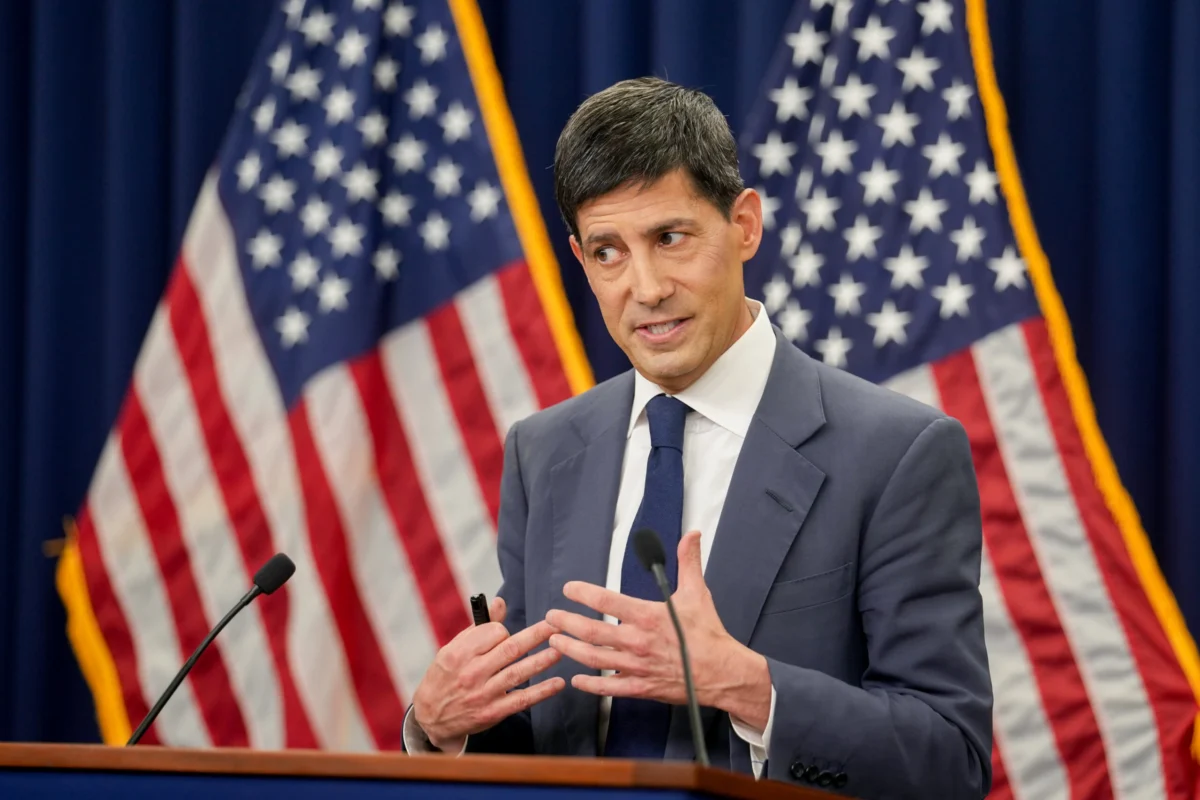
Federal Reserve Chairman Kevin Warsh on Thursday publicly released the comprehensive list of experts who will constitute five specialized task forces, charged with a thorough examination of the institution’s core operations. This highly anticipated roster features a diverse array of prominent figures, including influential Wall Street executives, seasoned business leaders, distinguished academicians, and former central bank officials, signaling a broad-based approach to the Fed’s future direction. The establishment of these panels represents a pivotal step in Warsh’s agenda to recalibrate the nation’s central bank, an initiative he first articulated last month.
The five task forces are strategically designed to address critical facets of the Federal Reserve’s mandate and operational efficacy. Their areas of focus encompass communications strategies, the management and implications of the Fed’s expansive balance sheet, the utilization and interpretation of economic data, the intricate dynamics of productivity and jobs, and the overarching framework guiding policymakers’ understanding of inflation. From the granular details of monetary policy implementation to the transformative potential of artificial intelligence in economic analysis, these groups are poised to conduct a rigorous, "first principles" review, as pledged by Chairman Warsh.
A Convergence of Expertise: High-Profile Appointments
The announced list of appointees showcases a deliberate effort to gather diverse perspectives and deep expertise from across the economic and technological spectrum. Among the most recognizable names are venture capitalist Marc Andreessen, a co-founder of Netscape and a leading voice in the technology sector; Mervyn King, the former Governor of the Bank of England, renowned for his stewardship during the 2008 global financial crisis; and Greg Mankiw, a distinguished Harvard economist who previously served as chairman of the White House’s Council of Economic Advisers. Leadership from the corporate world is also strongly represented, with Doug McMillon, the former CEO of Walmart, heading a contingent of prominent business executives. Notably, several of these appointments, including that of Mervyn King, had been subject to prior media speculation and leaks, indicating the significant interest surrounding Warsh’s reforms.
Chairman Warsh underscored the magnitude of this collaborative effort, stating, "I am honored that the best minds from a range of disciplines have agreed to work with us to sharpen our performance as an institution. The goal is straightforward: to ensure the Fed is best positioned to achieve our objectives in this consequential time." This statement encapsulates the ambitious scope of the review and the high expectations placed upon these expert panels.
A Mandate for Independence and Rigor
A formal press release from the Federal Reserve did not provide a definitive timeline for the completion of the task forces’ work, though Chairman Warsh has previously indicated an expectation for tangible changes to be implemented within the current year. This suggests an accelerated pace for the review process, reflecting the urgency with which the central bank is approaching its self-assessment.
Crucially, the Fed’s statement emphasized the independent nature of these panels. They are mandated to "operate independently, with a mandate to follow the evidence, provide candid feedback, and produce rigorous findings" that will be directly reported to officials on the Federal Open Market Committee (FOMC), the Fed’s primary monetary policy-making body. This commitment to independence is vital for ensuring the credibility and objectivity of the review, shielding the findings from potential internal biases or political pressures. The membership itself reflects a broad spectrum of ideologies and professional backgrounds, further reinforcing the commitment to a comprehensive and unbiased evaluation.
Beyond the initial high-profile names, the task forces include other highly respected figures. Raghuram Rajan, former Governor of the Reserve Bank of India and a renowned economist, brings a global perspective on financial stability and monetary policy. Former Fed Governor Jeremy Stein, known for his work on financial regulation and macroprudential policy, adds valuable institutional insight. William White, a Canadian economist who famously issued warnings about the risks of central bank easy money policies well before the 2008 global financial crisis, offers a critical, long-term view on monetary orthodoxy.
For Marc Andreessen, his appointment to the productivity and jobs task force marks his second significant advisory role in recent days, having also been named to the U.S. Defense Policy Board, a civilian advisory group for the Pentagon, in late June. This dual appointment highlights the growing recognition of technology’s pervasive influence across various sectors of governance and the economy.
The Context of Reform: Warsh’s Vision for the Fed
Chairman Warsh, who assumed the leadership of the Federal Reserve less than two months prior to this announcement, has quickly moved to stamp his authority on the institution. When he initially unveiled his intention to form these task forces, he articulated a clear philosophical approach: the groups would "start with first principles; ask hard questions; examine current practice; consider alternatives; and, ultimately, propose next steps for policymaker consideration." This methodology underscores a desire to fundamentally re-evaluate the Fed’s operational paradigms rather than merely making superficial adjustments.
In the Thursday announcement, Warsh reiterated the central bank’s unwavering commitment to its core responsibilities, stating the Fed has "resolve to pursue our mandate with rigor." This message serves as an assurance to markets and the public that the review, while comprehensive, is ultimately aimed at strengthening the Fed’s capacity to achieve its dual mandate of maximum employment and price stability.
The establishment of these task forces is widely interpreted as a direct challenge to certain established Fed orthodoxies. Warsh has already demonstrated an impact on the Fed’s communications strategy, with a noticeable shift among officials towards providing less explicit forward guidance on future policy moves. Instead, there’s an increased emphasis on articulating the Fed’s "reaction function"—the specific economic conditions under which interest rates would be adjusted. This new approach was evident in the notably shorter post-meeting statement issued by the FOMC in June, a clear departure from the more detailed and often prescriptive statements of previous eras. This move aims to foster greater market discipline and reduce dependence on Fed pronouncements, potentially making policy more nimble.
Detailed Breakdown of Task Forces and Their Mandates
The composition of each task force reflects a careful selection of individuals whose expertise directly aligns with their assigned area:
1. Communications Task Force:
- Members: Peter R. Fisher, professor of practice at the Foster School of Business, University of Washington; Arminio Fraga, founder and chairman of Gávea Investimentos and former president of the Central Bank of Brazil; and Mervyn King, former Governor of the Bank of England.
- Mandate: This group will critically assess how the Federal Reserve communicates its monetary policy decisions, economic outlook, and strategic intentions to financial markets, the public, and policymakers. The challenge here is balancing transparency with avoiding undue market volatility, particularly in an era where every word from the Fed is dissected. The evolution from explicit forward guidance to emphasizing the "reaction function" signals a major shift that this task force will undoubtedly scrutinize, examining its effectiveness and clarity.
2. Balance Sheet Policy Task Force:
- Members: Karen Dynan, a Harvard economist; Raghuram Rajan, former Governor of the Reserve Bank of India; and Jeremy Stein, former Fed Governor.
- Mandate: The Fed’s balance sheet has ballooned to unprecedented levels in the wake of the 2008 financial crisis and the COVID-19 pandemic, far exceeding its historical size. This task force will delve into the long-term implications of this expanded balance sheet, including its impact on financial markets, liquidity, and the transmission mechanism of monetary policy. They will also consider optimal strategies for its eventual normalization, the risks associated with various asset holdings, and its role as a tool in future crises. The sheer scale, which once surpassed $8 trillion, necessitates a deep examination of its efficacy and potential distortions.
3. Data Task Force:
- Members: Doug McMillon, former CEO of Walmart; Raj Chetty, a Harvard economist; and Kevin Murphy, a University of Chicago economist.
- Mandate: In an increasingly data-driven world, this task force will focus on how the Fed collects, processes, analyzes, and disseminates economic data. This includes exploring the integration of new data sources (e.g., real-time transaction data, alternative labor market indicators), leveraging advanced analytical techniques including artificial intelligence and machine learning, and ensuring the timeliness and accuracy of information crucial for policymaking. The challenge lies in sifting through vast amounts of information to identify true economic signals amidst noise, and using modern tools to gain a more granular understanding of economic trends.
4. Productivity and Jobs Task Force:
- Members: Marc Andreessen, venture capitalist; Charles I. Jones, a Stanford economist; and Asha Sharma, executive vice president and XBOX CEO at Microsoft.
- Mandate: This group addresses one of the most perplexing economic puzzles of recent decades: the slowdown in productivity growth across many developed economies. They will investigate the underlying causes of this trend, the role of technological innovation (including AI and automation) in shaping labor markets, and the implications for the Fed’s dual mandate of maximum employment. The task force will explore how the Fed can better understand and respond to structural changes in the economy that affect long-term growth potential and labor force participation. Understanding the future of work and how technology impacts wages and employment is paramount for effective policy.
5. Inflation Frameworks Task Force:
- Members: Greg Mankiw, Harvard economist; William White, Canadian economist; and Thomas Sargent, a New York University economist and Nobel laureate.
- Mandate: With inflation dynamics proving more complex and volatile in recent years, this task force will re-examine the conceptual frameworks used by the Fed to understand, forecast, and manage inflation. This includes scrutinizing the effectiveness of current inflation targeting regimes, exploring alternative frameworks like average inflation targeting, and considering the role of global factors, supply-side shocks, and long-term inflation expectations. The inclusion of figures like White, who warned of easy money policies, and Sargent, known for his work on rational expectations, signals a robust and potentially critical review of prevailing theories.
Broader Impact and Implications
The formation of these expert task forces under Chairman Warsh marks a significant moment for the Federal Reserve. It signals a proactive and earnest attempt to modernize the institution’s operational framework and intellectual underpinnings in response to a rapidly evolving global economic landscape. The anticipated outcomes of this review could be far-reaching, potentially leading to substantial shifts in how the Fed communicates with the public and markets, manages its balance sheet, utilizes data, analyzes labor market trends, and conceptualizes inflation.
Such reforms could have profound implications for financial stability, market behavior, and the overall trajectory of the U.S. economy. A more agile and transparent Fed, equipped with refined analytical tools and updated policy frameworks, could enhance its effectiveness in navigating future economic challenges, from technological disruptions to inflationary pressures. Conversely, a failure to adapt could diminish its influence and effectiveness.
The emphasis on external expertise, combined with a mandate for independent, evidence-based findings, suggests a genuine desire to inject fresh perspectives and challenge long-held assumptions within the central bank. While the exact nature and timing of the proposed changes remain to be seen, Warsh’s initiative represents a pivotal moment in the ongoing evolution of one of the world’s most powerful economic institutions. The financial world and policymakers will be closely watching as these eminent minds embark on their critical mission to redefine the future of Federal Reserve policy. The work of these task forces, supported by dedicated Fed staff, is expected to lay the groundwork for a central bank better equipped to serve its mandate in the complex and uncertain economic environment of the 21st century.
