

As summer approaches and financial markets brace for increased volatility, global investment bank Jefferies is recommending investors pivot towards "quality, low-stress" stocks to navigate an environment increasingly fraught with questions surrounding investments in artificial intelligence (AI). This strategic counsel comes from Desh Peramunetilleke, head of quantitative strategy at Jefferies, who highlights a confluence of AI-related concerns that could destabilize the current market momentum.
The AI Momentum Phenomenon and Rising Concerns
The enthusiasm for artificial intelligence has been a defining characteristic of the equity markets over the past two years. Evidencing this widespread popularity, the S&P 500 momentum index has dramatically outperformed the broader stock market by more than 70% since 2024. This level of outperformance draws striking parallels to the dizzying heights witnessed during the dot-com boom of the late 1990s, a period famously characterized by speculative fervor that ultimately led to a significant market correction. Peramunetilleke notes a critical difference in the current landscape: while previous momentum strategies, such as those observed before the outbreak of war with Iran, often diversified across sectors like materials and defense stocks, the present market momentum appears almost singularly carried by AI. This concentrated reliance, he warns, "increasing the risk of an unwind on adverse sentiment."
The apprehension stems from several key "AI-related questions" that are gaining prominence among investors and analysts. These include the potential for overcapacity in AI infrastructure, particularly as hyperscalers – the massive cloud service providers like Amazon Web Services, Microsoft Azure, and Google Cloud – commit an estimated $700 billion in capital spending to build out their AI capabilities. The sheer scale of this investment raises questions about whether the eventual demand will justify such an enormous outlay and, more critically, the ultimate profitability that will accrue to these investors. Moreover, the rising costs for "tokens"—the computational units or fees paid to access and utilize AI models—are another point of concern, potentially squeezing margins for AI developers and users alike. While acknowledging AI as a "long-term winner," Peramunetilleke cautions that these underlying issues "could drive an unwinding of the AI-led momentum."
Jefferies’ Strategic Shift: Prioritizing Quality Over Momentum
In response to these burgeoning risks, Jefferies and Peramunetilleke’s team have meticulously screened for companies that exhibit robust financial health and stability, rather than those riding the crest of the current AI-driven momentum wave. Their criteria for identifying these "high-quality companies with low momentum" are stringent and designed to identify businesses capable of weathering potential market turbulence.
The selection process focused on several key financial metrics and qualitative factors:
- High Quality Score: This proprietary metric typically assesses factors such as earnings stability, balance sheet strength, management effectiveness, and sustainable competitive advantages. Companies with consistent revenue streams and predictable business models are often favored.
- Market Capitalization over $10 Billion: This threshold ensures a focus on established, large-cap companies that generally offer greater liquidity and a proven track record, making them less susceptible to the extreme volatility often associated with smaller, less mature firms.
- Solid Fundamentals: This encompasses a deep dive into a company’s core financial health, including strong revenue growth, healthy profit margins, disciplined capital allocation, and a manageable debt load. The emphasis is on businesses that generate consistent cash flows from their operations.
- Long-Term Free Cash Flow (FCF) Yield above 3%: Free cash flow is the cash a company generates after accounting for cash outflows to support its operations and maintain its capital assets. A high FCF yield indicates that the company is generating substantial cash relative to its market valuation, which can be used for dividends, share buybacks, debt reduction, or future investments, signifying financial flexibility and health.
- Limited Momentum: This criterion is crucial for the strategy. It specifically excludes stocks that have recently experienced significant price appreciation, particularly those fueled by speculative enthusiasm rather than fundamental improvements. The goal is to avoid assets that might be overvalued or due for a correction.
- Attractive Valuations (Selling for Less than 20 Times Expected Earnings): Valuation multiples, such as the price-to-earnings (P/E) ratio, are essential. A P/E ratio below 20 times expected earnings for the next year suggests that the stock is reasonably priced relative to its future earning potential, offering a margin of safety for investors.
By adhering to these rigorous standards, Jefferies aims to identify companies that can offer stability and sustained value creation, even if the broader market experiences a correction or a rotation away from current high-growth narratives. This strategy represents a classic defensive play, prioritizing intrinsic value and resilience during uncertain times.
Spotlight on Key Recommendations: AbbVie
Among the companies highlighted by Jefferies as exemplars of quality and low-stress investment is AbbVie, the pharmaceutical giant. The drugmaker earned a top quality score from Jefferies, underscoring its robust financial profile and strategic positioning within the healthcare sector. Analysts project AbbVie to deliver an impressive compound annual earnings growth of nearly 28% between 2026 and 2027. This growth trajectory is complemented by a strong free cash flow yield of 5.2%, making it one of the most compelling combinations of growth and cash flow generation on Jefferies’ list.
AbbVie’s recent financial performance reinforces its strong position. In its first-quarter 2026 financial report, the company announced worldwide net revenues of $15 billion. A significant portion of this revenue, $7.3 billion, was attributed to its leading immunology portfolio, which includes blockbuster drugs like Skyrizi and Rinvoq, as well as the enduring presence of Humira, despite its biosimilar competition. Recognizing the importance of continually innovating and expanding its therapeutic offerings, AbbVie made a strategic move on June 22, 2026, by agreeing to acquire Apogee Therapeutics for $10.9 billion. This substantial acquisition, its largest in over five years, is set to significantly strengthen AbbVie’s next-generation immunology pipeline, signaling a proactive approach to maintaining market leadership and addressing future patient needs.
Based in Chicago, AbbVie’s stock has demonstrated considerable strength, climbing 25% in the past three months and an impressive 37% over the past year, according to FactSet data. The company also offers an attractive dividend yield of 2.7%, providing investors with both capital appreciation potential and regular income. Investors will be keenly watching for AbbVie’s second-quarter results, which are scheduled for release on July 31, 2026, to gain further insight into its performance and future outlook.
Spotlight on Key Recommendations: Netflix
Another prominent company making Jefferies’ list of high-quality, low-stress stocks is Netflix. Despite recent market turbulence, the dominant streaming platform garnered a high quality score in Jefferies’ model, supported by its substantial $320 billion market value and a solid 3.6% free cash flow yield. Netflix’s leadership position in the global streaming industry, coupled with its vast subscriber base and robust content library, underpins its fundamental strength.
However, Netflix has not been immune to market scrutiny. The company recently forecast a 13% revenue growth for the second quarter, a projection that fell short of some Wall Street expectations. This guidance, coupled with a warning that content spending would be weighted towards the first half of the year due to the timing of new title launches, led to a notable 10% drop in its shares in mid-April 2026. Despite this short-term setback and the ongoing competitive pressures from rivals like Disney+, Max, and Amazon Prime Video, Netflix maintained its full-year forecasts, signaling confidence in its long-term strategy, which includes expanding into new revenue streams like ad-supported tiers and gaming, as well as clamping down on password sharing.
The company’s stock performance reflects this recent volatility, being down 18% year-to-date in 2026 and almost 41% lower over the past 12 months. This dip, however, might present an opportunity for value-oriented investors who believe in Netflix’s long-term growth trajectory and market dominance, aligning with Jefferies’ low-momentum criteria. Investors will be closely watching for Netflix’s second-quarter financial results, slated for release on July 16, 2026, for further clarity on its subscriber growth, profitability, and future strategic direction.
Other Notable "Quality, Low-Stress" Picks
Beyond AbbVie and Netflix, Jefferies’ comprehensive screen identified several other established companies fitting the "quality, low-stress" profile. These include Lowe’s Companies, the home improvement retailer; McDonald’s, the global fast-food giant; and American Express, the financial services corporation. These companies typically share characteristics such as strong brand recognition, resilient business models, consistent demand for their products or services (often categorized as consumer staples or essential services), and a history of stable financial performance. Their inclusion underscores a broader strategy of investing in fundamentally sound businesses that are less susceptible to speculative bubbles and more likely to provide stable returns during periods of market uncertainty.
Broader Market Implications and Expert Commentary
The recommendations from Jefferies signal a potential shift in broader investment sentiment, moving away from the high-flying, often speculative growth stocks that have dominated recent headlines, particularly those in the AI sector. This pivot towards "quality" and "value" stocks suggests a renewed emphasis on fundamental strength, consistent profitability, and robust balance sheets as investors seek shelter from potential market storms.
Historically, periods of intense speculative activity, often fueled by revolutionary technologies, have eventually given way to more rational market behavior. The dot-com bubble of the late 1990s serves as a stark reminder of how quickly sentiment can shift when profitability and sustainable business models fail to materialize as quickly as anticipated. The current concerns around AI overcapacity and the economic viability of massive hyperscaler investments echo some of those historical anxieties.
Inferred expert commentary from other market strategists might align with Peramunetilleke’s cautious stance, advocating for diversification and a focus on companies with strong competitive moats and predictable cash flows. Such a strategy can act as a buffer against unforeseen market corrections and provide a more stable foundation for long-term portfolio growth. The implications for the market are significant: sectors traditionally viewed as defensive, such as healthcare, consumer staples, and mature technology companies with strong cash generation, might see increased inflows. Conversely, highly speculative AI-centric ventures with unproven business models could face headwinds as investors become more discerning.
Chronology and Contextual Timeline
The journey to this current market juncture has unfolded over several key periods:
- 2024: The S&P 500 momentum index begins its significant outperformance, largely driven by enthusiasm for artificial intelligence, drawing comparisons to the tech-fueled exuberance of the 1990s dot-com era.
- Pre-War with Iran: Earlier momentum strategies were more diversified, encompassing sectors like materials and defense, indicating a broader base for market leadership.
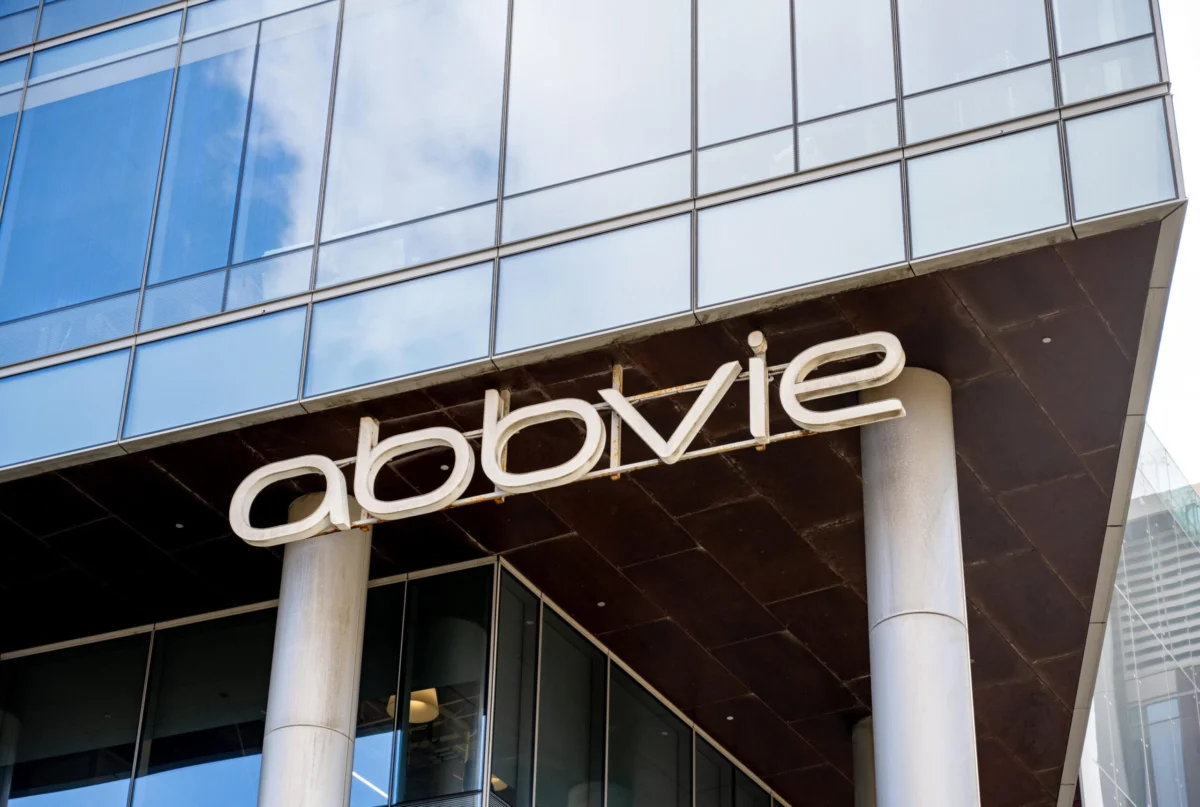
- October 16, 2025: A representative image captures the AbbVie logo on its South San Francisco office, reflecting the company’s established presence.
- Mid-April 2026: Netflix shares experience a notable 10% decline following the release of second-quarter guidance that fell short of Wall Street expectations, highlighting market sensitivity to growth forecasts.
- June 22, 2026: AbbVie strategically expands its immunology pipeline through the announcement of its $10.9 billion acquisition of Apogee Therapeutics, marking its largest acquisition in over five years.
- July 1, 2026: A broader market observation notes that the "Magnificent 7" stocks, often seen as bellwethers for tech and AI growth, had collectively moved into negative territory for the year, signaling potential underlying weakness in the dominant tech narrative.
- July 16, 2026: Netflix is scheduled to release its second-quarter financial results, which will be closely watched for insights into subscriber growth and profitability.
- July 31, 2026: AbbVie is set to announce its second-quarter results, providing updates on its financial performance and the integration of its recent acquisition.
- 2026-2027: This period marks the projected window for AbbVie’s robust compound annual earnings growth of nearly 28%, underscoring its long-term potential.
In conclusion, Jefferies’ recommendation to favor "quality, low-stress" stocks represents a pragmatic approach to investing in a market that, while still captivated by the long-term potential of AI, is also grappling with increasing short-term uncertainties and valuation concerns. By focusing on companies with strong fundamentals, attractive valuations, and proven resilience, investors may be better positioned to navigate potential market turbulence and secure more stable, sustainable returns in the evolving economic landscape.
