

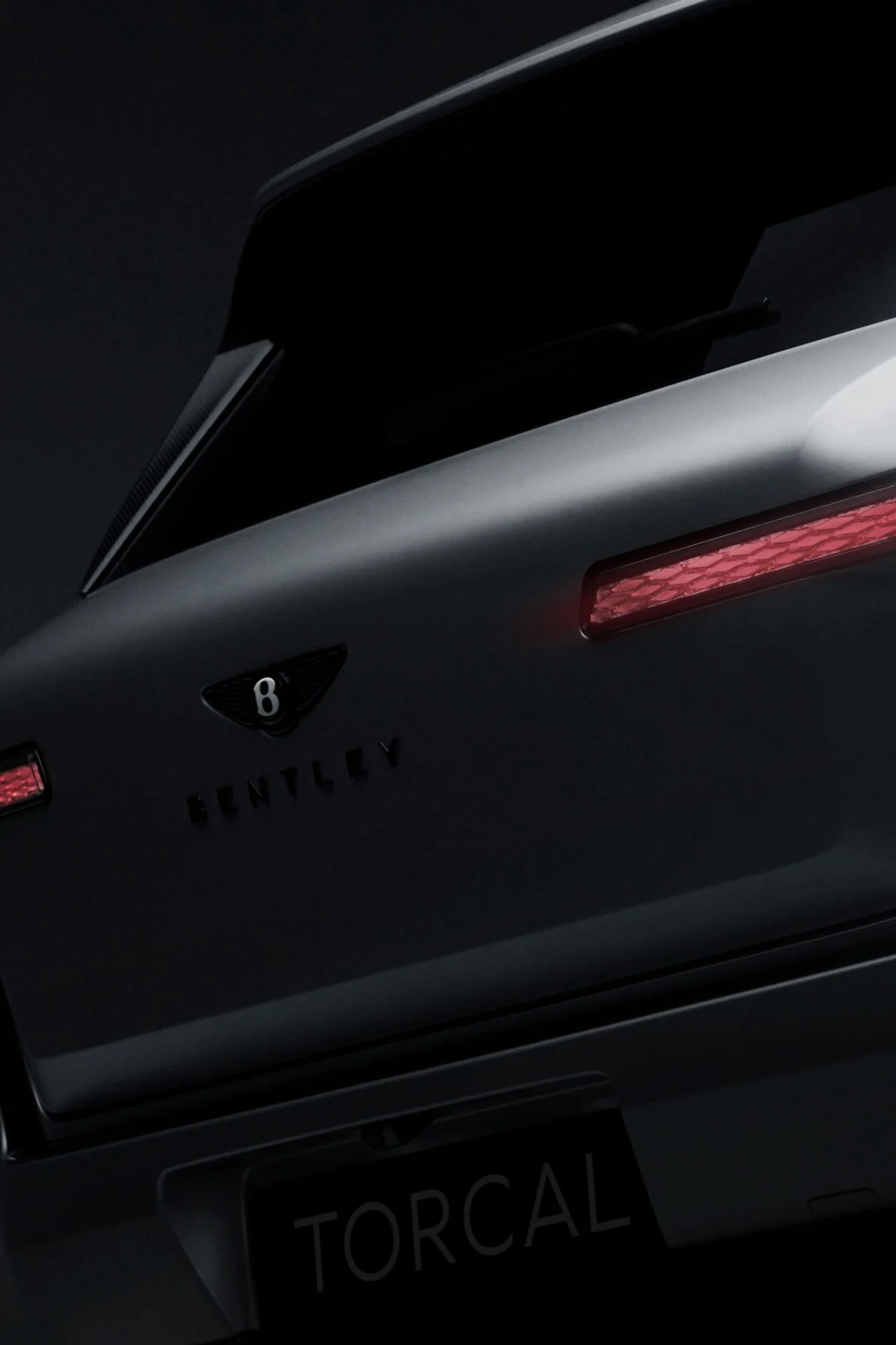
Bentley Motors has officially confirmed the name of its inaugural fully electric vehicle, christening the upcoming model the Bentley Torcal. The announcement, made at the company’s headquarters in Crewe, England, was accompanied by a teaser image showing the vehicle’s rear profile and a commitment to a full global reveal scheduled for September 23, 2026. This milestone marks a definitive shift for the 105-year-old British manufacturer as it navigates the transition from internal combustion engines to a sustainable, electrified future. While technical specifications remain closely guarded, the company has disclosed that the Torcal will be a five-meter-long SUV designed to deliver a driving range exceeding 300 miles on a single charge.
The naming of the Torcal concludes months of industry speculation. Earlier in the year, trademark filings in the United Kingdom and the European Union revealed that Bentley had secured the rights to two names: "Torcal" and "Barnato." Many brand enthusiasts had predicted the latter, which serves as a tribute to Woolf Barnato, the legendary three-time Le Mans winner and former chairman of Bentley during the "Bentley Boys" era of the 1920s. However, the company opted for Torcal, continuing a tradition of naming its flagship models after significant geographical landmarks. The name is derived from El Torcal de Antequera, a nature reserve in the Andalusia region of Spain known for its unique limestone rock formations. Beyond the geographical link, the name carries linguistic weight; it is rooted in the Latin torquere, meaning "to twist," which is the etymological origin of the word "torque"—a critical performance metric for electric motors.
Design Philosophy and Aesthetic Evolution
The Bentley Torcal is positioned as a slightly more compact alternative to the Bentayga, yet it retains the commanding presence synonymous with the marque. In a private viewing of a pre-production prototype, the vehicle’s silhouette revealed a clear lineage with its predecessors, featuring a signature long hood and an upright front fascia. However, the Torcal introduces several design departures necessitated by aerodynamic efficiency. Unlike the Bentayga, the Torcal features a roofline that tapers more aggressively toward the rear, a design choice intended to reduce drag and maximize battery range—a common priority in the contemporary electric vehicle (EV) segment.
One of the most distinctive visual features is the front grille. In a move away from the functional mesh grilles of combustion-engine vehicles, the Torcal utilizes a solid "wall" of illuminated crystals. This design is reportedly inspired by the front-end aesthetics of the classic Continental T, blending heritage with futuristic lighting technology. The rear of the vehicle also sees a departure from tradition; the familiar oval light clusters have been replaced by a singular, clean horizontal line, providing a more minimalist and modern appearance. Additional luxury features confirmed for the model include a switchable glass sunroof and all-round power-assisted doors.

Inside the cabin, Bentley’s designers have sought a balance between digital integration and tactile luxury. The interior features a combination of physical switchgear for essential functions and high-resolution OLED screens. The central display is designed with a downward curve, similar to the interface found in the latest Porsche Cayenne, emphasizing the shared technological synergies within the Volkswagen Group. Notably, Bentley has confirmed it will not offer a separate passenger-side screen, a feature currently trending among other luxury manufacturers, as the brand seeks to maintain a more focused and uncluttered environment for the occupants.
A Challenging Market Environment
The introduction of the Torcal comes at a period of significant volatility for the high-end electric vehicle market. Bentley Chairman and Chief Executive Frank-Steffen Walliser has described the Torcal as "the most considered car" in the company’s history, a statement that reflects the high stakes of this launch. The luxury sector, once thought to be insulated from market fluctuations, has recently seen a cooling of demand for pure electric models.
Data from across the industry highlights the "decidedly rocky state" of the market Bentley is entering:
- Lamborghini: The Italian marque recently shelved its Lanzador electric GT project after internal research suggested demand among its core demographic was nearing zero.
- Ferrari: While its first EV, the Luce, saw strong initial interest in specific regions, its reveal was met with a significant drop in company market value, leading Ferrari to delay its second electric model until 2028.
- Porsche: Bentley’s stablemate has faced severe headwinds with the Taycan. Reports indicate that steep depreciation has impacted resale values, contributing to a 93% collapse in operating profit for the group, largely due to writedowns associated with its EV strategy.
- Mercedes-Benz: Sales of the electric G-Wagon have lagged significantly behind its combustion-engine counterpart, with only 1,450 units sold in Europe through early 2025 compared to nearly 10,000 units of the traditional model.
- Rolls-Royce: Even the ultra-luxury Spectre has not been immune, with sales reportedly declining by 44% in recent quarters.
Bentley’s own financial performance reflects these broader pressures. While the company reported its seventh consecutive year of profitability in March 2026—earning €216 million on €2.6 billion in revenue—this represented a 42% decline compared to the previous year. To navigate these challenges, Bentley has implemented a restructuring plan that includes the cutting of 275 management and non-manufacturing roles to reallocate capital toward its electrification goals.
The Beyond100 Plus Strategy
In response to the shifting landscape, Bentley has revised its long-term roadmap. Originally, the "Beyond100" strategy aimed for a fully electric lineup by 2030. However, under the leadership of Walliser, who joined the company in 2024, this has been rebranded as "Beyond100 Plus." The new target for total electrification has been pushed back to 2035. This adjustment allows Bentley to continue offering plug-in hybrid (PHEV) and internal combustion engine (ICE) models alongside the new Torcal, providing a buffer as charging infrastructure and consumer sentiment evolve.

The company is currently investing heavily in its manufacturing hub in Crewe. The historic A1 building is being converted into a dedicated assembly line for battery electric vehicles, complemented by a new design center and an advanced paint shop. This infrastructure is essential for the Torcal and the subsequent electric models that are expected to follow, though a second all-electric Bentley is not anticipated until at least 2030.
Strategic Outlook and Regional Dynamics
Despite the cooling of the Western EV market, Bentley remains optimistic about the Torcal’s potential, particularly in Asia. While some high-end electric models have struggled in Europe and North America, there are emerging signs of resilience in the Chinese luxury market. For instance, despite the controversy surrounding the Ferrari Luce in the West, its initial allocation in China was reportedly sold out almost instantly, despite a price tag exceeding $580,000. Bentley, which has seen a decline in Chinese demand for its traditional models, views the Torcal as a critical tool for recapturing market share in the region.
CEO Frank-Steffen Walliser believes that Bentley’s timing may actually be advantageous. He argues that early "technology seekers" who wanted EVs to look radically different are being replaced by a more traditional luxury buyer who simply wants a high-quality vehicle that happens to be electric. "Now people don’t want that [radical difference]," Walliser stated. "They just want to have a car, and this is why our timing maybe now is right. Using all of our DNA, being careful, delivering the car that feels authentic—don’t try to play anymore."
By positioning the Torcal as an evolution rather than a revolution, Bentley is betting that its existing customer base will transition to electric power if the product remains quintessentially a Bentley. The strategy focuses on "the edges" of the brand’s identity—refining the luxury experience rather than reinventing the automotive form factor. Whether this measured approach will allow Bentley to avoid the pitfalls experienced by its competitors remains to be seen, but the Torcal represents the most significant gamble in the company’s modern history. As the September 2026 reveal approaches, the automotive world will be watching to see if the Torcal can successfully navigate the transition from the "Golden Age" of combustion to the uncertain frontiers of the electric era.
