

July 3, 2026
By Barry Eichengreen
Today’s wave of mega-Initial Public Offerings (IPOs), particularly those fueled by the burgeoning fields of artificial intelligence (AI), commercial space travel, and their vast supporting infrastructures, has ignited a fervent discussion among economists, investors, and technologists. This period of intense innovation and subsequent market activity has prompted a veritable "analogy-fest," as observers grapple with identifying historical parallels to understand and forecast the potential trajectory of these transformative sectors. While no single historical event offers a perfect blueprint, the aftermath of Nippon Telegraph and Telephone’s (NTT) monumental IPO in February 1987 provides a particularly apposite and sobering case study, offering crucial insights into the dynamics of rapid technological adoption, market exuberance, and the eventual reckoning that can follow.
The questions surrounding the financial implications of radical new technologies are not unique to our current era. The 1870s witnessed a colossal railway boom, a period of unprecedented investment and expansion in transportation networks. However, this boom ultimately culminated in significant financial distress throughout the 1880s, highlighting the risks inherent in overextended infrastructure projects and speculative investment. Subsequently, the electrification boom of the late 19th century, while unfolding more smoothly, demonstrated that the full realization of a transformative technology’s economic potential can take decades, requiring sustained investment, widespread adoption, and the development of complementary industries. The current excitement surrounding AI, space travel, and their associated ecosystems begs the question: are we on a similar path, characterized by both immense promise and the potential for significant disruption?
The NTT IPO: A Bellwether of Japanese Economic Might
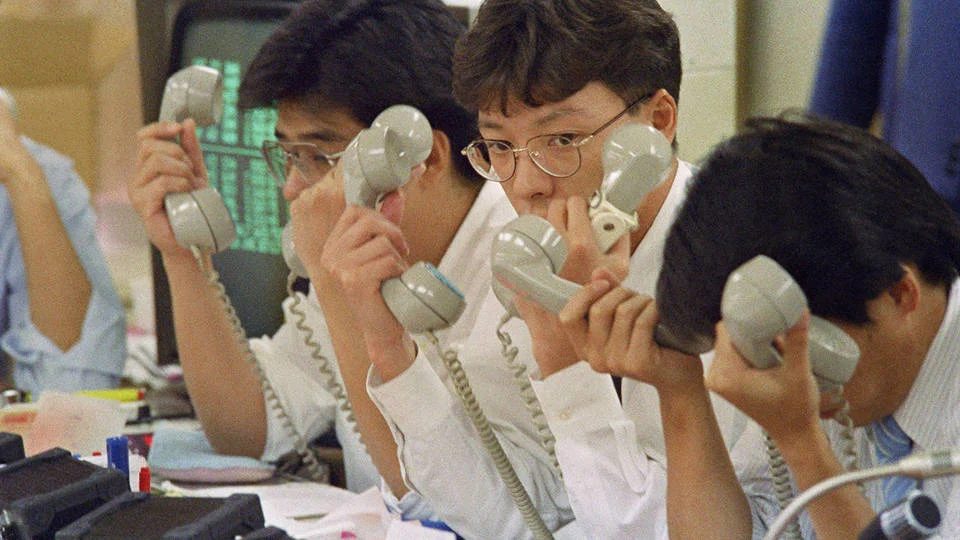
The IPO of Nippon Telegraph and Telephone in February 1987 was not merely a significant corporate event; it was a symbol of Japan’s ascendant economic power in the late 20th century. The Japanese government privatized NTT, the state-owned telecommunications giant, in a move designed to inject greater efficiency and market discipline into the sector. The offering was a resounding success, raising an unprecedented ¥3.6 trillion (approximately $25 billion at the time), making it the largest IPO in history. The shares were snapped up by domestic investors, particularly individuals, eager to participate in the growth of a company seen as fundamental to Japan’s technological future.
The context for the NTT IPO was a period of remarkable economic expansion in Japan, often referred to as the "Bubble Economy." Driven by a combination of strong export performance, aggressive monetary policy, and a belief in Japan’s invincibility in the global economy, asset prices, including stocks and real estate, had soared to dizzying heights. The NTT IPO was seen as the crowning jewel of this economic euphoria, further fueling investor confidence and a sense of boundless optimism. The company’s stock price initially surged, reflecting the overwhelming demand and the perceived value of its monopolistic position and strategic importance.
The Unfolding Aftermath: From Euphoria to Correction
The immediate post-IPO period for NTT was characterized by continued strong performance. However, the broader economic landscape in Japan was becoming increasingly precarious. The Bank of Japan, concerned about overheating and inflation, began to tighten monetary policy in 1989. This tightening, coupled with other factors, led to a dramatic and prolonged stock market crash starting in early 1990. The Nikkei 225, which had reached record highs, began a steep decline that would last for over a decade, ushering in Japan’s "Lost Decades" of economic stagnation.
While NTT itself remained a fundamentally strong company, its stock price, like virtually all others on the Tokyo Stock Exchange, suffered a significant downturn. The initial exuberance that surrounded its IPO was replaced by a stark realization of the vulnerabilities inherent in an overvalued market and an economy heavily reliant on speculative asset growth. The NTT IPO, therefore, serves as a potent reminder that even the most promising companies and sectors can be swept up in broader market corrections driven by macroeconomic forces and shifts in investor sentiment.
Parallels to the Present: AI, Space, and the Specter of Speculation
Today’s technological landscape bears some striking, albeit imperfect, resemblances to the conditions that preceded the Japanese bubble burst. The rapid advancements in AI are creating entirely new industries and disrupting established ones, leading to a surge in investment and valuation for companies at the forefront of this revolution. Similarly, the burgeoning commercial space sector, with ambitions ranging from satellite internet constellations to lunar resource extraction and interplanetary travel, is attracting substantial capital and generating immense excitement.
The "analogy-fest" that Barry Eichengreen mentions often invokes comparisons to historical technological revolutions. The railway boom of the 1870s saw an explosion of investment in rail lines, many of which were built with little regard for economic viability, leading to widespread bankruptcies and financial panics. The electrification boom, while ultimately transformative, required decades of patient capital and the development of a complex ecosystem of power generation, transmission, and utilization.
The current wave of IPOs in AI and space-related companies is characterized by a similar blend of genuine technological innovation and speculative fervor. Companies are being valued at astronomical multiples, often based on future potential rather than current profitability. The sheer volume of venture capital and public market investment flowing into these sectors suggests a high degree of optimism, bordering on exuberance, about their transformative power.
Supporting Data: Valuations and Investment Trends
To understand the scale of current investment, consider the following:
- AI Sector Growth: Global spending on AI solutions is projected to reach trillions of dollars annually within the next decade. Venture capital funding for AI startups has seen exponential growth, with significant rounds raised by companies in areas like generative AI, AI-powered drug discovery, and autonomous systems. For instance, in the first half of 2026 alone, AI-focused startups have reportedly raised over $75 billion globally, a substantial increase from previous years.
- Space Economy Expansion: The global space economy, encompassing satellite services, launch capabilities, and future exploration endeavors, is estimated to be worth hundreds of billions of dollars and is projected to grow significantly. Companies like SpaceX, Blue Origin, and numerous satellite internet providers are attracting billions in private and public funding. The number of new space companies going public or being acquired has also seen a notable uptick.
- Mega-IPOs: The trend of mega-IPOs, particularly in technology, has been a hallmark of recent years. Companies with valuations in the tens of billions are becoming increasingly common, often before achieving sustained profitability. This mirrors the immense demand that characterized the NTT IPO, albeit with a different set of technological drivers.
Potential Risks and Sobering Lessons
The NTT IPO serves as a crucial cautionary tale. While the privatization and subsequent growth of NTT were undeniably important for Japan’s telecommunications infrastructure, the IPO occurred at the peak of a speculative bubble. The subsequent market crash demonstrated that even a strategically vital and fundamentally sound company could experience severe stock price declines when the broader economic and financial environment deteriorates.
For today’s tech IPOs, several risks are worth considering:
- Overvaluation: The current valuations of many AI and space companies may not be sustainable in the long term. If market sentiment shifts or economic conditions worsen, these high valuations could be severely challenged, leading to significant investor losses.
- Technological Hurdles and Adoption Rates: While AI and space technologies are advancing rapidly, their full economic potential may take longer to materialize than anticipated. Unforeseen technical challenges, regulatory hurdles, or slower-than-expected adoption rates could temper growth prospects.
- Competition and Market Saturation: As these sectors attract more investment, competition is likely to intensify. Companies that fail to innovate or differentiate themselves may struggle to maintain market share and profitability.
- Macroeconomic Headwinds: Just as the Bank of Japan’s tightening policy contributed to the Japanese market crash, current or future macroeconomic shifts, such as rising interest rates, inflation, or geopolitical instability, could impact the performance of these new technology companies and the broader stock market.
Broader Impact and Implications
The lessons from the NTT IPO are multifaceted. Firstly, it underscores the importance of distinguishing between genuine technological innovation and speculative excess. While AI and space travel represent profound advancements with the potential to reshape economies, investors must exercise caution and conduct thorough due diligence, understanding that market sentiment can be a powerful, and sometimes irrational, force.
Secondly, the case of NTT highlights the interconnectedness of individual company performance with the broader economic and financial environment. The success of any company, regardless of its technological prowess, is ultimately influenced by macroeconomic stability, monetary policy, and investor confidence.
Thirdly, the prolonged economic stagnation in Japan following the bubble served as a stark reminder that rapid growth fueled by speculation can lead to long-term challenges. Policymakers and regulators today are keenly aware of the need to foster sustainable growth, manage financial stability, and avoid the pitfalls of asset bubbles.
While the current wave of technological innovation offers immense promise, the echoes of past booms and busts, particularly the cautionary tale of Nippon Telegraph and Telephone’s IPO, serve as a vital reminder for investors, companies, and policymakers to approach this era of unprecedented technological advancement with a blend of optimism and prudent realism. The long-term success of AI and space exploration will likely depend not only on groundbreaking innovation but also on disciplined investment, sustainable business models, and a stable macroeconomic environment. The next few years will be critical in determining whether today’s technological revolution leads to sustained prosperity or a painful correction, much like the one that followed Japan’s economic zenith in the late 1980s.
