

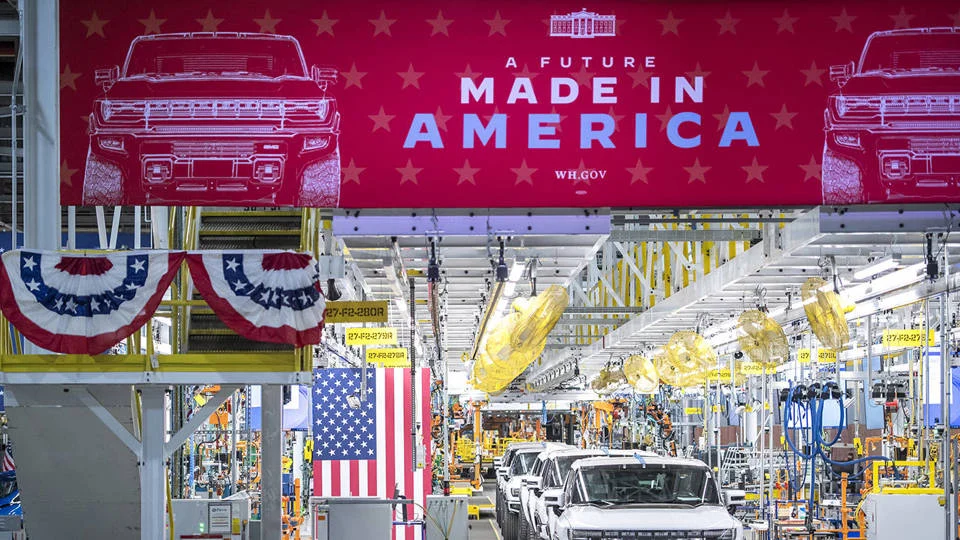
As the United States approaches its 250th anniversary, a critical examination of its economic foundations reveals a narrative far more complex and interventionist than often portrayed. The enduring myth of pure laissez-faire capitalism, built solely on free markets, obscures a historical reality where government has consistently played a pivotal role in directing, subsidizing, and supporting private enterprise to achieve national objectives. This pragmatic, hybrid model, established from the nation’s inception, has been the bedrock of American economic growth and innovation, a stark contrast to the idealized free-market dogma that has often dominated public discourse.
A Founding Paradox: Pragmatism Over Purity
The very genesis of the United States was not a declaration of unbridled free markets, but a bold assertion of national sovereignty and the pursuit of collective prosperity. The Founding Fathers, while espousing ideals of individual liberty and limited government, were also acutely aware of the necessity for state action to foster economic development and secure national interests. This inherent tension between ideological commitment to free markets and the practical demands of nation-building set the stage for a distinctly American economic model.
From Alexander Hamilton’s visionary "Report on Manufactures" in 1791, which advocated for government promotion of industry through subsidies, tariffs, and infrastructure investment, to the massive federal land grants that fueled the transcontinental railroad in the 19th century, the hand of the state has been demonstrably present. These were not ad-hoc interventions but deliberate strategies designed to overcome market failures, foster nascent industries, and consolidate national power. The notion that the U.S. economy simply "grew" organically through unfettered competition overlooks these foundational governmental actions.
A Chronicle of Intervention
The history of American economic policy is replete with examples of state intervention, often framed in response to crises or to seize strategic opportunities.
Early Republic (Late 18th – Early 19th Century):
- Hamiltonian Vision: Alexander Hamilton, as the first Secretary of the Treasury, championed policies that encouraged manufacturing and industrial development. His proposals included protective tariffs to shield domestic industries from foreign competition and subsidies to nascent businesses. This was a clear departure from a purely laissez-faire approach, prioritizing national economic self-sufficiency.
- Infrastructure Development: The construction of canals, roads, and later, railroads, was heavily supported by government funding and land grants. The Erie Canal, completed in 1825, a monumental public works project, dramatically reduced transportation costs and opened up new markets, demonstrating the state’s capacity to create economic opportunities that private capital alone might have struggled to initiate.
19th Century: Expansion and Industrialization:
- Westward Expansion and Land Policy: The U.S. government used land as a powerful tool for economic development. The Homestead Act of 1862, for instance, granted vast tracts of public land to settlers, encouraging agricultural expansion and settlement of the West. Land grants were also instrumental in financing the construction of the transcontinental railroad, a project of immense strategic and economic importance.
- Banking and Monetary Policy: The establishment of national banks and the management of currency were consistently viewed as crucial government functions, influencing credit availability and economic stability. Debates over the gold standard versus bimetallism, and the establishment of the Federal Reserve in 1913, underscore the ongoing governmental role in shaping the financial landscape.
20th Century: The Rise of the Modern State:
- The New Deal (1930s): In response to the Great Depression, President Franklin D. Roosevelt’s administration enacted a series of programs that fundamentally expanded the government’s role in the economy. The Civilian Conservation Corps (CCC), the Works Progress Administration (WPA), and the Tennessee Valley Authority (TVA) were massive public works projects designed to create jobs, stimulate demand, and undertake large-scale infrastructure development. Social Security and unemployment insurance were also established, creating a social safety net and influencing consumer spending.
- World War II and the Arsenal of Democracy: The mobilization of the American economy for World War II saw unprecedented government intervention. The War Production Board directed industrial output, the government funded research and development (leading to innovations like the atomic bomb and radar), and massive investments were made in factories and infrastructure. This period solidified the concept of the state as a crucial partner in driving large-scale technological and industrial advancement.
- Post-War Era and the Cold War: Government spending on defense, space exploration (NASA), and research and development continued to spur innovation and economic growth. The GI Bill, which provided educational and housing benefits to returning soldiers, significantly boosted human capital and fueled a post-war economic boom.
21st Century: Continued Pragmatism:
- Bailouts and Stimulus: The financial crisis of 2008 saw the U.S. government implement massive bailouts for financial institutions and the auto industry, demonstrating a willingness to intervene decisively to prevent systemic collapse. Subsequent stimulus packages aimed at boosting economic recovery further illustrate this pragmatic approach.
- The CHIPS and Science Act (2022): This recent legislation, providing significant subsidies and tax credits for domestic semiconductor manufacturing, is a contemporary example of the government actively seeking to bolster strategic industries and national competitiveness in the face of global competition.
Supporting Data: The Tangible Impact of State Action
The notion that free markets alone drive prosperity is challenged by historical data demonstrating the significant economic returns from government-led initiatives.
- Infrastructure Investment: Studies by organizations like the Congressional Budget Office (CBO) and the International Monetary Fund (IMF) have consistently shown a positive correlation between public infrastructure investment and economic growth. For example, a 2018 CBO report estimated that increasing federal investment in transportation infrastructure by $100 billion per year could boost GDP by 0.3% to 0.7% annually over a decade.
- Research and Development: Government funding has been instrumental in many of the most transformative technological advancements. The internet, GPS, and the touchscreen interface, all foundational technologies of the digital age, originated from government-funded research. According to the National Science Foundation, federal government has historically been a major funder of basic research, which underpins much private sector innovation.
- Subsidies and Tariffs: While controversial, these tools have demonstrably protected and fostered key industries. For instance, agricultural subsidies have historically supported the American farming sector, ensuring food security and maintaining a viable rural economy. Early industrial tariffs helped nascent American industries compete with established European manufacturers.
Official Responses and Inferred Reactions
While direct "reactions" from historical figures are impossible, the consistent policy decisions of various administrations, from Washington to Biden, underscore an enduring pragmatic approach. The legislative history of the U.S. Congress, filled with acts promoting industry, infrastructure, and scientific research, serves as a testament to this pragmatic consensus.
Economists across the political spectrum, while differing on the degree and nature of intervention, acknowledge the state’s role. Even staunch free-market proponents often concede the necessity of government provision of public goods, enforcement of contracts, and the creation of a stable legal and monetary framework. Conversely, those advocating for greater state involvement often point to historical successes like the New Deal or the post-war technological boom as evidence of its efficacy.
The recurring pattern of bipartisan support for significant industrial policy initiatives, such as the CHIPS Act, suggests a pragmatic understanding that in a globalized and competitive world, strategic state intervention is often deemed necessary to secure national economic interests and technological leadership.
Broader Impact and Implications: A Model for the Future?
The recognition of America’s hybrid economic model carries profound implications. It challenges simplistic ideological debates and suggests that the most effective path to prosperity lies not in adhering to a rigid doctrine of market purity, but in a flexible, pragmatic approach that leverages the strengths of both the private sector and the state.
This historical perspective offers a valuable framework for addressing contemporary economic challenges. As the nation grapples with issues like climate change, global supply chain vulnerabilities, and the imperative of technological innovation, understanding the historical precedent of state-directed investment and industrial policy can inform future policymaking. The success of initiatives like the Manhattan Project or the Apollo program, driven by massive government investment and strategic coordination, can serve as blueprints for tackling large-scale, complex challenges.
The enduring legacy of America’s pragmatic, hybrid economic model is a testament to its adaptability and effectiveness. It is a model that has consistently prioritized national objectives, fostered innovation, and ensured a degree of economic stability, often in defiance of purely ideological prescriptions. As the nation looks towards its next 250 years, a clear-eyed understanding of this historical reality is not merely an academic exercise but a vital prerequisite for navigating the complexities of the 21st-century global economy. The myth of pure laissez-faire has served its purpose as an ideal, but the reality of pragmatic intervention has been the engine of American prosperity.
