

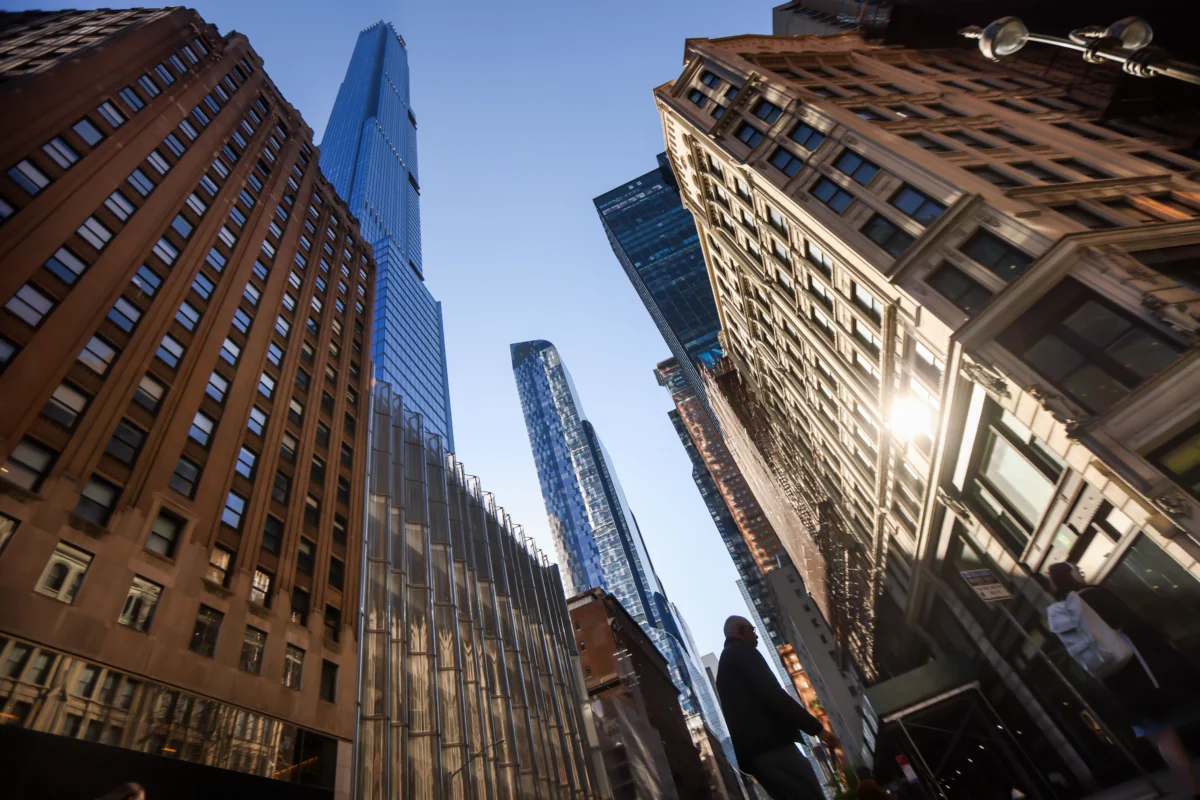
Just weeks after the implementation of New York City’s controversial pied-à-terre tax, the luxury real estate market in Manhattan continues to demonstrate remarkable resilience, with strong sales figures and dwindling inventory confounding initial predictions of a significant downturn. The legislative measure, designed to generate revenue from non-primary residences, was met with widespread apprehension from real estate developers and brokers who warned of an exodus of wealthy buyers and a chilling effect on new development. However, current market data suggests that a confluence of unprecedented liquidity, soaring asset valuations, and limited supply has largely absorbed the impact of the new surcharge, at least in the immediate aftermath.
The Genesis of the Pied-à-Terre Tax: A Policy of Revenue and Equity
The concept of a pied-à-terre tax has been a subject of intense debate in New York for several years, driven by progressive political factions advocating for increased contributions from the city’s wealthiest residents to address systemic issues like housing affordability, public transit funding, and infrastructure improvements. Proponents argued that non-primary residences, often left vacant for significant portions of the year, contribute to housing scarcity while their owners benefit from city services without fully contributing to the local tax base in a manner commensurate with their wealth. The tax was envisioned as a means to achieve greater equity in the city’s financial landscape and to tap into the substantial wealth held in underutilized luxury properties.
New York Governor Kathy Hochul and the state legislature approved the so-called pied-à-terre tax on May 27, 2026, following its proposal in April. The tax officially took effect in early July 2026, applying to non-primary residences valued by the city at more than $1 million, with the residency status assessed as of January 5, 2026. The legislation mandates an annual surcharge on these properties, calculated as a percentage of the property’s assessed value, incrementally increasing with higher valuations. Governor Hochul and New York City Mayor Zohran Mamdani, a prominent advocate for the measure, projected the tax would generate approximately $500 million annually, earmarked for critical public services. However, the New York City Comptroller offered a more conservative estimate, forecasting annual revenues between $340 million and $380 million, a disparity that highlights the inherent uncertainties in predicting the behavioral responses of the ultra-wealthy. This difference in projections often arises from varying assumptions about how many properties will be subject to the tax, how valuations might shift, and whether some owners might change their residency status or sell their properties to avoid the levy.
Industry’s Initial Trepidation: The "Mamdani Effect" and Predicted Exodus
The passage of the pied-à-terre tax was met with an immediate and vocal outcry from segments of the real estate industry. Brokers and developers had widely predicted an adverse, immediate impact, with many foreseeing a significant flight of wealth from New York City, particularly to more tax-friendly states like Florida. This anticipated exodus was frequently dubbed "the Mamdani effect," referencing Mayor Mamdani’s staunch advocacy for wealth-based taxation and the fear that such policies would deter high-net-worth individuals from investing in the city’s luxury market. Critics argued that such taxes could erode New York’s competitive edge as a global financial and cultural hub.
The Real Estate Board of New York (REBNY), a powerful lobbying group representing the city’s real estate interests, issued a stern warning shortly after the measure’s approval. In a public statement, REBNY asserted, "The tax on second homes will dampen market activity, reduce property values, hurt new development and weaken the city’s economy." Their concerns extended beyond mere transaction volumes, encompassing potential job losses in construction and ancillary services, a reduction in the overall property tax base over time as property values potentially stagnate or decline, and a diminished competitive standing for New York City in the global luxury market. Developers, in particular, voiced fears that the added cost burden on potential buyers would render new high-end projects financially unfeasible, leading to a halt in future construction and exacerbating the city’s housing supply challenges across all price points. They contended that a healthy luxury market often fuels construction jobs and trickles down to benefit other sectors of the economy.
Unwavering Demand: Luxury Market Defies Predictions
Despite the dire predictions, the luxury real estate market has, in the short term, largely shrugged off the new tax. Data from leading real estate analytics firms and brokerages paint a picture of sustained, if not intensified, demand. According to Olshan Realty, a firm specializing in Manhattan’s luxury market, there were 126 contracts signed for apartments priced at $4 million or more in June 2026. This figure not only held steady but slightly surpassed the 124 contracts recorded during the corresponding four-week period in the previous year, signaling no immediate dip in high-end transactional activity. This marginal increase suggests that any initial hesitancy among buyers was quickly overcome by other market forces.
Further reinforcing this trend, Brown Harris Stevens reported that the average price of a Manhattan apartment reached its second-highest level ever during the second quarter of 2026, climbing 5% over the past year to approximately $2.2 million. This increase underscores a broader upward trajectory in property values, even as new tax considerations emerge, indicating robust confidence in the long-term value of Manhattan real estate. This data also reflects strong performance across various segments of the market, not just the ultra-luxury tier.
The ultra-luxury segment, in particular, has demonstrated remarkable vigor. Compass, another prominent real estate brokerage, highlighted a significant surge in sales for properties exceeding the $10 million mark. Sales of condominiums priced between $10 million and $20 million soared by an impressive 55%, while transactions for condos exceeding $20 million saw a robust 33% increase. The average asking prices for these top-tier properties also reflected this buoyancy, rising by 14%, indicating that sellers are maintaining strong pricing power in the face of robust buyer interest and limited supply. This segment, often driven by a distinct set of motivations and financial capacities, appears particularly impervious to incremental tax changes.
Notable transactions in June underscored the market’s strength, including the sale of an $80 million duplex penthouse in a newly constructed condominium building near Manhattan’s West Village, a $26 million downtown condo, and a $22 million co-op on the Upper East Side. These high-value deals suggest that for a significant segment of the ultra-wealthy, the added cost of the pied-à-terre tax is being absorbed within broader financial considerations, such as investment returns, lifestyle preferences, and the inherent prestige of owning a piece of prime Manhattan real estate.
Broker Insights: Liquidity, Timing, and the Great Wealth Transfer
Experienced brokers on the front lines of Manhattan’s luxury market offer critical insights into why the tax has not yet delivered the predicted blow. Many point to an extraordinary flood of liquidity injected into the global economy, driven by recent high-profile initial public offerings (IPOs) and a sustained surge in asset prices across various sectors, including technology, finance, and private equity. This has created a significant pool of new wealth seeking investment opportunities and tangible assets.
Lauren Muss, a veteran broker with Douglas Elliman, articulated this sentiment bluntly: "The amount of money out there is insane. We’re seeing big things come to us every day. It’s only getting stronger." Muss herself saw a $17.5 million condo listing go into contract in June, reflecting the underlying strength. Brokers report that while some buyers initially paused their transactions when the tax was first proposed in April, clarity on the tax’s details, coupled with the sheer volume of available capital, quickly alleviated their fears. For many ultra-high-net-worth individuals, the additional annual cost of the pied-à-terre tax, though substantial, represents a relatively small percentage of their overall net worth or the total value of their property portfolio.
Scott Hustis of Paradigm Advisory at Compass provided a compelling anecdote illustrating this dynamic. He listed a $16.5 million penthouse duplex in Madison Square Park Tower on April 8. An immediate interested buyer was poised to make an offer, but the announcement of the proposed tax a week later prompted a withdrawal. However, as the specifics of the tax became clearer by late May, the buyer re-entered the market, and the penthouse ultimately went into contract on June 6. "There is a lot of confidence out there," Hustis observed. "Markets are strong. A lot more New York buyers are coming out of the woodwork." He emphasized that for the ultra-wealthy, the timing of a market entry or exit often outweighs the impact of an incremental tax. "Right now, they’re seeing things go into contract and prices not coming down and they decide to execute." While Hustis declined to comment on the specific buyer of the $16.5 million penthouse, he noted that if it were not a primary residence, it would incur a pied-à-terre tax bill exceeding $98,000 for the current fiscal year, in addition to standard property taxes. This figure, while significant in absolute terms, is often viewed as a cost of doing business or a premium for owning property in one of the world’s most desirable cities.
Another significant driver of demand, particularly at the highest echelons, is the ongoing "great wealth transfer." Marc Palermo of Douglas Elliman highlighted an increasing trend of transactions involving younger buyers (under 40) where the underlying funding originates from parents, family offices, or trusts. "We’re seeing a lot of gifts coming in from parents," Palermo stated. "If you’re under 40 and you’re buying in New York City, chances are you’re not making enough to buy on your own." This generational transfer of wealth creates a continuous pipeline of buyers with substantial capital, further insulating the luxury market from tax-related disincentives and contributing to sustained demand for high-end properties.
The Inventory Crunch: A Seller’s Market Intensified
A critical factor contributing to the market’s current robustness is the severely constrained inventory. Jonathan Miller, CEO of the appraisal and research firm Miller Samuel, reported that luxury inventory in Manhattan is down a staggering 40% compared to the previous year. This marks the lowest level he has observed since he began tracking these metrics in 2004, indicating a profound imbalance between supply and demand. This scarcity is not unique to the luxury market but is particularly acute at the high end, where the construction of new, super-luxury residential towers has slowed due to rising costs and market saturation concerns prior to the new tax.
This scarcity creates intense competitive pressure among buyers, pushing them to act decisively and often foregoing extensive negotiations. Marc Palermo’s experience with a $19 million, 4,700-square-foot apartment at 565 Broome Street—a prestigious glass condo tower with past buyers including tennis great Novak Djokovic and Uber co-founder Travis Kalanick—underscores this dynamic. In late 2025 and early 2026, the listing attracted several offers significantly below the asking price, ranging from 20% to 25% discounts. Yet, the building maintained its price, demonstrating a strong conviction from sellers in the underlying value. By late spring, as global markets demonstrated resilience despite lingering geopolitical concerns (such as "Iran war fears") and major liquidity events like the SpaceX IPO fueled optimism, the Manhattan market reanimated. Palermo received a "strong offer" for the $19 million apartment, and it went into contract at the end of June. The buyer, already an owner in the building, sought to expand their footprint. As a non-primary New York tax resident, this buyer will likely be subject to the pied-à-terre tax. Palermo noted, "People took a breath, they settled into the new reality and the smart ones charged in." He further revealed that the two early bidders for the Broome Street listing also secured other high-end apartments recently, for $15 million and $17 million respectively, highlighting the urgency and depth of buyer demand in the market. A key characteristic of these transactions is the prevalence of cash buyers, with virtually all high-end deals in Manhattan reportedly transacted without mortgages, signaling exceptional financial strength among purchasers and bypassing the complexities of rising interest rates.
Beyond the Initial Shock: Long-Term Outlook and Challenges
While the immediate impact of the pied-à-terre tax has been less disruptive than anticipated, experts caution that it is premature to assess its long-term ramifications fully. Real estate lawyers predict years of intricate litigation stemming from the new tax. Disputes are expected to arise concerning property valuations, the roles and responsibilities of co-op boards in applying the tax, and the precise definition and verification of "residency status," which is central to determining tax liability. These legal challenges could create administrative burdens and introduce uncertainty for both property owners and the city’s tax authorities, potentially tying up resources for years. The ambiguity in certain aspects of the legislation may necessitate clarifications or amendments in the future.
Furthermore, the discrepancy between the Governor’s projected $500 million annual revenue and the Comptroller’s more conservative estimate of $340 million to $380 million suggests that the actual fiscal benefit to the city might be less than initially hoped. If the tax generates less revenue than anticipated, it could lead to budget shortfalls for the programs it was intended to fund, or necessitate adjustments to other city revenue streams. The long-term impact on new luxury development remains a concern, as developers may eventually factor the tax into their financial models, potentially leading to a slowdown in future projects or a shift towards less expensive housing options, thereby altering the landscape of new construction in the city.
Another potential implication, though not immediately evident, is how the tax might influence New York City’s competitive standing against other global luxury hubs. Cities like Miami, known for their favorable tax environments and burgeoning luxury markets, could potentially draw away some ultra-high-net-worth individuals over time, particularly those who maintain multiple residences globally and prioritize tax efficiency. However, New York’s enduring appeal as a financial, cultural, and artistic capital, along with its unique status as a global epicenter, often overrides purely financial considerations for many, suggesting a degree of inelasticity in demand for its prime real estate.
Broader Economic Context: A Confluence of Forces
The resilience of New York City’s luxury real estate market cannot be isolated from broader economic trends. The sustained stock market gains and the boom in various financial sectors, including technology and biotechnology, have significantly expanded the wealth of many potential luxury buyers. The global economic landscape, despite localized geopolitical tensions, has seen an unprecedented accumulation of private wealth, much of which seeks tangible assets as both investments and status symbols. New York City, with its finite supply of prime real estate, its dynamic job market, and its status as a global financial and cultural center, remains a highly attractive destination for this capital. The perception of real estate in Manhattan as a safe haven asset, particularly during periods of economic uncertainty, further contributes to its enduring appeal.
In conclusion, New York City’s luxury real estate market has, against initial expectations, demonstrated remarkable robustness in the immediate aftermath of the pied-à-terre tax implementation. Driven by an overwhelming flood of liquidity, record-low inventory, and generational wealth transfers, the market continues to see strong sales and rising prices. While the long-term implications, including potential legal challenges, the ultimate impact on development, and the actual city revenues generated, remain to be fully understood, for now, the fears of a significant downturn appear to have been largely unfounded, replaced by a narrative of sustained demand and a thriving, albeit taxed, luxury sector. The coming months and years will be crucial in determining whether this resilience is a fleeting phenomenon or a testament to the enduring allure and intrinsic value of Manhattan’s most coveted properties, and how the city will balance its revenue goals with the continued vibrancy of its real estate market.
