

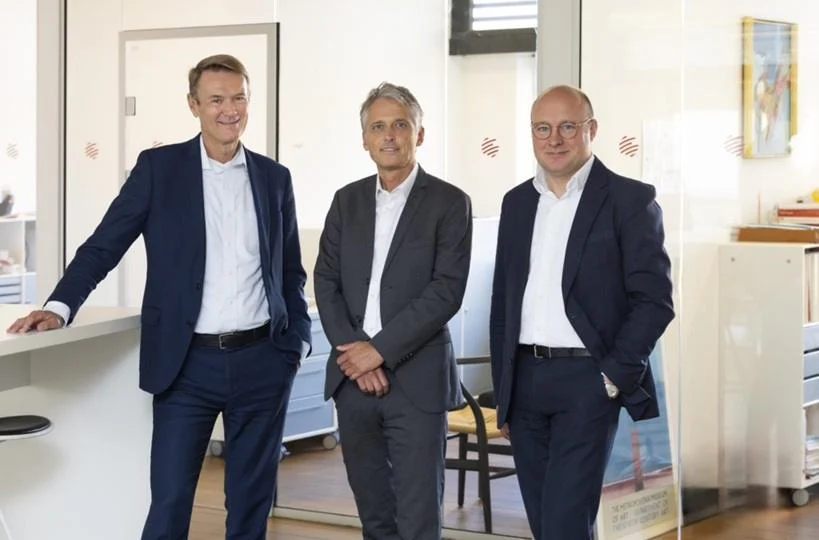
The Danish development finance institution Impact Fund Denmark has announced the successful final close of its SDG Fund II, a specialized investment vehicle that has secured DKK 5 billion (approximately USD $760 million) in total commitments. This milestone marks a significant achievement in the realm of blended finance, a strategic approach that combines public and private capital to address the massive financing gap required to meet the United Nations Sustainable Development Goals (SDGs). By focusing on private-sector enterprises within developing and emerging markets, the fund aims to catalyze sustainable economic growth while delivering competitive financial returns to its institutional backers.
The closure of SDG Fund II represents a sophisticated evolution in the partnership between the Danish government and the nation’s robust institutional investment sector. Structured as a public-private partnership (PPP), the fund’s capital composition is split with private investors contributing 60% of the total commitments, while Impact Fund Denmark provides the remaining 40%. This structure is designed to leverage the risk-taking capacity of public capital to mobilize much larger pools of private institutional wealth, which might otherwise be hesitant to enter high-growth but high-risk emerging markets.
The Mechanics of Blended Finance and Risk Mitigation
At the heart of SDG Fund II is a blended finance framework intended to bridge the gap between perceived risk and the urgent need for climate and development capital. Blended finance functions by using developmental or "concessional" capital to improve the risk-return profile of an investment for commercial investors. In the case of SDG Fund II, this is achieved through a tiered return structure. Private investors are prioritized, receiving returns of up to 6% before other distributions are made. To ensure alignment and upside potential, these investors also share in a portion of the gains once a 12% return threshold is surpassed.
The fund targets an ambitious annual return of 12% to 15%, positioning it as a commercially viable alternative to traditional private equity funds while maintaining a strict mandate for social and environmental impact. This dual-purpose approach is bolstered by a significant guarantee from the European Union. Under the European Fund for Sustainable Development Plus (EFSD+), the fund has secured a guarantee exceeding €71 million (USD $77 million). This guarantee acts as a financial backstop, covering potential losses on individual investments and significantly lowering the barrier for entry for pension funds and commercial banks.
This EU support is part of the broader "Global Gateway" strategy, a European initiative designed to mobilize up to €300 billion in investments between 2021 and 2027. The Global Gateway focuses on sustainable and high-quality projects, taking into account the needs of partner countries and ensuring lasting benefits for local communities. By integrating SDG Fund II into this framework, the EU and Impact Fund Denmark are positioning the fund as a key instrument in the geopolitical and economic effort to offer developing nations a transparent and sustainable alternative for infrastructure and industrial development.
Strategic Objectives and SDG Alignment
Impact Fund Denmark has identified four primary Sustainable Development Goals that will serve as the north star for the fund’s investment committee:
- SDG 5 (Gender Equality): The fund prioritizes investments in companies that promote women’s leadership, ensure equal pay, and provide products or services that disproportionately benefit women in emerging economies.
- SDG 8 (Decent Work and Economic Growth): By targeting the private sector, the fund aims to create high-quality jobs and foster entrepreneurship in regions where formal employment opportunities are often scarce.
- SDG 10 (Reduced Inequalities): Investments are directed toward projects that narrow the wealth gap and provide marginalized populations with better access to essential services and economic participation.
- SDG 13 (Climate Action): A core pillar of the fund is the green transition. This includes financing renewable energy projects, supporting energy efficiency, and backing companies that provide climate adaptation solutions.
The decision to focus on unlisted private companies is a strategic choice based on the economic realities of developing markets. In many emerging economies, the vast majority of GDP growth and job creation occurs within the private sector, often in companies that are not yet large enough or mature enough to be listed on public stock exchanges. By providing equity and mezzanine financing to these firms, SDG Fund II can capture the high growth potential of these markets while exercising greater influence over the environmental, social, and governance (ESG) standards of the portfolio companies.
A Coalition of Institutional Investors
The successful fundraising effort highlights the increasing appetite among Danish institutional investors for impact-oriented assets. The participants in SDG Fund II include some of the largest and most influential pension funds in Denmark, including P+, PenSam, PKA, PFA, and PBU. Additionally, Jyske Bank has joined the cohort, signaling a broadening interest from the commercial banking sector in blended finance structures.
The involvement of these pension funds is particularly noteworthy given their fiduciary duty to provide stable, long-term returns for their members. Their participation suggests a growing consensus that sustainable development in emerging markets is not merely a philanthropic endeavor but a necessary component of a diversified, future-proof investment portfolio. Lars Bo Bertram, CEO of Impact Fund Denmark, emphasized this shift, noting that the participation of five major pension funds and a leading bank demonstrates a clear market signal: private investors are increasingly recognizing the synergy between financial performance and sustainable global development.

Portfolio Deployment and Early Successes
SDG Fund II has already begun the process of capital deployment, with more than DKK 1 billion (USD $152 million) already committed to five pioneering companies across diverse geographies and sectors. These initial investments provide a roadmap for the fund’s future activities:
- Radiance Renewables (India): A leading developer of renewable energy solutions for commercial and industrial customers. As India seeks to decarbonize its massive industrial base, Radiance Renewables provides the infrastructure necessary for businesses to transition to solar power.
- Sturdee Energy (South Africa): An independent power producer focused on developing, owning, and operating solar and wind projects across Sub-Saharan Africa. This investment addresses the critical energy shortages that hinder economic growth in the region.
- Imperium Holding (Morocco): A major player in the tea packaging and value-added agricultural sector. This investment supports Morocco’s efforts to move up the value chain in global trade, creating local manufacturing jobs and increasing export revenue.
- Project Villeta (Paraguay): A project focused on the production of green fertilizers. This is a crucial development for South American agriculture, as it reduces reliance on carbon-intensive imported fertilizers and promotes sustainable farming practices.
- Spiro (Africa): An electric mobility company that is revolutionizing transportation in several African nations by deploying electric motorbikes and battery-swapping infrastructure. This addresses both urban air pollution and the high cost of fuel for local transporters.
The remaining DKK 4 billion (USD $608 million) is scheduled to be deployed by 2028. The fund’s management team is expected to maintain a rigorous selection process, seeking out companies that demonstrate both scalability and a measurable impact on the targeted SDGs.
The Broader Impact and Global Context
The launch and closing of SDG Fund II come at a critical juncture for international development finance. The "SDG Financing Gap"—the difference between what is currently being invested and what is needed to achieve the 2030 goals—has widened in the wake of the global pandemic and subsequent inflationary pressures. Recent estimates by the United Nations suggest that the gap now exceeds $4 trillion annually for developing countries.
Institutional capital, which manages hundreds of trillions of dollars globally, is the only pool of liquidity large enough to fill this void. However, institutional investors are often constrained by strict risk mandates. The Danish model, exemplified by SDG Fund II, offers a blueprint for how national development finance institutions can use relatively small amounts of public money to "crowd in" private capital at scale.
Furthermore, the fund’s emphasis on a "just transition" is vital. While the green transition is a global necessity, the costs of moving away from fossil fuels can be disproportionately high for developing nations. By investing in companies like Spiro and Project Villeta, SDG Fund II ensures that the benefits of new technologies—such as lower operating costs and reduced pollution—are accessible to those in emerging markets, rather than being confined to the developed world.
Future Outlook and Economic Implications
As SDG Fund II moves into its full investment phase, its progress will be closely watched by international observers and other development finance institutions (DFIs). The success of this fund could encourage other nations to adopt similar blended finance models, potentially unlocking billions of dollars in additional funding for the SDGs.
For the target markets in Africa, Asia, and Latin America, the influx of DKK 5 billion in equity-like capital represents more than just a financial boost. It brings with it the high ESG standards and operational expertise of Danish and European investors. This "knowledge transfer" is often as valuable as the capital itself, helping local businesses implement better governance, improve labor conditions, and adopt more efficient technologies.
Between now and 2028, the fund is expected to build a diversified portfolio of 20 to 30 companies. If the fund achieves its target returns of 12% to 15%, it will provide a powerful proof of concept: that investing in the world’s most challenging markets is not only a moral imperative but a sound financial strategy. In an era of geopolitical volatility and climate uncertainty, the Danish SDG Fund II stands as a testament to the power of collaborative finance in building a more resilient and equitable global economy.
