

Overall mortgage demand in the United States essentially flattened last week, reflecting a market grappling with persistent economic uncertainties and interest rates that continue to hover within a narrow, elevated range. This period of stagnation saw a noticeable shift in borrower behavior, with a discernible pullback from riskier adjustable-rate mortgage (ARM) products, as their perceived advantages diminish in the current financial landscape. The Mortgage Bankers Association’s (MBA) latest seasonally adjusted index reported a marginal increase of just 0.04% in total mortgage application volume compared to the preceding week, underscoring the prevailing equilibrium in borrower activity.
This near-flat trajectory in application volume comes at a time when the housing market navigates a complex interplay of factors, including inflation, Federal Reserve monetary policy, and evolving consumer confidence. The marginal uptick, while technically an increase, signifies a market holding its breath, with both potential homebuyers and those considering refinancing demonstrating a cautious approach to leveraging debt. The minimal movement suggests that current interest rate levels, while stable, are not low enough to stimulate a significant surge in demand, nor high enough to completely deter it.
Interest Rate Dynamics and Borrower Sentiments
A closer examination of interest rate movements reveals subtle shifts that influenced last week’s application trends. The average contract interest rate for 30-year fixed-rate mortgages with conforming loan balances, defined as $832,750 or less, saw a slight decrease to 6.57% from 6.59%. This marginal dip, while seemingly minor, offered a glimmer of relief to some prospective buyers. However, the associated points, which represent an upfront fee paid to the lender in exchange for a lower interest rate, simultaneously increased to 0.65 from 0.63, including the origination fee, for loans with a 20% down payment. This adjustment in points suggests that while the advertised rate might have softened slightly, the upfront cost for securing that rate became marginally more expensive, effectively neutralizing some of the perceived savings for borrowers. The interplay between rates and points is a critical component of a mortgage’s true cost, and borrowers often weigh these factors carefully when making financial decisions.
In contrast, the average rate for a five-year adjustable-rate mortgage (ARM) moved in the opposite direction, increasing to 5.79% from 5.68%. ARMs are inherently considered riskier than fixed-rate counterparts because their interest rates reset to prevailing market rates after an initial fixed period, typically five, seven, or ten years. While ARMs traditionally offered lower initial rates to compensate for this risk, making them attractive during periods of rapidly rising fixed rates, the current market dynamics are eroding this advantage. The spread between ARM rates and 30-year fixed rates is notably shrinking, reducing the financial incentive for borrowers to assume the inherent payment volatility associated with ARMs.
This shrinking spread, coupled with a general climate of economic uncertainty, has led to a significant decline in ARM popularity. Last week, ARM loans accounted for merely 7.6% of all mortgage applications, marking their lowest share since January and a considerable drop from a high of 9.6% observed in mid-May. This shift underscores a growing preference among borrowers for the stability and predictability offered by fixed-rate mortgages, even if it means accepting a slightly higher initial rate. The memory of rapid interest rate hikes over the past two years likely contributes to this risk aversion, as borrowers seek to lock in predictable monthly payments amidst broader economic volatility.
Expert Insights and Market Influences
Joel Kan, Vice President and Deputy Chief Economist at the MBA, provided crucial context to these trends. In a recent release, Kan stated, "Mortgage rates eased slightly last week as oil prices declined. As a result, mortgage applications increased modestly, with an uptick in purchase activity offsetting a smaller decline in refinances." This analysis highlights the interconnectedness of global commodity markets and domestic lending rates. A decrease in oil prices can signal a potential easing of inflationary pressures, which in turn can lead to a dip in long-term bond yields, such as the 10-year Treasury yield, to which mortgage rates are closely tethered. When bond yields fall, mortgage rates often follow suit, creating a brief window of opportunity for borrowers.
However, the "modest increase" in overall applications, as Kan noted, was not uniformly distributed. It was primarily driven by a slight rebound in purchase activity, which managed to counterbalance a more pronounced dip in refinance applications. This divergence in activity speaks volumes about the current state of the housing market, where the impetus for buying a new home appears stronger than the incentive to restructure existing mortgage debt.
Refinance Activity: A Lingering Freeze
Applications to refinance a home loan fell 1% for the week, signaling continued reluctance among homeowners to engage in this activity. While refinance applications were 9% higher than the same week one year ago, it is critical to contextualize this year-over-year comparison. One year ago, the average rate on the 30-year fixed mortgage was 22 basis points higher, making current rates appear relatively more attractive by comparison. However, the current rates, hovering around 6.57%, remain significantly higher than the ultra-low rates (sub-3% or 4%) many homeowners secured during the pandemic-era housing boom.
This disparity creates a "lock-in effect," where millions of homeowners are effectively anchored to their historically low mortgage rates. For them, refinancing at current rates would mean accepting a substantially higher monthly payment, a financially unviable option unless they are extracting significant equity or consolidating high-interest debt. Consequently, the refinance market has largely dried up, limited primarily to homeowners with specific financial needs or those who purchased homes with very high rates more recently and are now seeking a marginal improvement. The prospect of a robust refinance wave appears dim unless interest rates experience a substantial and sustained decline, a scenario not widely anticipated in the near term given the Federal Reserve’s ongoing commitment to inflation control.
Purchase Activity: Glimmers of Opportunity Amidst Headwinds
In contrast to the refinance market, applications for a mortgage to purchase a home rose by 1% last week. This modest increase is particularly noteworthy given the persistent challenges buyers continue to contend with, including lingering inflation and broader economic uncertainty. While only 3% higher than the same week one year ago, this consistent, albeit slow, growth in purchase applications indicates a resilient segment of demand.
Kan elaborated on this trend, stating, "Purchase applications remain ahead of 2025’s pace and have exhibited year-over-year growth for almost three months, as prospective homebuyers are finding opportunities in markets with ample inventory and easing home-price growth." This observation is crucial for understanding the nuanced shifts occurring within the housing market. For much of the pandemic era, the market was characterized by intense competition, limited inventory, and rapidly escalating home prices. The current environment, while still challenging, is showing signs of rebalancing in certain areas.
The Evolving Landscape of Housing Inventory and Prices
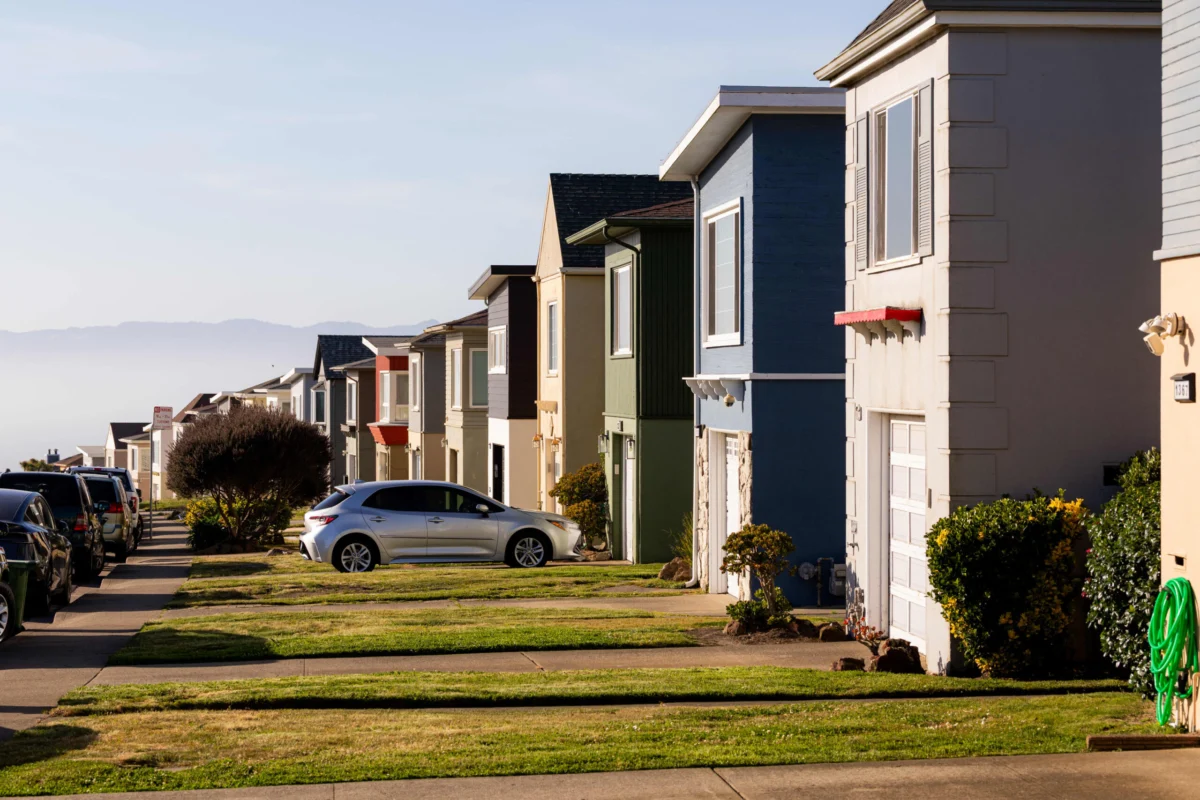
The mention of "ample inventory" and "easing home-price growth" points to a critical evolution in the housing market. Increased housing inventory provides more choices for prospective buyers, potentially reducing the intensity of bidding wars and allowing for more measured decision-making. This rise in available homes can stem from a variety of factors, including builders completing new construction projects, more existing homeowners deciding to sell (perhaps due to life changes or a slight improvement in their own financial positions), or a cooling of speculative demand. For instance, in regions like Daly City, California, where housing costs have historically been among the nation’s highest, even a modest increase in inventory or a deceleration in price appreciation can significantly impact buyer sentiment and activity.
Similarly, "easing home-price growth" does not necessarily mean widespread price declines but rather a moderation from the double-digit annual increases seen in recent years. This deceleration, if sustained, can gradually improve affordability for some buyers, particularly in conjunction with stable or slightly declining mortgage rates. While national median home prices remain elevated, the rate at which they are appreciating has slowed in many markets, creating a more sustainable environment for long-term homeownership. This gradual recalibration suggests a market moving away from the frenetic pace of recent years towards a more balanced, albeit still challenging, environment.
Broader Economic Context and Outlook
The trajectory of mortgage demand and interest rates is inextricably linked to the broader economic climate, particularly the actions of the Federal Reserve. The Fed’s aggressive campaign of interest rate hikes initiated in early 2022 to combat surging inflation has had a profound impact on borrowing costs across the economy, including mortgages. While the Fed directly controls the federal funds rate, its actions indirectly influence longer-term rates like those for mortgages through their effect on the bond market and inflation expectations.
Current inflation levels, though off their peak, remain above the Fed’s target of 2%. This persistent inflationary pressure means the central bank is likely to maintain a cautious stance, keeping the possibility of future rate adjustments on the table, even if pauses are implemented. This uncertainty permeates the mortgage market, as lenders and borrowers alike constantly assess the likelihood of further rate hikes or potential cuts.
The labor market also plays a pivotal role. A strong job market, characterized by low unemployment and wage growth, provides consumers with the financial stability and confidence necessary to undertake significant investments like home purchases. Conversely, any signs of weakening in employment could dampen demand, even if rates were to fall. The current robust employment figures, despite some recent cooling, continue to provide a foundational support for the housing market, ensuring a pool of financially capable buyers.
Looking ahead, the housing market is likely to remain in a state of delicate balance. While mortgage rates may fluctuate modestly week-to-week based on economic data releases, energy prices, and geopolitical events, a dramatic shift in either direction seems improbable without a significant change in the Federal Reserve’s policy or a major economic shock. For borrowers, this means continuing to adapt to a higher-rate environment than seen in the past decade, emphasizing the importance of strong financial planning, diligent rate shopping, and a clear understanding of loan terms. For the overall housing market, the current trends suggest a gradual transition towards greater equilibrium, where the frenzied pace of the past is replaced by a more considered and cautious approach from both buyers and sellers. This evolution, while perhaps less exciting for headline news, might ultimately lead to a more sustainable and healthy real estate ecosystem in the long run.
