

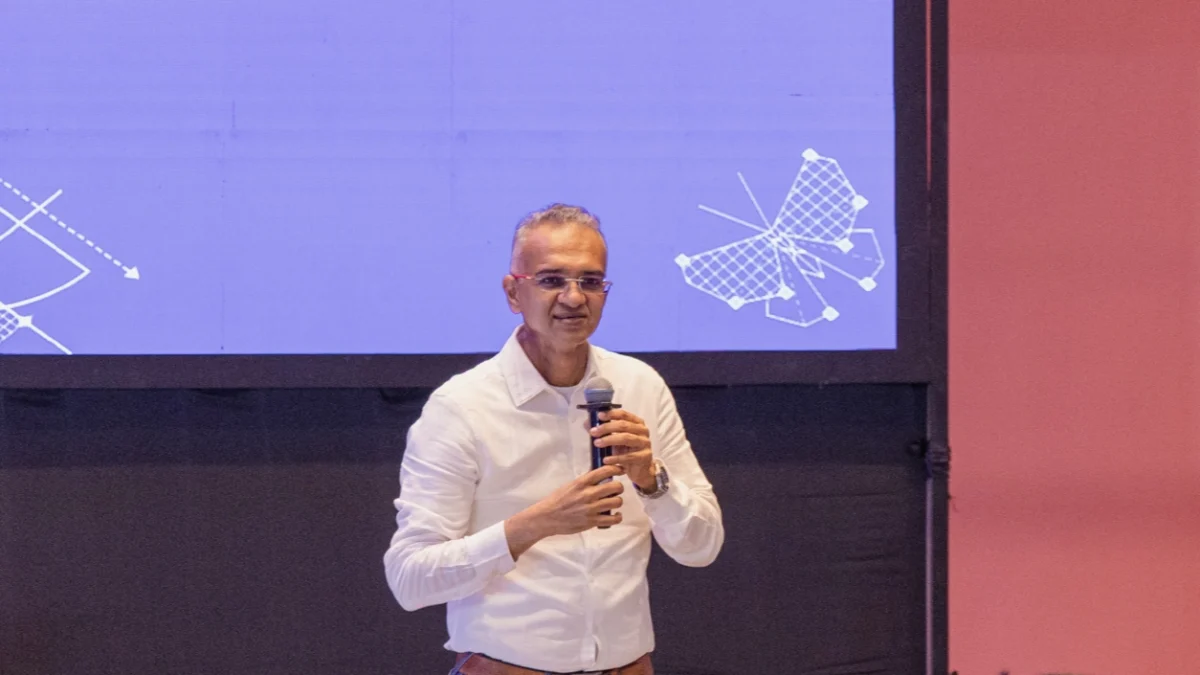
The landscape of digital finance in India is poised for a transformative shift as the National Payments Corporation of India (NPCI) integrates advanced artificial intelligence to catalyze the next stage of growth for the Unified Payments Interface (UPI). Speaking at Mumbai Tech Week (MTW) 2026, Dilip Asbe, the Managing Director and CEO of NPCI, outlined a strategic roadmap aimed at propelling UPI from its current standing of 750 million daily transactions to a milestone of over one billion. This ambitious expansion relies heavily on the deployment of AI to address three critical pillars of the fintech ecosystem: user acquisition, fraud mitigation, and the democratization of credit.
Asbe’s vision highlights a shift from basic transactional growth to a sophisticated, data-driven environment where AI acts as the primary interface between the technology and the user. By leveraging India’s vast and unique datasets, the NPCI intends to move beyond general-purpose large language models (LLMs) toward specialized small language models (SLMs) that are tailored specifically for the nuances of Indian finance and linguistics.
The Strategic Role of AI in Scaling Digital Payments
The primary objective for the NPCI over the next 24 months is to bring an additional 500 million users into the UPI fold. To achieve this, the organization is working in close coordination with the Reserve Bank of India (RBI) and the central government. Asbe noted that while the current growth of UPI has been historic, reaching the "last mile" of users—those in rural areas or those with limited digital literacy—requires a more intuitive and protective system.
AI is expected to play a decisive role in making onboarding simpler through multilingual and voice-activated solutions. In a country with 22 official languages and hundreds of dialects, traditional text-based interfaces can act as a barrier to entry. While NPCI launched "Hello UPI," a voice-assistant-based interactive system, in 2023, adoption has remained in its nascent stages. Asbe acknowledged that for voice to become a critical component, the underlying models must achieve higher levels of accuracy and lower latency. The goal is to allow a user to perform a transaction simply by speaking to their device in their native tongue, reducing the friction currently associated with navigating complex app interfaces.
Beyond user acquisition, AI is being positioned as a shield against the rising tide of digital financial crime. The NPCI aims to use machine learning algorithms to identify "mule" accounts—bank accounts used by criminals to launder stolen money—and to detect fraudulent patterns in real-time. By analyzing millions of transactions per second, AI can flag suspicious behavior before the money leaves the ecosystem, thereby maintaining public trust in digital infrastructure.
From Transactions to Credit Distribution
One of the most significant shifts in the UPI roadmap is the move toward credit distribution. Historically, UPI has been a "pay-now" system, facilitating immediate transfers from a user’s bank account. However, the NPCI is now looking to leverage the "digital footprints" created by millions of small merchants and individual users to provide formal credit.
Small-scale vendors, who often lack traditional collateral or credit histories, have built significant transaction records through UPI. AI models can analyze these transaction flows to assess creditworthiness, allowing banks and non-banking financial companies (NBFCs) to offer micro-loans and working capital. This "credit on UPI" initiative is expected to bring millions of unbanked or underbanked individuals into the formal economy, further solidifying India’s position as a global leader in Digital Public Infrastructure (DPI).
The Chronology of UPI’s Evolution and AI Integration
To understand the current trajectory, it is essential to look at the timeline of UPI’s development and its gradual embrace of automation and intelligence:
- 2016: Launch of UPI by the NPCI with 21 member banks. The system was designed to simplify peer-to-peer (P2P) and peer-to-merchant (P2M) transactions.
- 2020-2022: The COVID-19 pandemic acted as a catalyst, leading to a massive surge in digital adoption. UPI transactions crossed the 5 billion monthly mark during this period.
- 2023: NPCI introduced "Hello UPI" and "Conversational Payments," marking the first significant attempt to integrate AI and voice recognition into the payment flow.
- 2024: The launch of "FIMI," India’s first AI language model tailored specifically for payments. FIMI was designed to resolve user disputes, such as canceling mandates or addressing failed transactions.
- 2025: Pilot programs for "agentic commerce" were conducted in collaboration with fintech firms like Razorpay, demonstrating how AI agents could handle end-to-end shopping and payment tasks for users.
- 2026 (Present): NPCI focuses on scaling SLMs and setting a deadline for market share caps to ensure a competitive and resilient ecosystem.
Specialized AI: The Rise of Small Language Models (SLMs)
A key takeaway from Asbe’s address at Mumbai Tech Week is the preference for Small Language Models over the massive, generalized models developed by global tech giants. Asbe argued that the Indian finance ecosystem possesses a "very rich data set" that can be used to train models that are "sharp, specific, and as deterministic as possible."
Unlike general AI, which can sometimes produce "hallucinations" or incorrect information, financial AI must be precise. By focusing on SLMs, Indian banks and fintech companies can create tools that are more cost-effective to run, faster in response time, and more secure in handling sensitive financial data. The FIMI model already serves over a million users, proving that specialized AI can effectively manage high-volume tasks like dispute resolution without human intervention.
Regulatory Frameworks and Global Comparisons
The push for AI in finance is not unique to India, but the regulatory approach differs significantly from Western markets. In the United States, companies like Coinbase and Robinhood are experimenting with AI agents that can trade on a user’s behalf. Similarly, OpenAI’s integration with personal financial data allows for automated advisory services.
However, the NPCI is treading carefully, emphasizing the need for a robust regulatory framework before a wider rollout of agentic finance. Asbe stressed that user protection is paramount. If an AI agent makes a mistake or an unauthorized transaction, the system must have a clear "audit trail" to examine the instructions and the consent provided by the human user. This focus on "explainable AI" and accountability is intended to prevent systemic risks that could arise from autonomous financial agents.
Competition and the 30% Market Share Cap
Despite the technological advancements, the UPI ecosystem faces a challenge regarding market concentration. Currently, two major players—Walmart-owned PhonePe and Google Pay—control more than 80% of the market share. This dominance has led to concerns regarding "concentration risk," where a technical failure in one of these apps could disrupt a significant portion of the national economy.
To address this, the NPCI has proposed a 30% market share cap for third-party app providers (TPAPs). Initially suggested several years ago, the deadline for compliance has been deferred multiple times and is currently set for December 31, 2026.
Asbe noted that the lack of a "viable commercial model" for smaller players is a primary reason for this concentration. Currently, UPI transactions are free for users and merchants (Zero MDR), which means apps must find alternative ways to monetize, such as through lending or insurance. Asbe believes that if the industry can establish sustainable business models, newer players will invest more heavily, naturally balancing the market.
In an effort to lead by example, the NPCI spun off its BHIM (Bharat Interface for Money) app into a separate subsidiary in 2024. While BHIM currently holds only about 1% of the market, the goal is to position it as a "sovereign and secure alternative" that can compete with private players without necessarily aiming for total dominance.
Broader Impact and Future Implications
The integration of AI into UPI has implications that extend far beyond India’s borders. As India exports its UPI technology to nations like Singapore, the UAE, France, and Nepal, the AI-driven security and onboarding features developed at home will become part of a global standard for real-time payments.
For the domestic economy, the successful deployment of AI could lead to a significant increase in financial velocity. By reaching the one-billion-transaction-per-day mark, India would solidify its status as the world’s most active digital payment market. The shift toward AI-powered credit distribution also promises to boost GDP by providing capital to the "missing middle"—small businesses that have been historically excluded from the banking system.
However, the path forward is not without hurdles. The success of voice-based payments depends on the availability of high-speed internet in rural areas and the continued improvement of natural language processing for regional dialects. Furthermore, the 2026 deadline for market share caps will be a pivotal moment for the industry, potentially forcing a reshuffle of the competitive landscape.
As the NPCI moves toward this AI-centric future, the focus remains on balancing rapid innovation with the stability and security required for a national payment backbone. With the government, the central bank, and the private sector aligned, the next phase of UPI is set to redefine how a billion people interact with money.
