

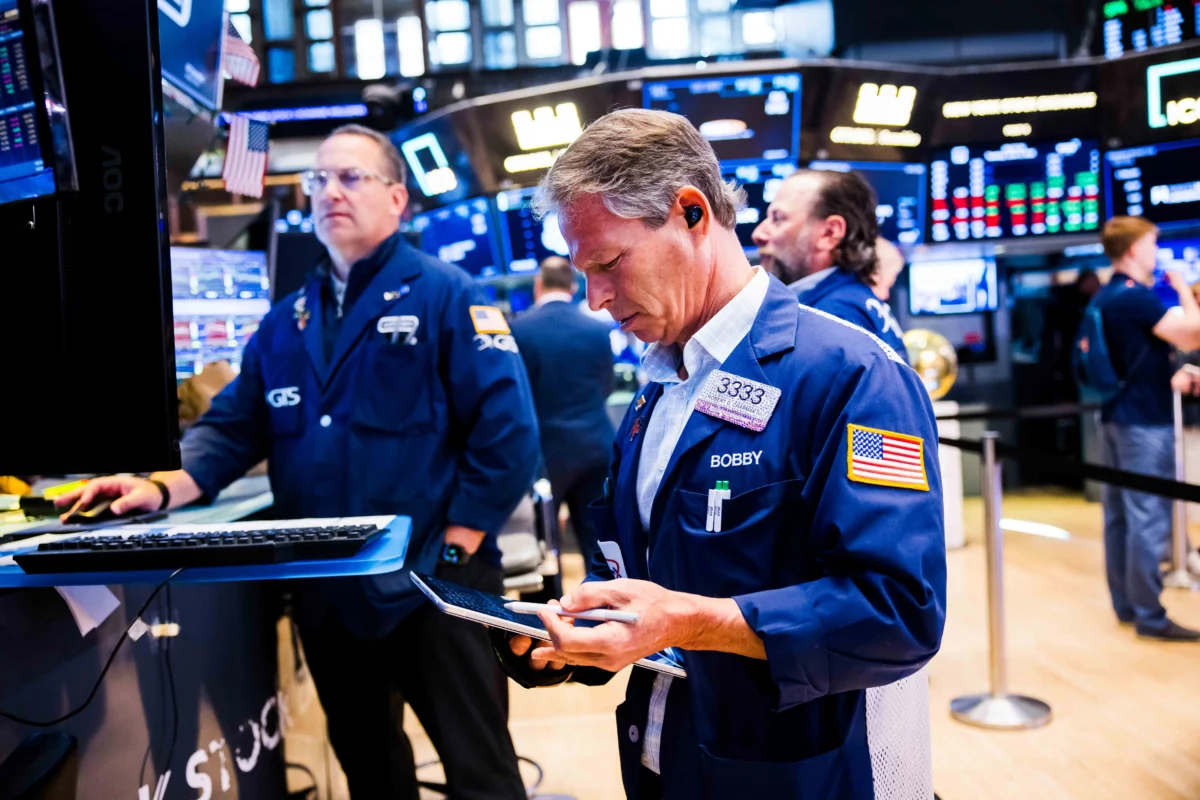
The intersection of global business journalism and real-time financial data has reached a pivotal juncture as media conglomerates prioritize hyper-speed information delivery to meet the demands of an increasingly volatile global market. As of 2026, the landscape of financial reporting is no longer defined merely by editorial commentary but by the seamless integration of high-frequency data feeds, proprietary analytics, and strategic partnerships between news organizations and data providers. The evolution of entities such as CNBC under the umbrella of Versant Media, LLC, illustrates a broader industry shift toward data-centric journalism, where the accuracy and speed of market "snapshots" are as critical to the consumer as the reporting itself.
The Structural Shift in Financial Media Ownership
The emergence of Versant Media, LLC as a primary steward of major financial news outlets marks a significant consolidation phase in the media industry. By 2026, the traditional boundaries between newsrooms and data warehouses have blurred. Versant Media has positioned itself not just as a broadcaster, but as a comprehensive financial technology and information service. This transition reflects a decade-long trend where media companies have sought to internalize data capabilities to reduce reliance on third-party vendors while simultaneously forging high-level alliances with established data giants like Reuters.
The operational philosophy of these modern media companies centers on the "real-time snapshot." In an era where algorithmic trading accounts for a vast majority of market volume, the delay of even a few seconds can be the difference between a profitable trade and a significant loss for retail investors. While institutional players utilize direct fiber-optic feeds, the general public relies on platforms that can synthesize complex market movements into digestible, real-time updates. The 2026 model of financial news delivery emphasizes a tiered information structure: real-time data for premium subscribers and a standard 15-minute delay for general public access, ensuring that the infrastructure remains economically viable while fulfilling the mandate of public information.
A Chronology of Digital Integration (2021–2026)
To understand the current state of the industry, one must examine the chronological milestones that led to the hyper-integrated environment of 2026.
2021–2022: The Post-Pandemic Retail Boom
Following the surge in retail investing during the early 2020s, news organizations began heavily investing in mobile-first platforms. The focus was on "gamifying" financial news, making stock quotes and market analysis accessible to a demographic that had previously been underserved by traditional financial media.
2023–2024: The Rise of Generative AI in Financial Reporting
The mid-2020s saw the widespread adoption of artificial intelligence to automate routine market updates. This allowed human journalists to focus on investigative reporting and deep-dive analysis, while AI systems handled the instantaneous reporting of earnings calls and economic data releases. It was during this period that Versant Media began its aggressive acquisition strategy, consolidating smaller fintech news outlets under a single technological framework.
2025: The Standardization of Low-Latency Feeds
By 2025, the industry reached a consensus on market data terms of service. Regulatory bodies pushed for clearer disclaimers regarding data latency, leading to the standardized "15-minute delay" warnings seen across digital platforms today. This year also marked the strengthening of the Reuters-CNBC data partnership, creating a formidable pipeline of global business intelligence.
2026: The Era of the Unified Financial Ecosystem
Currently, the financial media landscape is characterized by a "unified ecosystem" approach. Outlets are no longer just websites or television channels; they are interactive dashboards that provide global business news, stock quotes, and market analysis in a single, synchronized interface.
Supporting Data: The Value of Information Speed
The economic implications of data delivery speed are profound. Industry reports from the first quarter of 2026 suggest that financial news platforms that reduced their internal data latency by just 100 milliseconds saw a 12% increase in user retention. Furthermore, the volume of data processed by global newsrooms has increased by an estimated 400% since 2022.
Market data provided by Reuters and integrated into the Versant Media network handles billions of data points daily. For instance, a standard market snapshot during a high-volatility event, such as a Federal Reserve interest rate announcement, requires the simultaneous processing of thousands of equity symbols, currency pairs, and commodity futures. The logistical challenge is not just the delivery of these numbers, but the contextualization of them through "Regular Article" formats that explain the ‘why’ behind the ‘what.’
Subscription models have also shifted. Data indicates that 65% of active traders now pay for "zero-latency" news packages, a significant increase from 30% in 2023. This shift has provided the capital necessary for media companies to maintain the expensive infrastructure required for real-time global reporting.
Official Responses and Industry Sentiment
Executives within the Versant Media group have frequently emphasized the dual responsibility of modern media: speed and accuracy. In a recent internal briefing, a spokesperson for the company stated, "Our mission in 2026 is to bridge the gap between institutional-grade data and the retail investor. By partnering with entities like Reuters, we ensure that our global audience receives the same quality of information as the world’s largest trading floors, albeit with the necessary regulatory disclosures regarding data snapshots."
Industry analysts have noted that this move toward data-heavy journalism has changed the profile of the modern journalist. "We are seeing a new breed of financial reporter," says Dr. Elena Vance, a media analyst at the Global Institute for Journalism. "They must be as comfortable with a Bloomberg Terminal or a Python script as they are with a microphone. The 2026 reporter doesn’t just tell you the market is down; they use real-time analytics to show you exactly which sectors are dragging the index and why."
However, the transition has not been without its critics. Consumer advocacy groups have raised concerns about the "data divide," where those unable to afford premium, real-time feeds are left at a disadvantage. In response, media companies have pointed to their "Market Data Terms of Use," which provide transparent guidelines on how data is sourced and the nature of the delays involved for free-to-access content.
Broader Impact and Implications for the Global Economy
The integration of real-time data into mainstream news has several long-term implications for the global economy. First, it has led to a more informed—though perhaps more reactive—investor base. The immediate availability of global business news means that regional market shocks are transmitted globally almost instantaneously. This "synchronization" of global markets requires more robust risk management tools for both individual and institutional investors.
Second, the role of "Market Data Terms of Service and Disclaimers" has become a cornerstone of financial literacy. Understanding that a stock quote is a "real-time snapshot" versus a "delayed feed" is now a fundamental skill for anyone participating in the digital economy. Media companies have taken on an educational role, providing tutorials and documentation to help users navigate the complexities of market data.
Third, the reliance on a few major data providers, such as Reuters, creates a centralized point of information that must be protected with rigorous cybersecurity measures. As financial news becomes synonymous with financial data, the threat of misinformation or data tampering becomes a matter of national economic security. Versant Media and its peers have invested heavily in blockchain-based verification systems to ensure that the data appearing on a user’s screen is authentic and untampered.
Conclusion: The Future of the Financial Information Stream
Looking ahead, the trajectory of financial media suggests an even deeper immersion into the "meta-data" of the markets. We are moving toward a future where "mini-video players" and interactive charts are not just features of an article, but the primary mode of communication. The footer of a 2026 financial news site—with its copyright to Versant Media and its nods to Reuters—is a testament to a complex, multi-layered industry that operates 24/7 to keep the wheels of global commerce turning.
As the industry moves toward 2030, the focus will likely shift toward hyper-personalization, where data feeds are tailored to an individual’s specific portfolio in real-time, delivered through augmented reality or direct-to-device neural interfaces. For now, the standard of excellence remains the accurate, timely, and context-rich reporting provided by the consolidated media giants of today. The "Global Business and Financial News" mission continues, driven by the twin engines of editorial integrity and high-velocity data.
