

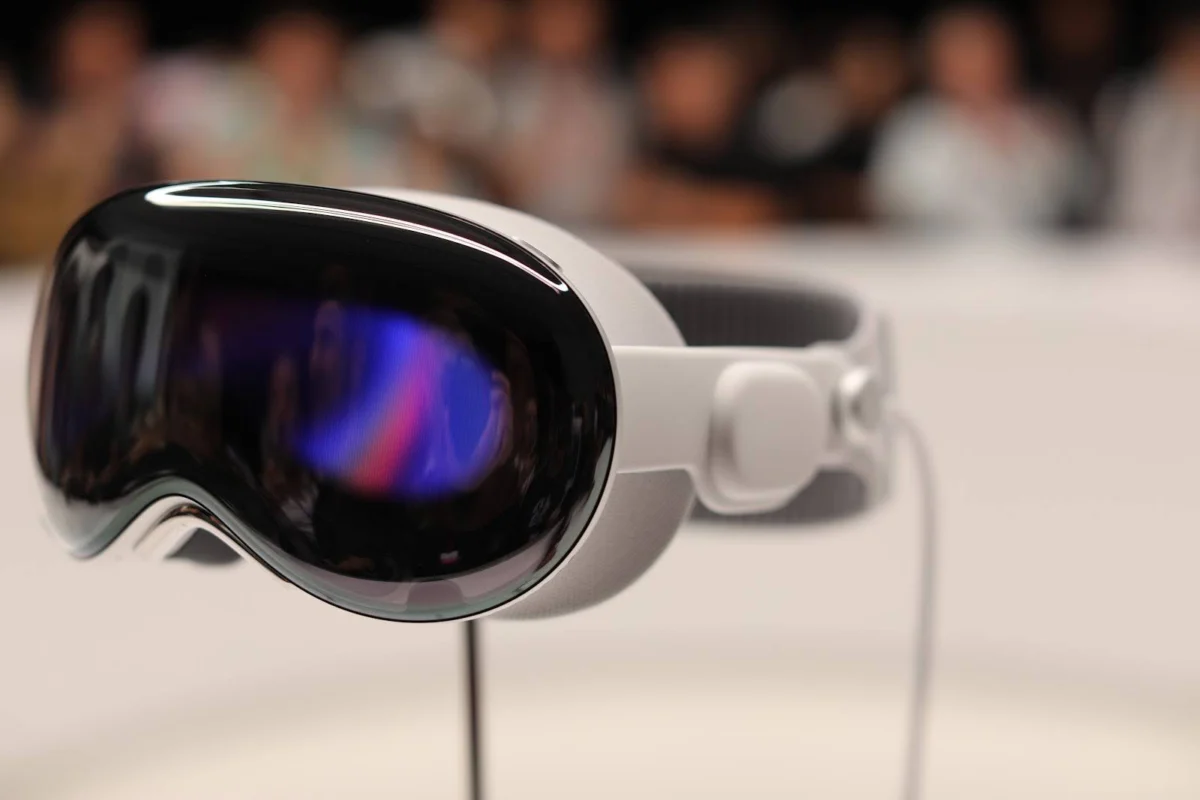
In a move that signals a significant realignment within the upper echelons of Silicon Valley’s hardware landscape, Paul Meade, the Apple vice president who spearheaded the development of the Vision Pro headset, has officially departed the company to join OpenAI’s burgeoning hardware division. The transition, first reported by Bloomberg’s Mark Gurman, comes at a critical juncture for Apple as it navigates a leadership transition and a strategic pivot away from high-end mixed-reality headsets toward more accessible, AI-integrated smart glasses. Meade’s exit is not merely a loss of technical expertise for Apple but a symbolic shift in the ongoing talent war between legacy tech giants and the rising titans of generative artificial intelligence.
The Architect of Spatial Computing
Paul Meade’s tenure at Apple was defined by his leadership of the Vision Products Group (VPG), a specialized division tasked with realizing Tim Cook’s vision of "spatial computing." As the vice president in charge of the Vision Pro, Meade was responsible for overseeing the complex integration of hardware and software required to deliver a high-fidelity mixed-reality experience. Under his guidance, Apple developed the R1 chip, a dedicated processor designed specifically to handle the input from 12 cameras, five sensors, and six microphones, ensuring that content felt as though it were appearing right in front of the user’s eyes in real-time.
Beyond the Vision Pro, Meade was also reportedly the lead executive for Apple’s next generation of wearable technology: AI-powered smart glasses. These devices, currently slated for a 2027 release, represent Apple’s attempt to distill the capabilities of the Vision Pro into a form factor that is lightweight, socially acceptable, and significantly more affordable. Meade’s departure leaves a vacuum at the head of this project, which is widely considered to be Apple’s most vital response to the burgeoning success of the Ray-Ban Meta smart glasses.
The Vision Pro’s Market Reality
The context of Meade’s departure is inextricably linked to the commercial trajectory of the Vision Pro. Launched with significant fanfare at a $3,499 price point, the device was hailed as a technical marvel but struggled to find a foothold in the mass market. Industry data from mid-2025 suggested that Apple had significantly scaled back production targets for the Vision Pro, dropping from an initial estimate of 700,000–800,000 units to fewer than 400,000.
High costs, the weight of the device, and a "tethered" battery pack were cited as primary friction points for consumers. Furthermore, the lack of a "killer app" beyond enterprise productivity and high-end media consumption led Apple to internalize a hard truth: the future of wearables may not lie in immersive, enclosed headsets, but in "ambient" devices that augment reality without replacing it. This realization prompted the reported shelving of a direct Vision Pro successor in favor of the smart glasses project Meade was leading.
The John Ternus Transition and Organizational Friction
The timing of Meade’s exit coincides with the imminent elevation of John Ternus to the role of Apple CEO, succeeding Tim Cook. Ternus, who previously served as the Senior Vice President of Hardware Engineering, has been characterized as a pragmatic leader focused on streamlining Apple’s product lines and integrating AI across the entire ecosystem.
As part of his preparation for the CEO role, Ternus has initiated a comprehensive "shake-up" of the hardware engineering department. This reorganization aimed to break down the silos between the Vision Products Group and the broader hardware teams responsible for the iPhone and Mac. However, reports suggest that this restructuring was met with resistance. Several long-standing vice presidents, including Meade, reportedly felt that the new hierarchy effectively demoted their roles by stripping them of the autonomy they enjoyed under the previous administration.
In the high-stakes environment of Cupertino, where executive prestige is often tied to the independence of one’s division, the move toward a more centralized engineering structure under Ternus appears to have been a catalyst for Meade’s decision to seek opportunities elsewhere.

OpenAI’s Hardware Ambitions and the Jony Ive Connection
Meade’s move to OpenAI is perhaps the most telling aspect of this transition. OpenAI, led by Sam Altman, has been quietly assembling a "dream team" of hardware experts to build a dedicated AI device. This project is being developed in collaboration with Jony Ive, Apple’s legendary former Chief Design Officer, and his design firm, LoveFrom.
Altman has described the forthcoming OpenAI device as something fundamentally different from the smartphone—a device that is "more peaceful and calm than an iPhone." While details remain scarce, the involvement of Meade suggests that the device will likely leverage sophisticated sensors and perhaps augmented reality components to provide a seamless interface for OpenAI’s large language models (LLMs).
The recruitment of Meade follows a pattern of OpenAI poaching top-tier Apple talent. In late 2024, Tang Tan, Apple’s former vice president of iPhone and Watch product design, also joined LoveFrom to work on the OpenAI hardware project. By bringing Meade into the fold, OpenAI gains an executive who understands how to manage the supply chains and engineering hurdles of cutting-edge wearable technology, bridging the gap between Ive’s aesthetic vision and a functional consumer product.
Chronology of Events Leading to the Departure
- June 2023: Apple officially unveils the Vision Pro at WWDC, with Paul Meade at the helm of hardware development.
- February 2024: The Vision Pro launches in the U.S. to mixed reviews regarding its weight and price.
- October 2025: Reports surface that Apple has "shelved" work on a second-generation high-end Vision Pro to focus on "Opal," the internal codename for affordable AI smart glasses.
- April 2026: John Ternus is identified as the clear successor to Tim Cook; a major hardware engineering reorganization begins.
- June 2026: Rumors of executive dissatisfaction at Apple peak; Bloomberg confirms Paul Meade’s departure for OpenAI.
Comparative Analysis: Apple vs. Meta vs. OpenAI
The departure of Meade highlights the three-way battle currently defining the future of personal computing:
- Apple’s Approach: Focuses on premium hardware integration and "Spatial Computing." After the Vision Pro’s slow start, the company is pivoting toward AI-driven glasses that utilize the "Apple Intelligence" framework to compete with Meta.
- Meta’s Approach: Mark Zuckerberg has successfully occupied the mid-tier market with the Quest 3 and found a surprise hit with the Ray-Ban Meta smart glasses. Meta’s strategy relies on social integration and a "glasses-first" AR future.
- OpenAI’s Approach: Aims to bypass the "app-based" economy of the smartphone entirely. By building a device designed around natural language and intent, OpenAI hopes to create the first "AI-native" hardware, potentially making the iPhone’s interface feel legacy.
Broader Implications for the Tech Industry
Meade’s exit is a microcosm of a larger trend: the migration of hardware talent from traditional consumer electronics companies to AI-first organizations. For decades, Apple was the undisputed destination for the world’s best hardware engineers. However, as AI becomes the primary driver of innovation, the center of gravity is shifting toward companies like OpenAI, which offer the opportunity to define a new category of computing from the ground up.
For Apple, the challenge under John Ternus will be to prove that the company can still innovate at the speed of its rivals while maintaining its signature focus on privacy and polished user experiences. The loss of Meade is a setback for the smart glasses project, but Apple’s deep bench of engineering talent means the project is unlikely to be derailed. However, it does increase the pressure on Ternus to deliver a "win" in the wearables space to justify the billions of dollars invested in the Vision platform.
Conclusion and Outlook
As of late June 2026, neither Apple nor OpenAI has issued a formal statement regarding Paul Meade’s new role. However, the move is widely seen as a victory for Sam Altman’s vision of an AI-centric future. Meade’s expertise in miniaturization, sensor fusion, and high-performance mobile silicon will be invaluable to OpenAI as it attempts to move beyond the browser and into the physical world.
For the consumer, this executive musical chairs suggests that the next two years will be a period of intense competition in the "face-worn" tech category. Whether the winner is Apple’s refined smart glasses, Meta’s social-centric AR, or OpenAI’s "calm" AI device, the departure of Paul Meade marks the end of the first chapter of the spatial computing era and the beginning of the AI hardware revolution.
