

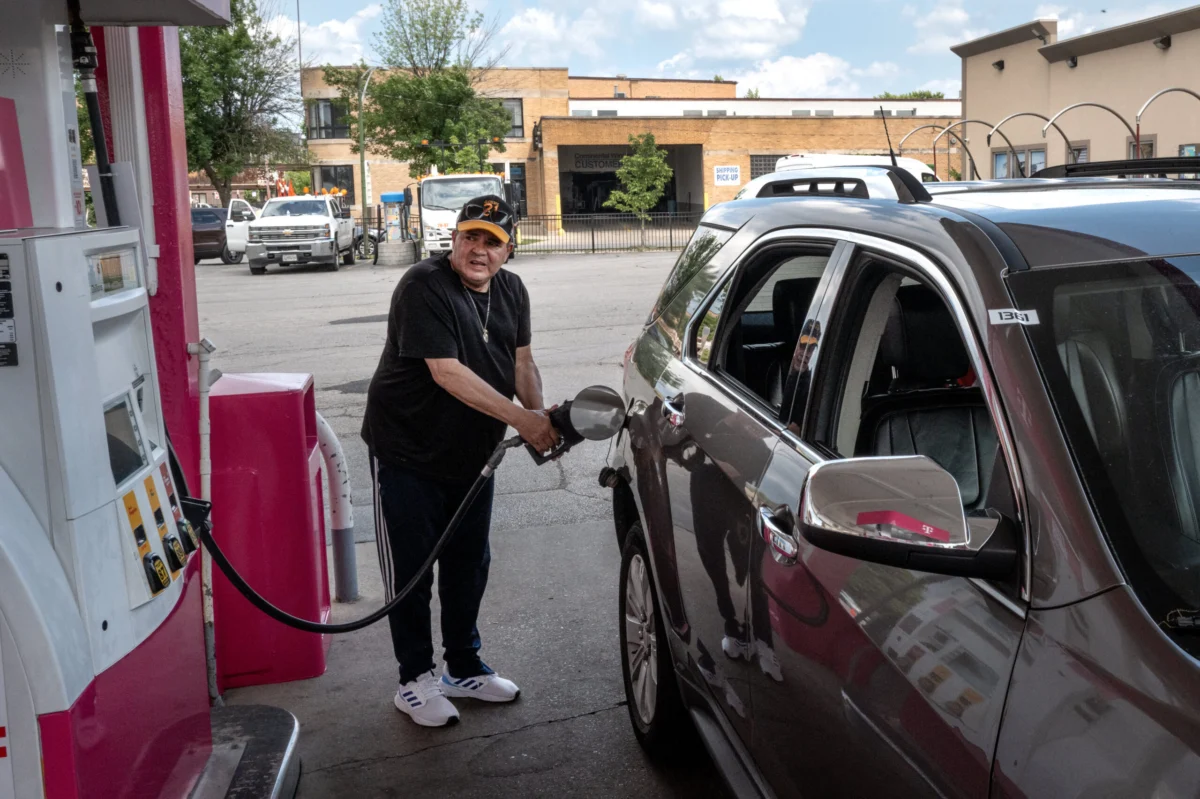
The Federal Reserve concluded its inaugural meeting under newly appointed Chairman Kevin Warsh on Wednesday, opting to maintain its benchmark interest rate at current levels. This decision, while widely anticipated by many market observers, delivers little immediate reprieve for American consumers grappling with the persistent burden of elevated gas prices and a broader affordability crisis gripping the nation. Chairman Warsh, sworn in just weeks prior on May 22, 2026, in a ceremony held in the East Room of the White House, now finds himself at the helm of the central bank during a period of complex economic challenges and significant geopolitical uncertainty.
The move to keep rates unchanged marks a pivotal moment for the new Fed leadership, signaling a cautious approach as the central bank navigates its dual mandate of achieving maximum employment and maintaining stable prices. Despite earlier indications from Warsh, who had previously hinted at a potential inclination towards lower borrowing costs, the economic landscape has shifted dramatically. Recent data revealed that inflation surged at its fastest pace in three years last month, with the May 2026 Consumer Price Index (CPI) report highlighting an alarming acceleration in the cost of living. This inflationary pressure, significantly exacerbated by a sharp spike in energy costs—a direct consequence, economists suggest, of the ongoing conflict in Iran—has presented a formidable obstacle to any dovish pivot. Experts widely believe that these inflationary headwinds played a decisive role in the Federal Open Market Committee’s (FOMC) decision, and indeed, may compel the central bank to consider a path of further rate hikes in the near future, a trajectory that stands in stark contrast to the expressed desires of President Donald Trump for reduced borrowing costs.
The Chairman’s Debut and the Inflationary Challenge
Kevin Warsh’s ascension to the Federal Reserve chairmanship was met with considerable anticipation. A former member of the Federal Reserve Board of Governors from 2006 to 2011, Warsh brings a wealth of experience, albeit from a different economic era marked by the Global Financial Crisis. His nomination by President Trump, and subsequent Senate confirmation, signaled a potential shift in monetary policy philosophy, with many observers expecting a more growth-oriented approach. However, the economic realities confronting him upon assuming office have quickly underscored the complexities of the Fed’s role in a high-inflation environment.
The Federal Reserve operates under a dual mandate from Congress: to foster maximum employment and stable prices. Achieving this balance often involves difficult trade-offs. For several months leading up to Warsh’s appointment, the Fed had been engaged in an aggressive campaign of interest rate hikes to combat persistent inflation that surged in the post-pandemic period. While these hikes had begun to show some effect, bringing headline inflation down from its peak, the latest data indicate a resurgence of price pressures.
The May 2026 CPI report served as a stark reminder of these realities. Headline inflation, which includes volatile food and energy prices, posted its most significant year-over-year increase since May 2023, reaching an annualized rate of 5.2%. This figure surpassed economists’ expectations of 4.9% and marked an unwelcome acceleration from the previous month’s 4.5%. Core inflation, which strips out these more volatile components to provide a clearer picture of underlying price trends, also remained stubbornly elevated at 3.8% year-over-year, indicating broad-based price increases beyond just energy. The primary driver of this acceleration was undoubtedly the energy sector, with gasoline prices soaring by 18% month-over-month. This rapid increase has had a cascading effect, pushing up transportation costs for businesses and consumers alike, and contributing to higher prices across a range of goods and services, from groceries to manufactured goods.
Stephen Kates, a Certified Financial Planner and financial analyst at Bankrate, encapsulated the gravity of the situation, stating, "The Fed can no longer claim there is a balance of risks; inflation is the problem." This sentiment reflects a growing consensus among economists that the inflationary pressures are no longer transient but have become deeply entrenched, necessitating a firm response from the central bank. The Fed’s previous efforts to bring inflation down to its target of 2% have faced significant headwinds, making the current period particularly challenging for policymakers.
Geopolitical Undercurrents and Economic Pressures
The inflationary surge is not solely a domestic phenomenon; it is inextricably linked to global geopolitical events. The reference to the "Iran war" points to a significant source of uncertainty and economic disruption. While specific details of the conflict remain subject to ongoing news cycles, its economic ramifications are clear: disruptions to global oil supplies, increased shipping costs due to heightened security risks in key waterways like the Strait of Hormuz, and a general elevation of geopolitical risk premiums across financial markets. These factors directly translate into higher energy prices and potential supply chain bottlenecks, feeding into the broader inflationary narrative.
The conflict has also likely contributed to volatility in commodity markets beyond oil, impacting agricultural products and industrial metals, further complicating the inflation picture. For instance, disruptions in key trade routes or increased demand for certain materials for military production could push up global prices. This external shock places the Fed in a difficult position, as monetary policy tools are inherently less effective at addressing supply-side inflationary pressures stemming from geopolitical conflicts. The central bank must weigh the risks of overtightening and potentially triggering a recession against the imperative of taming inflation and safeguarding the purchasing power of the dollar. The global economic outlook, already fragile from lingering effects of previous crises, is further clouded by such uncertainties, making the Fed’s task even more complex.
Expert Perspectives on the Fed’s Stance
The decision to hold rates steady, rather than cut them, reflects the FOMC’s assessment that the immediate priority must remain combating inflation. While a rate hike was not implemented at this particular meeting, the Fed’s statement indicated a readiness to adjust policy as needed, leaving the door open, or even nudged open further, for such a move in the coming months if inflationary pressures persist or intensify. This potential trajectory runs counter to the preferences of President Trump, who has consistently advocated for lower interest rates to stimulate economic growth, particularly in the run-up to the next election cycle. The independence of the Federal Reserve from political interference is a cornerstone of its effectiveness, and this decision underscores the institution’s commitment to its mandate despite external pressures.
Wayne Winegarden, an economist at the conservative think tank Pacific Research Institute, highlighted the broader societal implications of persistently high rates. "It makes buying a house more difficult, revolving credit is now more difficult, owning a car is now more expensive," Winegarden observed. He elaborated that while some product rates are fixed and not immediately influenced by Fed actions, "if you are locking in at a higher rate, it’s just another way we are making life unaffordable for American families." This perspective resonates deeply with the experiences of countless households struggling to manage rising costs for housing, transportation, and daily necessities. The cumulative effect of high inflation and elevated borrowing costs creates a formidable barrier to upward mobility and financial stability for many, particularly lower-income households and young families attempting to enter the housing market.
The Direct Impact on American Households
The Federal Reserve’s benchmark, known as the federal funds rate, is the rate at which commercial banks lend reserves to each other overnight. While seemingly abstract, this rate has a profound and pervasive ripple effect across the entire financial system, directly influencing a wide array of consumer borrowing and savings rates. When the Fed raises its benchmark rate, borrowing generally becomes more expensive for both consumers and businesses. This increased cost of capital is intended to cool economic activity and, by extension, rein in inflation. However, the degree to which different types of loans and savings accounts are impacted varies significantly.
Credit Cards and Short-Term Borrowing
Short-term rates, such as those associated with credit cards, are among the most directly and immediately tied to the Fed’s benchmark rate. The vast majority of credit cards carry a variable Annual Percentage Rate (APR), meaning they adjust in lockstep with changes to the federal funds rate. With the Fed holding its rate steady, and no immediate cuts on the horizon, consumers should anticipate that credit card APRs will remain at their current elevated levels for the foreseeable future.
Matt Schulz, chief credit analyst at LendingTree, emphasized this point: "Credit card APRs don’t tend to change much unless the Fed forces them to, and with no Fed rate cuts likely on the horizon, Americans should expect card APRs to remain high for the foreseeable future." According to Bankrate data, the average annual percentage rate for credit cards has hovered just under 20% since the previous year, specifically 19.98% as of early June 2026. This places a significant financial burden on households carrying revolving balances, making it more challenging to pay down debt and exacerbating financial strain, especially for those who rely on credit for everyday expenses or unexpected costs. This persistent high cost of credit can lead to a vicious cycle of debt accumulation for vulnerable households.
Savings Accounts: A Glimmer of Opportunity
Conversely, savings rates also tend to correlate with shifts in the target federal funds rate. While the decision to keep the Fed’s rate unchanged has generally stabilized savings yields, some have begun to experience a slight downward drift in anticipation of potential future cuts or a prolonged plateau. Nevertheless, high-yield online savings accounts continue to offer a relative silver lining for savers. Many of these accounts currently boast annual percentage yields (APYs) exceeding 4%, significantly outperforming traditional brick-and-mortar bank accounts that often pay negligible interest. For example, some top-tier online banks are offering APYs as high as 4.35% or 4.50%.
Schulz pointed out, "If you’re seeking a silver lining in these higher rates, look no further than high-yield savings accounts." For individuals with emergency funds or short-term savings goals, these accounts present an opportunity to earn a substantial return on their deposits, helping to partially offset the erosive effects of inflation. However, the overall impact on household finances is often asymmetric, with the cost of borrowing typically outweighing the benefits of higher savings yields for many, particularly those with little disposable income to save.
Mortgage Market Volatility
Unlike credit card rates, longer-term fixed mortgage rates do not directly mirror the federal funds rate. Instead, they are more heavily influenced by the yields on long-term U.S. Treasury bonds and the broader economic outlook. Consequently, the mortgage market has been characterized by considerable volatility in recent months, largely fueled by lingering uncertainty surrounding Middle East tensions and their potential impact on global markets and inflation expectations. The 10-year Treasury yield, a key benchmark for mortgage rates, has fluctuated significantly, reflecting investor concerns about inflation and economic growth.
As of June 16, the average rate for a 30-year, fixed-rate mortgage stood at 6.54%, according to Mortgage News Daily. For a 15-year, fixed-rate mortgage, the average was 6.11%. These elevated rates have significantly dampened housing affordability, particularly for first-time homebuyers and those looking to move up the property ladder. Coupled with persistently high home prices, which have seen a national median increase of 5% year-over-year in many markets, the increased cost of borrowing has priced many potential buyers out of the market, contributing to a slowdown in housing transactions and inventory accumulation in some regions. The dream of homeownership, a cornerstone of the American middle class, has become increasingly elusive for a growing segment of the population. Refinancing activity has also plummeted, as most homeowners are locked into lower rates from previous years.
Auto Loans: The Squeeze Continues
Auto loan rates, typically fixed for the duration of the loan, are also influenced by broader market conditions and the Fed’s benchmark. The current environment of elevated financing costs, combined with persistently high vehicle prices due to ongoing supply chain issues and strong demand, has created a significant squeeze for new-car buyers. The average new vehicle transaction price reached a record high of $48,000 in May, compounding the pressure from high interest rates. This dual pressure often forces consumers into a difficult choice: accept higher monthly payments or extend the repayment term of their loan, ultimately accruing more interest over the life of the agreement.
Joseph Yoon, consumer insights analyst at Edmunds, articulated this predicament: "Until the rate picture shifts, buyers will keep stretching loan terms to make payments affordable, accruing more interest through the life of their terms as an unfortunate byproduct." With the Fed’s benchmark holding steady, the average rate for a five-year new car loan is currently 6.9%, while the average auto loan rate for a used car is even higher, at 10.4%, according to Edmunds. These figures underscore the financial strain faced by individuals and families needing to purchase or replace a vehicle, a necessity for many in their daily commutes and economic activity. Longer loan terms, now commonly extending to 72 or even 84 months, mean that buyers are paying interest for a longer period, sometimes even owing more than the car is worth as it depreciates.
The Fed’s Dual Mandate and Future Outlook
The Federal Reserve’s decision to hold interest rates steady under Chairman Warsh’s leadership reflects a delicate balancing act. The central bank is acutely aware of the consumer struggles stemming from high inflation and borrowing costs. However, its primary mandate to achieve price stability means it cannot afford to ease monetary policy prematurely, risking a re-acceleration of inflation that could prove even more difficult to contain. The May CPI report served as a stark reminder of the persistent inflationary pressures, particularly from energy and services, suggesting that the fight against rising prices is far from over.
Looking ahead, the path of monetary policy remains uncertain. Future decisions will hinge critically on incoming economic data, particularly inflation readings, labor market conditions, and global economic developments. While the unemployment rate has remained relatively low, holding steady at 3.9% in May, wage growth has also shown signs of cooling slightly, which could eventually help ease service-sector inflation. However, the geopolitical landscape, especially the situation in the Middle East, introduces a significant wild card. Should inflation show signs of sustained moderation, perhaps falling consistently towards the Fed’s 2% target, the Fed might eventually consider rate cuts, potentially in late 2026 or early 2027. However, if inflation proves more stubborn, or if geopolitical events further exacerbate price pressures, the possibility of additional rate hikes cannot be discounted. This would further tighten financial conditions and likely intensify the affordability challenges for American households and businesses, potentially pushing the economy closer to a recessionary environment.
The first meeting under Chairman Warsh sets a tone of vigilance and commitment to combating inflation, even if it means deferring relief for consumers. The road ahead for the U.S. economy, under the stewardship of its new Fed Chair, appears to be one of continued caution and a strategic focus on price stability, as the nation navigates a complex interplay of domestic economic realities and volatile international dynamics. The stakes are high, with the financial well-being of millions of Americans hanging in the balance, awaiting the Fed’s next moves in this intricate economic chess match.
