

A groundbreaking study released Thursday by First Street, a leading climate risk analytics firm, reveals that a substantial portion of the world’s critical data center capacity is increasingly vulnerable to both acute and chronic climate hazards. The findings underscore a looming threat to the global digital infrastructure, which underpins everything from daily communications and e-commerce to artificial intelligence and national security. The report, which scrutinized 97 global data center markets, indicates that an alarming 79% of total capacity faces elevated risk from acute climate-induced events such as severe flooding, extreme winds, and devastating wildfires. These events are not merely disruptive; they can lead to prolonged operational outages, skyrocketing repair costs, and significantly higher insurance premiums, threatening the very stability of the digital economy.
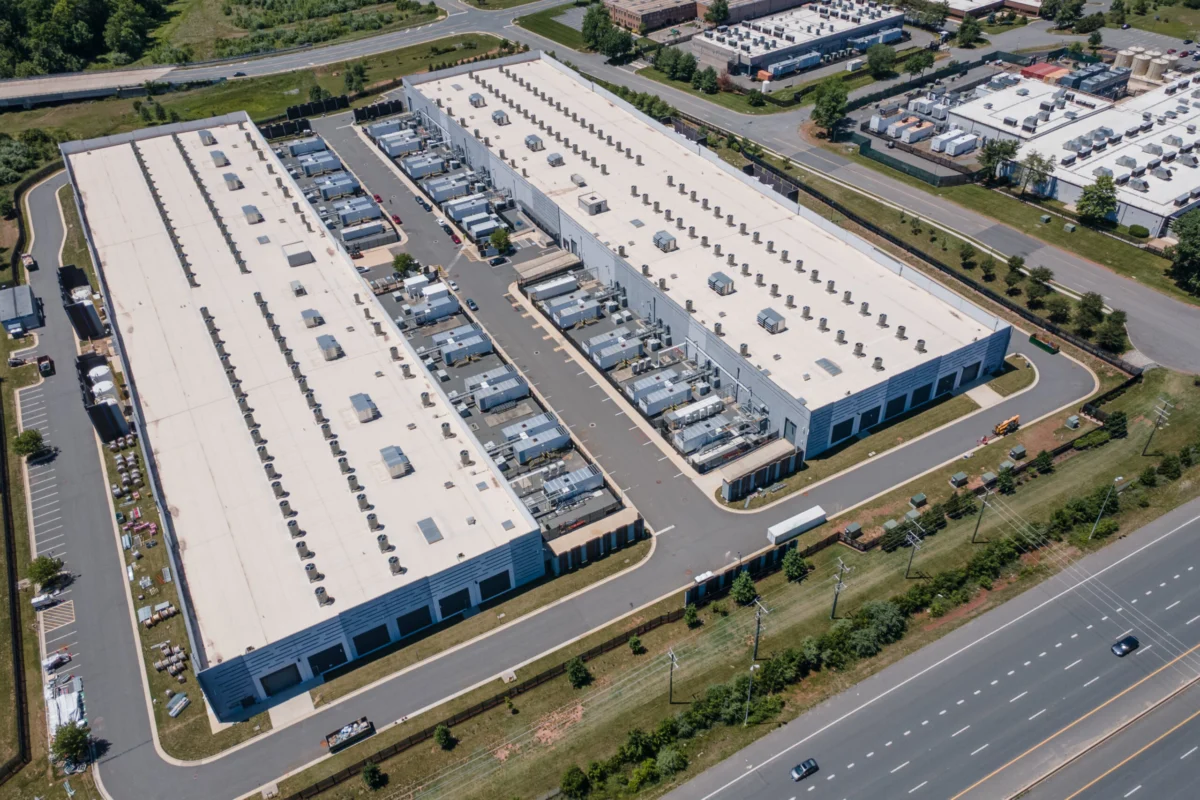
The Amazon Web Services IAD10 data center in Sterling, Virginia, photographed on May 31, 2026, serves as a stark reminder of the physical infrastructure at the heart of the digital world, infrastructure now confronting unprecedented environmental pressures. These vast facilities, often unassuming in their appearance, are the nerve centers of modern society, processing and storing the immense volumes of data that fuel global commerce, research, and communication. Their resilience is paramount.
The Critical Infrastructure Under Threat
Data centers are the physical backbone of the internet and the digital economy. They house the servers, storage systems, and networking equipment essential for cloud computing, online services, and the burgeoning field of artificial intelligence. The global data center market, valued at trillions of dollars, is experiencing exponential growth, driven by increasing data consumption and the rapid adoption of AI technologies. Projections suggest that data centers could consume between 4% and 8% of global electricity by 2030, a testament to their scale and operational demands. This immense infrastructure, however, was often sited based on historical considerations such as proximity to fiber optic networks, access to affordable land, and stable power grids, without adequately factoring in the accelerating impacts of climate change.
The acute hazards identified by First Street — flooding, extreme winds, and wildfires — present immediate and severe dangers. Flooding, whether from heavy rainfall, storm surges, or river overflows, can inundate facilities, damage sensitive electronics, and disrupt power and cooling systems. Extreme winds, characteristic of hurricanes, typhoons, and powerful storms, can compromise building envelopes, damage cooling towers, and cause widespread power outages across local grids. Wildfires, intensified by prolonged droughts and higher temperatures, threaten facilities directly through proximity or indirectly by disrupting power lines and supply chains. Each of these events can lead to significant downtime, translating into massive financial losses for businesses and severe inconvenience for billions of users worldwide. For example, a single hour of data center downtime can cost large enterprises millions of dollars, not just in direct repair but also in lost revenue, reputational damage, and regulatory penalties.
Outdated Models and Emerging Realities
A core issue highlighted by First Street CEO Matthew Eby is the reliance on antiquated risk assessment models. "Most underwriting for real assets still uses historical data, but the climate is no longer behaving the way the historical record would predict," Eby stated in a release. This backward-looking approach fails to account for the dramatic shifts in climatic patterns observed over recent decades. The Earth’s climate system is characterized by increasing variability and extremes, rendering past data an unreliable predictor of future events. As heatwaves become more intense, droughts more prolonged, and precipitation events heavier, the assumptions built into traditional risk models become fundamentally flawed.
Jeremy Porter, Chief Economist at First Street, elaborated on this critical flaw, pointing out that government models, too, often lag behind scientific understanding. These models, he argued, frequently look at past levels of precipitation without integrating the physics of a warming planet. As global temperatures rise, the atmosphere can hold more moisture, leading to a higher potential for more intense rainfall and flash floods, even in areas historically less prone to such events. This underestimation of risk is pervasive, creating a false sense of security for investors and developers. The danger, according to the study’s findings, is that investors continue to base long-term development decisions for facilities expected to operate for 20 to 30 years on metrics that no longer reflect contemporary environmental realities. This mispricing of risk can lead to significant financial vulnerabilities down the line.
The Dual Threat: Chronic vs. Acute Climate Stress
Beyond the immediate and dramatic impact of acute hazards, the study also delves into the insidious effects of chronic climate stress. It found that just over half of all data centers globally are situated in markets exposed to chronic conditions like extreme heat and prolonged drought. While less dramatic than a hurricane, these ongoing stresses can inflict significant damage over time, primarily by compromising energy efficiency and escalating operational costs.
Extreme heat, for instance, necessitates increased cooling efforts, driving up electricity consumption and associated expenses. This not only impacts the bottom line but also contributes to the data center’s carbon footprint, creating a feedback loop where operations exacerbate the very problem they are trying to mitigate. Droughts, on the other hand, can limit the availability of water, which is crucial for many cooling systems, especially in older facilities that rely heavily on evaporative cooling. This forces operators to seek alternative, often more expensive, cooling methods or to curtail operations. The cumulative effect of chronic stress can be just as damaging, if not more so, than singular acute events, eroding profitability and long-term viability. The implications extend beyond individual facilities to regional power grids and water resources, potentially straining critical utilities.

Global Hotspots and Geographic Vulnerabilities
The First Street study provides a crucial geographic breakdown of climate risk exposure, revealing significant regional disparities. The Asia-Pacific region emerges as the most vulnerable, with a staggering 89% of its data center capacity facing elevated risk. This compares sharply with 50% exposure in the Americas and 46% in Europe, the Middle East, and Africa (EMEA). This disparity is particularly concerning given that the Asia-Pacific region is home to some of the world’s fastest-growing digital economies and a rapidly expanding data center market. Countries like India, China, and Southeast Asian nations are witnessing massive investment in digital infrastructure to support their burgeoning populations and technological advancements. However, many of these areas are also highly susceptible to monsoons, typhoons, coastal flooding, and extreme heatwaves.
The study specifically identifies several industry hotspots that are also highly exposed to climate risk. In the U.S., Northern Virginia, a global hub for data center development often dubbed "Data Center Alley," is highlighted. This region, while strategically important due to its proximity to Washington D.C. and major fiber routes, faces increasing flood risk and is susceptible to severe weather events. Internationally, Johor in Malaysia and Marseille, France, are also flagged as high-risk, fast-growing markets. Johor, a burgeoning data center destination in Southeast Asia, is vulnerable to tropical storms and coastal flooding. Marseille, a critical internet exchange point connecting Europe, Africa, and Asia, sits in a region increasingly prone to heatwaves and droughts, alongside potential for severe Mediterranean storms. Conversely, Nordic markets, with their naturally cool climates and abundant renewable energy sources, are identified as having the lowest climate risk, making them attractive locations for future resilient data center development. Porter noted that while the U.S. has many markets with acute wind and flood risk, it generally faces less chronic climate stress compared to other parts of the world.
Industry’s Evolving Response and Adaptation
Despite the sobering findings, the data center industry is not entirely static in the face of these challenges. Some developers and operators are beginning to integrate climate considerations into their design and operational strategies. Digital Realty, a global provider of cloud and carrier-neutral data center solutions, offers a pertinent example of proactive measures. Andrew Power, CEO of Digital Realty, discussed on the Property Play podcast how the company is focusing on water efficiency for cooling. "Almost all of our data centers today, 300 around the world, the global portfolio, are either a waterless system or closed loop water," Power explained, emphasizing the significant investments made to avoid evaporation and conserve water. This foresight is crucial in regions grappling with water scarcity.
However, the challenge extends beyond individual building resilience. Porter emphasized the need for a "systems-level thinking" approach. While robust building envelopes can protect structures from severe weather, the true vulnerability lies in the external infrastructure that connects to data centers – power grids, fiber optic networks, and access roads. A data center might be a fortress, but if it cannot receive power or data, or if its staff cannot access it, its resilience is compromised. This necessitates looking beyond parcel-specific risk to community-level mitigation strategies, involving collaboration with local governments, utility providers, and urban planners to ensure resilient power access, egress routes, and broader infrastructure protection. This holistic approach acknowledges that data centers are embedded within complex ecosystems, and their ultimate resilience is a function of the entire system.
Economic and Strategic Imperatives
The implications of this heightened climate risk are multifaceted, spanning economic, financial, and strategic domains. For investors, the study serves as a critical warning. Those who fail to incorporate these climate factors into their underwriting and capital allocation decisions risk significant financial exposure. As Eby succinctly put it, "Investors who incorporate these factors into underwriting and capital allocation decisions will be better positioned to identify resilient markets and avoid mispriced risk." The costs associated with climate damage – repairs, business interruption, higher insurance premiums, and potential relocation – could severely impact profitability and asset valuations. Insurance companies are already re-evaluating their models, and premiums for high-risk assets are expected to climb, potentially making certain developments financially unviable.
Beyond financial returns, the issue has broader strategic ramifications. Data centers are considered critical infrastructure, and their disruption can have national security implications. Governments are increasingly concerned about data sovereignty and the integrity of national digital assets. Prolonged outages could impact essential services, emergency response systems, and defense capabilities. This elevates climate resilience from a purely commercial concern to a matter of national strategic importance. Furthermore, the global supply chain for data center components, from specialized chips to cooling systems, can also be disrupted by climate events, creating ripple effects that impact lead times and costs worldwide.
A Call for Collaborative Action and Future Outlook
Addressing the pervasive climate risk to data centers requires a concerted, collaborative effort involving industry leaders, financial institutions, government bodies, and climate scientists. The path forward involves several key strategies:
- Enhanced Risk Assessment: Moving away from historical data to incorporate advanced climate modeling and predictive analytics in site selection and infrastructure planning. This means using dynamic models that project future climate scenarios rather than relying on past averages.
- Resilient Design and Engineering: Implementing advanced architectural and engineering solutions that go beyond basic building codes. This includes elevated foundations, flood barriers, hardened building envelopes against extreme winds, fire-resistant materials, and diversified cooling systems less reliant on water.
- Infrastructure Hardening: Investing in the resilience of surrounding critical infrastructure, including power grids, water supply, and transportation networks. This may involve undergrounding power lines, building microgrids, and ensuring redundant utility connections.
- Geographic Diversification and Redundancy: Cloud providers and large enterprises are increasingly adopting strategies of geo-diversity, distributing their data across multiple, geographically dispersed data centers to minimize the impact of localized climate events.
- Policy and Regulatory Frameworks: Governments can play a crucial role by updating building codes, implementing climate-aware zoning regulations, and offering incentives for resilient data center development. This also includes investing in regional infrastructure improvements that benefit critical assets.
- Sustainable Operations: Continuing the drive towards greater energy efficiency and the use of renewable energy sources to mitigate the data center industry’s contribution to climate change, thereby reducing the long-term risk.
The findings from First Street are a powerful call to action for an industry that forms the bedrock of modern life. As the digital transformation accelerates and climate change intensifies, the resilience of data centers will not just be a competitive advantage, but a fundamental prerequisite for global stability and progress. The challenge is immense, but the opportunity for innovation and strategic adaptation is equally significant, paving the way for a more secure and sustainable digital future.
