

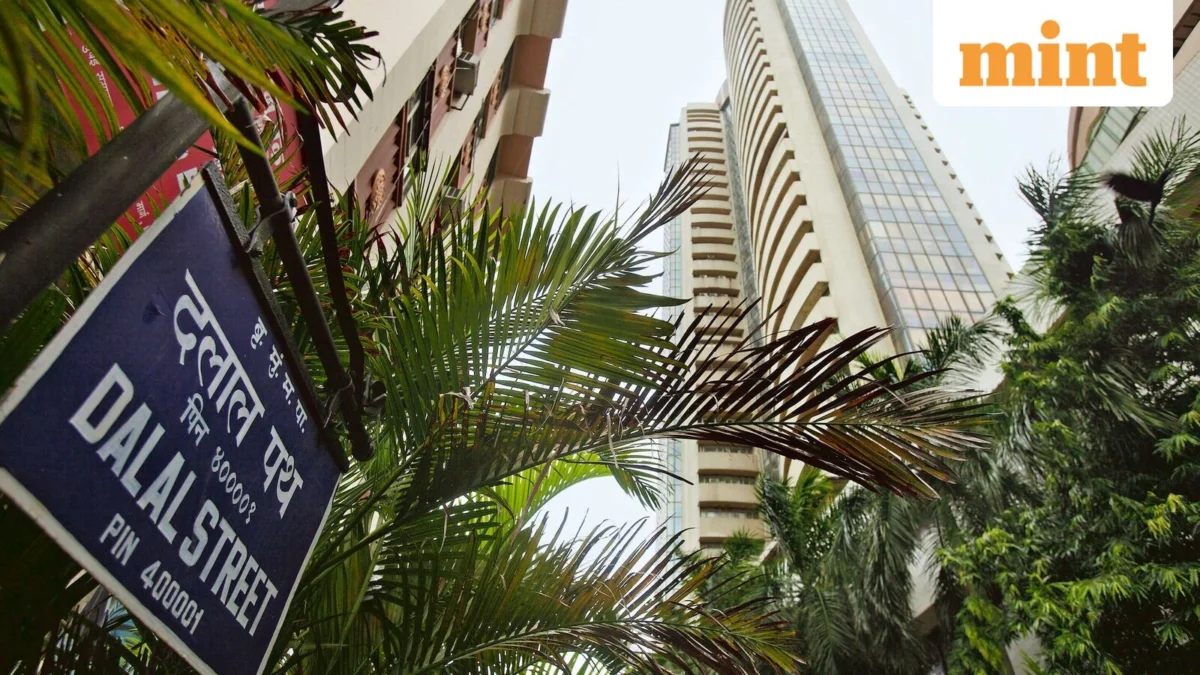
The Indian equity markets witnessed a period of intense volatility and significant capital erosion on Tuesday, June 23, 2026, as a perfect storm of global and domestic headwinds converged to batter investor sentiment. Tracking a severe downturn in international markets, particularly within the high-growth technology sector, the domestic headline indices plummeted, wiping out trillions in investor wealth. The benchmark Nifty 50 index experienced its most substantial single-day decline in nearly a month, breaching the critical psychological support level of 24,000. This downturn was exacerbated by a strengthening US dollar, which pressured commodity-linked stocks, and a wave of profit-taking in public sector undertakings (PSUs) that had previously enjoyed an extended bull run.
By the end of the trading session, the Nifty 50 had shed 1.16%, or approximately 280 points, to settle at 23,824. The BSE Sensex mirrored this bearish momentum, declining by 1.28% to close at 78,593. The broader market was not spared, as the Nifty Midcap 100 and Nifty Smallcap 100 indices also faced selling pressure, indicating that the risk-off sentiment was pervasive across all market capitalizations. Market analysts estimated that the day’s rout resulted in an aggregate loss of nearly ₹6 lakh crore for investors, as the advancing-to-declining stocks ratio tilted heavily in favor of the bears.
A Chronology of the Tuesday Market Bloodbath
The day began on an ominous note, with the Nifty 50 opening lower, reflecting the overnight weakness in Wall Street’s tech-heavy Nasdaq. Initial attempts at a recovery were swiftly met with aggressive selling by institutional investors. By mid-morning, the index had already slipped below the 24,000 mark, a level that had served as a sturdy floor for the past several weeks.
As the European markets opened to deep cuts in their respective technology sectors, the selling pressure in India intensified. Domestic IT majors, which derive a significant portion of their revenue from Western markets, became the primary targets of the sell-off. By the afternoon session, the contagion had spread to the metal and banking sectors. The final hour of trade saw a desperate scramble for the exit, particularly in high-beta stocks and PSU counters, leading the indices to close near their lowest points of the day.
The Global Catalyst: Tech Meltdown and Asian Contagion
The primary driver of the domestic slump was a synchronized global retreat from technology stocks. In Europe, the STOXX 600 Technology Index plunged by more than 3%, signaling a shift in investor preference away from growth-oriented sectors. This sentiment was echoed in Asia, where the carnage was even more pronounced.
South Korea’s Kospi index suffered a historic 10% plunge, a move so violent that it triggered a market-wide circuit breaker, temporarily halting all trading activity. Such extreme measures are rare and usually indicate a systemic fear among participants, often linked to margin calls and automated algorithmic selling. Similarly, Japan’s Nikkei 225 ended its impressive eight-session winning streak, declining by 3.55% to close at 69,788.38. The regional weakness was further compounded by mainland China’s CSI 300, which dropped 2.77%, and Hong Kong’s Hang Seng Index, which fell 1.82%.
Financial historians and market strategists pointed toward a "valuation reset" in the global tech space. After years of aggressive expansion driven by artificial intelligence optimism and low-interest rates, investors are now scrutinizing earnings more closely. The anticipation of a prolonged high-interest-rate environment in the United States has made the high price-to-earnings ratios of tech giants increasingly difficult to justify.
The Federal Reserve and the Resurgent US Dollar
Adding fuel to the fire was a shift in the macroeconomic outlook regarding the US Federal Reserve’s monetary policy. Recent economic data from the United States, including resilient labor market figures and sticky inflation components, has led to growing expectations that the Fed may not only keep rates "higher for longer" but could potentially implement another interest rate hike later in 2026.
These hawkish expectations triggered a surge in the US Dollar Index (DXY), which moved toward its highest levels since May 2025. A stronger dollar typically acts as a headwind for emerging markets like India for two reasons: it leads to capital outflows as investors seek higher risk-adjusted returns in dollar-denominated assets, and it makes dollar-priced commodities more expensive for countries with weaker currencies.
The impact was immediately visible in the Indian metal sector. As the dollar strengthened, the Nifty Metal index became the worst-performing sectoral gauge, crashing by 3.22%. Major industry players such as Vedanta and NALCO saw their share prices slide by more than 6%. Other heavyweights, including Hindustan Zinc, Jindal Steel, NMDC, SAIL, and JSW Steel, all posted losses exceeding 3%.
Sectoral Breakdown: IT, Banking, and Real Estate Under Fire
The domestic Information Technology sector, a bellwether for global discretionary spending, was hit hard by the Nasdaq’s weakness. Infosys led the retreat with a 3.4% decline, while other giants like Tata Consultancy Services (TCS), Wipro, and HCL Technologies fell between 1.5% and 3.2%. Analysts suggest that if the US economy slows down under the weight of high interest rates, the deal pipeline for Indian IT firms could face significant delays, impacting revenue guidance for the upcoming quarters.
The PSU Bank index also faced a correction, declining by 2.23%. After a multi-month rally where state-owned lenders significantly outperformed their private counterparts, traders used the global weakness as an excuse to lock in profits. Canara Bank, Bank of Baroda, and the State Bank of India (SBI) were among the notable losers, with declines ranging from 1.5% to 3.3%.
Real estate and media stocks also buckled under the pressure, with the Nifty Realty index falling nearly 2%. Higher interest rate expectations are particularly damaging for the real estate sector, as they translate to higher home loan rates for consumers and increased debt-servicing costs for developers.
Defensive Pockets: Pharma and Niche Gainers Defy the Trend
Despite the overarching gloom, certain segments of the market exhibited remarkable resilience. The pharmaceutical and lifescences sectors, often viewed as defensive plays during times of economic uncertainty, managed to attract "safe-haven" buying. Cohance Lifesciences emerged as the star performer of the day, skyrocketing by 13% to reach ₹457 per share. Other healthcare-related stocks like Piramal Pharma, Gland Pharma, and Neuland Laboratories each rallied by more than 5%.
Individual news-driven stories also provided some relief. Kirloskar Oil Engines continued its upward trajectory, gaining 4.8% to reach ₹2,504. This followed a 20% surge in the previous session, fueled by a massive order win in the burgeoning data center segment—a sector that remains insulated from broader consumer spending trends.
Ather Energy and Ola Electric also saw positive movement, advancing 5% and 3% respectively. The electric vehicle (EV) space in India continues to benefit from long-term structural tailwinds and government incentives, which appear to be outweighing the immediate macroeconomic concerns for some investors. Additionally, companies like Meesho and PhysicsWallah showed gains, suggesting that investors are still willing to back specific growth stories in the tech-enabled services and education sectors.
Implications for the Near Term
The breach of the 24,000 level on the Nifty is a significant technical development. Technical analysts suggest that the index may now test its next support level near 23,500 if the global sell-off persists. The "Fear Gauge," or India VIX, spiked during the session, indicating that traders expect continued volatility in the coming days.
From a fundamental perspective, the focus will now shift toward the upcoming corporate earnings season and the Reserve Bank of India’s (RBI) commentary on domestic inflation. While India’s internal economic indicators remain relatively robust compared to its global peers, the market’s high correlation with international flows means that a prolonged US dollar rally could lead to sustained FII (Foreign Institutional Investor) selling.
Institutional desks are advising caution, suggesting that while the long-term structural bull case for India remains intact, the short-term environment is fraught with risks. "The market was overdue for a correction after the relentless climb we’ve seen in 2026," noted one senior fund manager. "The global tech rout served as the necessary trigger. We are moving from a phase of ‘buy everything’ to a much more selective, stock-picking environment."
As the dust settles on a tumultuous Tuesday, the Indian markets find themselves at a crossroads. Whether this is a temporary blip in a larger bull market or the start of a more protracted downturn will depend largely on the Federal Reserve’s next moves and the ability of global technology earnings to meet the high bar set by investors. For now, the sentiment remains cautious, with the 24,000 mark on the Nifty serving as a distant ceiling that bulls will struggle to reclaim in the immediate future.
