

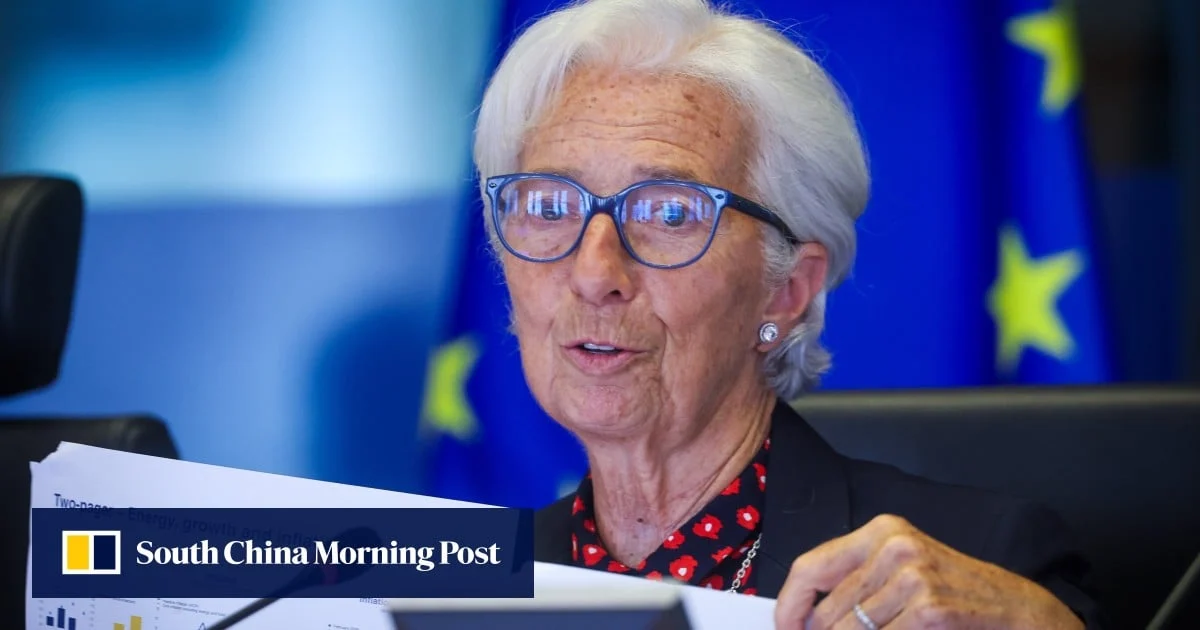
European Central Bank (ECB) President Christine Lagarde has issued a firm call to action for global leaders, identifying the persistent undervaluation of the Chinese renminbi as a primary driver of the macroeconomic imbalances currently threatening the stability of the global economy. Speaking at a high-level economic forum in Brussels on Monday, Lagarde emphasized that the "excessive imbalances" characterizing international trade must be addressed through multilateral dialogue, specifically highlighting the currency aspect as a central point of contention between the Group of Seven (G7) nations and Beijing.
The remarks follow the recent G7 summit held in France, where leaders expressed growing alarm over China’s ballooning trade surpluses. While Beijing has consistently maintained that its currency value is determined by market forces and has denied accusations of manipulation for trade advantage, Lagarde’s comments signal a hardening stance among European and Western financial authorities. The ECB President pointed to specific research from the International Monetary Fund (IMF) suggesting that the renminbi remains significantly misaligned with economic fundamentals, creating an uneven playing field for global manufacturers.
The Quantitative Gap: IMF Data and the 16 Percent Undervaluation
Central to Lagarde’s argument is the discrepancy between the renminbi’s nominal exchange rate and its real value when adjusted for international inflation differentials. Citing internal and IMF-backed research, Lagarde noted that the Chinese currency is estimated to be undervalued by approximately 15 to 16 percent. This valuation gap, she argued, acts as a de facto subsidy for Chinese exports, making them artificially competitive in overseas markets while simultaneously making foreign imports into China more expensive.
"That is the situation as it is," Lagarde stated during the Brussels event. "It justifies completely the fact that there has been, and I hope there will be, further discussions of excessive imbalances. These imbalances include a critical currency aspect that cannot be ignored by G7 leaders or the broader international community."
Economists note that a 15 percent undervaluation provides a massive tailwind for a manufacturing powerhouse like China. In a low-margin global environment, such a price advantage can be the deciding factor in whether a domestic industry survives or collapses. For Europe, which has seen its industrial production fluctuate amid high energy costs and shifting supply chains, the impact of a "cheap" renminbi is felt most acutely in the high-end manufacturing and automotive sectors.
Sectoral Erosion: The Crisis in European Manufacturing
For decades, Europe—and Germany in particular—dominated the global market for high-end machinery and luxury automobiles. However, the tide has shifted. Lagarde highlighted that Europe has increasingly struggled to compete with Chinese goods, which have moved up the value chain. No longer limited to low-cost textiles or basic electronics, Chinese firms are now producing high-tech goods, electric vehicles (EVs), and precision engineering equipment at prices that European firms find impossible to match.
The automotive sector serves as the primary case study for this economic friction. Chinese automakers, supported by state subsidies and a favorable exchange rate, have made significant inroads into the European market. The price differential between a European-made luxury sedan and a Chinese-made equivalent has widened, partly due to the currency misalignment cited by Lagarde.
"The struggle to compete is not merely a matter of innovation or labor productivity," noted an analyst following the Brussels event. "When you layer a 16 percent currency advantage on top of lower energy costs and integrated supply chains, European manufacturers are essentially fighting a battle with one hand tied behind their back."
A Chronology of Growing Tensions
The current friction is the culmination of several years of escalating trade disputes and shifting economic policies. The timeline of these tensions reveals a steady move away from the era of hyper-globalization toward a period of "de-risking" and defensive trade postures.
- 2023-2024: The US and EU begin investigating Chinese state subsidies in the EV sector. The G7 issues its first warnings regarding "non-market policies and practices" emanating from Beijing.
- Early 2025: China’s trade surplus reaches record highs, driven by a surge in exports to emerging markets and a resilient manufacturing sector. Western nations complain that China is "exporting its overcapacity" to compensate for weak domestic demand.
- June 2026 (G7 Summit in France): G7 leaders issue a joint communique identifying three major threats to global economic stability: chronic US deficits, Europe’s systemic underinvestment, and China’s surging trade surpluses. The document explicitly mentions the need for "market-oriented" exchange rates.
- June 22, 2026: Christine Lagarde delivers her speech in Brussels, providing the quantitative backing (the 15-16% figure) for the G7’s concerns and calling for a dedicated dialogue on currency valuation.
The Ghost of the Plaza Accord
Despite her call for action, Lagarde was careful to distinguish the current situation from historical precedents. When asked whether the world needed a "New Plaza Accord"—referring to the 1985 agreement where the US, UK, France, West Germany, and Japan agreed to depreciate the US dollar against the Japanese yen and German deutsche mark—Lagarde was dismissive.
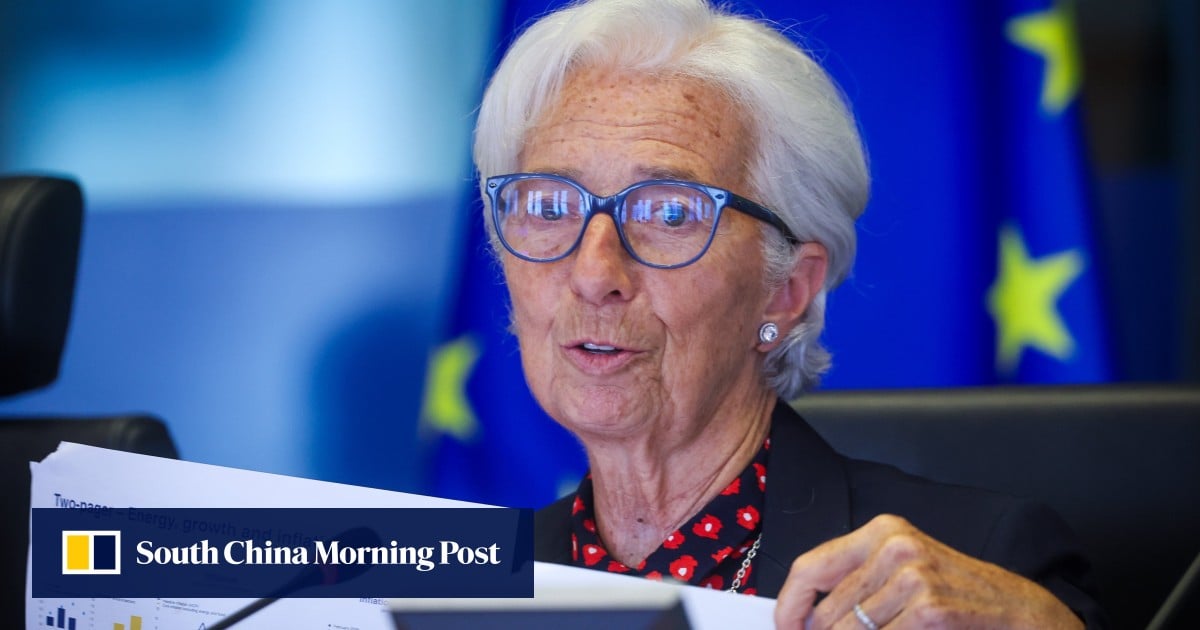
She argued that "times were different" in the mid-1980s. The 1985 accord was struck in a unipolar economic world where the participating nations were close Cold War allies with deeply integrated security interests. Today’s geopolitical landscape is far more fragmented. China is not a treaty ally of the G7 nations, and its role in the global economy is far more dominant than Japan’s was in 1985. Furthermore, the modern financial system is characterized by massive, instantaneous capital flows that make the managed exchange rate targets of the 1980s difficult to implement without risking systemic volatility.
Instead of a single, sweeping agreement, Lagarde appears to be advocating for a more nuanced, persistent pressure campaign within the framework of the G20 and the IMF to force China into allowing the renminbi to appreciate naturally.
Official Responses and Geopolitical Implications
Beijing’s response to such accusations has historically been one of staunch defiance. The People’s Bank of China (PBOC) has repeatedly stated that the renminbi’s value is stable and that China does not use currency depreciation as a tool to deal with trade disputes. Chinese officials often counter-argue that the "imbalances" mentioned by Lagarde are a result of the US’s own fiscal irresponsibility and Europe’s lack of industrial competitiveness.
In Washington, the US Treasury has remained cautious but supportive of Lagarde’s sentiment. While the US has stopped short of officially labeling China a "currency manipulator" in its most recent reports, Treasury officials have noted that the lack of transparency in China’s foreign exchange interventions remains a "serious concern."
The implications of this currency dispute extend far beyond the balance sheets of central banks. If the G7 moves from rhetoric to action, the world could see a new wave of protectionist measures. This might include:
- Currency-Based Tariffs: Legislation that allows countries to impose duties on imports from nations with undervalued currencies.
- Increased Scrutiny of Capital Flows: Stricter controls on Chinese investments in the West as a counter-lever to trade imbalances.
- Bifurcation of Trade Blocs: A further hardening of the "Global West" vs. "Global East" trade divide, where currency alignment becomes a prerequisite for preferential trade status.
Analysis of Broader Global Impact
The "macroeconomic mismatches" cited by Lagarde—China’s surplus, the US deficit, and Europe’s underinvestment—form a volatile triangle. For the global economy to remain stable, these three legs must eventually find a new equilibrium.
If China continues to rely on exports to drive growth while keeping its currency low, it risks inviting a coordinated wall of tariffs from the West. However, if China allows the renminbi to appreciate too rapidly, it risks a sharp slowdown in its manufacturing sector, which could destabilize its domestic economy and, by extension, global demand.
For the European Central Bank, the stakes are high. A weak renminbi complicates the ECB’s efforts to manage inflation and support growth. When cheap Chinese imports flood the market, they help keep consumer prices down (aiding the inflation fight) but simultaneously hollow out the industrial base that provides employment and tax revenue. Lagarde’s speech indicates that the ECB is no longer willing to trade industrial health for short-term price stability.
As the G7 and China move toward a potential showdown over exchange rates, the role of the IMF will be crucial. By citing the IMF’s 15-16 percent figure, Lagarde has effectively weaponized neutral, data-driven research to provide a mandate for political action. The coming months will likely see a flurry of diplomatic activity as officials attempt to bridge the gap between Beijing’s "market-driven" narrative and the West’s "undervaluation" reality.
The Brussels forum concluded with a sense of gravity. Lagarde’s remarks have set the stage for the next phase of global economic diplomacy, one where the value of a currency is seen not just as a financial metric, but as a fundamental pillar of international fairness and geopolitical stability. Whether this leads to a cooperative resolution or a deepening of the trade war remains the defining question for the late 2020s.
