

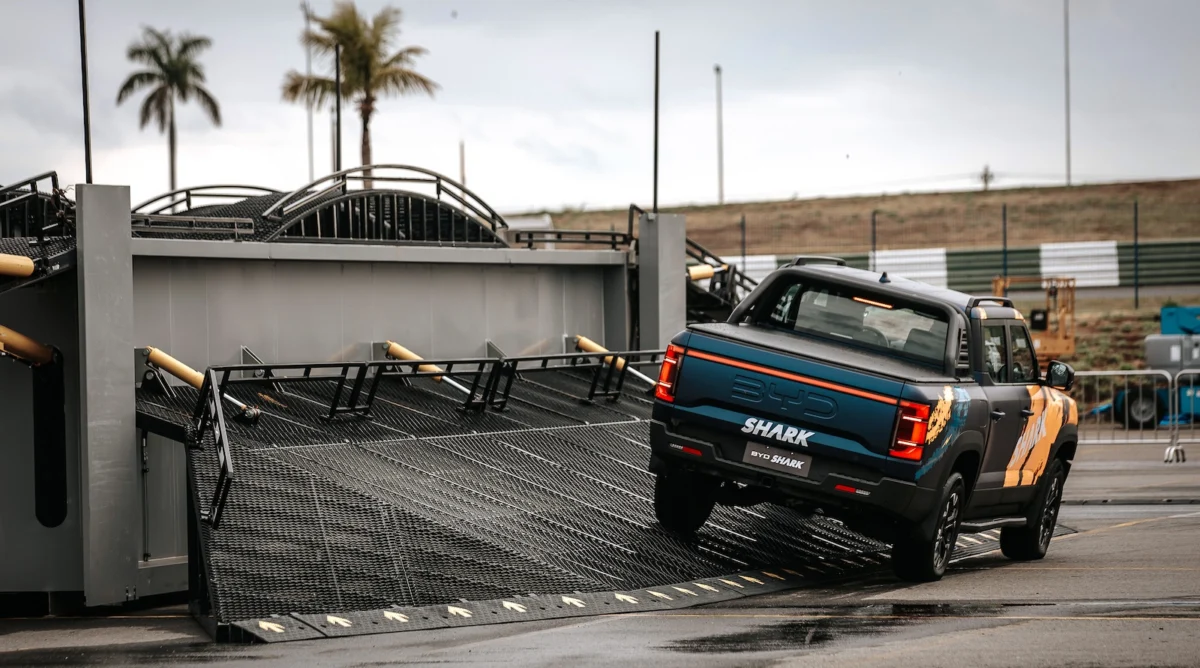
BYD, the world’s leading manufacturer of new energy vehicles (NEVs), is significantly intensifying its presence in the Latin American market through a comprehensive localization strategy that includes the establishment of large-scale battery production facilities in Brazil. This move signals a pivotal shift in the company’s global operations, moving beyond a simple export model toward a fully integrated domestic manufacturing presence. As the company seeks to mitigate the impact of international trade tensions and fluctuating logistics costs, Brazil has emerged as the cornerstone of its South American ambitions. The expansion is underpinned by a multi-billion-dollar investment plan designed to transform Brazil into a regional hub for electric vehicle (EV) production, battery technology, and renewable energy storage solutions.
The cornerstone of this initiative is the development of a sophisticated manufacturing complex in Camaçari, located in the northeastern state of Bahia. This site, formerly occupied by the Ford Motor Company, represents more than just a physical expansion; it symbolizes a changing of the guard in the global automotive industry. Where traditional internal combustion engine (ICE) manufacturers have retreated, BYD is stepping in with a long-term vision for electrification. According to Alexandre Baldy, Senior Vice President of BYD Brazil, the company’s primary objective is to reach 50% domestic content in its Brazilian-made vehicles by the start of 2027. This localization is not merely about assembly but involves the deep integration of the supply chain, most notably through the production of high-tech battery modules.
A Strategic Pivot Toward Global Localization
The expansion into Brazil comes at a time when BYD is experiencing unprecedented growth in its international sales. While the Chinese market remains the company’s primary volume driver, the saturation of domestic demand and increasing competition have prompted a strategic pivot toward overseas markets. In the first five months of 2024, BYD’s vehicle exports grew by approximately 65%, with May alone seeing a staggering 80% year-over-year increase. To support this massive outflow of vehicles, BYD has invested heavily in its own logistics infrastructure, currently operating a fleet of seven giant roll-on, roll-off (RoRo) ships. These vessels, including the "BYD Explorer No. 1," allow the company to bypass the bottlenecks of the global shipping industry and maintain a steady supply of vehicles to distant markets.
However, relying solely on exports from China carries significant risks, including geopolitical friction and the potential for protective tariffs in markets like the European Union and the United States. By establishing a manufacturing foothold in Brazil, BYD is insulating itself from these external pressures. Brazil offers a unique advantage as a member of the Mercosur trade bloc, potentially allowing BYD to export duty-free to other South American nations once local production reaches the required thresholds. The transition from being an importer to a "Brazilian manufacturer" is a calculated effort to foster brand loyalty and align with the industrial policies of the Brazilian government, which has been vocal about its desire for "neo-industrialization."
Financial Commitments and Industrial Scale
The scale of BYD’s investment in Brazil is substantial. The company has committed a total of 5.5 billion reais (approximately $1.08 billion) to its flagship plant in Camaçari. This capital is being deployed to modernize the existing facilities and install state-of-the-art production lines for passenger cars, electric buses, and truck chassis. A significant portion of this investment is dedicated to the production of lithium iron phosphate (LFP) batteries, a technology in which BYD is a world leader. Unlike the nickel-cobalt-manganese (NCM) batteries used by many competitors, LFP batteries are known for their safety, longevity, and lower production costs, making them ideal for the price-sensitive Brazilian market.
In addition to passenger vehicle batteries, BYD is investing between 50 million and 60 million reais to expand its production line for electric bus batteries. Brazil has a robust public transport sector, and cities like São Paulo and Curitiba are increasingly looking to electrify their bus fleets to meet carbon reduction targets. By localizing bus battery production, BYD gains a competitive edge in government tenders and municipal contracts.
Furthermore, the company is preparing to invest up to 500 million reais ($98 million) in a new production line for Battery Energy Storage Systems (BESS). These industrial-scale batteries are designed to store electricity for the national grid, providing stability and allowing for the better integration of intermittent renewable energy sources like wind and solar. This investment is particularly timely, as Brazil is scheduled to hold its first specialized auction for industrial-scale battery storage in December. BYD’s early entry into this space positions it as a key player in Brazil’s broader energy transition, extending its influence beyond the automotive sector.
Market Dynamics and the Path to Number One
The Brazilian automotive market is currently undergoing a rapid transformation. In May 2024, plug-in vehicles (including both battery electric vehicles and plug-in hybrids) reached a record 13.5% market share in Brazil, representing a 153% growth compared to the previous year. This surge in demand has been largely driven by the entry of affordable Chinese models, with BYD leading the charge. The company has already climbed into the top five auto brands in the country, a feat rarely achieved by a newcomer in such a short timeframe.
BYD’s ultimate goal is to become the number one automotive brand in Brazil by 2030. To achieve this, the company is focusing on a diverse lineup that includes the popular Dolphin hatchback and the Seagull (marketed as the Dolphin Mini in Brazil), which have disrupted the market with their combination of high technology and competitive pricing. By localizing production, BYD hopes to further reduce costs and protect its pricing strategy from currency fluctuations and import taxes, which the Brazilian government has begun to reintroduce on EVs to encourage local manufacturing.
Chronology of BYD’s Brazilian Expansion
The journey of BYD in Brazil has been marked by several key milestones that illustrate the company’s rapid ascent:
- 2015: BYD opens its first factory in Brazil, located in Campinas, focusing on electric bus chassis and solar panels.
- 2020: The company launches a lithium iron phosphate battery factory in Manaus, primarily for bus chassis.
- 2021-2022: BYD begins a concerted push into the passenger vehicle market, introducing premium models like the Han EV and Tang SUV.
- July 2023: BYD officially announces the investment in the Camaçari industrial complex following Ford’s exit from the region.
- Early 2024: The company expands its investment plan from 3 billion reais to 5.5 billion reais, citing higher-than-expected demand.
- June 2024: Senior executives confirm the ramp-up of battery production and the goal of 50% domestic content by 2027.
- December 2024 (Anticipated): BYD participates in the national battery storage auction, marking its entry into the utility-scale energy sector.
Socio-Economic Impact and Government Relations
The revitalization of the Camaçari plant is expected to have a profound impact on the local economy in Bahia. At its peak, the facility is projected to create more than 10,000 direct and indirect jobs. For a region that suffered a significant economic blow following Ford’s departure, the arrival of BYD is seen as a vital lifeline. The Brazilian government, led by President Luiz Inácio Lula da Silva, has welcomed the investment as a centerpiece of its "Green New Deal" style policies. The administration has emphasized the need for Brazil to not only consume green technology but to produce it, utilizing the country’s vast reserves of lithium and other critical minerals.

Environmental groups and industry analysts have also noted the strategic importance of BYD’s BESS investment. As Brazil increases its reliance on wind and solar power—which already account for a significant portion of its energy matrix—the need for grid-scale storage becomes critical. BYD’s ability to provide both the vehicles that consume clean energy and the systems that store it creates a vertically integrated ecosystem that few other companies can match.
Future Implications and Global Context
The "Brazil Strategy" serves as a blueprint for BYD’s ambitions in other parts of the world. Similar localized manufacturing projects are underway or under consideration in Thailand, Hungary, and Mexico. By embedding itself into the industrial fabric of these nations, BYD is successfully navigating a fragmented global trade environment.
However, challenges remain. Establishing a local supply chain from scratch is a complex undertaking. While BYD aims for 50% domestic content, sourcing high-quality automotive-grade components within Brazil will require significant development of local suppliers. Additionally, established giants like Volkswagen, Stellantis, and General Motors are not standing still; they have also announced multi-billion-dollar investments in Brazilian electrification and hybrid technology to defend their market share.
Despite these hurdles, BYD’s momentum in Brazil appears formidable. The combination of massive capital investment, a clear focus on localized battery production, and a product lineup that resonates with Brazilian consumers has placed the company on a trajectory to dominate the Latin American EV landscape. As the 2027 deadline for 50% domestic content approaches, the industry will be watching closely to see if BYD can truly transform from a foreign disruptor into a national champion of Brazilian industry. The success of this venture will likely determine the pace of electrification across the entire South American continent.
