

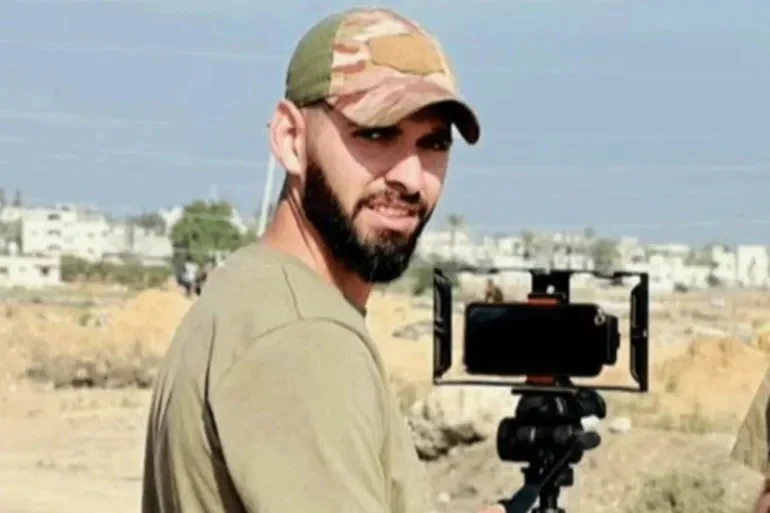
Ahmed Wishah, a dedicated cameraman for Al Jazeera, was tragically killed in an Israeli air strike that targeted a residential house in the Bureij refugee camp, located in central Gaza, on Saturday. His death marks another grim chapter in the escalating toll on media professionals covering the relentless conflict in the besieged enclave, prompting immediate and forceful condemnation from Al Jazeera and raising profound questions about the protection of journalists in active war zones. The incident underscores the extreme dangers inherent in reporting from Gaza, where the line between combatant and civilian often blurs amidst intense military operations.
The Fatal Incident and Immediate Aftermath
The Israeli military operation unfolded in the Bureij refugee camp, a densely populated area in central Gaza that has endured repeated assaults and extensive destruction since the onset of the current conflict in October 2023. Wishah, a vital member of the Al Jazeera Mubasher team, was on assignment, fulfilling his professional duty to document the realities on the ground when the strike occurred. The specific circumstances leading to the targeting of the house remain a subject of intense scrutiny and investigation, but the outcome was devastating. Reports indicated that at least 10 people were killed in Israeli attacks across Gaza on the same day, underscoring the widespread and often indiscriminate nature of the violence plaguing the region.
Al Jazeera swiftly issued a vehement statement condemning the attack, labeling it a "heinous crime of targeting and killing" their correspondent. The network’s statement further articulated that this incident "constitutes a new and flagrant violation of all international laws and norms, and reflects a continued systematic policy of targeting journalists and silencing the voice of truth." This accusation points to a broader pattern of concern regarding the safety of media personnel operating in Gaza, an issue that has drawn significant international attention and criticism throughout the conflict. The network emphasized that such actions not only undermine press freedom but also impede the world’s ability to receive unfiltered, independent information from one of the globe’s most perilous conflict zones, thereby obstructing accountability and transparency.
A Family’s Double Tragedy and Unsubstantiated Claims
The death of Ahmed Wishah is compounded by a heartbreaking personal tragedy for his family, revealing the profound, multi-generational impact of the conflict on Palestinian households. His brother, Mohammed Wishah, was also killed just months prior, on April 8 of this year, by Israeli shelling while traveling in his vehicle. According to Palestinian civil defense authorities, Mohammed’s death was a direct result of Israeli military action. The Israeli military subsequently claimed, the following day, that Mohammed Wishah was a "key terrorist in Hamas’s rocket and weapons production headquarters." However, crucially, the Israeli military provided no evidence to substantiate this grave accusation, leaving the claim unsubstantiated and drawing further scrutiny from human rights organizations and media watchdogs.
This pattern of immediate accusation without verifiable proof has become a recurring feature in the conflict, often serving to justify military actions post-factum and deflect international criticism. The back-to-back loss of two brothers, both victims of Israeli military operations, underscores the immense personal cost of the conflict. The targeting of individuals, even those ostensibly associated with media, without clear justification, raises serious questions about adherence to international humanitarian law and the principle of distinction between combatants and civilians, which mandates that only legitimate military targets can be attacked.
A Dire Toll on Journalists in Gaza: Unprecedented Casualties
The killing of Ahmed Wishah is not an isolated incident but rather a stark illustration of the catastrophic toll the current conflict has exacted on journalists in Gaza. According to figures compiled by the Committee to Protect Journalists (CPJ), an independent non-profit organization promoting press freedom worldwide, at least 260 Palestinian journalists have been killed since Israel’s "genocidal war" on Gaza began in October 2023. This figure is alarmingly high and represents an unprecedented loss of life for media professionals in any modern conflict. To put this into perspective, the number of journalists killed in Gaza in a matter of months far exceeds the total number of journalists killed in many prolonged conflicts over several years. For instance, the CPJ typically reports dozens of journalist deaths globally in an entire year, making the Gaza figure exceptionally grave and a somber record in the history of journalism.
The CPJ and other international organizations, such as Reporters Without Borders (RSF), have repeatedly called for independent investigations into these killings, emphasizing the crucial role journalists play in informing the world about conflict and holding power accountable. These organizations argue that the high number of journalist casualties suggests a potential disregard for their protected status under international humanitarian law, which mandates that journalists, like all civilians, must not be targeted. The systematic nature of these deaths creates a chilling effect, hindering the ability of media outlets to provide comprehensive and independent coverage, thereby contributing to an information vacuum and potentially obscuring the full scope of human rights violations and the lived experiences of civilians caught in the conflict.
Broader Humanitarian Crisis and Escalating Casualties
The tragic death of Ahmed Wishah unfolds against the backdrop of an overwhelming and worsening humanitarian catastrophe in Gaza. The Gaza health ministry reported on Saturday that since Israel’s "genocidal war" began in October 2023, a staggering 73,018 people have been killed, and 173,273 others have been wounded. These figures represent an unimaginable scale of human suffering, with a significant proportion of the casualties being women and children. The term "genocidal war," as used by the Gaza health ministry and echoed by various international bodies and legal experts, highlights the extreme severity and widespread destruction inflicted upon the civilian population.
The original article mentions, "Since the ceasefire was announced in October, Israeli attacks have killed 1,007 and injured 3,165 others." While the primary large-scale truce occurred in late November 2023, this phrasing underscores the continuous nature of hostilities even amidst calls for cessation or during brief periods of de-escalation. It suggests that even during or immediately after attempts at a ceasefire, the violence has persisted, demonstrating the profound fragility of any efforts at de-escalation and the continuous threat faced by Gaza’s residents. The ongoing military operations have not only led to massive loss of life but have also decimated critical infrastructure, including hospitals, schools, and residential areas, pushing the territory to the brink of famine and creating an unparalleled humanitarian crisis. The sheer volume of casualties reported daily underscores the relentless nature of the conflict and the profound impact on every aspect of life in Gaza, from healthcare to education and basic survival.
International Law and the Protection of Journalists
International humanitarian law, enshrined in the Geneva Conventions and their Additional Protocols, explicitly protects journalists in armed conflicts. Article 79 of Additional Protocol I states that "journalists engaged in dangerous professional missions in areas of armed conflict shall be considered as civilians" and "shall be protected as such, provided that they take no action adversely affecting their status as civilians." This means that journalists, even those reporting from the front lines, are not legitimate military targets unless they directly participate in hostilities, a threshold that is exceptionally high and rarely met. Their role is recognized as essential for informing the public and ensuring transparency in times of war.
The consistent targeting and killing of journalists in Gaza, as documented by CPJ and other organizations, raises serious concerns about potential violations of these international legal frameworks. Critics argue that the Israeli military’s actions often fail to distinguish adequately between combatants and civilians, including journalists, leading to preventable deaths. Furthermore, the practice of issuing blanket accusations without presenting evidence, as seen in the case of Mohammed Wishah, undermines the credibility of such claims and reinforces suspicions that journalists are being deliberately targeted or are caught in a pattern of reckless disregard for their safety. The lack of independent, impartial investigations into these incidents perpetuates a cycle of impunity, making it more difficult to hold perpetrators accountable and deter future attacks on media professionals. This situation not only endangers individual lives but also erodes the very principles of international law designed to mitigate the brutality of warfare.
Official Responses and Calls for Accountability
Al Jazeera’s condemnation of Ahmed Wishah’s killing is not merely a statement of grief but a powerful demand for accountability and justice. By calling it a "heinous crime" and a "flagrant violation of international laws," the network is effectively calling for an independent and thorough investigation into the incident, as well as into the broader pattern of journalist killings in Gaza. Al Jazeera has been particularly vocal throughout the conflict, having lost multiple staff members and seen its offices in Gaza targeted, underscoring its direct experience with the dangers faced by media workers.
On the Israeli side, responses to such incidents typically involve either denying responsibility, attributing casualties to Hamas’s operational tactics (e.g., operating from civilian areas or using human shields), or labeling victims as combatants without providing substantiating evidence. The claim regarding Mohammed Wishah exemplifies this approach, which often fails to satisfy international standards for transparency and accountability. This consistent lack of transparent, independent investigation into incidents involving civilian casualties, particularly journalists, has been a major point of contention for international human rights organizations and UN bodies.
Beyond Al Jazeera, organizations like the Committee to Protect Journalists and Reporters Without Borders have been at the forefront of advocating for journalist safety in Gaza. They have meticulously documented each death, called for international intervention, and urged the International Criminal Court (ICC) to investigate potential war crimes against journalists. The UN Human Rights Office has also expressed deep concern over the high number of journalist casualties, reiterating their protected status under international law and calling on all parties to respect these obligations. These calls for accountability, however, often face significant political hurdles and resistance, making justice for victims like Ahmed Wishah an uphill battle in a deeply politicized conflict.
Implications for Press Freedom and Independent Reporting
The systematic targeting and killing of journalists in Gaza carry profound implications for press freedom globally and the ability to conduct independent reporting from conflict zones. When journalists are killed, it is not just an individual tragedy; it is an attack on the public’s right to know and on the very fabric of independent media. The constant threat of death or injury forces media organizations to make difficult decisions about deploying personnel, potentially leading to a reduction in on-the-ground coverage. This "chilling effect" can result in a distorted or incomplete narrative of the conflict, making it harder for the international community to understand the realities faced by civilians and to make informed decisions about intervention, aid, or diplomatic efforts.
Moreover, the targeting of a prominent media organization like Al Jazeera, which has a significant global reach and is often one of the few international outlets with a consistent presence in Gaza, sends a powerful message. It suggests an intent to control information and limit independent scrutiny of military operations. This erosion of press freedom sets a dangerous precedent, not only for the Israeli-Palestinian conflict but for other conflict zones worldwide, where authoritarian regimes or warring factions might be emboldened to silence critical voices. The ability of journalists to work safely and without fear of reprisal is fundamental to democratic societies and the upholding of human rights. The situation in Gaza represents a severe challenge to these core principles, demanding a robust and unified international response to protect media workers and ensure the free flow of information. The legacy of Ahmed Wishah, and the many journalists who have perished alongside him, will undoubtedly fuel ongoing debates about the ethical conduct of warfare and the imperative to safeguard the truth-tellers who bear witness to its horrors. His death serves as a poignant reminder of the immense sacrifices made in the pursuit of truth, even in the face of overwhelming danger and systemic challenges.
Conclusion
The death of Al Jazeera cameraman Ahmed Wishah in an Israeli air strike in Gaza is a tragic testament to the extreme perils faced by journalists striving to report from the front lines of one of the world’s most devastating conflicts. His killing, following that of his brother, Mohammed Wishah, underscores the profound human cost of the ongoing violence and the deeply personal tragedies it inflicts. Al Jazeera’s strong condemnation, coupled with alarming statistics from the Committee to Protect Journalists, highlights an unprecedented assault on media professionals, raising serious questions about adherence to international law and the protection of civilians in conflict zones. The broader humanitarian crisis in Gaza, characterized by staggering casualty figures and widespread destruction, provides a grim backdrop to these incidents. As calls for accountability and independent investigations grow louder, the international community faces an urgent imperative to ensure the safety of journalists and uphold the fundamental principles of press freedom, without which the true human cost of conflict risks remaining unseen, unheard, and ultimately, unaddressed.
