

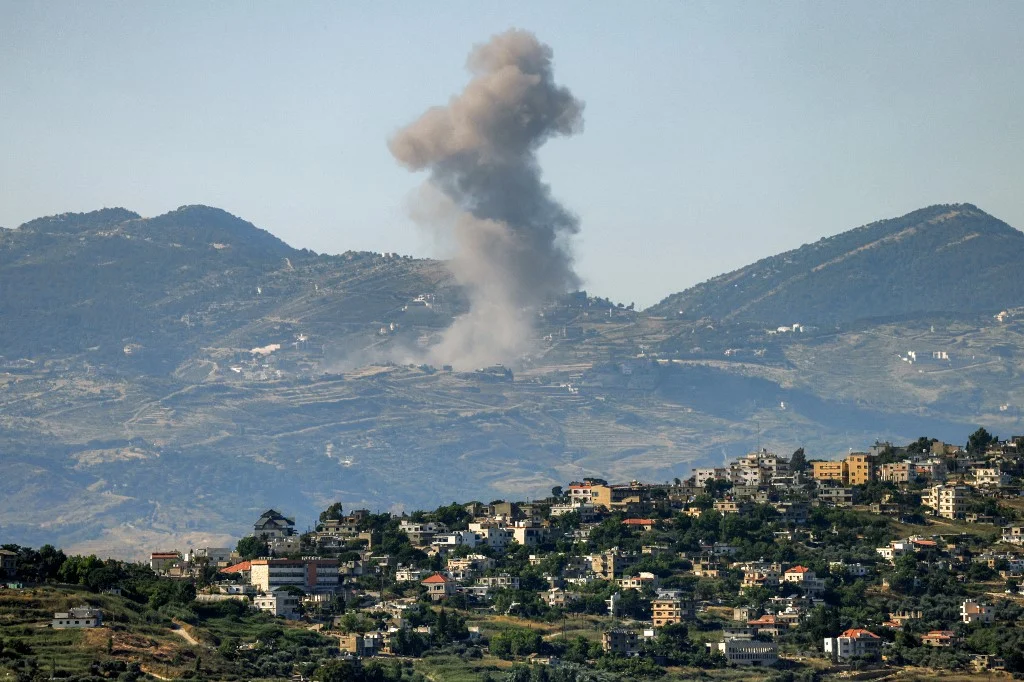
Tehran has signaled a cautious but firm willingness to re-engage in diplomatic channels with the United States, with the Iranian Deputy Foreign Minister stating the nation is "ready to move forward" on talks, provided that an end to hostilities on "all fronts" is achieved. This overture comes amidst escalating regional tensions, particularly a resurgence of clashes between Israeli forces and Iran-backed Hezbollah fighters in southern Lebanon, casting a long shadow over impending mediation talks scheduled for June 21, 2026, in the Egyptian city of Alamein.
The Deputy Foreign Minister’s statement, delivered from an undisclosed location and disseminated through official Iranian media, underscores a complex diplomatic tightrope walk. While expressing openness to dialogue, the precondition of an end to conflict across all theaters where Iran holds influence or is perceived to be involved – implicitly including Yemen, Syria, Iraq, and notably, Lebanon – highlights the interconnected nature of regional stability and any potential bilateral engagement with Washington. The emphasis on "all fronts" suggests Iran’s demand for a comprehensive de-escalation, rather than a piecemeal approach, as a prerequisite for meaningful diplomatic progress.
Escalation on the Lebanese Front
The urgency of Iran’s condition is underscored by the deteriorating security situation in southern Lebanon. On June 19, 2026, intense smoke was seen rising following significant Israeli bombardment in the region, as captured from a position across the border in northern Israel. This latest round of violence marks a troubling resumption of hostilities, despite prior reports of an agreement designed to halt fighting between Israeli forces and Hezbollah. The specifics of this earlier agreement remain largely undisclosed, but its apparent failure has fueled concerns about a wider regional conflagration.
Hezbollah, a powerful Lebanese political party and militant group, has long been a critical component of Iran’s regional "Axis of Resistance." Its substantial arsenal and experienced fighters represent a significant deterrent and a proxy force that has historically challenged Israeli military dominance. The recent exchange of fire suggests a breakdown in ceasefire mechanisms, potentially triggered by specific events or a broader shift in strategic calculations by either side. Analysts suggest the renewed clashes could be a response to perceived Israeli provocations, or a calculated move by Hezbollah to assert its presence and align with broader Iranian objectives in the region. The proximity of these renewed clashes to the proposed diplomatic talks further complicates the path to de-escalation, potentially being used as leverage by various actors.
The Looming Alamein Mediation Talks
Against this backdrop of renewed conflict and tentative diplomatic signaling, international attention is firmly fixed on the Alamein talks. Cairo and Islamabad have officially confirmed that mediators from Pakistan, Saudi Arabia, and Turkey are slated to gather in Egypt on June 21 to discuss the US-Iran conflict. This multi-party mediation effort represents a significant attempt to de-escalate tensions and find common ground between two long-standing adversaries.
- Pakistan’s Role: As a traditional intermediary and a nation with historical ties to both the US and Iran, Pakistan often seeks to play a constructive role in regional stability. Its involvement lends a degree of neutrality and a perspective from outside the immediate Arab-Israeli conflict matrix.
- Saudi Arabia’s Role: A regional rival of Iran, Saudi Arabia’s participation is particularly noteworthy. Riyadh’s engagement suggests a recognition of the need for dialogue to prevent wider instability, even as it navigates its own complex relationship with Tehran. Recent years have seen tentative steps towards détente between the two regional powers, making Saudi involvement a potential facilitator for broader regional de-escalation.
- Turkey’s Role: Turkey, a NATO member with significant geopolitical ambitions, also maintains relationships with both Washington and Tehran. Ankara has frequently positioned itself as a mediator in various regional conflicts, seeking to enhance its diplomatic influence. Its presence at the table could offer a unique perspective and potential avenues for compromise.
- Egypt’s Role: Hosting the talks in Alamein, Egypt, underscores Cairo’s enduring diplomatic influence in the Arab world and its commitment to regional stability. Egypt has historically played a pivotal role in mediating Middle East conflicts, offering a neutral ground for sensitive negotiations.
The very composition of these mediating powers, encompassing diverse geopolitical interests and allegiances, highlights the complexity of the task ahead. While their collective presence signifies a strong international desire for de-escalation, it also points to the deep-seated mistrust and multifaceted nature of the US-Iran rivalry.
Historical Context of US-Iran Relations
The current diplomatic landscape is deeply rooted in decades of animosity and strategic competition between the United States and Iran. Relations severed after the 1979 Islamic Revolution have seen intermittent periods of heightened tension and occasional, often indirect, engagement. The 2015 Joint Comprehensive Plan of Action (JCPOA), or Iran nuclear deal, represented a landmark, albeit fragile, attempt at de-escalation, providing sanctions relief in exchange for curbs on Iran’s nuclear program. However, the US withdrawal from the agreement in 2018 under the Trump administration and the subsequent re-imposition of stringent sanctions severely damaged trust and led to a renewed cycle of escalation, including attacks on shipping, drone incidents, and increased proxy warfare.
Iran’s nuclear program remains a persistent point of contention, with Western powers expressing concerns about its potential military dimensions, while Tehran insists on its peaceful nature. Sanctions continue to cripple the Iranian economy, fueling internal discontent and hardening the regime’s stance against what it perceives as external pressure. The "maximum pressure" campaign by the US has been met with Iran’s "maximum resistance" policy, often manifesting through its regional allies and proxies.
The "War on All Fronts": A Broader Perspective
The Iranian Deputy Foreign Minister’s demand for an end to war on "all fronts" is a critical element of Tehran’s negotiating position, reflecting its comprehensive view of regional security.
- Yemen: Iran is widely seen as supporting the Houthi movement in Yemen, which has been locked in a protracted civil war against a Saudi-led coalition backed by the US. A cessation of hostilities here would entail a complex political settlement.
- Syria: Iranian military advisors and Iran-backed militias play a significant role in supporting the Assad regime in Syria, a presence viewed with alarm by both the US and Israel.
- Iraq: Iran exerts considerable influence over various Shia militia groups in Iraq, which have at times targeted US interests and personnel.
- Gaza Strip: While not directly mentioned, the broader Israeli-Palestinian conflict and Iran’s support for groups like Hamas and Palestinian Islamic Jihad often factor into the regional dynamic.
- Lebanon: As evidenced by the recent clashes, the Israeli-Hezbollah front is a flashpoint with the potential for rapid escalation.
For Iran, achieving an end to conflict on all these fronts likely implies a reduction of US military presence in the region, a cessation of support for anti-Iranian groups, and a recognition of Iran’s legitimate security interests and regional influence. This holistic demand presents a formidable challenge for any diplomatic endeavor, requiring coordination across multiple international and regional actors.
Potential US and Israeli Reactions (Inferred)
While no official statements have yet emerged from Washington or Jerusalem regarding Iran’s latest overture, their reactions can be inferred based on past policies and current strategic interests.
- United States: The US is likely to view Iran’s statement with a degree of skepticism, given the long history of distrust. While successive US administrations have expressed a desire for de-escalation, Washington’s primary concerns remain Iran’s nuclear program, its ballistic missile capabilities, and its support for regional proxy groups. Any US engagement would likely demand concrete steps from Iran to address these issues, potentially including a return to the negotiating table for a broader, more comprehensive deal than the JCPOA. The US would also likely emphasize the importance of freedom of navigation in critical waterways and the protection of its allies’ security.
- Israel: Israel’s security establishment would almost certainly approach Iran’s diplomatic overture with extreme caution. For Israel, Hezbollah represents a direct and immediate threat on its northern border, and Iran’s nuclear ambitions are considered an existential danger. Jerusalem’s primary demand would be for a complete dismantlement of Hezbollah’s military capabilities and a cessation of Iranian financial and military support to the group. Any diplomatic process that does not adequately address these core security concerns would be viewed as insufficient, if not dangerous. The resumption of fighting in Lebanon just days before the Alamein talks would only reinforce Israeli skepticism about Iran’s sincerity.
Implications and Outlook
The Iranian Deputy Foreign Minister’s statement, coupled with the upcoming Alamein talks and the renewed violence in Lebanon, paints a picture of a volatile but potentially pivotal moment in US-Iran relations.
- Challenges to Diplomacy: The primary challenge lies in bridging the vast chasm of mistrust and reconciling fundamentally divergent strategic objectives. Iran’s demand for an end to war on "all fronts" is a maximalist position, likely intended to set a high bar for negotiations, but also reflecting its integrated regional strategy. The US and its allies, conversely, will likely insist on addressing Iran’s perceived destabilizing activities.
- Risk of Escalation: The renewed fighting in Lebanon serves as a stark reminder of the ever-present risk of miscalculation and unintended escalation. A full-blown conflict between Israel and Hezbollah could rapidly draw in other regional actors, potentially derailing any diplomatic progress and leading to a humanitarian crisis.
- Role of Mediators: The success of the Alamein talks hinges significantly on the ability of Pakistan, Saudi Arabia, and Turkey to facilitate genuine dialogue and identify areas of common interest. Their collective diplomatic weight and relationships with both sides could prove crucial in finding off-ramps from the current trajectory.
- Internal Dynamics: Both the US and Iran face significant domestic pressures that could influence their negotiating positions. In Iran, economic hardship and political hardliners could limit the government’s flexibility, while in the US, domestic political considerations and alliance commitments will shape Washington’s approach.
- Path Forward: A realistic path forward would likely involve incremental steps rather than a grand bargain. This could include a de-escalation agreement in specific conflict zones, confidence-building measures, and a gradual return to indirect or direct talks on a more comprehensive framework. The immediate priority, however, remains a cessation of hostilities in Lebanon to create a more conducive environment for the Alamein discussions.
The coming days, particularly the outcomes of the June 21 Alamein talks, will be critical in determining whether this latest diplomatic opening represents a genuine opportunity for de-escalation or merely another chapter in the long-running saga of US-Iran confrontation. The stakes for regional stability and international security could not be higher.
