

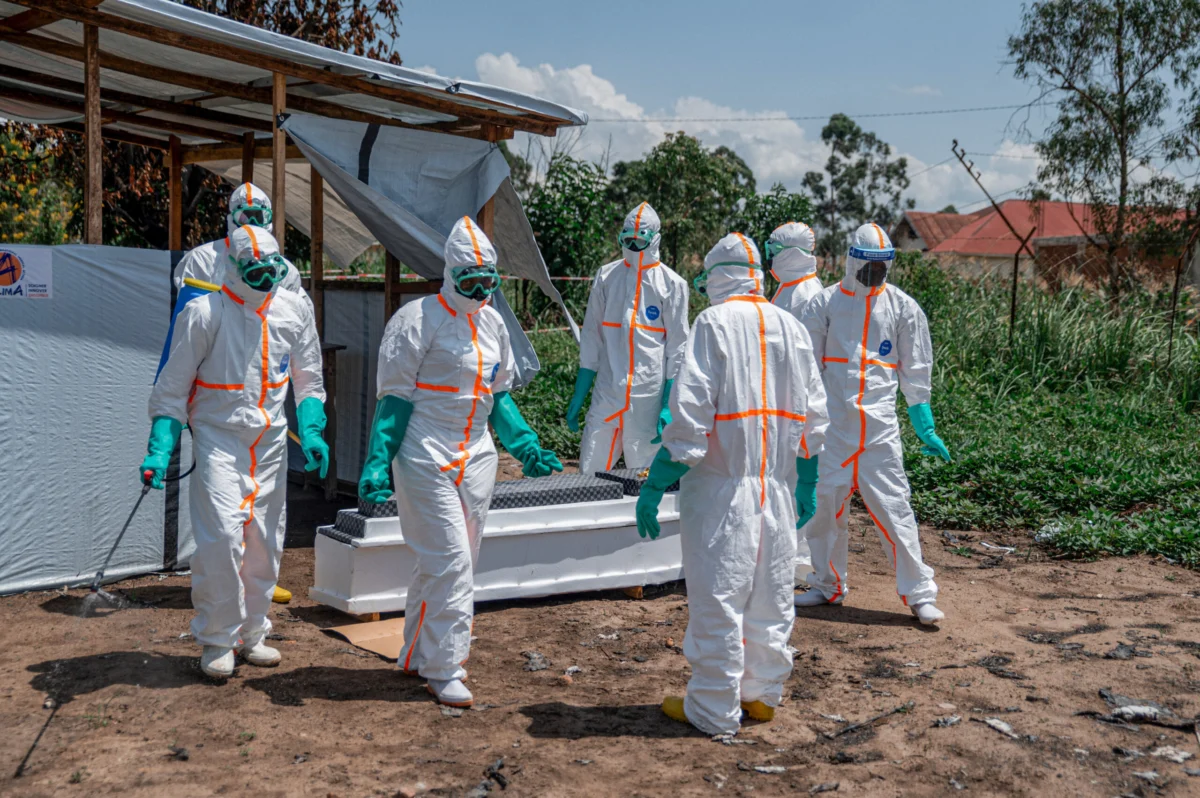
The Democratic Republic of Congo (DRC) is grappling with a rapidly escalating Ebola epidemic, marked by a devastating toll on its already fragile healthcare system and an alarming spread within densely populated displacement camps. As the death count surpasses 200, including 17 frontline medical professionals, fears are intensifying that the confluence of aid funding cuts and dire sanitation conditions is creating an unprecedented humanitarian and public health catastrophe, particularly among the millions displaced by years of conflict in the country’s eastern provinces.
Deepening Crisis for Frontline Healthcare Workers
The human cost of this latest Ebola outbreak is starkly evident in the statistics concerning healthcare workers. A senior official from the World Health Organization (WHO) confirmed on Friday that 75 healthcare workers had contracted the deadly virus since Congolese authorities officially declared the outbreak on May 15. This includes 17 medics who have tragically succumbed to the disease, a devastating loss for a nation already struggling with one of the world’s lowest ratios of healthcare professionals to its population, standing at approximately 11 health workers for every 10,000 people, according to WHO data.
Marie Roseline Belizaire, WHO emergency director, underscored the gravity of the situation, describing the outbreak as "serious" and "evolving so fast." Speaking via video link from the outbreak’s epicentre in eastern DRC, Belizaire highlighted the immense burden on the nation’s health infrastructure. "It is a really high price that the system, the healthcare system, is paying, because we don’t have enough of healthcare workers in DRC," she stated, emphasizing the critical shortage of personnel even before the epidemic began to decimate their ranks.
Compounding the tragedy is the belief among health officials that the rare Bundibugyo strain of Ebola had been circulating undetected for months before the official announcement. This silent spread meant that doctors, nurses, and other medical staff were exposed to the highly contagious virus without the knowledge or protective measures necessary to prevent infection. Even now, the availability of basic protective equipment remains a critical challenge, with many facilities reportedly struggling to secure essential items such as gloves, masks, and other personal protective equipment (PPE) crucial for limiting transmission. The psychological toll on those remaining is immense, with the WHO providing support to medics who fear treating patients after witnessing colleagues fall ill. Belizaire recounted heartbreaking testimonies, noting that hearing how colleagues were infected "can break your heart." In response to the crisis, China and Uganda have pledged to send medical teams to bolster the overwhelmed local response efforts.
The Unseen Threat: Ebola in Displacement Camps
Beyond the official health facilities, a more insidious threat looms within the vast network of displacement camps scattered across eastern DRC. These camps, born out of protracted conflict and insecurity, are now fertile ground for the rapid spread of Ebola. Overcrowding, severely inadequate sanitation, and, crucially, a pervasive resistance to testing are creating an environment where the virus can propagate largely undetected, escalating fears among humanitarian agencies.
The Kigonze camp in Bunia, Ituri province—one of the outbreak’s epicentres—has become a tragic focal point. At least 30 people have died in Kigonze since early May, a death rate described by camp officials as "unprecedented." What makes these deaths particularly alarming is the initial refusal by patients and their relatives to allow testing for Ebola, both for the living and the deceased. This resistance persisted until Thursday, as confirmed by a camp spokesperson and the aid organization Caritas. However, witnesses and aid sources told Reuters that the deceased exhibited symptoms highly consistent with Ebola, including severe headaches, fever, and vomiting. "People didn’t just die like this before," camp spokesperson Desire Grodya Bapi remarked, underscoring the unusual nature of the deaths.
Kigonze is home to more than 15,000 individuals, a fraction of the over five million internally displaced people (IDPs) in eastern DRC. The rising death toll within such a confined and vulnerable population has dramatically heightened concerns that Ebola may be spreading rapidly and extensively among the region’s displaced masses. The DRC hosts hundreds of such camps, some accommodating up to 100,000 people. Worryingly, Ebola deaths have already been recorded in at least one other camp in Ituri province, which alone accounts for over 90 percent of the nearly 900 confirmed cases across 31 health zones in the country. This stark reality underscores the urgent need for targeted interventions within these highly susceptible communities.
A History of Struggle: Ebola in the DRC Context
The current outbreak, though alarming, is not an isolated event but rather the latest chapter in the DRC’s long and tragic history with Ebola. This marks the country’s 10th (or 11th, depending on precise epidemiological classifications) recorded outbreak since the virus was first identified near the Ebola River in 1976. The frequent recurrence of Ebola in the DRC is largely attributable to its rich biodiversity, which includes numerous animal reservoirs for the virus, combined with persistent challenges in public health infrastructure and security.
This particular outbreak is caused by the Bundibugyo strain of Ebola, a less common but still highly lethal variant. While the Zaire strain, responsible for the devastating 2014-2016 West African epidemic, is often associated with fatality rates exceeding 50%, the Bundibugyo strain typically presents a case fatality rate ranging from 25% to 80%. Its presence in a region already destabilized by decades of conflict introduces unique complexities for containment. Eastern DRC has been plagued by chronic instability, with numerous armed groups vying for control of lucrative mineral resources, leading to widespread violence, mass displacement, and the destruction of essential services. This environment of insecurity makes contact tracing, safe burials, and the delivery of medical aid exceedingly difficult and dangerous for responders. The constant movement of populations fleeing violence further complicates efforts to track and isolate infected individuals, creating potential pathways for wider regional dissemination.
Chronology of the Current Outbreak
The timeline of this outbreak highlights the challenges of early detection and rapid response in a complex humanitarian setting:
- Pre-May 15: Health officials now believe the Bundibugyo strain had been silently spreading for several months. This critical period of undetected transmission allowed the virus to gain a foothold, particularly among unsuspecting healthcare workers, before official recognition.
- May 15: Congolese authorities formally declare the Ebola outbreak in North Kivu province, following confirmation of cases. This marks the official start of the emergency response.
- Initial Weeks/Months: Early response efforts are hampered by insecurity and community resistance in some areas, making it difficult for health teams to access affected communities and implement crucial measures like safe burials and contact tracing.
- Ongoing: The outbreak expands geographically, affecting 31 health zones. Ituri province emerges as a primary hotspot, accounting for over 90% of confirmed cases.
- Recent Weeks: The death toll steadily climbs, surpassing 200, with a significant number of healthcare workers among the deceased. Concerns about spread in displacement camps become increasingly pronounced with reports from Kigonze and other sites.
- Current Status (as of Thursday’s reports): The outbreak has claimed 232 lives and infected 896 people. Health officials warn that the outbreak has not yet reached its peak, indicating a continuing upward trend in cases and fatalities.
International Response and Critical Funding Shortfalls
The international community has begun to mobilize, but the response faces significant financial hurdles. African Union member states have collectively pledged nearly $1 billion to support emergency efforts in eastern DRC and neighboring Uganda, which has reported 19 confirmed cases and two deaths, underscoring the regional threat. The WHO continues to play a central coordinating role, providing technical expertise, logistical support, and, critically, psychological aid to exhausted and traumatized frontline workers.
However, a more insidious challenge lies in the severe underfunding of essential public health programs, particularly those related to Water, Sanitation, and Hygiene (WASH). Aid workers on the ground lament that recent funding cuts have made the emergency even more dangerous. Donors, including the United States under President Donald Trump’s administration, have reportedly reduced their support for WASH initiatives, which are absolutely vital in controlling the spread of diseases transmitted through bodily fluids, such as Ebola.
UN data paints a grim picture: funding specifically allocated for toilets and handwashing stations in the DRC more than halved between 2024 and 2025, plummeting to approximately $38 million. For the current year, an $80 million appeal for these critical programs is only 21 percent funded, leaving a gaping hole in the resources needed to protect vulnerable populations. This reduction in basic public health infrastructure directly compromises the ability to prevent disease transmission in crowded settings like displacement camps, where rudimentary hygiene facilities are often the first line of defence against epidemics. The lack of adequate sanitation infrastructure directly facilitates the rapid spread of pathogens, turning already precarious living conditions into potential hotbeds for outbreaks.
Challenges to Containment: Insecurity and Community Mistrust
The inherent challenges of combating Ebola are amplified by the pervasive insecurity and deep-seated community mistrust in eastern DRC. Armed conflict not only displaces populations and destroys infrastructure but also creates an environment of fear and suspicion that impedes public health interventions. Aid workers and medical teams often operate at significant personal risk, with access to certain areas severely restricted by ongoing hostilities. This makes crucial activities like contact tracing, vaccination campaigns, and safe burial practices difficult, if not impossible, in some of the most affected areas.
Furthermore, historical grievances, political manipulation, and a lack of understanding about the virus have fostered significant community resistance to Ebola response efforts. Misinformation and rumors can lead to outright hostility towards health workers, refusal of medical care, and the concealment of sick individuals or deceased loved ones, as observed in the Kigonze camp. Traditional burial practices, which often involve close physical contact with the deceased, also pose a significant transmission risk if not adapted with strict safety protocols. Overcoming this mistrust requires sustained, culturally sensitive community engagement, building relationships of trust over time, and ensuring that local communities are active participants, rather than passive recipients, in the response efforts.
Regional Implications and Global Health Security
The proximity of the outbreak to international borders, particularly with Uganda, raises serious concerns about regional spillover. Uganda’s confirmed cases and deaths serve as a stark reminder that Ebola respects no borders. The highly mobile populations along these borders, driven by trade, family ties, and displacement, present a constant risk for cross-border transmission. A widespread regional outbreak would not only overwhelm the already strained health systems of neighboring countries but also pose a significant threat to global health security. The international community’s failure to contain Ebola in one country has historically demonstrated its potential to become a global crisis, as seen during the West African epidemic. Robust cross-border surveillance, coordinated regional response strategies, and rapid deployment of resources are therefore paramount to prevent a broader catastrophe.
The Path Forward: Sustained Support and Holistic Approach
The current Ebola crisis in the DRC demands an urgent, comprehensive, and sustained response. Beyond immediate medical interventions, there is a critical need to address the underlying vulnerabilities that enable such outbreaks to flourish. This includes:
- Increased and sustained funding for WASH programs: Reversing the trend of aid cuts and fully funding appeals for water, sanitation, and hygiene infrastructure is non-negotiable for preventing disease spread in displacement camps and beyond.
- Strengthening healthcare systems: Long-term investment in training, equipping, and supporting local healthcare workers, improving infrastructure, and ensuring a stable supply of PPE are essential to build resilience against future epidemics.
- Enhanced community engagement: Culturally appropriate strategies to build trust, combat misinformation, and encourage early reporting, testing, and safe practices are crucial for effective containment.
- Addressing root causes of displacement: Tackling the ongoing conflict and instability in eastern DRC is fundamental. Without peace and security, humanitarian crises will continue to erupt, making public health emergencies even harder to manage.
- Regional coordination: Strengthening cross-border collaboration, surveillance, and joint response planning among affected and neighboring countries is vital to prevent wider regional dissemination.
The current situation in the DRC is a stark reminder of the interconnectedness of public health, humanitarian aid, and geopolitical stability. The escalating Ebola crisis, exacerbated by aid cuts and the dire conditions in displacement camps, is a test of the international community’s commitment to protecting the most vulnerable. Failure to act decisively and comprehensively now will not only deepen the suffering within the DRC but also heighten the risk of a wider regional and potentially global health emergency.
