

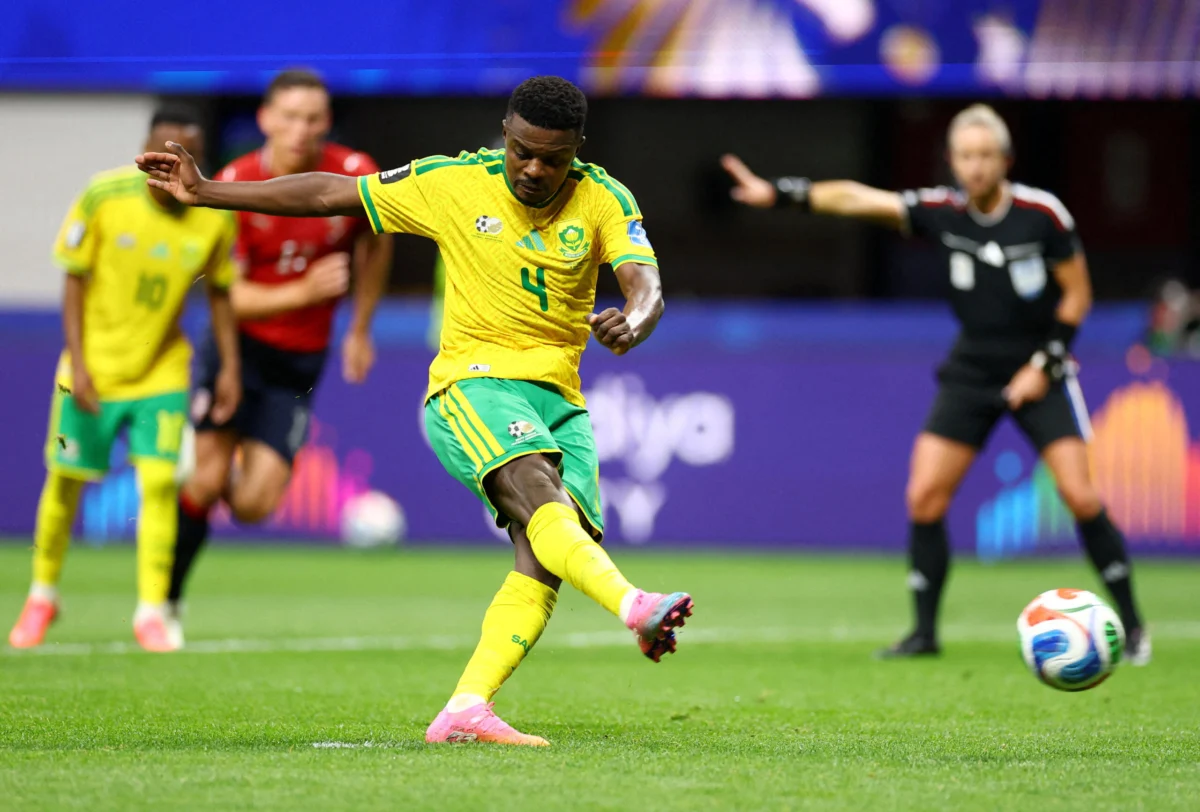
South Africa salvaged a crucial point in their FIFA World Cup 2026 Group A campaign, fighting back from an early deficit to secure a 1-1 draw against Czechia. A late penalty, confidently dispatched by Teboho Mokoena in the 83rd minute, provided the lifeline for Bafana Bafana after Michal Sadílek had given the Czechs a sixth-minute lead. The result leaves both nations with a single point after two matches, intensifying the stakes for their final group stage fixtures.
Match Overview: A Crucial Point Earned in Atlanta
The encounter, held at the state-of-the-art Atlanta Stadium in Georgia, was a high-stakes affair for both teams, each having suffered defeats in their opening Group A fixtures. For South Africa, a loss would have put them on the brink of early elimination from their fourth World Cup appearance. Czechia, equally eager to rebound from their initial setback, started brightly and appeared poised to claim all three points until a contentious handball decision dramatically altered the narrative in the dying minutes. The draw represents a psychological boost for the South Africans, demonstrating resilience, while for Czechia, it will be viewed as two points dropped from a winning position.
A Detailed Chronology of the Clash
Pre-Match Atmosphere and Early Exchanges:
The atmosphere in Atlanta, despite noticeable empty seats in the expansive NFL stadium, was charged with anticipation. Fans, many draped in South African colours, contributed to a vibrant backdrop. Both sides knew the importance of a positive result. Czechia, under Miroslav Koubek, signalled their attacking intent almost immediately. In the very first minute, star striker Patrik Schick, fresh off another strong season with Bayer Leverkusen, found himself in a prime position. A well-delivered cross presented him with a header from close range, but his effort sailed wide, a miss that would later prove costly. This early opportunity set the tone for Czechia’s initial dominance, pressing high and looking to exploit any defensive frailties.
Czechia Strikes First:
The Czechs did not have to wait long to capitalize on their early pressure. Just five minutes after Schick’s miss, in the sixth minute of play, the deadlock was broken. The move originated from the right wing, where Adam Hložek delivered a precise cross into the penalty area. Alexandr Sojka, displaying excellent vision and composure, cushioned the ball perfectly into the path of Michal Sadílek. Sadílek, unmarked and with time, calmly stroked a left-footed shot past the outstretched arms of South African goalkeeper Ronwen Williams. The goal ignited celebrations among the Czech contingent and sent a wave of concern through the South African faithful, highlighting the defensive vulnerabilities that Bafana Bafana had displayed in their opening match.
Bafana Bafana’s Struggle and Second Half Resilience:
Trailing early, South Africa struggled to find their rhythm in the first half. The Czech midfield effectively stifled their attempts to build play, and the attacking quartet often found themselves isolated. Coach Hugo Broos’s side, known for their defensive solidity and counter-attacking prowess, seemed disjointed. Czechia, meanwhile, continued to create chances, albeit without the clinical edge needed to extend their lead. The second half saw a more determined South African outfit, though the quality in the final third remained a concern. Czechia, however, also missed opportunities to put the game beyond doubt. Vladimir Darida dallied too long on a clear-cut chance, allowing the defence to recover, and Lukas Cerv forced a superb save from Ronwen Williams with a powerful long-range effort. These missed chances kept South Africa in the game, providing a glimmer of hope as the clock wound down. The mid-half hydration breaks, a feature of the tournament in warmer climates or enclosed stadiums, were met with boos from the Atlanta crowd, eager for continuous action.
The Penalty Moment and Mokoena’s Composure:
As the match entered its final phase, South Africa pushed harder, driven by the urgency of their situation. In the 81st minute, a moment of high drama unfolded. Thapelo Maseko unleashed a shot from just inside the penalty area. The ball struck the arm of Czech defender Pavel Šulc, who appeared to be attempting to block the shot. Referee Tori Penso, part of an all-female officiating team for this fixture – a significant milestone for FIFA – did not hesitate, immediately pointing to the spot. The decision was reviewed by VAR, but the on-field call stood, much to the dismay of the Czech players and bench. Teboho Mokoena, the Mamelodi Sundowns midfielder, stepped up to take the penalty. Under immense pressure, with the hopes of a nation resting on his shoulders, Mokoena struck the ball powerfully and accurately into the bottom corner, leaving Czech goalkeeper Matěj Kovář with no chance. It was South Africa’s first World Cup goal in 16 years, igniting pandemonium among the Bafana Bafana supporters.
A Tense Conclusion:
The equalizer injected renewed energy into the South African side. Just five minutes after their goal, they nearly snatched a winner when Relebohile Mofokeng found space, but his shot was well saved by Kovář. The final minutes were a frantic back-and-forth, with both teams pushing for a decisive goal. However, neither side could find the breakthrough, and the whistle blew, confirming a 1-1 draw.
Group A Dynamics and Pre-Match Stakes
Before this match, the Group A standings painted a clear picture of urgency for both South Africa and Czechia. Both teams had opened their World Cup 2026 campaigns with defeats. South Africa had fallen to a narrow loss against co-hosts Mexico, while Czechia had been overcome by a strong South Korea side. With zero points each, this fixture in Atlanta was effectively a must-not-lose for both, as another defeat would severely jeopardise their chances of progressing to the knockout stages, especially with two strong contenders like Mexico and South Korea also vying for qualification. The draw means both teams now sit on one point, trailing Mexico and South Korea, who were set to face off later on the same day. The expanded format of the 2026 World Cup, featuring 48 teams and more third-place teams potentially advancing, offers a sliver of hope, but points on the board are paramount.

Team Analysis: South Africa’s Journey and Challenges
South Africa’s participation in the 2026 World Cup marks their fourth appearance on the global stage, following outings in 1998, 2002, and as hosts in 2010. Despite the honour of hosting, they remain the only host nation never to have progressed beyond the group stage. This historical context adds significant weight to their current campaign.
Under the guidance of Belgian coach Hugo Broos, Bafana Bafana has experienced a notable resurgence since he took charge five years ago. Broos, who famously led Cameroon to an Africa Cup of Nations (AFCON) title in 2017, has instilled a sense of discipline and tactical awareness within the squad. His tenure saw South Africa qualify for the World Cup after missing out since 2002 (excluding their automatic qualification as hosts in 2010). Their impressive run to a third-place finish at the 2023 Africa Cup of Nations, where they showcased a robust defence and a spirited team ethic, highlighted their potential.
However, their return to the World Cup stage has, as the early matches suggest, exposed some persistent challenges, particularly in the attacking third. While defensively organized and industrious in midfield, a consistent lack of a prolific goalscorer and creative spark upfront has often hampered their ability to convert chances into goals. The reliance on set-pieces and moments of individual brilliance, as seen with Mokoena’s penalty, underscores this issue. Broos will be acutely aware that for South Africa to have any chance of making history and advancing from the group, they will need to find more attacking impetus in their final match.
Team Analysis: Czechia’s Quest for Revival
Czechia, formerly part of Czechoslovakia, boasts a rich footballing heritage, with their predecessors reaching two World Cup finals (1934, 1962) and winning the European Championship in 1976. As an independent nation, they achieved remarkable success at Euro 1996, reaching the final, and were semi-finalists at Euro 2004. However, their World Cup appearances as Czechia have been less frequent and less successful, with their last participation before 2026 being in 2006.
The current Czech squad, managed by Miroslav Koubek, is characterized by a strong collective spirit and tactical discipline, but perhaps lacks the individual "star quality" that defined some of their golden generations. Patrik Schick, the Bayer Leverkusen forward, is undoubtedly their most recognizable and influential player, a potent goalscorer capable of moments of brilliance. However, as demonstrated by his early miss and the team’s inability to kill off the game, even his presence isn’t always enough to guarantee victory against resilient opponents. The midfield is industrious, featuring players like Tomáš Souček (though not explicitly mentioned as playing in this match, he’s a key figure in the squad), providing a solid defensive screen and contributing to attacks. The team relies on a structured approach, aiming to exploit set-pieces and quick transitions. The draw against South Africa will undoubtedly be a source of frustration, as they had control of the game for long periods and created sufficient opportunities to secure a win.
Tactical Insights and Key Performances
The match was a tale of contrasting tactical approaches and individual moments. Czechia started with a high-pressing, attacking philosophy, utilizing their wingers and the robust presence of Hložek to deliver crosses for Schick. Their early goal showcased a well-executed attacking play, with Sojka’s assist being particularly astute. However, as the game progressed, particularly in the second half, Czechia seemed to become more cautious, perhaps sitting deeper to protect their lead. This allowed South Africa to gain more possession and territory, though they struggled to break down a well-organised Czech defence.
Key performances included Michal Sadílek for his composed finish and Ronwen Williams for a series of crucial saves that kept South Africa in the game, especially his stop from Cerv. Teboho Mokoena’s penalty demonstrated immense mental fortitude. For Czechia, the collective effort was strong in the first half, but the missed chances from Schick, Darida, and Cerv will be major talking points. The lack of ruthlessness in front of goal ultimately cost them two valuable points.
Coaches’ Reflections and Player Reactions (Inferred)
While official post-match statements are typically carefully worded, the sentiments of the respective camps can be reasonably inferred.
Hugo Broos (South Africa): Coach Broos would undoubtedly emphasize the resilience and fighting spirit of his Bafana Bafana squad. He would likely commend their character to come back from a goal down against a technically sound European opponent. However, he would also likely acknowledge the ongoing challenges in attacking fluidity and creativity, stressing the need for improvement in their final group fixture. The draw, while not a win, provides a platform and psychological boost that they are not out of contention.

Miroslav Koubek (Czechia): The Czech coach would almost certainly express disappointment at failing to hold onto a lead for so long. The missed opportunities to extend their advantage would be a significant point of frustration. While acknowledging South Africa’s fighting spirit, Koubek would likely lament the handball decision that led to the penalty, perhaps questioning its severity, and focusing on his team’s inability to close out the match. The feeling in the Czech camp would be one of two points dropped rather than one point gained.
Player Reactions: Teboho Mokoena would speak of pride and relief at scoring such a crucial goal for his nation. Michal Sadílek would likely reflect on the initial joy of scoring, which was later overshadowed by the draw. Pavel Šulc, whose handball led to the penalty, would undoubtedly feel a sense of misfortune, though team-mates would rally around him.
The Road Ahead: Qualification Scenarios
The draw leaves Group A finely poised, with all four teams technically still in contention for the knockout stages, though Mexico and South Korea will hold an advantage depending on their match result.
South Africa’s Next Challenge: Bafana Bafana will face South Korea in their final Group A match. This will be another formidable test against a technically proficient and fast-paced Asian side. For South Africa to advance, they will likely need a win against South Korea and potentially rely on other results going their way, or at least secure a draw and aim for a third-place finish that could see them qualify based on goal difference or points compared to other third-placed teams across the tournament. Their defensive solidity will be key, but they must find a way to create and convert more chances.
Czechia’s Daunting Task: Czechia faces the formidable challenge of playing co-hosts Mexico in the iconic Estadio Azteca. Playing against a passionate home crowd and a strong Mexican side will be an immense hurdle. To progress, Czechia will almost certainly need to secure a victory against Mexico, a task made even harder by the environment. Their ability to manage pressure and convert opportunities will be paramount in this high-stakes encounter.
Broader Implications for World Cup 2026
This match in Atlanta highlights several broader implications for the FIFA World Cup 2026. The expanded format, while offering more teams a chance, also creates more tightly contested groups where every point matters immensely. The early results in Group A underscore the competitive nature of the tournament, with no easy games.
The match also showcased the challenges of hosting a World Cup across multiple countries and climates. The Atlanta Stadium, a technologically advanced venue with air conditioning, still saw hydration breaks, indicating the global nature of the event requires careful planning for player welfare. The attendance, while respectable, also indicated that even for a major tournament, filling NFL stadiums for non-local matches can be a challenge.
The inclusion of an all-female officiating team, led by Tori Penso, was a significant moment for gender equality in football, demonstrating FIFA’s commitment to diversifying opportunities at the highest levels of the sport. Their confident handling of a high-pressure situation, including a critical VAR review, further solidifies their place in top-tier officiating.
Ultimately, the draw between South Africa and Czechia was a microcosm of the World Cup: moments of brilliance, missed opportunities, contentious decisions, and unwavering resilience. It ensures that Group A will go down to the wire, promising a thrilling conclusion to the first phase of the tournament.
