

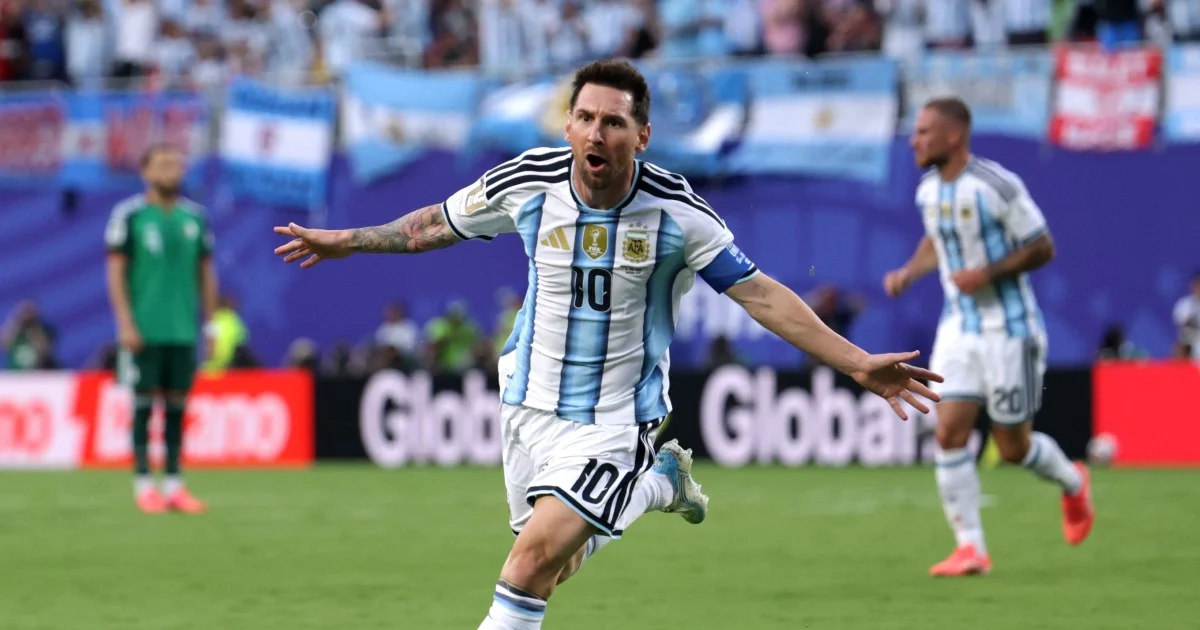
The opening week of the FIFA World Cup 2026 has delivered an immediate spectacle, captivating audiences across the globe with a potent mix of viral fan moments, on-field controversies, stunning individual performances, and earth-shattering upsets. As the expanded 48-team tournament finds its rhythm across the vast landscapes of the United States, Canada, and Mexico, the initial round of group matches has already set a high bar for excitement and unpredictability, defying pre-tournament expectations and crafting fresh narratives for football’s most prestigious event. From a historic hat-trick by Lionel Messi to the unexpected struggles of established giants and the joyous arrival of minnows on the global stage, the tournament’s inaugural phase has proven that the beautiful game continues to evolve, challenge, and surprise.
The Grand Stage: Context of the 2026 FIFA World Cup
This edition of the FIFA World Cup marks a monumental shift in the tournament’s history, expanding from 32 to 48 teams for the first time. Co-hosted by three North American nations – the United States, Canada, and Mexico – it represents the largest and most geographically expansive World Cup ever staged. This expansion has been designed to offer more opportunities for nations from developing football regions to participate, fostering global growth for the sport. The increased number of teams translates into 104 matches, spread across 16 cities, demanding unprecedented logistical coordination and promising an even greater feast of football for fans. Prior to kick-off, traditional powerhouses like Spain, Brazil, Argentina, France, and Germany were widely considered frontrunners, while the expanded format fueled hopes for a "dark horse" contender to emerge from the larger pool of participants. The opening week has already indicated that these aspirations are not unfounded, with several lower-ranked teams making their presence felt against footballing titans.
Chronology of an Unforgettable Opening Week
The tournament commenced on June 11, with simultaneous opening matches across the three host nations. Mexico faced South Africa in Mexico City, Canada played an unheralded opponent in Toronto, and the United States took on a formidable European side in Los Angeles. These initial fixtures set the stage for a whirlwind of group stage encounters over the subsequent days. Key moments unfolded rapidly: Germany’s emphatic victory over debutants Curacao on June 14, followed by Spain’s surprising draw against Cape Verde on June 15. The weekend brought Lionel Messi’s record-breaking performance for Argentina against Algeria on June 16, and Kylian Mbappé’s heroics for France against Senegal. The week concluded with Portugal’s unexpected stalemate against DR Congo on June 17, leaving fans and analysts buzzing about the implications for the remainder of the group stage.

Messi’s Enduring Brilliance: A Narrative Redefined
Before the tournament’s commencement, widespread speculation suggested that the FIFA World Cup 2026 might serve as Lionel Messi’s swansong, his "last dance" on football’s grandest stage. However, the legendary Argentine maestro emphatically dispelled such notions with a breathtaking performance in Argentina’s opening group match against Algeria. Messi delivered his first-ever World Cup hat-trick, a historic feat that not only secured a vital victory for his nation but also saw him draw level with Miroslav Klose’s all-time record of 16 World Cup goals. The three goals – a deftly placed penalty, a clinical finish from open play, and a trademark curling free-kick – showcased the full spectrum of his unparalleled skill, reminding the world that even at 39, his genius remains undiminished. Analysts widely lauded his agility and vision, noting that his influence on the game extended far beyond his goal tally, dictating play and creating numerous opportunities for his teammates. This early statement of intent has significantly bolstered Argentina’s confidence and repositioned Messi not as a player winding down his career, but as a formidable contender for individual and team glory, further enriching his already legendary status.
Ronaldo’s Quiet Start: Portugal’s Early Stumble
In stark contrast to his long-time rival, Cristiano Ronaldo experienced a subdued opening to his likely record-setting sixth World Cup appearance. In Portugal’s Group K opener against the Democratic Republic of Congo, which ended in a surprising 1-1 draw, Ronaldo’s performance was largely anonymous. Despite leading the line for a team ranked fifth globally by FIFA, the 41-year-old forward struggled to impact the game, failing to register a significant shot on target or create decisive opportunities. This display immediately triggered discussions among pundits and fans about his current form and whether he is "past his prime." The collective questioning underscored the high expectations placed upon him, particularly in the wake of Messi’s sensational start. For Portugal, a nation with genuine title aspirations, the draw against a resilient DR Congo side (ranked 67th globally) represents a significant setback, placing immediate pressure on their subsequent group stage matches. The team’s reliance on Ronaldo’s individual brilliance appears to be diminishing, prompting tactical questions for head coach Roberto Martínez as Portugal navigates a challenging path forward.
Mbappé’s Relentless Ascent: French History Maker
Kylian Mbappé, the prodigious French forward, continued his relentless assault on football records during France’s 3-1 victory over Senegal. The 27-year-old scored a crucial brace, propelling him past Olivier Giroud to become France’s all-time leading scorer in World Cup history with 14 goals. This remarkable achievement, accomplished in just his third World Cup, further solidified his reputation as one of the game’s most prolific and impactful players. Mbappé is now just two goals shy of matching Miroslav Klose’s overall World Cup goal record, a testament to his extraordinary consistency and predatory instinct in front of goal. His pace, dribbling, and clinical finishing were on full display, providing the cutting edge for the defending champions. The early form of Mbappé signals France’s serious intent to retain their title, with their star forward clearly in contention for the Golden Boot and poised to break more historical milestones throughout the tournament.

The Golden Boot Race: An Early Snapshot
The race for the Golden Boot, awarded to the tournament’s highest goal scorer, has ignited with ferocity from the very first whistle. Lionel Messi, with his opening week hat-trick, has taken the early lead with three goals. Hot on his heels, a formidable cohort of seven players, each with two goals, are vying for supremacy. This group includes some of the sport’s most lethal attackers: England’s captain Harry Kane, Norway’s towering striker Erling Haaland, and France’s record-breaking Kylian Mbappé. Other notable names among the two-goal scorers include Germany’s Kai Havertz, Brazil’s Vinicius Jr., and Uruguay’s Darwin Núñez, highlighting the diverse talent pool contributing to the tournament’s high-scoring start. This competitive early showing promises an enthralling individual battle that will run parallel to the team competition, adding another layer of excitement for fans tracking every goal.
Seismic Shocks: Favourites Stumble, Underdogs Roar
The opening week provided irrefutable proof that in an expanded World Cup, no team can be underestimated. The tournament’s biggest upset thus far unfolded when Spain, widely considered one of the absolute frontrunners and ranked No. 2 in the world, was held to a shock goalless draw by Cape Verde. The archipelago nation, situated off the west coast of Africa with a population of just over half a million people, sits a remarkable 65 places below Spain in the FIFA world rankings. Their disciplined defensive performance and tactical resilience against a star-studded Spanish side sent shockwaves through the footballing world, highlighting the growing competitiveness of smaller nations.
Adding to the narrative of upsets, the Democratic Republic of Congo delivered another significant blow by holding Cristiano Ronaldo’s Portugal to a 1-1 draw. Yoane Wissa’s historic goal, the DR Congo’s first-ever at a World Cup, ignited jubilant celebrations from Kinshasa to Niangara. This result, against a team ranked No. 5 globally, served as a stark warning that these "underdogs" are not merely here to make up the numbers but are prepared to challenge the established order, leveraging their passion and tactical acumen on the world’s biggest stage. These early results inject an unpredictable dynamic into the group stages, forcing traditional powerhouses to re-evaluate their strategies and underscoring the universal appeal of football’s ability to defy expectations.
Curacao’s Moment: A Debut Filled with Pride

While not an upset in terms of result, the Caribbean island nation of Curacao made a memorable debut at the World Cup despite a formidable 7-1 defeat against a clinical German side. As the smallest country ever to play in a FIFA World Cup, Curacao’s participation was a victory in itself. The overwhelming scoreline did little to dampen the spirits of their passionate fans, many of whom made the long journey to the United States. The highlight for the island nation came when Livano Comenencia scored Curacao’s historic first-ever World Cup goal, a moment of unbridled joy and national pride. Comenencia instantly became a hero across the island, embodying the dream of every young player from a developing football nation. Their presence in the tournament, a direct result of the expanded format, underscored the World Cup’s role as a platform for global inclusion, allowing smaller footballing nations to experience the pinnacle of the sport and inspire future generations.
The Unseen Threads: Fashion and Fandom
Beyond the goals and tactical battles, the opening week of the World Cup has also been defined by vibrant cultural expressions and intriguing trends. One notable observation has been the widespread adoption of "electric fuchsia" footwear. Pink boots, or cleats as they are known in North America, have become a ubiquitous sight on the pitches, sported by players across various teams and sponsored by all major sportswear giants – Nike, Adidas, and Puma. This eye-catching trend highlights a blend of player individuality and strategic brand marketing, adding a splash of colour to the competitive environment.
Off the pitch, the World Cup has reaffirmed its status as the ultimate global celebration of football. Fanbases from around the world have descended upon the host cities, transforming them into vibrant cultural melting pots. Brazil’s supporters, with their iconic green-and-yellow shirts, pulsating drums, and infectious samba rhythms, brought a slice of Rio de Janeiro to the streets of New York. Moroccan fans joined the festive atmosphere, their red flares illuminating the night sky and signaling their passionate support. In Boston, Scotland’s legendary "Tartan Army" made their presence felt, their boisterous camaraderie and enthusiastic consumption of local brews reportedly pushing some establishments to the brink of running out of beer during their memorable "occupation" of the city. These scenes encapsulate the unparalleled spirit and global unity that the World Cup fosters.
Merlin the Duck: Mexico’s Unofficial Mascot
In a delightful and uniquely Mexican twist, the football craze in co-host nation Mexico has extended beyond human fandom. A domesticated duck named Merlin has waddled his way into the hearts of many, becoming an unlikely unofficial mascot for Mexico’s World Cup campaign. Sporting a miniature Mexico shirt and custom-made duck socks, Merlin gained viral fame after a chance encounter on Reforma Avenue in Mexico City. His charming presence, frequently captured by local media and shared widely on social platforms, perfectly encapsulates the profound and often quirky passion that Mexicans hold for football. Merlin’s rise to internet stardom is a testament to how deeply the sport permeates cultural life, inspiring endearing and unexpected expressions of national pride.

Broader Implications and The Road Ahead
The opening week of the FIFA World Cup 2026 has provided a compelling preview of what promises to be an extraordinary tournament. The early upsets serve as a powerful reminder that the expanded format genuinely fosters greater competitiveness, with fewer guarantees for established giants. This dynamic could lead to more unpredictable group stages and a heightened sense of excitement as teams fight for every point. For the host nations, the initial influx of fans and the smooth running of events have been positive indicators of their readiness to manage such a large-scale international spectacle, with significant economic and cultural benefits already being observed in cities like New York, Boston, and Mexico City.
As the tournament progresses into the second round of group matches, the stakes will only rise. Teams that stumbled in their openers, such as Spain and Portugal, will face immense pressure to secure victories and salvage their campaigns. Meanwhile, the momentum gained by high-flying teams like Argentina and France, along with the confidence boosted by underdogs like Cape Verde and DR Congo, will shape the narratives for the coming weeks. The blend of individual brilliance, collective effort, dramatic upsets, and vibrant fan culture has ensured that the FIFA World Cup 2026 has begun with a bang, promising a truly unforgettable celebration of the global game.
