

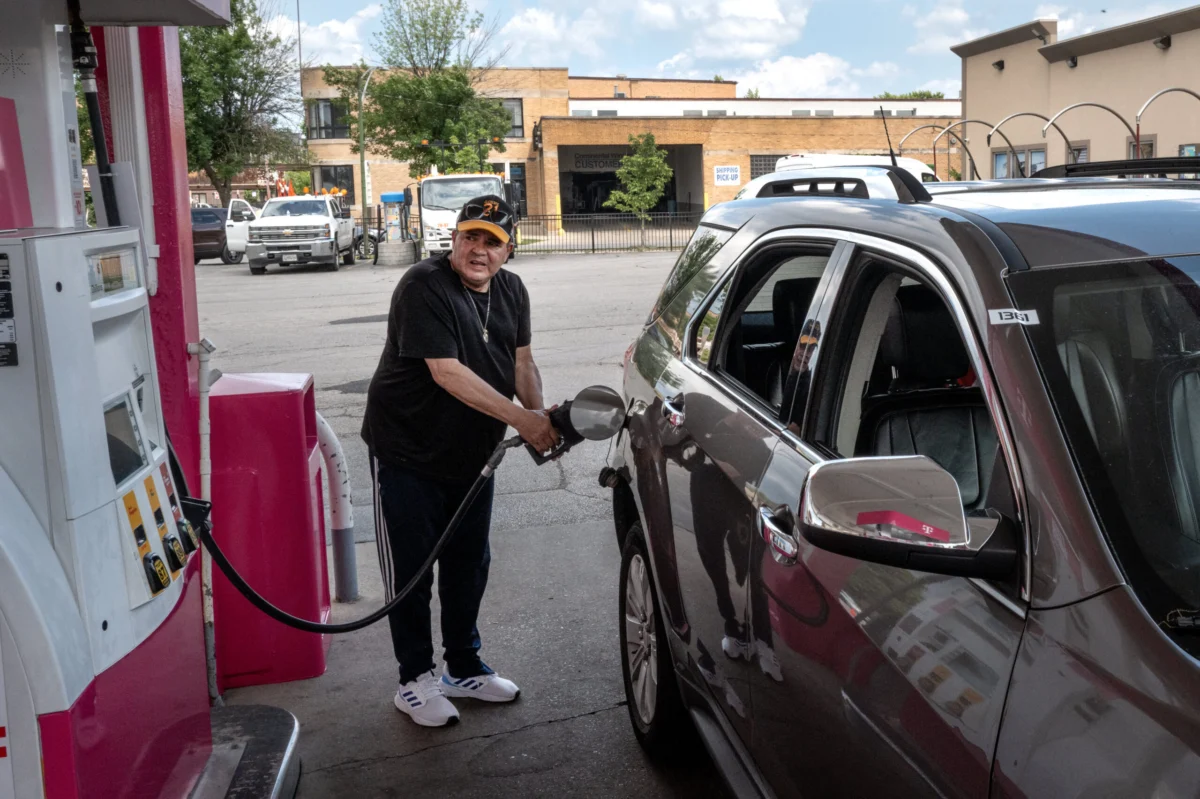
The Federal Reserve, under the fresh leadership of newly appointed Chairman Kevin Warsh, concluded its inaugural policy meeting on Wednesday by opting to hold interest rates steady. This decision, while widely anticipated by market analysts, offered little immediate reprieve for American consumers grappling with a persistent surge in gas prices and an overarching crisis of affordability. The central bank’s stance underscores a challenging economic landscape, with inflation showing stubborn resilience just as a new era begins for the nation’s monetary policy.
A New Era at the Fed: Warsh’s Debut Amidst Economic Headwinds
Kevin Warsh’s swearing-in ceremony on May 22, 2026, in the East Room of the White House, marked a pivotal moment for the Federal Reserve. Handpicked by President Donald Trump, Warsh, a former Federal Reserve governor with a distinguished career in finance and economics, assumed the helm of an institution at a critical juncture. His appointment had been met with a mix of anticipation and speculation, particularly given his prior inclinations, which at times suggested a lean towards more accommodative monetary policies, potentially favoring lower interest rates to stimulate economic growth. This initial expectation, however, quickly collided with the stark realities of the current economic data, setting the stage for a cautious debut.
The June Federal Open Market Committee (FOMC) meeting was Warsh’s first opportunity to shape the central bank’s direction. The decision to maintain the federal funds rate within its existing target range reflected a consensus that, despite the political rhetoric and consumer hardship, the inflationary pressures confronting the U.S. economy demanded a restrained approach. This conservative opening move by Warsh signals a potentially pragmatic shift, prioritizing price stability even when it means foregoing immediate economic stimulus or defying presidential preferences.
The Inflationary Pressure Cooker: A Closer Look at Rising Costs
The primary driver behind the Fed’s decision was the alarming acceleration of inflation. Just last month, the Consumer Price Index (CPI) report for May 2026 revealed that inflation had risen at its fastest pace in three years, shocking many economists and policymakers. This broad-based increase was significantly propelled by a sharp jump in energy costs, a direct consequence of escalating geopolitical tensions in the Middle East, specifically the ongoing Iran War, which has disrupted global oil supplies and sent crude prices soaring.
Economists widely acknowledge that such a significant rise in energy prices carries potent inflationary effects, cascading through supply chains and impacting a multitude of goods and services. Transportation costs for businesses increase, leading to higher prices for consumers at the grocery store, the pump, and nearly every point of purchase. The core inflation rate, which strips out volatile food and energy prices, also showed upward momentum, indicating that price pressures were not confined solely to the energy sector but were becoming more entrenched across the economy.
Stephen Kates, a certified financial planner and financial analyst at Bankrate, encapsulated the gravity of the situation, stating, "The Fed can no longer claim there is a balance of risks; inflation is the problem." This sentiment underscores the growing consensus among experts that the central bank’s primary focus must now unequivocally be on taming inflation, even if it means confronting the politically unpopular prospect of higher borrowing costs. The Fed’s dual mandate of achieving maximum employment and price stability currently leans heavily towards the latter, as unchecked inflation threatens long-term economic stability and erodes purchasing power for all Americans.
The Fed’s Dilemma: Balancing Mandates Under Scrutiny
The Federal Reserve’s independence is a cornerstone of its effectiveness, allowing it to make monetary policy decisions free from direct political interference. However, this independence is frequently tested, especially when presidential administrations have clear preferences. President Trump’s known desire for lower interest rates to bolster economic growth and ease borrowing costs for businesses and consumers presented a delicate challenge for Chairman Warsh in his inaugural meeting.
Despite these external pressures, the FOMC’s decision to hold rates steady suggests a collective determination to adhere to data-driven policymaking. The robust inflation data, coupled with a relatively tight labor market (even if wage growth isn’t keeping pace with inflation for many), provided a compelling argument against any immediate rate cuts. In fact, many experts now believe that the sustained inflationary pressures could prompt the central bank to consider raising borrowing costs in the near future – a move that would directly contradict the President’s stated preference and further tighten financial conditions for households and businesses.
Such a hawkish pivot, if it materializes, would be a significant development, signaling the Fed’s resolve to bring inflation back to its target range, typically around 2%. The challenge for Warsh and the FOMC lies in threading this needle: cooling an overheated economy without triggering an economic downturn or significantly increasing unemployment. It’s a delicate balancing act, with every policy move scrutinized for its potential ripple effects across global markets and domestic households.
Direct Impact on American Households: The Wallet Squeeze
The implications of persistently elevated interest rates, and the looming threat of further hikes, cast a long shadow over American households already struggling with mounting cost pressures. From housing to transportation, the financial burden continues to grow, exacerbating affordability challenges across the nation.
Credit Card Debt: One of the most immediate and direct impacts of the Fed’s benchmark rate is on variable-rate loans, predominantly credit cards. The federal funds rate directly influences the prime rate, which banks use as a basis for setting their Annual Percentage Rates (APRs). With no rate cuts on the horizon, the average APR for credit cards has remained stubbornly high, hovering just under 20% since last year, according to Bankrate data.
Matt Schulz, chief credit analyst at LendingTree, highlighted this reality: "Credit card APRs don’t tend to change much unless the Fed forces them to, and with no Fed rate cuts likely on the horizon, Americans should expect card APRs to remain high for the foreseeable future." For millions of Americans carrying revolving credit card balances, this translates into higher monthly interest payments, making it more difficult to pay down debt and significantly increasing the overall cost of borrowing. This effectively acts as a stealth tax on consumer spending, diverting household income towards interest payments rather than essential goods or savings.
Mortgage Market Volatility: While fixed-rate mortgages (15- and 30-year terms) do not directly track the federal funds rate, they are heavily influenced by long-term Treasury yields and broader economic sentiment. The ongoing uncertainty stemming from the Middle East tensions, particularly the Iran War, has contributed to significant volatility in these rates. Investors seek safety in government bonds during periods of global instability, which can drive down Treasury yields, but inflationary concerns can push them higher.
As of June 16, the average rate for a 30-year, fixed-rate mortgage stood at 6.54%, while the 15-year, fixed-rate was 6.11%, according to Mortgage News Daily. These elevated rates have dramatically reshaped the housing market. For prospective homebuyers, higher mortgage rates translate into significantly larger monthly payments, severely impacting affordability and locking many out of homeownership. For those looking to refinance, the current rate environment offers little incentive, effectively trapping homeowners in existing, potentially higher, rates. The picture of a "for sale" sign in Pasadena, California, against this backdrop, underscores the challenging market faced by both buyers and sellers.
Auto Loan Burdens: The automotive market presents another area where consumers are feeling a dual squeeze. New car prices have surged due to ongoing supply chain issues and increased demand, while elevated interest rates make financing those vehicles more expensive. Auto loans, typically fixed for the life of the loan, are still set at rates tied to the broader market, which is influenced by the Fed’s benchmark.
Joseph Yoon, consumer insights analyst at Edmunds, noted the trend: "Until the rate picture shifts, buyers will keep stretching loan terms to make payments affordable, accruing more interest through the life of their terms as an unfortunate byproduct." This means consumers are increasingly opting for longer loan terms (e.g., 72 or 84 months) to lower their monthly payments, but this comes at the cost of paying substantially more in total interest over the life of the loan. With the Fed’s benchmark holding steady, the average rate on a five-year new car loan is 6.9%, while the average auto loan rate for used cars climbs even higher to 10.4%, according to Edmunds. This combination of high prices and high interest rates makes car ownership increasingly out of reach for many.
Savings Accounts: A Glimmer of Hope: Amidst the widespread financial strain, there is one area where higher rates offer a modest benefit: savings accounts. Savings rates tend to be correlated with changes in the target federal funds rate. While the Fed’s decision to hold rates steady has kept savings yields largely stable, some have begun to drift lower from their peaks. Nevertheless, top-yielding online savings accounts continue to offer above-average returns, with some currently paying more than 4%, according to Bankrate.
"If you’re seeking a silver lining in these higher rates, look no further than high-yield savings accounts," Schulz advised. For diligent savers, these accounts provide an opportunity to earn a respectable return on their cash reserves, mitigating some of the inflationary erosion of their purchasing power. However, it’s crucial to acknowledge that for many households struggling with rising costs, the ability to save significant amounts is diminished, limiting the overall benefit of these higher yields.
Broader Economic Ripple Effects and Future Outlook
Wayne Winegarden, an economist at the conservative think tank Pacific Research Institute, succinctly summarized the broader economic consequence: "It makes buying a house more difficult, revolving credit is now more difficult, owning a car is now more expensive… if you are locking in at a higher rate, it’s just another way we are making life unaffordable for American families." This sentiment resonates deeply with the current economic reality for millions.
Beyond individual consumer wallets, the Fed’s hawkish posture and the persistent inflation pose broader challenges for the U.S. economy. Elevated borrowing costs can deter business investment, slowing expansion and potentially impacting job creation. Smaller businesses, often more sensitive to financing costs, may find it harder to secure loans for growth or operational needs. The stock market, while not directly addressed in the decision, often reacts to the Fed’s signals, with sustained high rates potentially dampening corporate earnings expectations and investor sentiment.
Looking ahead, all eyes will remain on Chairman Warsh and the FOMC. The path forward is fraught with complexity, as the central bank navigates the twin challenges of stubbornly high inflation and a growing sense of financial strain among the populace. Future rate decisions will hinge on incoming economic data, particularly inflation readings and labor market reports. Should inflation continue its upward trajectory, the pressure for the Fed to consider further rate hikes will intensify, potentially setting the stage for a period of prolonged economic tightening and an even more pronounced squeeze on American households. The initial chapter of Kevin Warsh’s tenure at the Federal Reserve thus opens with a clear and formidable mandate: to restore price stability in an economy where affordability has become a luxury for far too many.
