

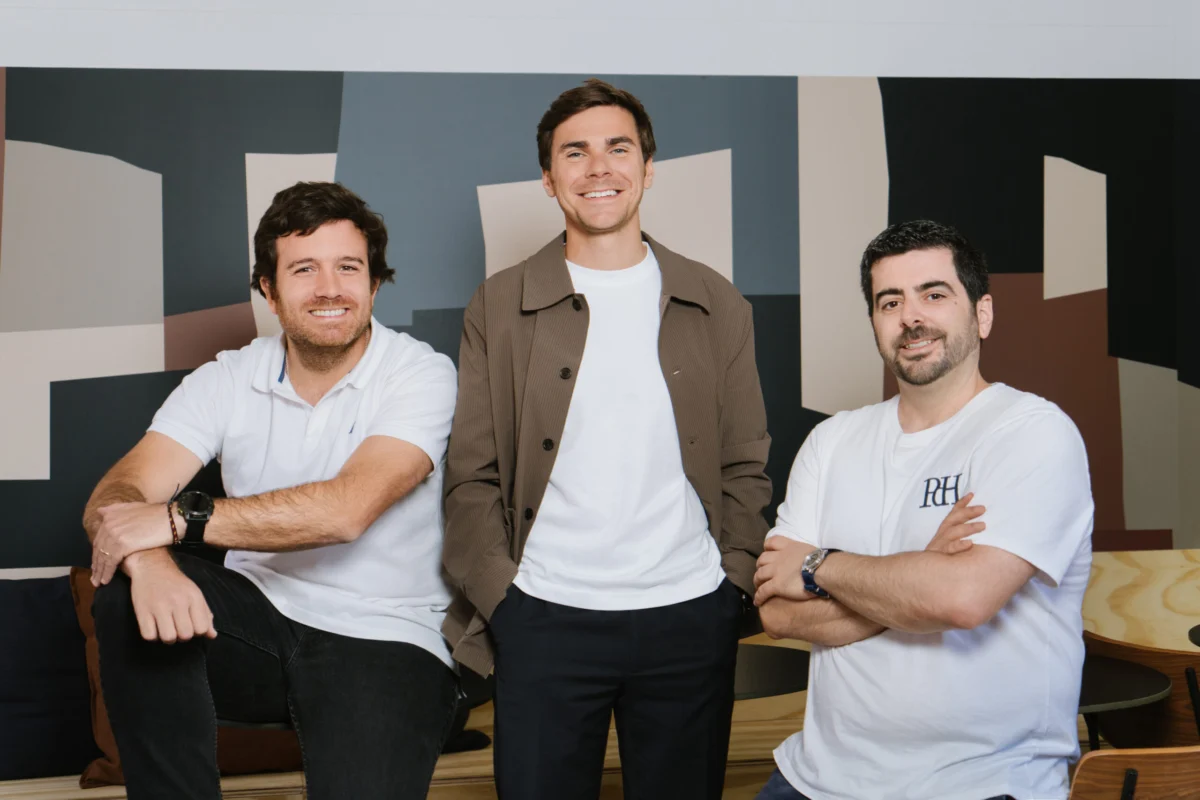
Orbio, an enterprise technology startup specializing in the management of frontline workforces, has announced the successful closure of a $21 million Series A funding round. The investment, led by Dawn Capital with significant participation from Visionaries and 2100 Ventures, brings the company’s total capital raised to date to $26 million. Founded by Sergi Bastardas, Nacho Travesí, and Antonio Melé, the London-based startup aims to modernize the "human infrastructure" required to manage the global frontline workforce—a demographic comprising roughly 2.7 billion people who sustain the healthcare, retail, logistics, and hospitality sectors.
The fresh injection of capital is earmarked for the accelerated development of Orbio’s proprietary AI agents and the expansion of its engineering and product teams. The company’s primary value proposition lies in replacing fragmented legacy systems—often consisting of manual spreadsheets, disjointed phone calls, and outdated software—with an autonomous, AI-driven ecosystem designed to handle the entire lifecycle of an employee, from recruitment to retention and offboarding.
The Genesis of Orbio: Identifying the Frontline Gap
The inspiration for Orbio stemmed from CEO Sergi Bastardas’s decade-long tenure at industry giants, including Amazon and the floriculture startup Colvin. During his time at Amazon, a company renowned for its massive logistical operations, Bastardas observed a recurring systemic failure: while high-level corporate functions were increasingly optimized by sophisticated software, the frontline workers—the drivers, warehouse staff, and fulfillment associates—remained underserved by technology.
Bastardas noted that the "human infrastructure" necessary to manage these employees was often inefficient, leading to high turnover rates and operational bottlenecks. Recognizing that frontline workers typically lack corporate email addresses and access to traditional HR platforms like Slack or Workday, Bastardas and his co-founders launched Orbio in early 2025. Their mission was to create a platform that speaks the language of the frontline, utilizing mobile-first, conversational AI to bridge the gap between corporate objectives and ground-level execution.
The Architecture of Autonomous Management: Meet Maria, Daniel, and Claire
At the core of the Orbio platform are three specialized AI agents, each designed to handle a specific phase of the employee lifecycle. These agents are not merely chatbots; they are integrated entities capable of processing complex data and making operational decisions.
- Maria (The Recruiter): Maria is tasked with the initial stages of the talent pipeline. She conducts preliminary interviews, assesses candidate fit based on historical success data, and manages the scheduling of further evaluations. By automating the screening process, Maria allows human HR managers to focus on final selections rather than sifting through hundreds of initial applications.
- Daniel (The Operations Manager): Once a candidate is onboarded, Daniel takes over the day-to-day management. He monitors employee output, tracks attendance, and ensures that operational benchmarks are met. Daniel serves as the primary interface for workers who need to report issues or request schedule changes, providing instant responses that were previously delayed by manual processing.
- Claire (The Retention Specialist): Claire focuses on the "human" element of the workforce. She conducts daily check-ins, monitors employee engagement signals, and performs exit interviews when a worker leaves. Her primary goal is to identify retention risks before they result in turnover, providing management with actionable insights to improve the work environment.
Bastardas emphasizes that these agents operate in a continuous feedback loop. Data generated by Claire’s exit interviews is fed back to Maria to recalibrate hiring criteria, ensuring that the company recruits individuals more likely to stay long-term. Similarly, Daniel’s performance data informs Maria’s assessment of what a "high-quality" candidate looks like for specific roles.
Early Adoption and Proven Impact: From Pilots to Full Deployment
Orbio’s transition from a pilot-stage startup to a fully deployed enterprise solution has been marked by partnerships with major global brands. The company’s current client roster includes Poke and YUM! Brands, the parent company of household names such as Pizza Hut, Taco Bell, and KFC. These organizations, which rely heavily on high-volume frontline staffing, use Orbio to streamline the onboarding and management of thousands of employees across diverse geographic regions.
One of the most compelling success stories cited by the company involves The Stepping Stones Group, a leading behavioral health provider in the United States. Initially brought on for a pilot program, Orbio now manages the organization’s full U.S. operation. According to Bastardas, the implementation of Orbio’s AI agents resulted in a 20% increase in the number of candidates successfully navigating the hiring funnel to reach employment. This efficiency gain is particularly critical in the healthcare sector, where labor shortages are a persistent challenge.
Market Context: The $2.7 Billion Opportunity
The frontline workforce represents approximately 80% of the global labor force, yet historically, only about 1% of venture capital funding in HR technology has been directed toward tools specifically for these workers. Most "WorkTech" solutions are designed for desk-based employees, assuming access to a laptop and a corporate login.
Orbio enters a competitive but underserved market. While startups like Paradox focus on automating the recruitment process and WorkJam provides task management for frontline staff, Bastardas views the "status quo" as his primary competitor. In many logistics hubs and retail chains, managers still rely on WhatsApp groups, physical bulletin boards, and Excel sheets to coordinate shifts and communicate with staff.
Industry analysts suggest that the move toward autonomous workforce management is a response to the "Great Resignation" and the subsequent tightening of labor markets. With turnover rates in some retail and fast-food sectors exceeding 100% annually, the cost of recruiting and training new staff has become a significant drain on profitability. Orbio’s ability to use AI to predict and prevent turnover provides a direct financial incentive for enterprise adoption.
Strategic Financials and Investor Perspectives
The Series A round led by Dawn Capital reflects a growing investor appetite for "Applied AI"—startups that move beyond foundational models to solve specific, high-value industrial problems. Dawn Capital, known for its investments in B2B software, noted that Orbio’s ability to integrate disparate HR functions into a single AI-driven ecosystem was a key factor in their decision.
"The frontline workforce has been the backbone of the global economy, yet they have been the last to benefit from the digital revolution," a spokesperson for Dawn Capital stated following the announcement. "Orbio is not just building a tool; they are building a new category of autonomous infrastructure that has the potential to redefine how half the world goes to work."
The $26 million in total funding positions Orbio to expand its footprint in the North American and European markets. The company plans to use the new capital to further refine its AI agents, specifically focusing on multilingual capabilities to support a diverse, global workforce.
Analysis of Implications: The "AI Moment" for Frontline Workers
The deployment of AI agents in the workplace raises important questions about the future of human management. While Orbio frames its technology as a way to "engage and support" workers, the transition toward autonomous management implies a reduction in human oversight for routine tasks.
Bastardas argues that this transformation is overwhelmingly positive for the workers themselves. "The 2.7 billion people who keep healthcare, retail, logistics, and hospitality running… have previously got nothing," he said. "This is their AI moment." By providing frontline workers with a direct, responsive digital interface, Orbio aims to eliminate the "black hole" of communication that often leads to employee frustration and resignation.
From a corporate perspective, the implications are equally profound. The ability to run workforce operations autonomously allows businesses to scale rapidly without a corresponding increase in administrative overhead. However, the success of this model will depend on the "humanity" of the AI. If agents like Claire and Daniel are perceived as cold or purely transactional, they may inadvertently contribute to the very turnover they are designed to prevent.
Chronology of Orbio’s Development
- 2023–2024: Sergi Bastardas, Nacho Travesí, and Antonio Melé identify the "frontline gap" during their roles at Amazon and Colvin. They begin developing the framework for autonomous AI agents.
- Early 2025: Orbio officially launches, securing initial seed funding of $5 million from Visionaries and 2100 Ventures.
- Mid-2025: The company begins pilot programs with The Stepping Stones Group and YUM! Brands, focusing on high-volume recruitment and onboarding.
- Late 2025: Success in pilot programs leads to full-scale deployment across U.S. operations for key clients.
- Q1 2026: Orbio announces its $21 million Series A round led by Dawn Capital, bringing total funding to $26 million and signaling a shift toward global expansion.
As Orbio continues to develop more specialized agents, the company stands at the forefront of a major shift in enterprise resource planning. By treating the frontline workforce as a sophisticated network that requires its own dedicated "human infrastructure," Orbio is challenging the traditional boundaries of HR technology and setting a new standard for how the world’s most essential workers are managed in the age of artificial intelligence.
