

The Evolution of Residential Lighting: From Utility to Ambiance
The recent surge in demand for ambient lighting is not merely a fleeting aesthetic preference but a reaction to the "cold and corporate" feel often associated with standard-issue overhead fixtures. On platforms like TikTok and Instagram, the "anti-Big Light" movement has garnered millions of views, with users advocating for the use of table lamps, floor lamps, and sconces to create "cozy" and "inviting" environments. This cultural shift aligns with historical design principles that emphasize the importance of layered lighting—combining task, ambient, and accent sources to create depth in a room.
Market analysts note that the global decorative lighting market is projected to grow steadily over the next decade, driven by innovations in LED technology and a renewed consumer focus on home improvement. Modern consumers are looking for pieces that offer both "staying power" and versatility. A lamp purchased for a bedside table today might find a second life on a bookshelf, an entryway console, or a kitchen countertop tomorrow, provided its design is sufficiently adaptable.
Expert-Curated Selection: A Detailed Review of Top Market Options
To assist consumers in navigating the vast array of available options, design experts and editors have rigorously tested a selection of lamps from leading and boutique brands. These evaluations focus on design integrity, functional versatility, and the quality of light emitted.

The Intersection of Function and Play: The Flos Bilboquet
Designed by Philippe Malouin, the Flos Bilboquet Table Lamp has emerged as a favorite among professionals for its "handsome" silhouette and directional flexibility. The lamp features a bulbous chrome joint that acts as a magnetized swivel point, allowing for nearly 360 degrees of light adjustment. Beyond its aesthetic appeal, the Bilboquet is a testament to sustainable manufacturing. The body is crafted from a byproduct of paper production, and the assembly avoids the use of glues, ensuring that individual components can be recycled at the end of the product’s lifespan.
Coastal Aesthetics and Material Contrast: Serena & Lily Como
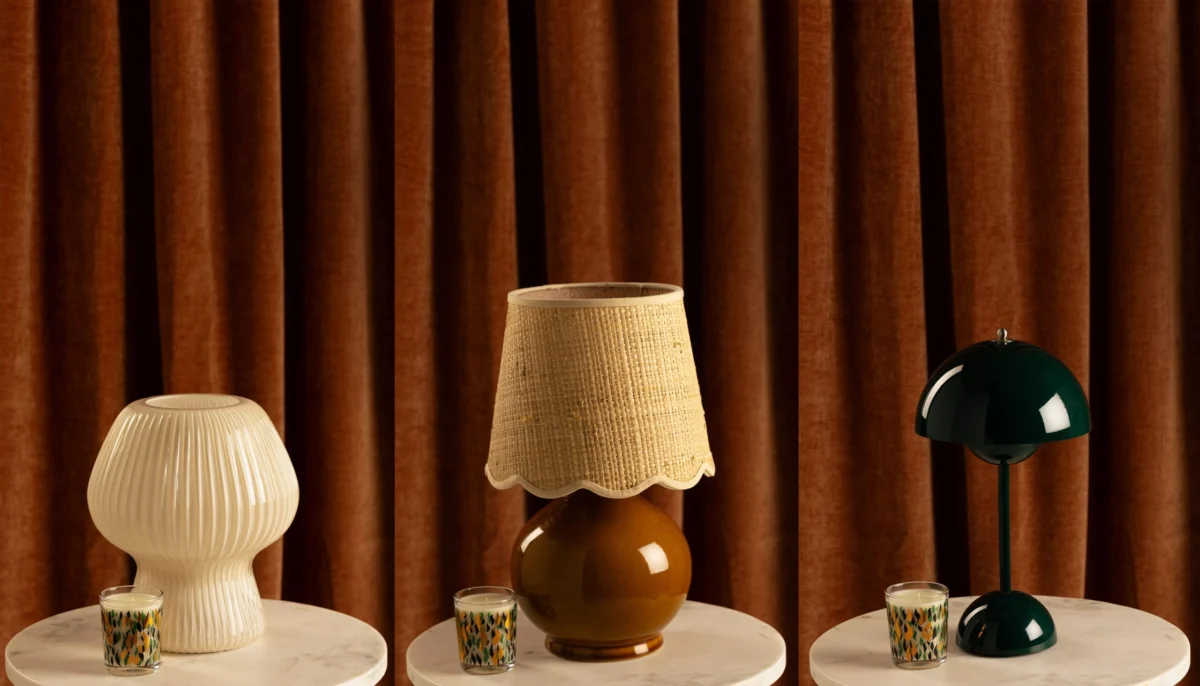
For interiors leaning toward a "coastal" or "organic modern" aesthetic, the Serena & Lily Como Petite Table Lamp offers a blend of traditional materials and contemporary forms. The lamp pairs a sleek ceramic base with a unique raffia wave shade, providing a textured contrast that diffuses light into a warm, ambient glow. While its petite size makes it ideal for nooks and small desks, testers noted that the manual switch requires a firm turn, and the opaque nature of the raffia makes it better suited for mood lighting than for high-intensity task work.
Midcentury Modernism and the Mushroom Silhouette: Rejuvenation Roland
The Rejuvenation Roland Table Lamp draws inspiration from Italian modernism, specifically the iconic mushroom shapes of the mid-20th century. Constructed entirely of glass, this 10-inch fixture provides a soft, diffused light that eliminates the harshness often found in modern LED bulbs. Although it lacks a dimming function, the opacity of the glass ensures the light remains gentle, making it an optimal choice for bedside environments where relaxation is the primary goal.
Portability and the Cordless Revolution: Flos Bellhop
As outdoor living and flexible floor plans become more common, the demand for rechargeable, cordless lighting has skyrocketed. The Flos Bellhop, characterized by its "vaguely mushroomy" design, offers four dimmable light levels and a portability that allows it to move from a bedside to a patio with ease. While the price point is higher than many "dupes" on the market, long-term testing suggests that the durability and light quality of the original justify the investment.
Technical Specifications and Safety: The Science of Illumination
When selecting a lamp, consumers must look beyond aesthetics to consider technical compatibility and safety. One of the most common mistakes in home lighting is "overlamping"—using a bulb with a higher wattage than the fixture is designed to handle.
The Risks of Overlamping
Wattage is a measure of power consumption, and light fixtures are engineered to dissipate a specific amount of heat. If a bulb exceeds the recommended wattage, the fixture can overheat. This leads to several potential hazards:
- Material Degradation: Excessive heat can melt plastic sockets and damage the insulation on internal wiring.
- Fire Hazards: In extreme cases, the heat generated by an incorrect bulb can ignite nearby materials or cause electrical fires.
- Energy Inefficiency: Using higher-wattage incandescent bulbs instead of modern LEDs increases energy costs and requires more frequent bulb replacements.
Experts recommend always checking the manufacturer’s label, usually found near the socket, for the maximum wattage rating. With the advent of LED technology, consumers can often achieve higher brightness (measured in lumens) while using significantly less power (wattage) than traditional incandescent bulbs.
Sustainability and Innovation in Modern Lighting Design
The lighting industry is currently undergoing a green revolution, with brands like Gantri leading the way in sustainable manufacturing. The Gantri Analog Task Light, designed by Chris Granneberg, is a prime example of this trend.
.jpeg)
3D Printing and Bio-Polymers
The Analog Task Light is manufactured using Gantri’s proprietary "Gantri Plant Polymer" (GPP), a blend derived from sustainably sourced sugarcane. Unlike traditional plastics, this material is bio-based and produced through 3D printing, which significantly reduces waste compared to traditional injection molding. The lamp features a dimmable light and a head that rotates 230 degrees, proving that high-performance task lighting does not have to come at an environmental cost.
Methodology: How Product Efficacy is Determined
To provide reliable recommendations, products are subjected to a multi-point testing process. This methodology ensures that the lamps are evaluated not just as static objects, but as functional tools in a living environment.
- Brand Discernment: Testers prioritize brands with established reputations for safety and quality, ranging from global retailers like West Elm to specialized designers like Louis Poulsen.
- Delivery and Assembly Assessment: The shipping process is scrutinized for protective packaging, especially for delicate materials like porcelain or hand-cast glass. Assembly instructions are evaluated for clarity, and the inclusion (or lack) of a complimentary bulb is noted.
- Scale and Proportion: To assist consumers in visualizing the products, each lamp is photographed alongside standardized objects (such as a 2.4-ounce candle) to provide a clear reference for size and scale.
- Functional Versatility: Testers move the lamps between different rooms—offices, bedrooms, and living areas—to determine how well the design adapts to various lighting needs and decor styles.
Broader Economic and Design Implications
The shift toward high-quality, designer lighting reflects a larger trend in the "home as a sanctuary" movement. In the wake of global shifts toward remote and hybrid work, the domestic environment has taken on a multi-functional role. Lighting is the primary tool used to transition a space from a productive daytime office to a restful nighttime retreat.
Furthermore, the influence of iconic designers like Verner Panton continues to resonate. The Louis Poulsen Panthella lamp, originally designed in 1971, remains a bestseller because it bridges the gap between historical design and modern technology. The release of portable, LED versions of such classics demonstrates the industry’s ability to modernize traditional aesthetics for the 21st-century consumer.

As the market continues to evolve, the integration of "smart" technology—such as bulbs that change color temperature based on the time of day—will likely become standard. However, the fundamental appeal of the table lamp remains unchanged: it provides a localized, human-scale source of light that creates a sense of place and comfort in an increasingly fast-paced world. Whether through the brutalist appeal of a Jeremiah Brent hand-cast glass cube or the playful geometry of a Philippe Malouin swivel lamp, the right lighting remains an essential investment in the quality of daily life.
