

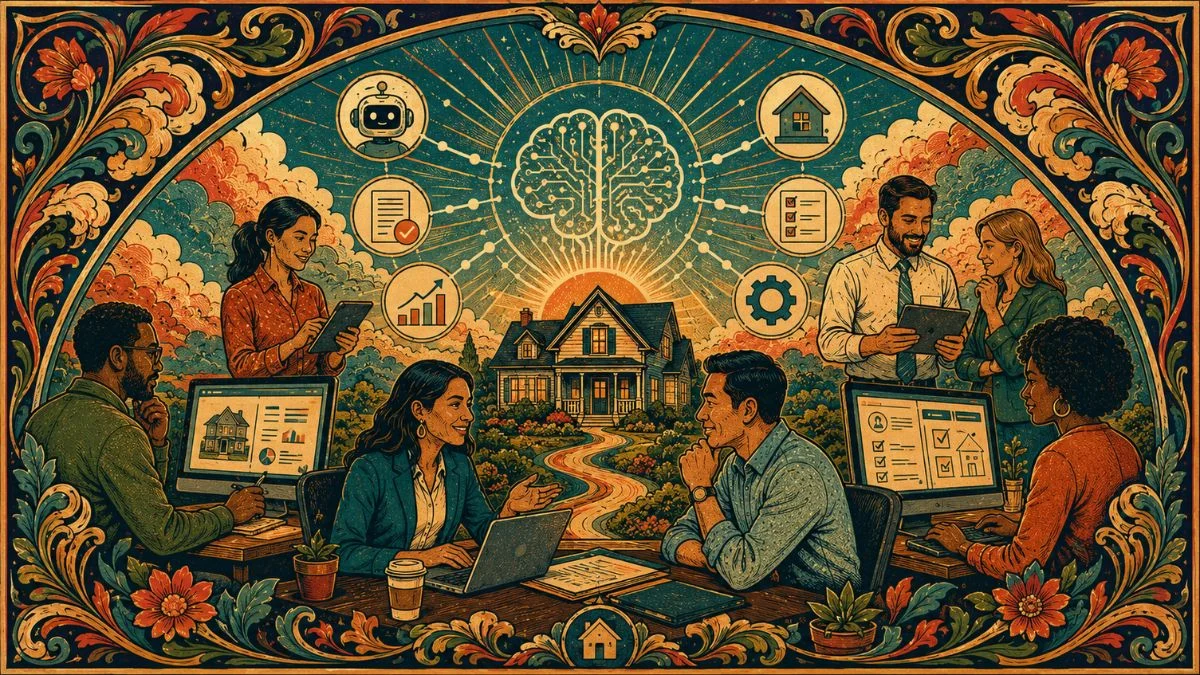
The mortgage lending industry is currently navigating a pivotal transition as artificial intelligence moves from the periphery of experimental technology into the core of enterprise operations. Over the last twenty-four months, the sector has transitioned from a period of cautious curiosity to a phase of deep operational integration. Michael Vandi, the founder and CEO of Addy AI, has observed this evolution firsthand, noting that the conversation among lenders has shifted from asking what AI can do to determining how it can be deployed at scale to solve specific, recurring bottlenecks in the loan lifecycle. As the industry grapples with fluctuating interest rates and high origination costs, the adoption of AI is no longer viewed as an optional innovation but as a fundamental necessity for maintaining competitive margins and operational agility.
The Evolution of Mortgage AI: A Two-Year Transformation
The timeline of AI adoption in mortgage lending can be divided into two distinct phases. Between late 2022 and late 2023, the industry was largely in an "exploration phase." This period was characterized by lenders testing general-purpose generative AI tools and attempting to understand how large language models (LLMs) might apply to the highly regulated world of finance. During this time, many firms launched small-scale pilot programs that were often siloed within innovation departments rather than integrated into the actual production line.
By early 2024, the narrative shifted toward "operational maturity." Lenders began to demand specialized tools that understood the nuances of Fannie Mae and Freddie Mac guidelines, the complexities of the TILA-RESPA Integrated Disclosure (TRID) rule, and the specific document structures inherent in the American mortgage process. Michael Vandi notes that this shift was driven by the realization that generic AI was insufficient for the precision required in lending. Consequently, the industry saw the rise of specialized AI firms—such as Addy AI—that combined machine learning expertise with deep domain knowledge of the mortgage sector.
Standardization: Why Mortgage is the Ideal AI Use Case
While other sectors like e-commerce or creative services deal with high levels of variability, the mortgage industry is built upon a foundation of standardization. Whether a loan is originated by a small credit union or a top-tier national bank, the underlying products—such as 30-year fixed-rate mortgages—and the required documentation—such as 1040s, W-2s, and bank statements—are remarkably consistent.
This consistency has served as a catalyst for AI adoption. Because the workflows are largely uniform across the industry, AI developers can build highly effective models that solve universal problems. Vandi points out that this standardization allowed his team to focus on "going deep" into the enterprise opportunity. Instead of creating a broad tool that works moderately well for many industries, the focus shifted to creating a specialized "agent" capable of handling the repetitive, high-volume tasks that define mortgage processing. This inherent structure makes the mortgage industry a "natural fit" for automation, as the recurring nature of the problems allows for the training of highly accurate and reliable AI models.
The Trust Curve: Overcoming the Psychological Barriers to Adoption
One of the most significant insights to emerge from the recent wave of AI implementation is the concept of the "trust curve." Vandi argues that the primary hurdle for AI in mortgage is not a learning curve, but a trust curve. Unlike traditional mortgage software, which requires extensive training to navigate complex user interfaces, modern AI tools are often intuitive and conversational. The challenge lies in the willingness of human operators to rely on the AI’s output without manual verification of every data point.
In the early stages of implementation, processors and underwriters typically treat AI as a secondary assistant. They perform a "stare and compare" check on every recommendation the AI makes. However, as the technology demonstrates consistent accuracy over hundreds of live files, the human-in-the-loop moves from a role of "verifier" to one of "overseer." This psychological shift is essential for achieving true scalability. Once an organization moves past the initial skepticism, the speed of processing increases exponentially because the human workforce can focus on handling exceptions rather than routine data entry.
Economic Pressures and the Drive for Efficiency
The push toward AI is also being fueled by the economic realities of the current housing market. According to data from the Mortgage Bankers Association (MBA), the cost to originate a single loan has reached historic highs, often exceeding $10,000 per loan in low-volume environments. These costs are driven by labor-intensive processes, regulatory compliance requirements, and the need for multiple layers of manual review.
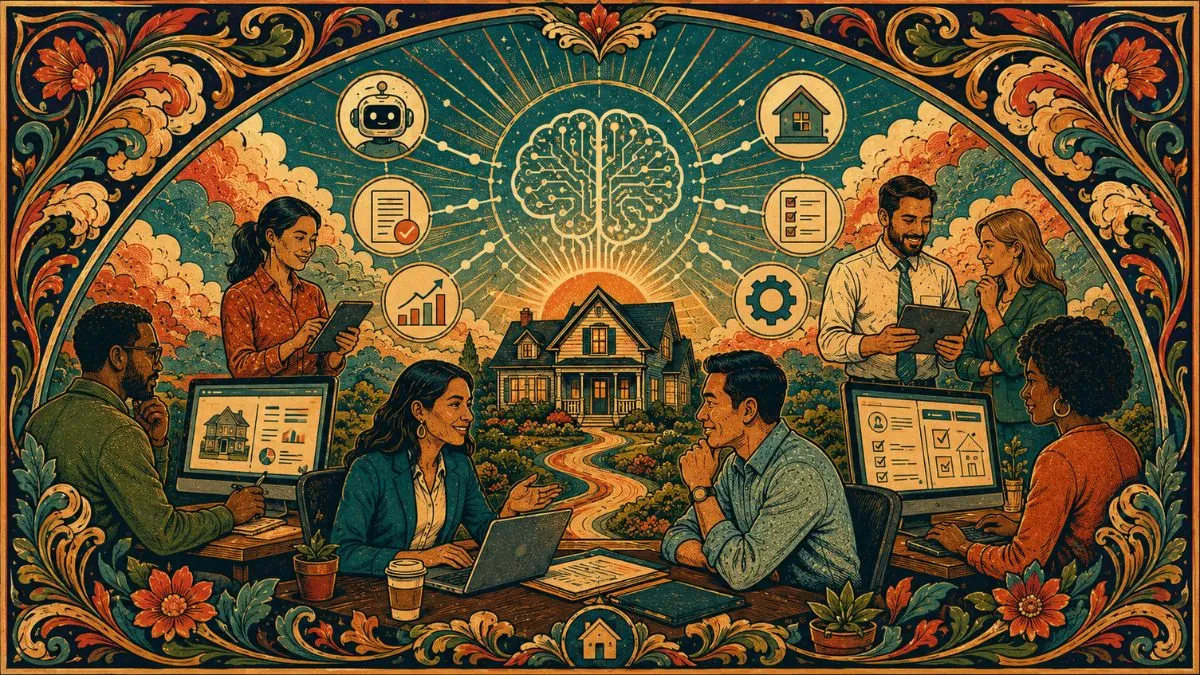
Lenders are increasingly looking to AI to compress these costs. By automating document validation, file scrubbing, and pre-underwriting, institutions can reduce the number of "touches" required per loan. This operational efficiency does more than just save money; it allows lenders to remain profitable during market downturns and to scale rapidly when volume returns. Furthermore, the ability to process loans faster provides a significant competitive advantage in a purchase-heavy market, where real estate agents and borrowers prioritize certainty and speed of closing.
The Ripple Effect: Expanding Beyond Initial Pilot Programs
Successful AI adoption typically follows a pattern of "land and expand." Most lenders begin their journey by targeting a specific pain point, such as validating closing documents or automating the extraction of data from income statements. However, once the AI proves its value in one area, organizations quickly identify adjacent workflows where the technology can be applied.
For example, a lender might start using AI to ensure that all required signatures are present on a loan application. Once that process is automated, they may expand the AI’s scope to include "scrubbing" files for inconsistencies between different documents, such as a discrepancy in the spelling of a name or a mismatch in reported income. Eventually, this leads to the automation of pre-underwriting tasks, where the AI evaluates the loan file against specific investor guidelines before it ever reaches a human underwriter. This holistic approach allows AI to improve the entire loan lifecycle rather than just isolated tasks.
Redefining the Role of the Underwriter
A common concern surrounding AI is the potential for job displacement. However, the current trend in the mortgage industry suggests a model of "augmentation" rather than "replacement." Experienced underwriters possess a level of institutional knowledge and nuanced judgment that AI cannot currently replicate, especially when dealing with complex "make-sense" lending scenarios or non-qualified mortgage (Non-QM) products.
Instead of replacing these professionals, AI is changing the nature of their work. By handling the "busy work"—such as data entry and basic rule checking—AI allows underwriters to focus on high-level decision-making and risk assessment. This shift is particularly beneficial for veteran underwriters who have spent decades in the industry; they can now leverage their expertise to manage more files with less fatigue. This evolution of roles ensures that the human element remains central to the lending process, while the AI acts as a high-speed engine that powers the administrative side of the business.
Broader Impact and Future Implications
Looking toward the future, the mortgage industry is moving toward a state where "AI agents" will take on entire responsibilities rather than just assisting with individual tasks. This transition will likely lead to the creation of "autonomous loan flows" for the most straightforward credit profiles, allowing for nearly instantaneous approvals for highly qualified borrowers.
Moreover, the efficiency gains provided by AI are enabling lenders to innovate in their product offerings. Vandi notes that lenders are now able to launch new loan products much faster than in the past. Traditionally, introducing a new product required months of training staff and updating manual workflows. With AI, the underlying rules can be updated in the system, and the AI agents can begin processing the new product type almost immediately.
As the technology continues to mature, the defining factor for success will be the integration of AI into the broader corporate strategy. The organizations that thrive will be those that treat AI as a core operational pillar rather than a standalone gadget. By focusing on the "trust curve," leveraging industry standardization, and expanding automation across the entire loan lifecycle, mortgage lenders are setting the stage for a more efficient, transparent, and resilient housing finance system. The next few years will likely see a widening gap between "AI-first" lenders and those who remain tethered to manual processes, fundamentally reshaping the competitive landscape of the American mortgage market.
