

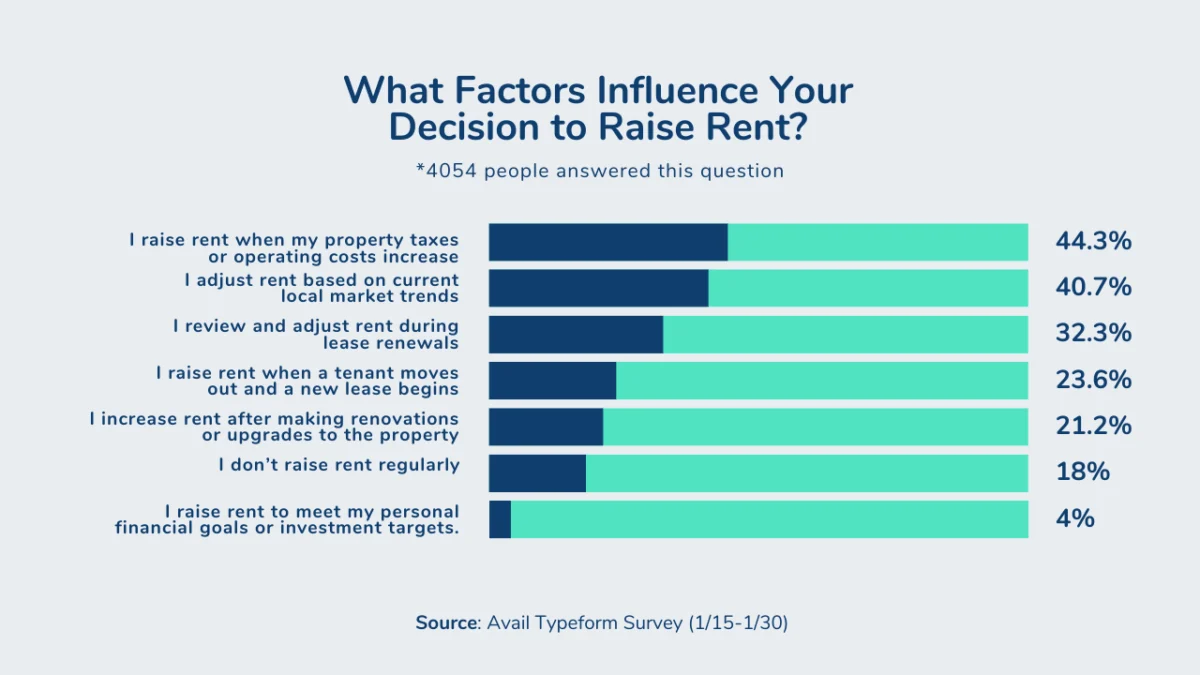
The decision to increase rent is one of the most consequential choices a property owner faces, balancing the need for sustainable cash flow against the risk of losing a reliable tenant. According to the 2026 Independent Landlord Survey conducted by Avail, a rental property management platform under the Realtor.com umbrella and a partner of BiggerPockets, approximately 18% of independent landlords—nearly one in five—have implemented a standing policy of not raising rents. This strategic hesitation comes at a time when property owners across the United States are grappling with a significant "cost squeeze" driven by inflationary pressures, rising property taxes, and a volatile insurance market.
The survey highlights a growing trend of "relationship-based management" among small-to-mid-sized investors who prioritize long-term stability over short-term revenue optimization. While large institutional landlords often utilize algorithmic pricing models to maximize every dollar of potential rent, independent landlords are increasingly focused on the "long game," viewing tenant retention as a primary hedge against the escalating costs of vacancy and turnover.
The Economic Drivers of Rent Stability
The primary motivation behind the reluctance to raise rents is a calculated fear of the "domino effect" caused by a vacancy. When a tenant moves out, the landlord is not merely losing a month of income; they are entering a period of high-intensity capital expenditure. This includes the costs of cleaning, painting, advertising, and potentially paying a leasing commission. For many, the prospect of a few extra dollars per month does not outweigh the risk of an empty unit sitting on the market for 30 to 60 days.
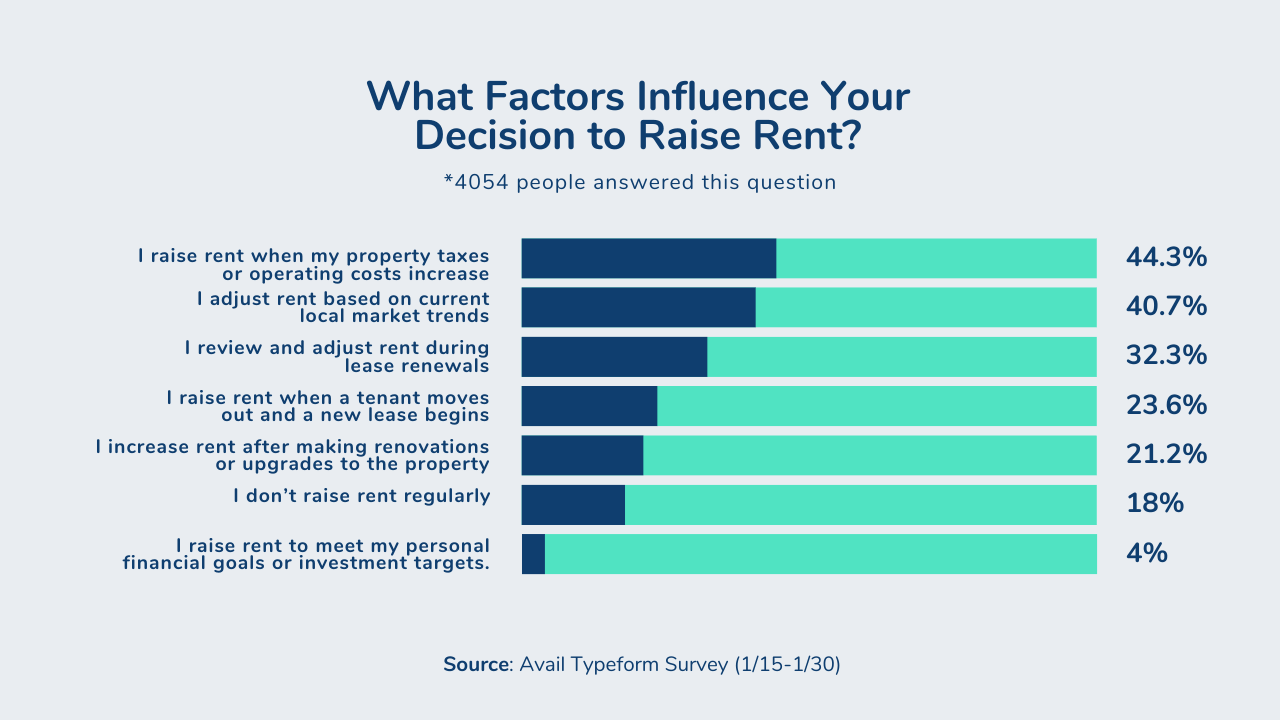
Despite this cautious approach, the external pressures to increase rent are mounting. Avail’s data indicates that 74.4% of landlords are deeply concerned about the rising costs of property taxes and insurance. However, a notable disconnect exists between these concerns and actual behavior: only 44.3% of landlords who did choose to raise rents cited these specific overhead costs as their primary motivation. This suggests that while expenses are rising, market competition and tenant stability remain the dominant factors in the decision-making process.
The Financial Math of Vacancy vs. Retention
To understand why 18% of landlords are holding the line on rent, one must look at the specific financial math associated with a turnover. Consider a standard scenario where a landlord currently charges $1,500 per month. If the landlord chooses to raise the rent by $125 per month (an 8.3% increase), they stand to gain $1,500 in additional revenue over a 12-month lease.

However, if that $125 increase causes a "good" tenant to move out, the landlord faces immediate losses. A single month of vacancy results in a $1,500 loss of base rent. When adding the conservative costs of turnover—such as $300 for professional cleaning, $400 for paint and minor repairs, and $300 for marketing and screening—the total cost of the tenant moving out reaches approximately $2,500.
In this scenario, it would take the landlord 20 months of receiving the higher rent just to break even on the cost of the turnover. This calculation does not account for the "soft costs" of the landlord’s time or the risk of the next tenant being less reliable. For many independent owners, a 20-month recovery period is an unacceptable risk, especially in an era where property taxes and insurance premiums are already eating into margins.
A Chronology of the Rental Market: 2021 to 2026
To understand the current landscape, it is necessary to examine the timeline of the U.S. rental market over the last several years.
- 2021–2022: The Post-Pandemic Surge. Following the initial shocks of COVID-19, the rental market experienced unprecedented growth. Migration patterns shifted, and a sudden demand for more space led to double-digit rent increases in many metropolitan areas. During this period, landlords held significant leverage.
- 2023–2024: The Inflationary Peak. As the Federal Reserve raised interest rates to combat inflation, the cost of borrowing skyrocketed. Property insurance premiums began to spike, particularly in disaster-prone states like Florida, California, and Texas. Landlords began to feel the "squeeze" as operating expenses rose faster than market rents.
- 2025–2026: The Stabilization and Retention Phase. The market entered a phase of cooling. While demand remained high due to a lack of affordable housing for purchase, the rapid rent hikes of previous years became unsustainable for many households. The Avail survey reflects this current reality, where landlords are prioritizing the "known quantity" of an existing tenant over the uncertainty of the open market.
The "Lock-In" Effect: Why Tenants Are Staying Longer
The survey also sheds light on tenant behavior, revealing that 36.1% of landlords report their tenants are staying in their rentals longer than in previous years. This is nearly five times the number of landlords reporting shorter-term tenancies.
This shift is largely attributed to the "lock-in" effect of the current housing market. With high mortgage rates and record-high home prices, many "renters by choice" have become "renters by necessity." The transition from renting to homeownership has become financially unfeasible for a significant portion of the population. Consequently, there is a tacit, unspoken agreement forming between landlords and tenants: as long as the rent remains manageable, the tenant will stay, sparing both parties the financial and emotional exhaustion of a move.
Algorithmic Pricing vs. Human Relationships
A significant point of divergence in the industry is the use of technology in pricing. In recent years, the Department of Justice (DOJ) has investigated firms like RealPage for allegedly facilitating price-fixing among large corporate landlords through algorithmic pricing software. These programs often encourage landlords to leave units vacant rather than lower rents, aiming to keep market averages high.
In contrast, the Avail survey suggests that independent landlords—who own the majority of the nation’s rental stock—operate on a different philosophy. For these owners, the relationship is central. When a tenant faces financial hardship, 78.3% of independent landlords report responding with communication or payment plans rather than immediate legal action or eviction. This human-centric approach is a strategic move to maintain property stability and avoid the high costs of the legal system.
Broader Implications for the Real Estate Market
The fact that 32.9% of landlords plan to acquire additional property over the next two years—while only 6.6% intend to exit—indicates a strong long-term confidence in the rental sector. For those looking to scale their portfolios, maintaining a history of low vacancy rates and steady (even if slightly under-market) revenue is essential. High occupancy rates are often a prerequisite for securing favorable refinancing terms or new acquisition loans from commercial lenders.
However, the decision to withhold rent increases is not without risk. If a landlord fails to adjust for rising taxes and insurance over several years, the property may eventually become "cash-flow negative." This can lead to deferred maintenance, which ultimately devalues the asset and makes it harder to attract quality tenants in the future.
Conclusion: The Strategic Middle Ground
For the modern landlord, the decision to raise rent is no longer a simple calculation of "what the market will bear." It is a nuanced assessment of risk, relationship, and ROI. The 18% of landlords who choose not to raise rents are betting that the value of a "bird in the hand"—a stable, paying tenant—is worth more than the speculative gains of the open market.
As we move through 2026, the successful landlord will likely be the one who finds the middle ground: implementing modest, predictable increases that keep pace with essential operating costs while maintaining the transparency and communication necessary to keep turnover at a minimum. In an era of economic uncertainty, stability has become the new currency of the real estate investment world. The Avail survey confirms that for a significant portion of the market, the cost of a "for rent" sign is simply too high to pay.
