

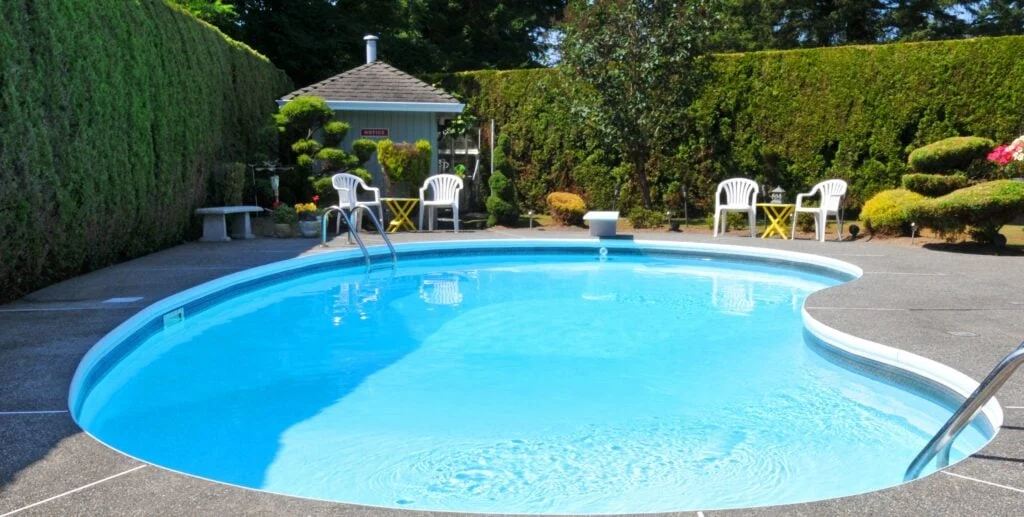
The arrival of the summer season represents the most lucrative window for the short-term rental (STR) industry, characterized by a surge in occupancy rates, premium pricing, and extended booking horizons. For real estate investors, particularly those operating in vacation destinations, these three months are the period when the financial models used to underwrite their deals come to fruition. However, this peak revenue period also coincides with the highest statistical risk for property owners. The very amenities that drive demand—swimming pools, hot tubs, and wet decks—possess the potential to transform a profitable investment into a catastrophic legal and financial liability in a matter of seconds.
While property owners often view these water features through the lens of marketing and guest satisfaction, the legal and insurance sectors view them as "attractive nuisances." This term refers to a doctrine in tort law that holds a property owner liable for injuries to children who may be attracted to a dangerous condition on the land. In the context of the modern sharing economy, where thousands of properties are listed on platforms like Airbnb and VRBO, the intersection of residential leisure and commercial liability has created a complex landscape that many investors are ill-prepared to navigate.
The Statistical Reality of Residential Water Safety
To understand the magnitude of the risk, one must examine the data provided by public health and safety organizations. The Centers for Disease Control and Prevention (CDC) estimates that more than 4,000 fatal unintentional drownings occur in the United States annually, averaging approximately 11 deaths per day. Furthermore, the CDC reports roughly 8,000 nonfatal drownings each year that require emergency department treatment, many of which result in long-term neurological damage or permanent disability.
The vulnerability of minors is particularly stark. Drowning remains the leading cause of death for children between the ages of 1 and 4, and the second-leading cause of unintentional injury death for children aged 5 to 14. A critical data point for STR hosts is provided by Pool Guard USA, which notes that approximately 81% of fatal child pool and spa drownings occur in residential settings rather than at public aquatic centers or water parks. These statistics suggest that the private, often unsupervised nature of a backyard pool creates a higher risk profile than a commercial facility with professional lifeguards.
The seasonality of these incidents is also a factor. Data indicates that drowning incidents peak between May and August. For an STR operator, this means the period of maximum financial gain is simultaneously the period of maximum physical and legal peril.
Challenging the Perception of Hot Tub Safety
A common misconception among short-term rental hosts is that hot tubs represent a lower liability risk than full-sized swimming pools due to their shallower depth and smaller footprint. However, safety data from the Consumer Product Safety Commission (CPSC) suggests that hot tubs present their own unique and often overlooked hazards. More than 300 people die from hot tub-related accidents in the United States every year, with children under the age of five accounting for roughly 20% of these fatalities.
The mechanisms of injury in hot tubs differ from those in pools. Approximately 50% of hot tub-related injuries are attributed to slips and falls on the surrounding surfaces. Another 10% involve heat overexposure, which can lead to loss of consciousness and subsequent drowning. Perhaps the most legally fraught category of injury is "entrapment." This occurs when a guest’s hair, limbs, or jewelry become caught in a powerful suction outlet or drain.
The Virginia Graeme Baker Pool and Spa Safety Act, a federal law enacted in 2007, mandates the use of anti-entrapment drain covers in public pools and spas. While federal law does not always mandate these for private residential tubs, a plaintiff’s attorney in a wrongful death suit will frequently cite the lack of such safety features as evidence of negligence. For an STR host, an uninspected drain cover or a failure to post temperature warnings can serve as the foundation for a multi-million dollar negligence claim.
The Financial Anatomy of a Liability Claim
When a serious injury or death occurs at a rental property, the resulting legal proceedings often focus on "premises liability." This is the legal principle that property owners are responsible for injuries that occur on their property due to unsafe conditions. In the STR space, the "duty of care" owed to a paying guest is significantly higher than that owed to a casual social guest.
While settlement amounts are often shielded by non-disclosure agreements, analyses of wrongful death cases across the United States provide a sobering look at the potential costs. Serious negligence cases involving residential pools typically result in settlements ranging from high-six-figure to seven-figure sums. A review of nearly 1,000 wrongful death cases found a mean settlement of approximately $973,000. In instances where "clear negligence" is established—such as a broken gate or a lack of required safety signage—and where the victim had high future earnings potential, settlements can exceed $5 million.
Even non-fatal incidents carry heavy price tags. A 2024 review of premises liability cases found that the average residential slip-and-fall settlement on private property is roughly $105,000. For catastrophic injuries, such as those resulting in spinal damage or traumatic brain injury from a fall on a wet pool deck, the costs regularly surpass $1 million. For an investor, these numbers represent more than just a loss of profit; they represent a potential total loss of the asset and personal bankruptcy if the property is not correctly insured.
The Failure of Standard Homeowner’s Insurance
The most significant risk to STR operators is the "insurance gap." Many hosts mistakenly believe that their standard homeowner’s insurance policy provides adequate protection for their rental activities. In reality, standard policies are designed for personal residential use and almost universally contain "business pursuit" exclusions.
Standard homeowner’s policies typically provide personal liability coverage in the range of $100,000 to $300,000. However, once a property is used for "regular rental activity," most carriers view the property as a commercial enterprise. If an incident occurs during a stay booked through a platform like Airbnb, and the owner only holds a standard residential policy, the carrier is likely to deny the claim entirely.
Furthermore, insurance industry guides treat pools as high-risk amenities that require specific underwriting. Some carriers will refuse to insure properties with pools if they are used as short-term rentals, or they may include specific exclusions for "waterborne injuries." This leaves the owner personally liable for legal defense costs and any eventual judgment.
Transitioning to STR-Specific Insurance
To mitigate these risks, professional operators are increasingly moving toward dedicated STR or landlord insurance policies. These policies are specifically drafted to bridge the gap between residential and commercial coverage. A robust STR policy typically includes:
- Commercial General Liability: This provides coverage for bodily injury and property damage occurring during a rental period, often with limits of $1 million or more per occurrence.
- No "Business Pursuit" Exclusion: The policy explicitly acknowledges that the property is being used to generate income.
- Legal Defense Costs: Professional policies include the cost of hiring specialized attorneys to defend the owner against claims, which can otherwise cost tens of thousands of dollars even if the owner is eventually found not liable.
- Lost Business Income: If a pool incident results in the property being "red-tagged" or closed by local authorities during an investigation, specialized insurance can reimburse the owner for the lost rental revenue.
While the premiums for these policies are higher than standard homeowner’s insurance, the additional cost is a fractional percentage of the total exposure. For most investors, this is a necessary "cost of goods sold" to protect the underlying equity in the property.
Operational Risk Management: A Preventive Checklist
Insurance serves as the final line of defense, but operational safety is the primary deterrent against litigation. Professional property managers suggest a rigorous safety audit before the peak summer season begins. This checklist should include:
- Physical Barriers: Ensure that all pools are surrounded by a fence at least four feet high with self-closing, self-latching gates. These gates should be tested weekly to ensure they have not sagged or become unaligned.
- Safety Equipment: A life ring or a reaching pole should be permanently mounted in a visible location near the water.
- Signage: Clearly post "No Diving" signs and "Swim at Your Own Risk" notices. For hot tubs, signs should indicate the maximum safe temperature (usually 104°F) and advise against use by children, pregnant women, or those under the influence of alcohol.
- Lighting: Ensure the path from the dwelling to the water amenity is well-lit with motion-activated or dusk-to-dawn lighting to prevent slips and falls during night use.
- Surface Integrity: Use non-slip coatings on pool decks and ensure that any mats or steps leading into hot tubs are secured and in good repair.
- Local Compliance: Many jurisdictions have specific codes for short-term rentals that exceed standard residential requirements. This may include the installation of pool exit alarms on any door leading to the pool area.
Broader Implications for the STR Market
The rising focus on pool and hot tub liability reflects a broader professionalization of the short-term rental industry. As the market matures, the "casual host" model is being replaced by sophisticated investors who treat their properties as hospitality businesses. This shift is being driven by both the legal system and the insurance industry.
As claim payouts increase, insurance carriers are becoming more selective. Properties that do not meet modern safety standards are finding it increasingly difficult—or expensive—to obtain coverage. This creates a market bifurcation where "safe" properties command higher valuations and lower insurance costs, while neglected properties become "uninsurable" and lose their viability as rental assets.
Ultimately, a pool or hot tub remains one of the most effective tools for increasing occupancy and nightly rates. Listings with these amenities can see occupancy boosts of 10% to 15% over comparable properties. However, the premium earned from these features must be reinvested into safety and proper insurance. The operators who thrive in the long term are those who recognize that their water amenities are both their greatest asset and their greatest potential liability, and who manage that tension with professional-grade diligence. Summer remains the season of opportunity, but for the unprotected host, it is also the season of maximum exposure.
