

While many national homebuilders are currently struggling to navigate a "gross margin slippery slope" that has seen industry averages slide from the mid-20s into the mid-teens, Green Brick Partners (GRBK) is bucking the trend with significant momentum. During the company’s Q2 earnings call on Thursday, executives revealed that the firm’s gross profit margin expanded to a remarkable 29.8% for the second quarter. While this figure represents a 150-basis-point decrease from the same period a year ago—reflecting broader market pressures—it marks a staggering 900-basis-point increase from the prior quarter, signaling a sharp recovery and an industry-leading level of profitability.
This financial performance is the direct result of a calculated, contrarian strategy. At a time when the "land-light" model—which involves using options and third-party land bankers to control lots without owning them—has become the gold standard for public builders, Green Brick has moved in the opposite direction. The company has strategically eschewed land-banking arrangements entirely, opting instead for a land-heavy, self-development approach that prioritizes long-term control and cost stability over short-term capital efficiency.
The Economics of Self-Development and Land Control
The cornerstone of Green Brick’s high-margin performance is its refusal to engage in the land-banking relationships that have become ubiquitous across the sector. In a typical land-light arrangement, a builder pays a fee to a land banker or developer to hold land, taking down lots only when they are ready to build. While this reduces the risk on the builder’s balance sheet, it comes at a high cost, often involving double-digit interest rates embedded in the lot price.
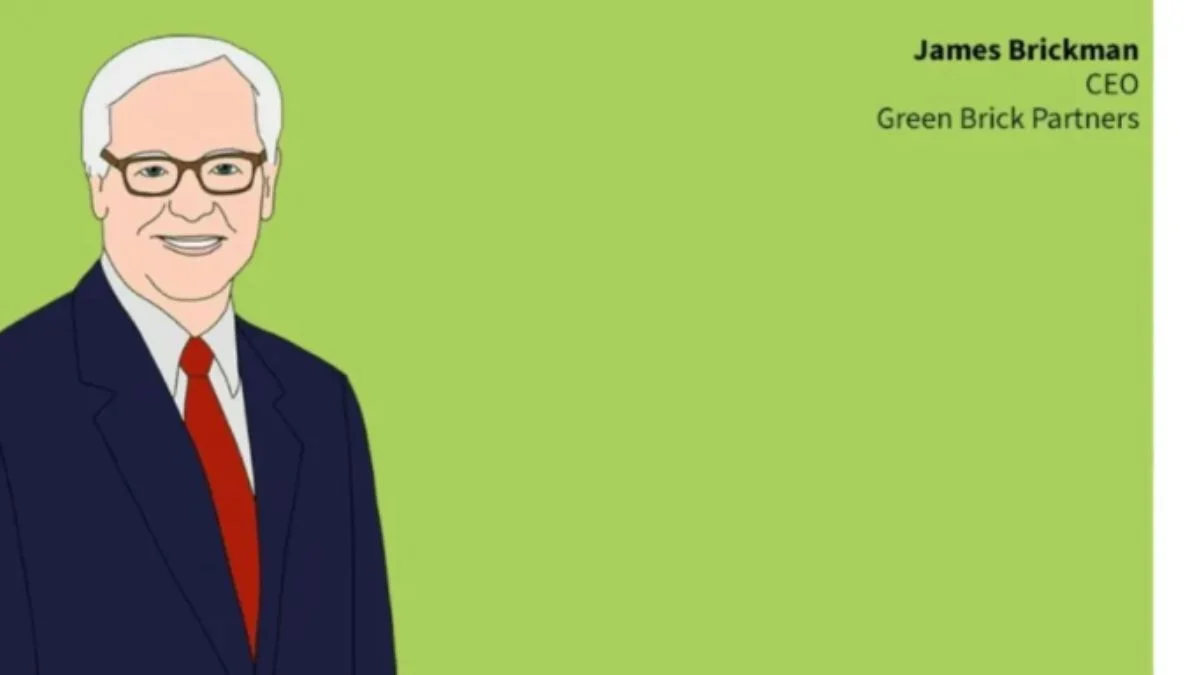
CEO Jim Brickman explained that Green Brick’s decision to own and self-develop the vast majority of its lots—currently 76% of its 52,000-lot portfolio—removes these "middleman" costs. By holding the land on its own balance sheet and managing the development process internally, the company captures the appreciation of the land and avoids high-interest carrying costs.
"One of the primary differentiators from many of our peers is that we do not engage in high-interest cost land banking relationships that can distort a builder’s economic leverage and risk," Brickman said during the call. He noted that land banking often gives the banker indirect control over the timing of lot purchases, which can force a builder to buy land during market downturns or unfavorable cycles. By maintaining direct ownership, Green Brick retains total autonomy over its development pace.
Furthermore, because Green Brick carries very little capitalized interest in its inventory and does not rely on third-party lot deliveries, it is insulated from the rising land costs that are currently squeezing the margins of its competitors. The company builds its long-term project projections on the assumption of flat undeveloped lot costs, which creates a natural "margin cushion" as home prices rise over the multi-year life of a community.
The Strategic Pivot to Trophy Signature Homes
Beyond its land strategy, Green Brick has significantly shifted its product mix to favor its entry-level, spec-driven brand, Trophy Signature Homes. This move is also contrarian; many large builders are currently pivoting toward "move-up" buyers (those buying their second or third homes) and "built-to-order" models to mitigate the risks associated with carrying unsold inventory.
In contrast, Green Brick has doubled down on "spec" building—starting construction on homes before a buyer has signed a contract. This allows the company to offer immediate or near-immediate move-in dates, which is a major selling point for buyers trying to time their home purchase with mortgage rate fluctuations.
Trophy Signature Homes has become the primary engine of Green Brick’s growth. In Q2, Trophy accounted for 44% of the company’s backlog units, a massive jump from 26% just one year ago. The brand’s sales velocity is nearly double the company average, selling 6.1 homes per community per month compared to the overall average of 3.3.
Jeff Cox, Chief Financial Officer at Green Brick Partners, attributed the sequential margin improvement largely to the execution of the Trophy brand. Despite being an entry-level product—typically priced between $325,000 and $400,000—Trophy’s margins are in line with the company’s higher-end subsidiaries. This is achieved through extreme operational efficiency. For example, in the Dallas-Fort Worth market, Trophy has reduced its average build cycle time from 103 days to just 84 days. This rapid turnover of capital allows the company to maintain high returns on equity despite the lower price points of the homes.
Financial Resilience and Strategic Optionality
Green Brick’s nearly 30% gross margin provides it with a level of "strategic optionality" that is rare in the current housing market. As the Federal Reserve maintains elevated interest rates, homebuilders have been forced to rely heavily on mortgage rate buydowns and price incentives to maintain sales volume.

While builders with thinner margins, such as Hovnanian Enterprises (14.3% margin) or KB Home (15.2% margin), have limited room to offer discounts without falling into unprofitable territory, Green Brick can afford to be aggressive. During the second quarter, Green Brick’s incentives on net new orders rose to 9.1%, an increase of 120 basis points year-over-year. However, because its starting margins are so high, the company was able to absorb these costs while still delivering industry-leading profitability.
Jed Dolson, the newly named co-CEO, emphasized that this margin cushion acts as a "shock absorber." It allows the company to prioritize volume and market share in volatile months without compromising its financial health. "The strength of our margins provides flexibility, but pricing decisions remain grounded in expected returns," Dolson noted, suggesting that the company will not chase volume at any cost, but rather use its margin strength to maintain a steady pace of deliveries.
Geographic Performance: The Texas Powerhouse
The company’s results also highlighted a growing divergence in regional housing markets. Green Brick’s operations are heavily concentrated in the "Sunbelt," with a particular focus on Texas, Georgia, and Florida.
Texas remains the company’s locus of strength. The Dallas-Fort Worth (DFW) market, where Trophy Signature Homes is now the third-largest builder, continues to see robust demand driven by corporate relocations and a relatively affordable cost of living. Green Brick has also begun to see significant traction in its expansion markets of Austin and Houston.
In contrast, the Atlanta market has proven more challenging. Green Brick’s subsidiary in Georgia, The Providence Group, focuses primarily on the "second-time move-up" market, with average selling prices (ASP) hovering around $700,000.
"In Atlanta, we don’t provide entry-level housing," Dolson explained. "We’re in that second-time move-up market, and that market has been tougher." The higher price points in Atlanta make buyers more sensitive to interest rate hikes, whereas the entry-level buyers in Texas are often more motivated by necessity and are more receptive to the mortgage buydown programs offered by the Trophy brand.
Broad Impact and Industry Implications
Green Brick’s success with a land-heavy, spec-heavy model may prompt a re-evaluation of industry norms. For the last decade, Wall Street has rewarded builders for moving toward "asset-light" models that prioritize high Return on Invested Capital (ROIC) and lower balance sheet risk. However, Green Brick’s performance suggests that in an inflationary environment with rising land scarcity, owning the "raw materials" (the land) and controlling the manufacturing process (self-development) can yield superior margins.
The company’s ability to grow net new home orders by 19% year-over-year—despite a flat market for new home deliveries—indicates that there is a deep well of demand for affordably priced, ready-to-move-in housing. By focusing on "A" sites—well-located properties in high-demand submarkets—and investing in high-quality amenities like multi-million dollar community centers and pools, Green Brick is creating a product that appeals to the "affordability-constrained" but "quality-conscious" first-time buyer.
Looking ahead, Green Brick executives expressed confidence in their long-term runway. With 52,000 lots under control and a disciplined approach to new land acquisitions, the company is not under pressure to buy expensive land in the current environment.
"Trophy is growing much faster than all of our other businesses," Brickman concluded. "Our other businesses are relatively flat, but Trophy’s ability to deliver affordably priced homes, supported by an efficient land and construction platform, provides us with a runway for growth over the next several years."
As the housing market continues to adjust to a "higher-for-longer" interest rate environment, Green Brick Partners’ Q2 results serve as a case study in how a contrarian strategy, rooted in operational discipline and asset ownership, can provide a significant competitive advantage. While the rest of the industry watches its margins slide, Green Brick appears to have built a foundation that is not only resilient but capable of thriving amidst economic uncertainty.
