

The United Nations has officially warned that Yemen has returned to a state of "full-scale war," as the internationally recognized government intensifies its military operations against the Iran-backed Houthi movement, also known as Ansar Allah. Speaking before the United Nations Security Council on Friday, Hans Grundberg, the UN Special Envoy for Yemen, delivered a somber assessment of the situation, noting that the relative stability achieved through a 2022 ceasefire has effectively evaporated. This resurgence of high-intensity conflict comes at a time when the Middle East is already grappling with the broader implications of a US-Iran confrontation, threatening to plunge the region into deeper instability.
The focal point of the current military escalation is the strategic Bab al-Mandeb strait, a vital maritime chokepoint at the southern entrance to the Red Sea. Government forces, supported by a Saudi-led coalition, are pushing to recapture this corridor, which has gained unprecedented economic and military significance. As Iranian attacks have effectively paralyzed shipping through the Strait of Hormuz, the Bab al-Mandeb has emerged as the primary alternative route for global trade and energy exports. Control over this narrow passage is now viewed as a prerequisite for national and regional security, leading to some of the most violent clashes the country has witnessed in years.
The Dawn of Yemen Offensive and Recent Military Developments
On Sunday, the internationally recognized government of Yemen announced the commencement of a comprehensive military operation titled "Dawn of Yemen." The stated objective of the campaign is the total restoration of state authority over Houthi-held territories, including the capital city of Sanaa, which has been under rebel control since 2014. This offensive represents a significant shift from the defensive posture maintained by government forces during the previous two years of the UN-brokered truce.

According to military reports, the scale of the offensive is massive. On Saturday, government spokespersons claimed that coalition forces conducted more than 2,750 precision strikes within a 24-hour window. These operations were reportedly aimed at "neutralizing" Houthi combatants and destroying high-value military assets deep within rebel territory. Colonel Majid al-Nuzaili, the spokesperson for the Yemeni armed forces, stated via the Saba news agency that these strikes resulted in the deaths of more than 1,400 Houthi fighters.
Al-Nuzaili further detailed that ground forces have successfully breached Houthi defensive lines in several key sectors, recapturing operationally significant positions and securing field gains along the Red Sea coast. The offensive is currently concentrated around the southern cities of Mocha and Dubhab. These cities serve as the gateway to the Bab al-Mandeb strait, and their control is essential for any party seeking to dominate the shipping lanes. While the Houthis seized much of this coastal area in September, the government’s "Dawn of Yemen" operation seeks to reverse these gains and re-establish a permanent presence on Mayyun Island, a strategic landmass that sits directly in the center of the strait.
Humanitarian Crisis and Civilian Impact
The return to full-scale hostilities has exacted a devastating toll on Yemen’s civilian population, which was already suffering from over a decade of conflict and economic collapse. The United Nations has confirmed that at least 46 civilians have been killed and more than 130 others injured since August. A disproportionate number of these casualties are children, caught in the crossfire of urban battles and aerial bombardments.
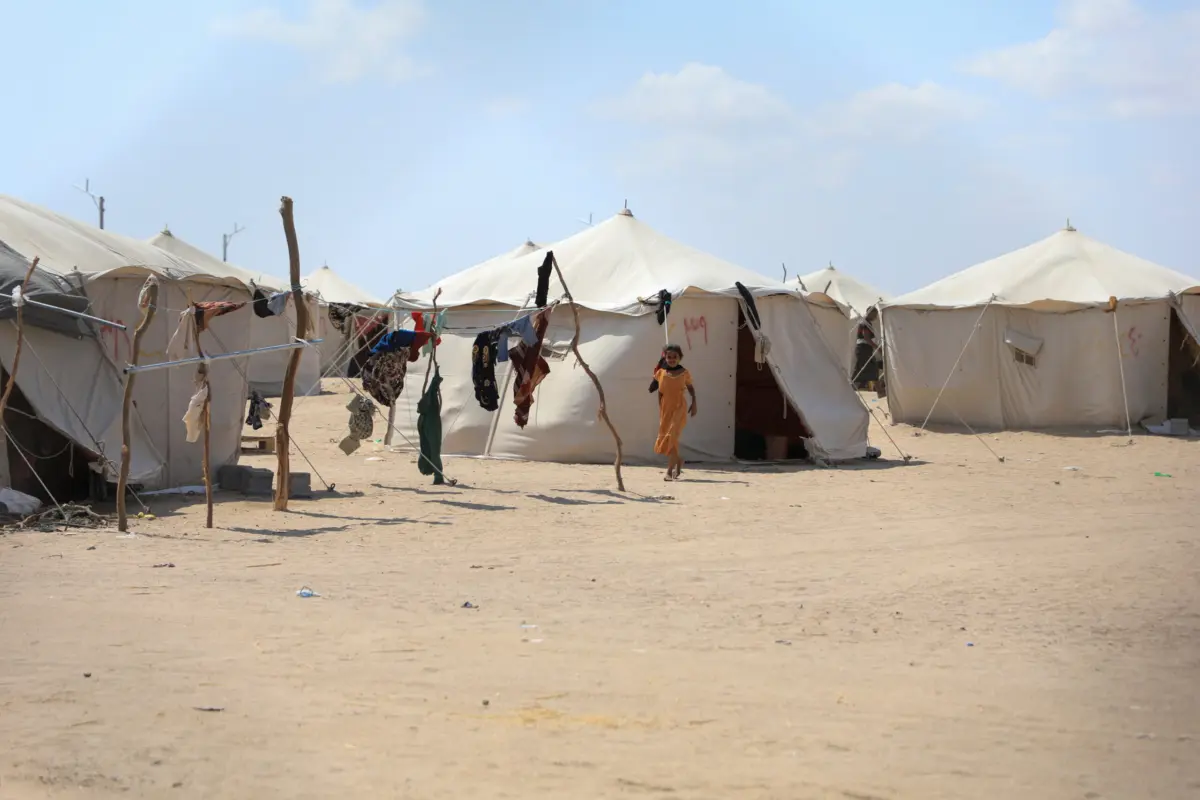
Displacement has also surged. The International Organization for Migration (IOM) reported that more than 200,000 people have been forced to flee their homes since the fighting escalated in September. Many of these individuals are being displaced for the second or third time, moving into overcrowded camps that lack basic facilities such as clean water, food, and medical supplies.

In Sanaa, the humanitarian situation is particularly dire. Al Jazeera’s Yousef Mawry reported that the city is being subjected to relentless bombardment, reminiscent of the early years of the Saudi-led intervention in 2015. Strikes have targeted the Sanaa International Airport, as well as industrial facilities including a chips factory and a sponge factory. Crucially, at least four telecommunications infrastructure sites have been destroyed, limiting the ability of civilians to communicate or access information. Mount Attan, a prominent landmark in the capital, was reportedly hit by 10 air raids in a single day.
A Decade of Conflict: Chronology and Context
To understand the current escalation, it is necessary to examine the timeline of the Yemeni Civil War, which has evolved from a localized power struggle into a complex proxy war.
- The 2014 Takeover: The conflict began when the Houthi movement, citing government corruption and rising fuel prices, marched into Sanaa and forced the government of President Abd-Rabbu Mansour Hadi into exile.
- 2015 Intervention: A Saudi-led coalition launched "Operation Decisive Storm" to restore the recognized government. This initiated years of stalemate, resulting in an estimated 150,000 to 227,000 deaths.
- 2022 Ceasefire: A UN-brokered truce brought a period of relative quiet, allowing for the partial reopening of Sanaa airport and the flow of fuel through Hodeidah port.
- 2023 Red Sea Escalation: Following the outbreak of conflict in the Gaza Strip, the Houthis began targeting commercial shipping in the Red Sea, claiming solidarity with Palestinians. This brought the group into direct confrontation with US and UK naval forces.
- July 2026 Blockade: The Houthis declared a naval blockade on ships linked to Saudi Arabia, asserting that it was a response to ongoing Saudi economic pressure. Analysts, however, viewed this as a move to provide Iran with leverage in its negotiations with the United States.
- September 2026 Coastline Seizure: Houthi forces launched a lightning offensive, seizing Mocha and Mayyun Island, effectively taking control of the Bab al-Mandeb strait.
- October 2026 "Dawn of Yemen": Rashad al-Alimi, leader of the Presidential Leadership Council (PLC), officially authorized the current counter-offensive to retake the coast and the capital.
Regional Implications and the US-Iran Proxy War
The war in Yemen is no longer an isolated civil conflict; it has become a primary theater in the broader US-Israel-Iran war. The Houthis, as part of Iran’s "Axis of Resistance," have utilized sophisticated weaponry—including ballistic missiles and long-range drones—to project power far beyond Yemen’s borders.
On Friday, Saudi Arabia’s aviation authorities reported the first civilian deaths within the kingdom since the resumption of hostilities. A Houthi missile strike on the international airport in Riyadh killed three Saudi citizens, including a pilot. This attack led to the immediate suspension of several international flights and signaled the Houthis’ intent to bring the cost of the war directly to the Saudi capital.

The closure of the Strait of Hormuz due to Iranian activity has made the Bab al-Mandeb the "crown jewel" of regional energy transit. Saudi Arabia, which has historically relied on the Persian Gulf for its exports, is increasingly dependent on Red Sea terminals. By seizing or threatening the Bab al-Mandeb, the Houthis and their backers in Tehran can exert immense pressure on the global economy and Saudi national security.
International Responses and Diplomatic Deadlock
The international community has reacted with alarm to the "full-scale war" declaration. At the UN Security Council, US Ambassador for Management and Reform Jeff Bartos expressed "grave concern" over the Houthi escalation. Bartos characterized the Houthis as "instruments of Tehran" used to "terrorize innocent civilians" and "undermine regional stability." The United States has demanded an immediate cessation of attacks on Saudi Arabia and the Yemeni government, while simultaneously calling on Iran to end its military support for the rebels.
Despite these calls, diplomatic solutions appear distant. UN Envoy Hans Grundberg emphasized that "unless war is to become Yemen’s permanent reality, the time to consider political strategies is now." However, military analysts suggest that the Yemeni government and its coalition allies are currently more focused on military gains than a return to the negotiating table. The success of the "Dawn of Yemen" offensive in breaching Houthi lines has provided the government with a level of momentum it has not felt in years, potentially making them less inclined to accept a settlement that leaves the Houthis in control of the north.
Analysis of Implications
The return to full-scale war in Yemen carries three major implications for the near future. First, the global energy market remains highly vulnerable. If the Bab al-Mandeb remains a combat zone, the cost of shipping and insurance for oil tankers will skyrocket, leading to higher energy prices worldwide.

Second, the humanitarian crisis is likely to reach unprecedented levels. Yemen has faced famine conditions since 2016, and the destruction of infrastructure combined with the displacement of 200,000 additional people could trigger a mass starvation event if aid corridors are not secured.
Third, the conflict risks a direct confrontation between the US and Iran on Yemeni soil. While the US has stated it does not wish to be directly involved in the ground war, the continued targeting of international shipping and Saudi airports may force a more robust military response from Washington. As the "Dawn of Yemen" offensive continues, the country stands at a crossroads between a protracted, bloody stalemate and a total regional conflagration.
