

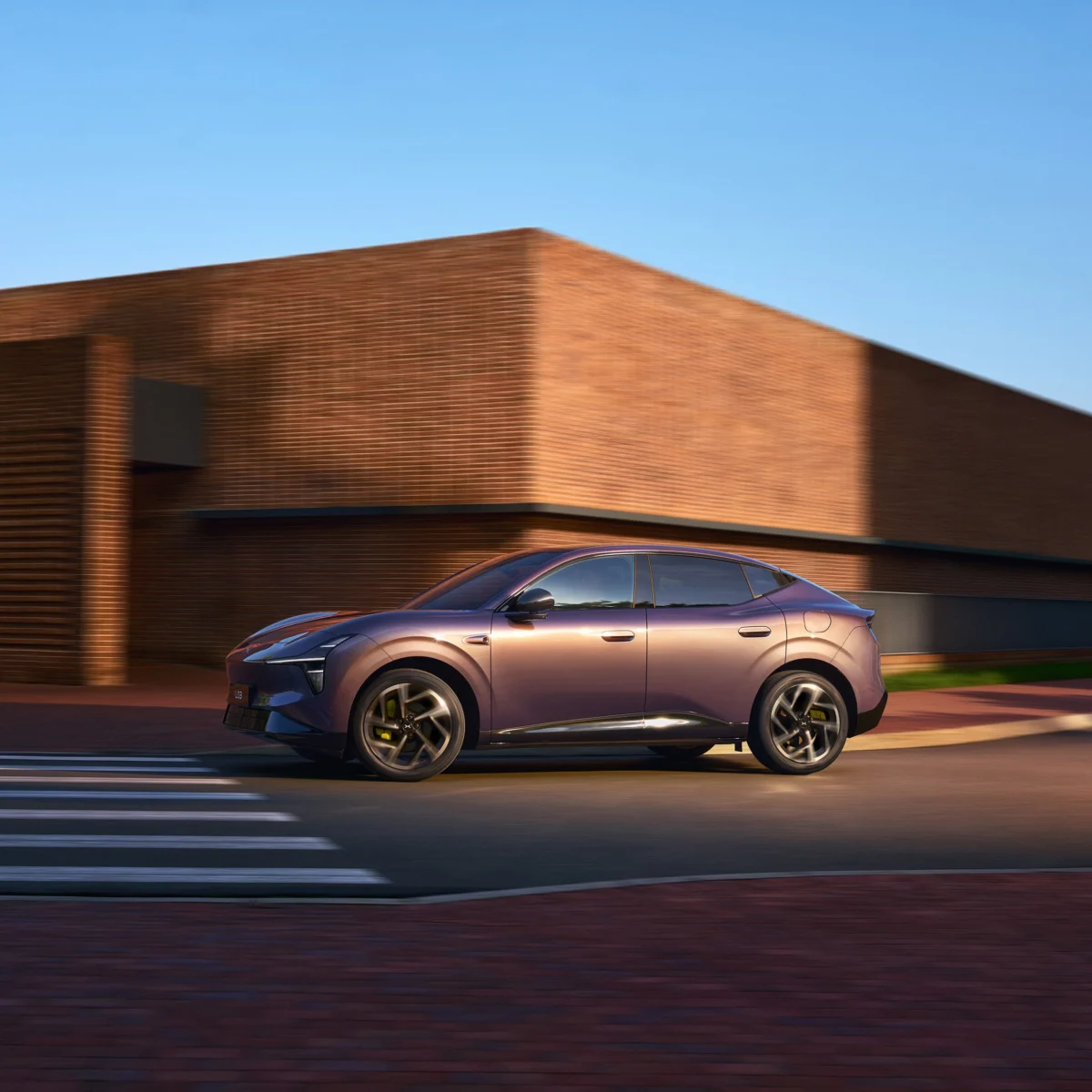
As attendees entered the XPeng showcase event in Munich, they were met with a giant wooden Trojan horse, a provocative symbol placed in the heart of the German automotive industry. The installation served as a clear message from the Chinese electric vehicle (EV) manufacturer: it is no longer merely testing the waters of the European market but is prepared for a full-scale entry into the global arena. The event marked the official international debut of the L03, a model designed to spearhead the company’s expansion into 60 countries across Europe, Latin America, the Middle East, and the Asia-Pacific region.
Founded less than 12 years ago, XPeng has undergone a rapid transformation from a domestic startup to a significant player in the global EV landscape. While the company does not currently rank among the top ten EV manufacturers by volume within China—a market dominated by giants like BYD and Tesla—it has cultivated a robust reputation for technological innovation and software integration. This reputation has been particularly strong in international markets since the company began shipping vehicles to Norway in 2020. The launch of the L03 represents a strategic pivot toward high-volume, mass-market segments, aiming to challenge established European marques on their home turf.
The L03 is positioned as XPeng’s "budget" entry, with a starting price of approximately €35,600 (roughly $40,000). This pricing strategy places it significantly below the company’s G6 SUV, a direct competitor to the Tesla Model Y, and aligns it with popular European models such as the Volkswagen ID.4. By offering a high-specification vehicle at a mid-market price point, XPeng is attempting to redefine consumer expectations for the "entry-level" EV segment, a strategy the company describes as delivering features that are "beyond class."
Chronology of XPeng’s Global Trajectory
XPeng’s journey to the Munich stage began in 2014, when it was founded by He Xiaopeng and several partners with the goal of creating "smart" electric vehicles. Unlike traditional manufacturers that prioritized mechanical engineering, XPeng focused heavily on software, artificial intelligence, and autonomous driving capabilities from its inception. This tech-first approach allowed the company to move quickly. By 2018, it launched its first production model, the G3, followed by the P7 sedan in 2020.

The year 2020 served as a major milestone when XPeng became one of the first Chinese EV startups to export vehicles to Europe, choosing Norway as its entry point due to the country’s high EV adoption rates and supportive infrastructure. This initial foray provided the company with critical data on European consumer preferences and regulatory requirements. In the years following, XPeng expanded its footprint to Denmark, the Netherlands, and Sweden, while simultaneously refining its autonomous driving software, XNGP, to handle diverse urban environments.
The development of the L03, known domestically in China as the Mona M03, represents the culmination of this decade of growth. The "Mona" sub-brand was originally conceived through a partnership with the ride-hailing giant Didi, intended to create affordable, tech-heavy vehicles for both private and commercial use. However, for the global release, XPeng has integrated the model into its primary lineup, rebranding it as the L03 and tweaking the specifications to meet the more demanding expectations of international buyers.
Technical Specifications and Performance Data
The L03 is built on a sophisticated platform designed to maximize efficiency and interior space. Despite its aggressive pricing, the vehicle boasts technical specifications that rival much more expensive competitors. According to data provided by the manufacturer, the L03 features a drag coefficient of 0.228, one of the lowest in its class. This aerodynamic efficiency is a key factor in achieving its claimed WLTP (Worldwide Harmonized Light Vehicles Test Procedure) range of 320 miles.
Charging performance is equally competitive. The vehicle is capable of fast charging from 10 to 80 percent in just 20 minutes, addressing one of the primary concerns of potential EV buyers: range anxiety and downtime. The L03 will be offered in several configurations, including a Standard Range, Long Range, All-Wheel Drive (AWD), and an Ultra version. While the base model achieves a 0 to 60 mph time of 7.5 seconds, the top-tier Ultra and AWD versions can reach that mark in 4.5 seconds, providing performance figures typically associated with premium sports sedans.
Inside the cabin, the L03 emphasizes a "digital-first" experience. The dashboard is dominated by a 15.6-inch 2.5K central touchscreen, complemented by a 27-inch Head-Up Display (HUD) that projects critical navigation and performance data onto the windshield. Standard features across all trims include:

- AI-powered voice control systems.
- Integrated Google Maps and localized app ecosystems.
- A 256-color ambient lighting system.
- Heated and cooled massage seats.
- A panoramic glass roof.
- High-fidelity audio with headrest speakers.
The Autonomy Debate: Vision vs. LiDAR
One of the most significant technological choices XPeng has made with the L03 is its reliance on a "vision-only" system for autonomous driving, a departure from many of its Chinese rivals like NIO and Zeekr, which utilize LiDAR (Light Detection and Ranging) sensors. This move aligns XPeng more closely with Tesla’s approach to Full Self-Driving (FSD) technology.
The L03 Ultra model is equipped with XPeng’s proprietary Turing 7-nanometer AI chips, which provide the computational power necessary for what the company calls "Level 2++" autonomy. This system is designed to provide point-to-point, hands-off navigation. XPeng’s senior director of engineering, Xianming Liu, stated that the combination of high-performance compute power and refined AI models allows the vehicle’s camera system to match or exceed the performance of LiDAR-based systems.
However, the company remains realistic about the regulatory and hardware limitations of the current platform. While the Turing chips are theoretically capable of supporting Level 4 autonomy (high automation without human intervention), Liu confirmed that the L03 lacks the six levels of hardware redundancy required for safe Level 4 operation. Consequently, the L03 is marketed as an advanced driver-assistance system (ADAS) vehicle, with plans to roll out hands-off navigation features in Europe by 2027 via over-the-air (OTA) updates.
Design Philosophy and Industry Convergence
The aesthetic of the L03 has drawn significant attention for its resemblance to high-end luxury vehicles, most notably the Ferrari Luce and the Denza Z9 GT. This is not a coincidence. XPeng’s head of design, JuanMa López, previously served as the head of exterior design at Ferrari between 2010 and 2018. During his tenure at the Italian marque, he was instrumental in shaping the lines of iconic models such as the LaFerrari and the SF90 Stradale.
Rafik Ferrag, XPeng’s head of creative design, addressed the convergence of design styles across different price brackets. He noted that in previous decades, entry-level cars were physically restricted by the cost of materials and manufacturing processes that could produce complex curves or high-end finishes. Today, advances in manufacturing and the use of digital design tools have democratized these elements. Ferrag stated that XPeng’s goal is to provide the "material fit and finish, color precision, and technology" of a luxury brand in an affordable package.

This strategy poses a significant challenge to traditional luxury manufacturers. As "budget" EVs begin to look and feel like premium products, high-end brands may find it increasingly difficult to justify their price premiums, especially as the industry shifts toward a standardized electric powertrain model where mechanical differentiation is less pronounced than in the era of internal combustion engines.
Market Implications and Global Strategy
The launch of the L03 comes at a volatile time for the global automotive market. European manufacturers are facing increased pressure from Chinese imports, leading to ongoing discussions within the European Union regarding potential tariffs and trade barriers. By launching the L03 in Munich, XPeng is signaling its intent to compete through innovation and value rather than merely competing on price.
Market analysts suggest that XPeng’s success will depend on its ability to build a localized service and charging infrastructure. While the L03’s specifications are impressive on paper, European consumers often prioritize long-term reliability and the availability of physical service centers. XPeng has acknowledged this by announcing plans to establish a comprehensive dealer and service network across its 60 target countries.
The rebranding of the "Mona" sub-brand for international markets also reflects a sophisticated understanding of global branding. By positioning the L03 as a core XPeng product, the company avoids the "budget brand" stigma that has occasionally hindered other manufacturers. The inclusion of localized features, such as built-in Google Maps and anchor points for action cameras or camping accessories, suggests a focus on a younger, tech-savvy demographic that values versatility.
As the Trojan horse in Munich suggests, the arrival of the L03 may be the beginning of a significant shift in the European automotive landscape. If XPeng can deliver on its promises of "beyond class" quality and reliable autonomous features, it may force a rapid acceleration of innovation among domestic European manufacturers, ultimately benefiting consumers through increased competition and more accessible high-technology vehicles. The L03 is not just a new car; it is a test case for whether a software-centric, Chinese-designed EV can truly become a global household name.
