

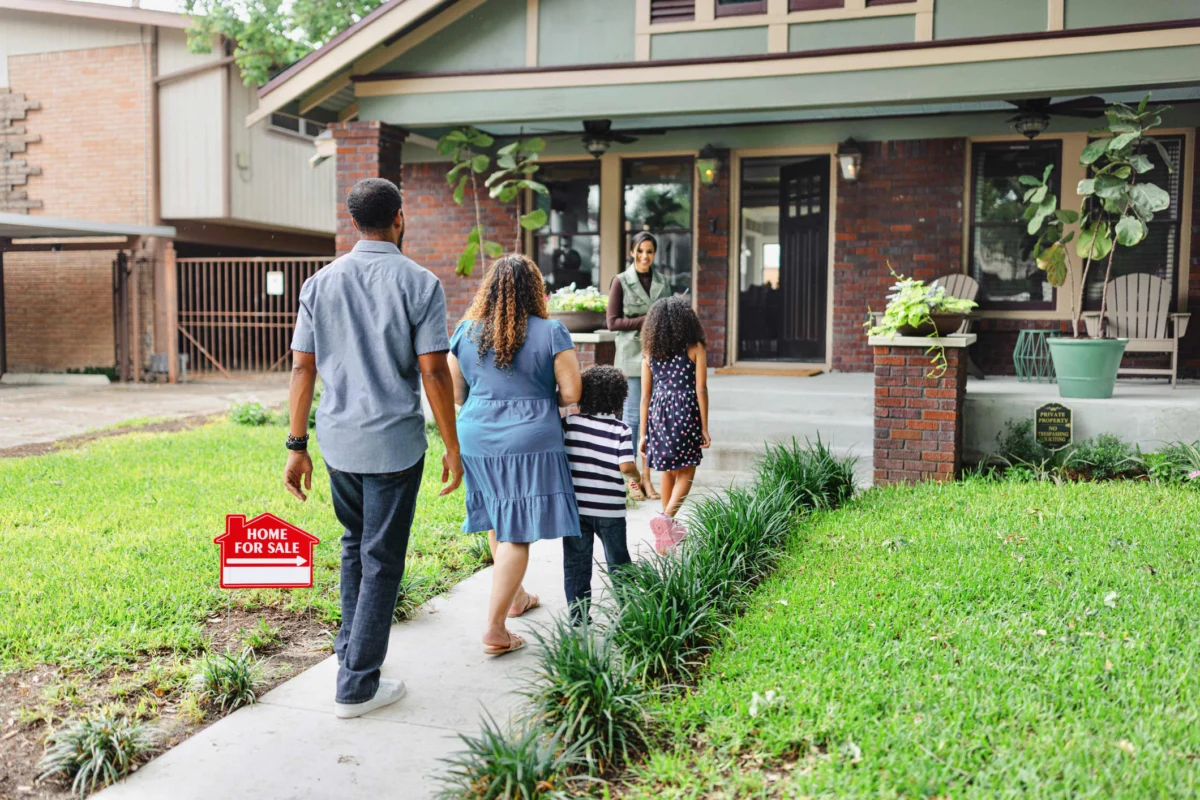
The availability of lower-priced homes for sale is experiencing a notable increase, yet this trend does not translate into improved affordability for prospective buyers, new research indicates. A recent report from real estate firm Zillow highlights a stark divergence in the housing market, underscoring persistent economic inequalities. While starter homes, defined as properties in the lowest-priced third of the market, saw a 4.5% increase in availability in May compared to a year prior, sales in this segment simultaneously fell by 5.4%. This paradox suggests that despite more options, the financial barriers to homeownership for many entry-level buyers remain insurmountable.
The Starter Home Paradox: Supply Up, Sales Down
According to Zillow’s May report, the typical value of a starter home nationally reached $202,000, marking a 2.3% increase from May 2025. This incremental rise in price, combined with other economic pressures, creates a challenging environment for first-time homebuyers. Kara Ng, a senior economist for Zillow and author of the comprehensive report, articulated the core dilemma: "Starter-home buyers have more choices, more price cuts and less competition… But the unfortunate reason for that advantage is that starter-home buyers are either unwilling or unable to purchase a home."
The inability to purchase is largely attributed to broader economic headwinds impacting household budgets. Ng elaborated, stating, "Even with subdued rent growth, inflation is eating into other parts of household budgets, making it harder to save for a down payment." This situation is particularly acute for younger generations and lower-income households, who often struggle to accumulate the substantial savings required for a down payment while contending with rising costs for essentials like groceries, utilities, and transportation. The national median down payment for a first-time homebuyer hovers around 6-7% of the purchase price, but in many competitive markets, lenders often prefer higher percentages, further exacerbating the savings challenge. For a $202,000 starter home, a 7% down payment alone would require over $14,000, a sum that can take years to save for many working-class families.
A Tale of Two Markets: Luxury Sales Surge Amidst Affordability Crisis
In stark contrast to the struggling starter home segment, the luxury housing market continues to demonstrate robust growth. The Zillow report revealed that sales of luxury homes—those in the top 5% of values, typically worth about $1.9 million nationally—surged by 6.2% year-over-year in May. This divergence paints a clear picture of a bifurcated housing landscape, mirroring broader economic trends. Ng’s analysis pointed to a "broader economic divide, with stock market gains supporting demand at the high end while rising everyday costs weigh on potential starter-home buyers."
This "K-shaped economy" phenomenon, a term frequently employed by economists, describes a scenario where different segments of the economy recover or perform at vastly different rates, often leading to increased wealth inequality. Higher-income households, benefiting from strong stock market performance and often possessing more stable, higher-paying jobs, continue to accumulate wealth and maintain strong purchasing power. For these affluent buyers, the decision to purchase a luxury home is less susceptible to fluctuations in mortgage rates or incremental increases in property values. They may have the capital to pay cash, or if they opt for financing, their substantial assets and income streams mitigate the impact of higher interest rates. This financial resilience allows them to capitalize on investment opportunities and lifestyle upgrades, further widening the gap between their economic trajectory and that of lower-income households.
Historical Context: The Post-Pandemic Housing Boom and Its Aftermath
To fully grasp the current market dynamics, it is crucial to consider the recent history of the housing sector. The period immediately following the onset of the COVID-19 pandemic saw an unprecedented housing boom. Fueled by historically low interest rates (which dipped below 3% for 30-year fixed mortgages), a sudden shift to remote work creating demand for more space, and a desire to escape urban centers, home prices soared across the nation.
In June 2020, just a few months into the pandemic, the median price of an existing home was significantly lower than current levels. By June 2026, this median price had reached an all-time high of $440,600, according to the National Association of Realtors (NAR). This figure represents a staggering 49.2% increase since June 2020. While the rate of growth has certainly slowed from the double-digit annual increases witnessed during the peak of the pandemic housing frenzy, the current median price is still 1.8% higher than a year earlier. This sustained elevation in home values, even with decelerated growth, has fundamentally altered the affordability landscape, making it difficult for new buyers to enter the market at prices that are dramatically higher than pre-pandemic levels. The rapid appreciation essentially priced out a significant portion of potential first-time buyers whose incomes did not keep pace with the meteoric rise in housing costs.
The Persistent Shadow of Mortgage Rates

Beyond elevated home prices, higher mortgage rates stand as a formidable barrier to homeownership. As of Wednesday, the average interest rate on a 30-year fixed-rate mortgage was 6.75%, according to Mortgage News Daily. This rate represents a significant increase from the sub-6% levels observed in late February. The upward trajectory of rates was heavily influenced by geopolitical events, specifically the onset of the Iran War, which injected new uncertainty into global markets and reignited concerns about inflation. Central banks, including the U.S. Federal Reserve, have been engaged in a prolonged battle against inflation, utilizing interest rate hikes as a primary tool to cool the economy.
Daryl Fairweather, chief economist for real estate company Redfin, emphasized the profound impact of these rates: "Buyers are also up against these nearly 7% mortgage rates currently, and can’t afford to buy at these high rates and high prices." She illustrated the potential relief lower rates could bring, stating, "Hypothetically, if mortgage rates were to drop to, say, 5%, that would make buying a home much more affordable. You would see instantaneously an increase in sales and more people buying and then more people selling." However, Fairweather quickly tempered expectations, adding, "But I think it’s pretty far-fetched at this point to rely on that happening. Interest rates are looking like they will be higher for longer."
The financial implications of even a small percentage point change in mortgage rates are substantial for homebuyers. For instance, a 6.75% rate on a $202,000 mortgage (the typical value of a starter home) translates to a monthly payment of approximately $1,310 for principal and interest, according to Bankrate’s mortgage calculator. If that rate were to drop to 5%, the monthly payment would decrease to about $1,084, saving the homeowner $226 each month. At the ultra-low 3% rates seen during the pandemic, the payment would have been just $852, a difference of nearly $460 from current rates. This monthly burden, compounded over the life of a 30-year loan, represents a significant portion of a household’s disposable income, particularly for those on tighter budgets.
Furthermore, mortgage rates play a diminished role for buyers in the luxury market. As Fairweather noted, these buyers "can sell stock or liquidate assets in order to buy a home without having to even get a mortgage in the first place, or if they get a mortgage, they might not be deterred by the high interest rate." Their robust financial positions provide a buffer against market fluctuations that cripple less affluent buyers. Beyond principal and interest, other often-overlooked costs like property taxes and homeowner’s insurance, typically bundled into monthly mortgage payments via escrow accounts, have also seen significant increases since 2019, according to property data and analytics firm Cotality, further straining affordability.
Addressing the Supply Shortage: Policy Interventions and Long-Term Challenges
The persistent lack of housing supply is a foundational issue exacerbating the affordability crisis. As of 2025, Realtor.com estimated a national shortage of more than 4 million homes. This deficit is the culmination of decades of underbuilding, restrictive zoning laws, labor shortages in construction, and rising material costs.
In an effort to address this systemic problem, the bipartisan 21st Century ROAD to Housing Act became law in July. This comprehensive legislation combines dozens of measures designed to stimulate home construction, broaden access to financing for potential buyers, and curb the purchasing power of large institutional investors in the residential market. The act aims to streamline permitting processes, provide incentives for builders, and potentially offer down payment assistance programs, though the specifics of its implementation and impact remain to be seen.
While the legislative intent is clear, experts caution that the benefits of such measures will likely take considerable time to materialize. Reversing a shortage of millions of homes is not an overnight task; it requires sustained effort across multiple sectors and levels of government. The construction industry faces ongoing challenges with skilled labor availability and the rising cost of building materials, which can offset some of the incentives provided by new legislation. Furthermore, local zoning regulations, which often limit density and increase development costs, remain a significant hurdle that federal legislation can only partially influence.
Broader Societal and Economic Implications
The widening gap in housing affordability and access carries profound societal and economic implications. For young people and aspiring first-time homebuyers, the dream of homeownership, long considered a cornerstone of the American Dream and a primary vehicle for wealth accumulation, is increasingly out of reach. This has several ripple effects:
- Wealth Inequality: Homeownership is a critical mechanism for building intergenerational wealth. When a significant portion of the population is locked out of this opportunity, existing wealth disparities are exacerbated, perpetuating economic inequality across generations.
- Geographic Mobility: The dilemma articulated by Redfin’s Fairweather — "Do they want to live somewhere that has the best job opportunities… or do they want to live where home ownership will be much easier to access at a younger age, but they might not earn as much over their lifetime because of that choice" — highlights a critical tension. High housing costs in economic hubs can limit talent mobility and potentially hinder overall economic dynamism.
- Social Stability: A lack of affordable housing can contribute to increased homelessness, housing insecurity, and social unrest. It can also strain public services and infrastructure in areas with rapidly growing populations but insufficient housing stock.
- Economic Drag: Consumer spending may be dampened as households divert a larger share of their income to housing costs, leaving less for other goods and services. This can slow economic growth and reduce overall market activity.
- Demographic Shifts: Sustained unaffordability can influence family formation decisions, birth rates, and migration patterns, with long-term consequences for the demographic makeup and economic vitality of communities.
In conclusion, the current housing market presents a complex and challenging picture. While an uptick in starter home availability might seem like a positive development, it is overshadowed by persistent affordability issues driven by elevated prices, high mortgage rates, and broader inflationary pressures. The contrasting boom in the luxury segment underscores a deepening economic divide. Until systemic issues of supply, affordability, and wealth inequality are comprehensively addressed, the path to homeownership for many will remain arduous, with significant repercussions for individuals and the economy at large.
