

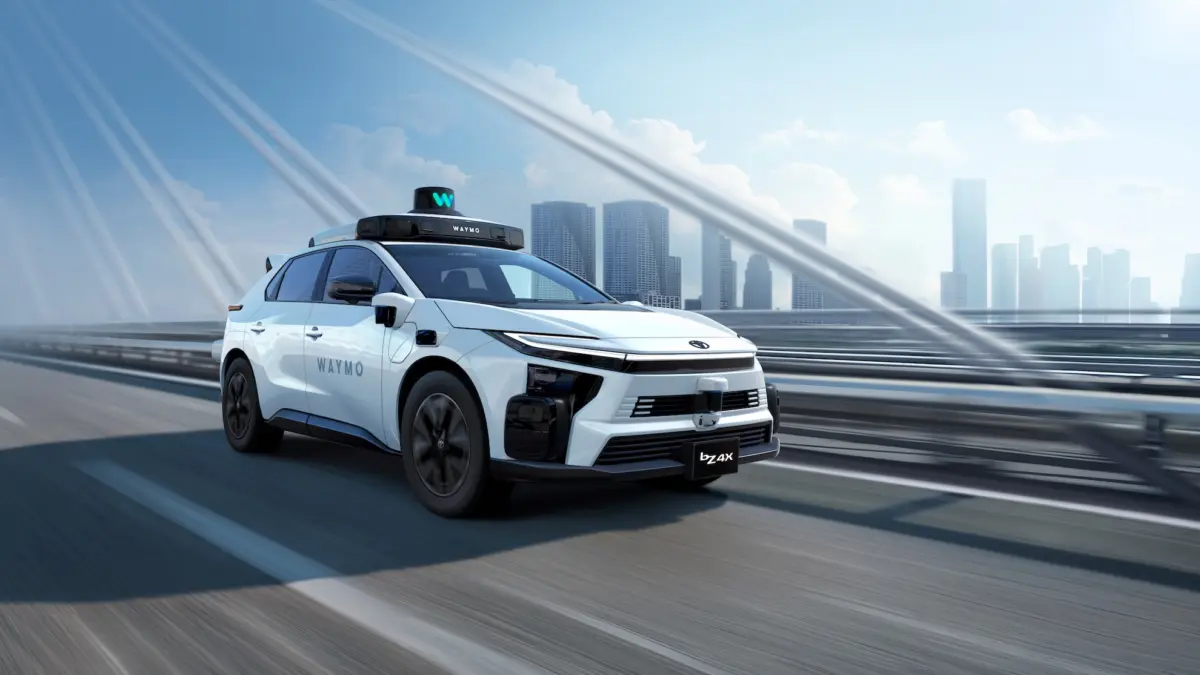
Waymo, the autonomous driving subsidiary of Alphabet Inc., has solidified a major international expansion strategy through a deepened partnership with Toyota Motor Corporation. Under the terms of a definitive agreement announced Friday, the two companies will collaborate to bring self-driving technology to global markets, specifically targeting Japan and the United Kingdom. The centerpiece of this initiative is the Toyota bZ4X, a fully electric crossover that will be modified to integrate the "Waymo Driver"—the company’s proprietary suite of sensors, software, and compute platforms. Testing of these autonomous vehicles is scheduled to commence in Japan in 2025, with a broader commercial rollout of a 2027 model year fleet intended for international robotaxi operations.
This partnership marks a significant transition for Waymo as it moves beyond its primary testing and commercial grounds in the United States. While Waymo currently operates commercial services in cities like Phoenix, San Francisco, and Los Angeles using the Jaguar I-Pace, the deal with Toyota provides the scale and manufacturing expertise necessary to penetrate complex international markets. The 2027 bZ4X vehicles—which are marketed simply as the "BZ" in North America—will be manufactured at Toyota’s Takaoka factory in Japan. This facility will serve as the primary hub for integrating Waymo’s Level 4 autonomous technology directly into the vehicle’s assembly line, a move that signals a more mature, factory-integrated approach to autonomous vehicle (AV) production compared to the aftermarket retrofitting seen in earlier years of the industry.
The Evolution of the Waymo-Toyota Alliance
The announcement is the culmination of a relationship that has been developing for several years. In April 2025, Toyota and Waymo signed a preliminary memorandum of understanding to explore the potential for an autonomous vehicle platform. At the time, the agreement was characterized as exploratory, with both companies evaluating the technical compatibility of Waymo’s software with Toyota’s e-TNGA (electric Toyota New Global Architecture) platform. Over the subsequent 18 months, engineering teams from both firms worked to bridge the gap between Toyota’s vehicle control systems and Waymo’s high-performance autonomous stack.
This new phase of the partnership transforms the relationship from a technical study into a commercial supply agreement. For Waymo, securing a partner with Toyota’s global manufacturing footprint is a strategic necessity as it seeks to compete with other players in the burgeoning robotaxi sector, including Tesla’s recently unveiled Cybercab and Amazon’s Zoox. For Toyota, the collaboration offers a pathway to accelerate its "Mobility as a Service" (MaaS) ambitions without having to develop a full-stack autonomous system entirely in-house, an endeavor that has proven prohibitively expensive and time-consuming for many traditional automakers.
Strategic Focus on Japan and the United Kingdom
A primary driver for the selection of the bZ4X is its adaptability to different driving configurations. By focusing on Japan and the United Kingdom, Waymo is explicitly targeting high-density, right-hand-drive markets. Waymo has already been laying the groundwork for a London launch, having tested autonomous Jaguar I-Pace vehicles on British roads for several months. The company is currently awaiting the finalization of regulatory permits under the UK’s evolving Automated Vehicles Act, which aims to establish a comprehensive legal framework for self-driving cars by 2026.
In Japan, the partnership aligns with the national government’s push to solve logistical and mobility challenges caused by an aging population and a shortage of professional drivers. The Japanese government has been proactive in establishing "Level 4" (fully autonomous under specific conditions) zones. Testing in Japan next year will focus on navigating the unique urban topographies of cities like Tokyo and Nagoya, where narrow streets and high pedestrian density provide a rigorous testing ground for the Waymo Driver.
The deployment of the bZ4X is also a logistical play. By utilizing a vehicle that Toyota already produces at scale, Waymo can reduce the per-unit cost of its fleet. The bZ4X offers a spacious interior and a familiar form factor for passengers, which is essential for consumer adoption in the ride-hailing market.
Technical Integration and Safety Infrastructure
The integration process at the Takaoka plant involves more than just mounting cameras and Lidar sensors. The 2027 bZ4X units will feature redundant steering, braking, and power systems specifically designed to support autonomous operations. If one system fails, a secondary system can safely bring the vehicle to a stop—a requirement for truly driverless operations.
Beyond the hardware on the cars, Toyota and Waymo are exploring "V2X" (Vehicle-to-Everything) initiatives. Hiroki Nakajima, Executive Vice President and board member at Toyota, emphasized that the collaboration would extend to traffic infrastructure. The goal is to use data from Waymo’s real-world operations to help Toyota design "smarter" roads. This could include traffic lights that communicate with vehicles to optimize flow or sensors at intersections that alert autonomous cars to obscured hazards.
"This collaboration will help scale that technology and bring it to customers in Japan and beyond through Waymo’s ride-hailing service," Nakajima stated. "In parallel, Toyota will continue to explore how integrating vehicles with traffic infrastructure can make those roads safer still."
The Competitive Landscape of the Robotaxi Market
The Waymo-Toyota deal arrives at a pivotal moment for the autonomous vehicle industry. After years of consolidation and the exit of several high-profile players, the remaining contenders are moving into a "scaling" phase. Waymo is widely considered the current leader in the space, having surpassed 20 million miles of fully autonomous driving on public roads. However, the company faces mounting pressure to prove that its business model can be profitable outside of a few select US cities.
By partnering with Toyota, Waymo is adopting an "asset-light" strategy in international markets. Rather than building its own vehicles from scratch—a path that led to the demise of several startups—Waymo is positioning itself as the "Intel Inside" of the automotive world, providing the "brain" for vehicles built by established giants.
This stands in contrast to Tesla’s approach, which relies on a vision-only system (no Lidar) and seeks to turn existing consumer vehicles into a "Tesla Network" of robotaxis via software updates. It also differs from the strategy of Cruise (backed by GM), which has focused heavily on custom-built vehicles like the Origin, though that project was recently sidelined in favor of returning to a modified Chevrolet Bolt platform.
Broader Implications for the Automotive Industry
The implications of this partnership extend to the consumer market. Both companies have hinted that the "Waymo Driver" could eventually find its way into personally owned Toyota vehicles. While the current focus is strictly on ride-hailing fleets, the long-term vision involves a tiered approach to autonomy: Level 4 for commercial fleets and high-end "chauffeur" features for private owners.
Market analysts suggest that the global robotaxi market could be worth over $2 trillion by 2030, driven by the reduction in labor costs and the increased utilization rates of electric vehicles. For Toyota, which has faced criticism for a perceived slow start in the battery-electric vehicle (BEV) race, the bZ4X robotaxi provides a high-visibility platform to showcase its electric credentials. The bZ4X features a 71.4 kWh battery pack and an estimated range of over 250 miles, making it well-suited for the daily duty cycles of a ride-hailing service.
Timeline of Future Milestones
As the partnership moves forward, several key milestones will be watched closely by industry observers:
- 2025: Commencement of public road testing for the Waymo-equipped bZ4X in Japan, primarily focusing on mapping and environmental adaptation.
- Late 2025/Early 2026: Regulatory approval processes in the UK and Japan for commercial "Level 4" operations.
- 2027: Launch of the first mass-produced fleet of autonomous bZ4X vehicles from the Takaoka factory.
- 2027-2028: Potential expansion of the service to other right-hand-drive markets, possibly including Australia or Singapore, depending on regulatory readiness.
Conclusion
The Waymo and Toyota partnership represents a maturing of the autonomous vehicle industry. By combining the world’s most advanced self-driving software with the world’s largest automaker’s production capacity, the two companies are creating a formidable force in the race to redefine urban mobility. As the first autonomous bZ4X vehicles begin their trials in Japan next year, the eyes of the automotive and tech worlds will be on this cross-continental alliance to see if it can finally deliver on the long-promised goal of safe, scalable, and sustainable autonomous transportation on a global scale.
