

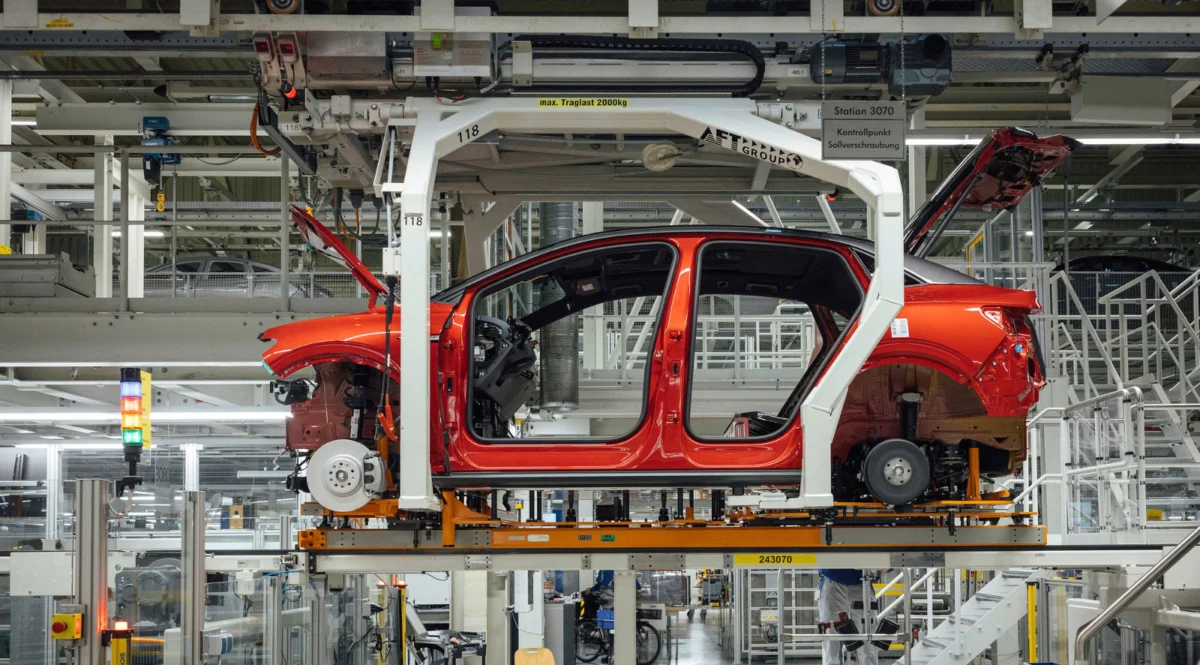
The supervisory board of Volkswagen Group has reached a unanimous consensus on a sweeping restructuring program that marks one of the most significant transformations in the company’s 89-year history. Known as Future Plan 2030, the strategy aims to navigate the German automotive giant through an era of diminishing internal combustion engine (ICE) demand, rising competition from Chinese electric vehicle (EV) manufacturers, and a challenging geopolitical landscape. The plan, spearheaded by CEO Oliver Blume, was finalized on September 3, 2026, signaling a definitive end to months of internal friction between management, labor representatives, and state stakeholders.
The centerpiece of the resolution is a drastic reduction in the company’s global workforce and a fundamental streamlining of its vehicle portfolio. Volkswagen Group intends to eliminate approximately 100,000 positions worldwide by the end of the decade. This figure includes an existing target of 50,000 redundancies, supplemented by an additional 50,000 job cuts mandated by the newly approved strategy. Furthermore, the company will discontinue approximately 50 percent of its current model offerings, focusing its capital on high-margin segments and high-growth electric platforms.
The Chronology of a Corporate Reorganization
The path to the approval of Future Plan 2030 was marked by significant institutional resistance. In June 2026, reports first surfaced in the German publication Manager Magazin suggesting that Blume was preparing a radical proposal to shutter four major factories in Germany. The identified sites included the commercial vehicle plant in Hanover, the electric vehicle hub in Zwickau, the Emden facility, and the Audi plant in Neckarsulm.
A pivotal board meeting held on July 9, 2026, initially saw the plan rejected. The proposal failed to secure the necessary majority, with 12 board members voting against the measures and only seven in favor. This deadlock highlighted the unique power structure of Volkswagen, where the state of Lower Saxony and powerful labor unions hold significant voting rights and influence over strategic decisions. Following this setback, Blume remained publicly determined, signaling to investors and the press that the restructuring was a matter of survival rather than choice.
By early September, intensive negotiations between the executive board and the works council resulted in a breakthrough. The unanimous approval on September 3 represents a strategic compromise. While the immediate threat of specific plant closures was deferred, the board acknowledged that the status quo was unsustainable. The agreement provides a framework for "staged implementation," allowing for a more gradual reduction in headcount while maintaining the flexibility to re-evaluate factory utilization over the next three years.
Financial Imperatives and Market Realities
The restructuring is driven by a stark decline in Volkswagen’s operational efficiency and market share. Historically, the Group produced approximately 12 million vehicles annually. However, that figure has contracted to roughly 9 million units. Despite the lower volume, the company’s fixed costs remained geared toward a much higher output, leading to severe margin compression.

Internal data indicates that Volkswagen’s European production capacity currently exceeds actual market demand by more than 500,000 units. This surplus capacity is particularly evident in the German plants that were originally optimized for high-volume ICE production. As the European market transitions toward electric mobility, the demand for traditional powertrains has eroded faster than the company anticipated, leaving several facilities underutilized.
To address this, the Group has committed to investing a "three-figure billion sum" over the coming years. This capital is earmarked for the electrification of core brands, including Volkswagen, Audi, and Porsche, as well as the development of next-generation software architectures. By halving the number of models offered, Volkswagen aims to reduce complexity in its supply chain and R&D departments, which have historically been criticized for being overly bureaucratic and fragmented.
The Fate of German Manufacturing Hubs
The four factories at the center of the restructuring—Hanover, Zwickau, Emden, and Neckarsulm—employ more than 40,000 workers and have a combined annual capacity of 750,000 vehicles. Under the approved plan, a definitive production allocation concept for these plants must be developed by June 2027.
The board’s resolution suggests that a competitive future for these sites cannot be guaranteed in their current form beyond the 2031–2034 window. Consequently, the company is exploring "alternative uses" for these industrial assets. One emerging possibility involves the repurposing of manufacturing space for the production of military hardware. Analysts suggest that shifting geopolitical tensions and a renewed focus on European defense autonomy may provide a pivot for underutilized automotive infrastructure. However, industrial experts, including Harald Hendrikse of Citi Research, have cautioned that the defense sector is unlikely to absorb the full scale of the labor and capacity surplus currently existing in the automotive sector.
Another potential avenue involves "contract manufacturing" for foreign competitors. There is growing speculation that Volkswagen could lease its excess capacity to Chinese automakers seeking to establish a manufacturing footprint within the European Union to circumvent import tariffs. While such a move would be politically sensitive, it would allow Volkswagen to maintain its facilities and preserve a portion of the local workforce.
Labor Relations and the Role of IG Metall
The approval of Future Plan 2030 was contingent on the cooperation of the IG Metall union and the Volkswagen Group works council. Christiane Benner, head of IG Metall, and Daniela Cavallo, chair of the works council, have emphasized that while they support the long-term viability of the company, they will continue to fight for the protection of individual sites.
In a joint statement, the labor leaders noted that the current agreement prevents an immediate "escalation of hostilities." They successfully fended off a proposed spinoff of the core Volkswagen brand—a move that unions feared would weaken worker protections and erode the company’s co-determination structures.

"No plant has been abandoned, and no plant closure has been finalized," Cavallo stated, clarifying that the 2027 deadline for the new production concept serves as a period for "constructive homework" rather than an immediate death knell for the affected sites. The unions are pushing for the management board to secure new product lines, such as battery cell production or specialized EV components, to replace the lost volume of traditional vehicle assembly.
Global Headwinds and the "Nokia Moment" Risk
Volkswagen’s restructuring occurs against a backdrop of intensifying global competition. In China, formerly the Group’s most profitable market, domestic manufacturers like BYD and Tesla have captured significant market share in the EV segment. Volkswagen’s sales in the region have declined sharply as local consumers increasingly favor software-heavy, tech-integrated vehicles that German engineering has struggled to match in terms of development speed.
In the United States, the regulatory environment has become increasingly complex. New tariffs and trade policies have made it difficult for European-made vehicles to compete on price. While Volkswagen’s sales of battery electric vehicles (BEVs) have shown growth in Europe, the overall trend for conventional vehicles remains downward.
Industry analysts have frequently warned of a "Nokia moment" for legacy automakers—a reference to the mobile phone giant that failed to adapt to the smartphone revolution. Volkswagen’s decision to prune its model lineup and aggressively cut costs is viewed by many as a necessary, if painful, attempt to avoid a similar fate. The challenge lies in transitioning from a traditional mechanical engineering firm to a software-driven mobility provider while managing the immense social and political costs of a shrinking industrial footprint.
Implications for the Broader Automotive Sector
The developments in Wolfsburg are being closely monitored by competitors and policymakers across the globe. As the largest automaker in Europe, Volkswagen serves as a bellwether for the health of the continent’s industrial base. If the restructuring succeeds, it could provide a blueprint for other legacy manufacturers, such as Stellantis, Renault, and Ford, which are facing similar pressures regarding overcapacity and the high costs of electrification.
However, the human cost of the transition remains a primary concern for the European economy. The loss of 100,000 jobs within a single corporate group represents a significant shift in the labor market. The success of Future Plan 2030 will ultimately depend on the company’s ability to innovate faster than it contracts. By focusing on a leaner, more specialized fleet and investing heavily in the technologies of the next decade, Volkswagen is betting that it can emerge from this period of turmoil as a more agile and profitable entity.
As the company moves toward the 2027 deadline for its European plant concepts, the automotive world will be watching to see if Blume’s "determined" vision can reconcile the demands of shareholders with the realities of a changing global market. The coming years will determine whether Volkswagen remains a dominant force in global transportation or if it becomes a cautionary tale of an industrial titan that struggled to keep pace with a rapidly evolving world.
