

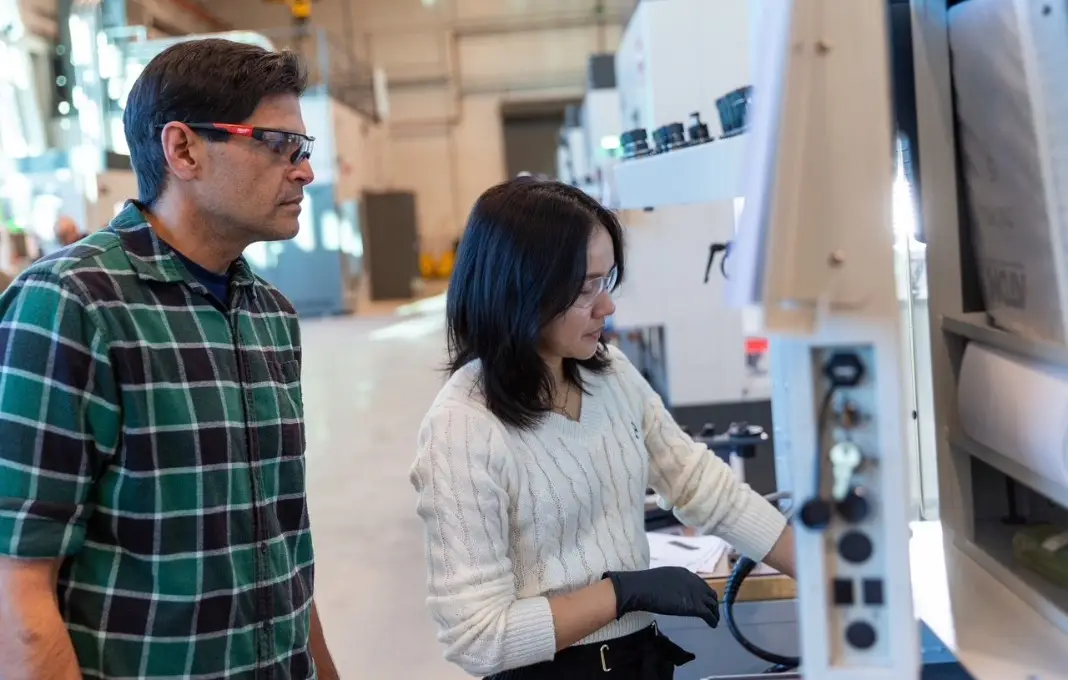
Virginia is transforming workforce development into a potent economic development advantage through the creation of innovative training pipelines, strategically positioning itself as a leader in preparing a skilled workforce for critical industries, particularly in aerospace, defense, and maritime sectors. This proactive approach is not only attracting new businesses and retaining existing ones but also bolstering national security capabilities through a dedicated focus on specialized training and talent acquisition.
The initiative’s impact is vividly illustrated in Danville, a city more than 200 miles from the coast, which has become a surprising hub of maritime expertise. This specialization is the culmination of over two decades of strategic investment in infrastructure designed to cultivate a skilled trades and manufacturing workforce. This long-term vision has laid the groundwork for attracting burgeoning industries to the region, serving as a prime example of how Virginia is meeting the escalating demand for a skilled workforce capable of supporting complex aerospace and defense projects.
The Accelerated Training in Defense Manufacturing (ATDM) Program: A Model for Talent Acquisition
A cornerstone of Virginia’s strategy is the Accelerated Training in Defense Manufacturing (ATDM) program, spearheaded by the Institute for Advanced Learning and Research (IALR) in Danville. With crucial federal backing, the ATDM program was specifically designed to address the U.S. Navy’s significant workforce needs. The pilot phase of this intensive program equips trainees with foundational skills over a rigorous 16-week period, enabling them to contribute immediately upon entering a defense manufacturing company. This immersive experience, spanning over 600 hours of focused instruction, culminates in graduates earning multiple certifications, making them day-one ready for the demands of the industry.
"Our goal is to reduce the time to talent," stated Telly Tucker, President of IALR. "Companies have told us we’ve saved them as much as two years in training." This efficiency is critical in an era where the pace of technological advancement and the demand for specialized skills are accelerating. The program’s ambitious target is to matriculate up to 1,000 students annually, with the aspiration of serving as a replicable model for similar initiatives across the nation aimed at meeting the Navy’s evolving workforce requirements.
The ATDM program’s curriculum is meticulously crafted to address critical skill gaps identified within the defense manufacturing sector. This includes, but is not limited to, advanced welding techniques, precision machining, complex electrical systems assembly, and the intricate processes involved in shipbuilding and repair. The hands-on nature of the training, often involving state-of-the-art equipment and simulation technologies, ensures that graduates possess not only theoretical knowledge but also practical proficiency. This focus on applied learning is a key differentiator, setting ATDM graduates apart and providing immediate value to employers.
Establishing a National Center for Maritime Expertise in Hampton Roads
Simultaneously, the Hampton Roads region, a critical nexus for naval operations and shipbuilding, is solidifying its position as a national center for the maritime industry through the Hampton Roads Workforce Council (HRWC). The HRWC plays a pivotal role in coordinating programs under the Hampton Roads Maritime Training System (HRMTS), a comprehensive initiative designed to consolidate and enhance skillsets essential for producing defense assets. Shawn Avery, President and CEO of the HRWC, aptly describes Hampton Roads as "the nation’s military metro," highlighting its unparalleled concentration of shipbuilding and ship repair capabilities, anchored by Newport News Shipbuilding and numerous other repair yards.
With substantial investment support from the Navy, including its Submarine Industrial Base (SIB) Program Office, and various other federal agencies, the HRMTS acts as a crucial connector. It links trainees from a diverse array of regional programs, including IALR’s ATDM initiative, directly to employment opportunities within the defense sector. The HRMTS collaborates closely with the region’s three community colleges – Tidewater, Virginia Peninsula, and Paul D. Camp – to offer both credit and non-credit maritime training programs.
"We’re five years into this and producing about 5,000 to 6,000 people per year in this effort," Avery reported. "Within the next two to three years, we will have the capacity to produce up to 10,000 people per year in the maritime industrial base here in Hampton Roads." This projected increase in output underscores the strategic importance of the region and the effectiveness of the coordinated training approach.
Addressing Critical Skill Demands and the AUKUS Partnership
The demand within the maritime industrial base is particularly acute for individuals possessing expertise in welding, electrical work, pipe fitting, ship fitting, and machining. The HRWC has made significant strides in addressing these needs. For instance, the council has aggressively expanded welding training, a sector that historically faced a substantial deficit. Five years ago, the region was only meeting about 50 percent of its welding demand; today, the HRWC reports having one qualified welder for every open position, a testament to the program’s success.
Further amplifying the demand for skilled labor in the region is the trilateral AUKUS partnership between the United States, Australia, and the United Kingdom. This security agreement aims to enhance coordinated deterrence and interoperability in the Indo-Pacific, notably including the Royal Australian Navy’s acquisition of five Virginia-class submarines from the U.S. Newport News Shipbuilding (NNS), Virginia’s largest industrial employer, is a key participant in this global endeavor, serving as a member of the AUKUS Workforce Alliance. This alliance, in partnership with three Australian universities, is dedicated to cultivating a skilled workforce capable of supporting the AUKUS initiative. The College of William & Mary in Williamsburg will serve as the U.S. academic hub for this partnership, fostering collaboration and knowledge exchange.
The AUKUS partnership, announced in September 2021, represents a significant shift in defense alliances and requires a robust and highly specialized industrial base. The commitment to transferring advanced submarine technology to Australia necessitates a substantial increase in the skilled workforce required for the design, construction, maintenance, and eventual modernization of these complex platforms. Virginia’s existing expertise in shipbuilding and its proactive workforce development programs position it as an ideal location to contribute to this monumental undertaking. The involvement of NNS, a company with decades of experience in building nuclear-powered submarines, provides a critical foundation, while the AUKUS Workforce Alliance aims to scale that expertise and adapt it to the specific needs of the partnership.
A Chronology of Virginia’s Workforce Development Evolution
Virginia’s commitment to leveraging workforce development as an economic driver is not a recent phenomenon. The groundwork was laid over two decades ago with the establishment of educational and training infrastructures aimed at supporting manufacturing.
Early 2000s: Regional initiatives begin to focus on building a skilled trades and manufacturing workforce, anticipating future industry needs. Investments are made in vocational schools and community college programs.
Mid-2010s: The growing importance of the defense sector in Virginia, coupled with increasing concerns about workforce shortages, prompts a more targeted approach. Federal agencies and the Department of Defense begin to identify critical skill gaps.
Late 2010s: The Institute for Advanced Learning and Research (IALR) in Danville, with federal support, begins developing specialized programs like the Accelerated Training in Defense Manufacturing (ATDM). Simultaneously, the Hampton Roads Workforce Council (HRWC) intensifies its efforts to coordinate maritime training initiatives.
2020-Present: The ATDM program launches and demonstrates significant success in reducing training times for defense manufacturers. The HRMTS solidifies its partnerships with community colleges and the Navy, projecting substantial increases in training capacity. The AUKUS partnership is announced, further highlighting the strategic importance of Virginia’s workforce development capabilities and leading to the formation of the AUKUS Workforce Alliance.
Supporting Data and Economic Implications
The economic impact of Virginia’s strategic workforce development is multifaceted. Beyond direct job creation, these programs foster innovation, attract significant private and public investment, and enhance the state’s competitive edge in attracting and retaining high-value industries.
- Job Creation and Retention: The ATDM program alone aims to train 1,000 individuals annually, directly feeding into the defense manufacturing pipeline. The HRMTS projects a capacity of 10,000 trained individuals per year in the maritime sector. These figures translate into thousands of well-paying jobs and contribute to the economic stability of the regions involved.
- Investment Attraction: A skilled and readily available workforce is a primary consideration for companies making investment decisions. Virginia’s demonstrable success in developing specialized training pipelines makes it an attractive destination for new defense contractors, aerospace companies, and advanced manufacturing firms looking to establish or expand their operations.
- Economic Diversification: While defense and maritime are key sectors, the skills developed through these programs are often transferable to other high-growth industries, such as advanced manufacturing, renewable energy, and technology. This diversification strengthens the state’s overall economic resilience.
- National Security Contribution: The U.S. Navy’s reliance on skilled workers for shipbuilding and maintenance is critical to national defense. Virginia’s ability to supply this talent pool directly contributes to the readiness and operational capability of the U.S. military. The AUKUS partnership further underscores this contribution, positioning Virginia as a vital player in global security initiatives.
Official Responses and Future Outlook
The success of these initiatives has garnered praise from government officials and industry leaders. The emphasis on public-private partnerships and the strategic alignment of educational institutions with industry needs are frequently cited as key factors.
"Virginia’s innovative approach to workforce development is a model for the nation," commented a hypothetical senior official from the Department of Defense. "By investing in specialized training programs like ATDM and by fostering robust regional collaboration through initiatives like the HRMTS, the Commonwealth is not only creating economic opportunities for its citizens but also ensuring the readiness of our defense industrial base."
The future outlook for Virginia’s workforce development strategy appears exceptionally strong. The ongoing demand from the defense sector, coupled with the strategic implications of the AUKUS partnership, suggests a sustained need for highly skilled workers. Virginia’s commitment to adapting and expanding its training pipelines, focusing on emerging technologies and critical skill sets, positions it to remain at the forefront of economic development and national security support for years to come. The state’s ability to anticipate future workforce needs and proactively develop the talent to meet them is a significant competitive advantage, ensuring its continued prosperity and its vital role in safeguarding national interests.
