

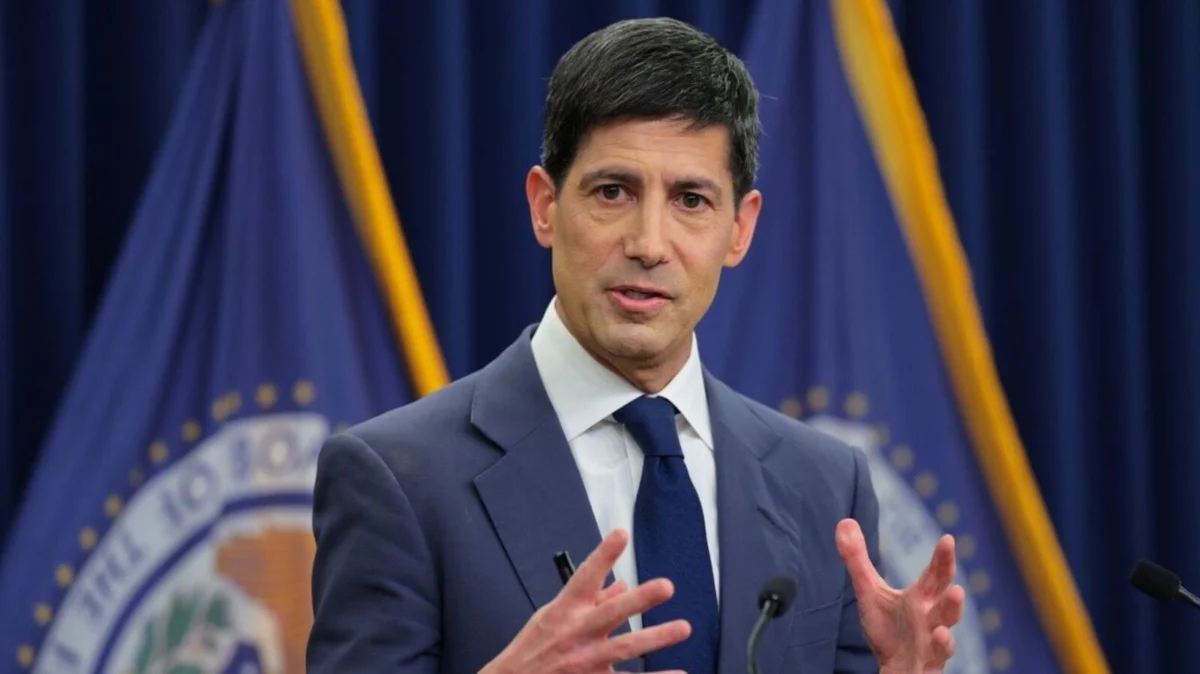
The decision, which was widely anticipated by Wall Street analysts and global economists, reflects the delicate balancing act the Fed must perform as it navigates a landscape characterized by solid domestic growth, persistent inflationary pressures, and heightening geopolitical tensions. While the majority of the committee favored stability, the meeting revealed a growing internal divide, with three members formally dissenting in favor of a more aggressive stance to curb price increases.
The FOMC Decision and the Internal Divide
The Federal Open Market Committee’s choice to hold the federal funds rate steady underscores a period of tactical patience. By maintaining the 3.50%-3.75% range, the Fed aims to allow previous tightening cycles to fully permeate the economy. However, the unanimity that often characterizes these decisions was notably absent.
Out of the 12 voting policymakers, three—Beth M. Hammack, Neel Kashkari, and Lorie K. Logan—voted against the majority. These dissenters advocated for a 25-basis-point (0.25 percentage point) increase, arguing that the delay in raising rates could allow inflation to become more deeply embedded in the American economy. Their preference for a higher target range suggests a "hawkish" minority that is increasingly concerned that the current restrictive levels are not yet sufficient to return inflation to the Fed’s long-term 2% goal.
The dissent by Kashkari and Logan, in particular, signals a shift in the internal consensus. Both have recently voiced concerns that the "last mile" of the inflation fight is proving more difficult than initially projected. The inclusion of Beth M. Hammack in the dissenting group further highlights a growing urgency among some officials to act before inflation expectations become unanchored.
Economic Resilience Amidst Global Uncertainty
Despite the cautious approach to interest rates, the Federal Reserve’s statement described the U.S. economy as being on "solid footing." Economic activity has continued to expand at a robust pace, defying earlier predictions of a significant slowdown. This resilience is attributed to several key factors:
- Strong Productivity and Investment: The Fed noted that capital investment remains high and productivity growth has been a surprising tailwind. This allows the economy to grow without immediately triggering the kind of wage-push inflation that usually accompanies low unemployment.
- Labor Market Stability: Job gains have largely kept pace with the growing workforce. The unemployment rate has remained relatively unchanged, suggesting that the labor market is in a state of equilibrium—neither overheating nor cooling too rapidly.
- Consumer Spending: Despite higher borrowing costs for mortgages and credit cards, consumer spending has remained a primary engine of growth, supported by steady income gains and healthy household balance sheets.
However, this domestic strength is being shadowed by external risks. The Fed specifically pointed to the ongoing conflict in the Middle East as a source of "elevated uncertainty." Such geopolitical disruptions have the potential to impact global supply chains and, more critically, energy prices, which could feed back into domestic inflation.
The Inflation Challenge: Stuck Above the 2% Target
The primary reason for the Fed’s hesitation to cut rates—or to stop considering hikes—is the stubbornness of inflation. While price increases have moderated significantly from their post-pandemic peaks, they remain uncomfortably above the 2% target.
Recent data shows that the Fed’s preferred inflation gauge accelerated in the year through May, reaching 3.4%. This upward trend in the short term has complicated the narrative that inflation is on a smooth "glide path" toward the target. The Committee’s statement reiterated that "inflation remains elevated," partly due to supply shocks in specific sectors like energy.
The Fed is particularly wary of "base effects" and volatile components. While core inflation (excluding food and energy) has shown signs of softening, the headline figures remain susceptible to global oil price fluctuations. Officials are scheduled to receive fresh inflation data on Thursday, which will likely play a critical role in shaping the rhetoric for the next FOMC gathering.

Chronology of the Interest Rate Cycle
To understand the significance of this fifth consecutive pause, it is necessary to look at the trajectory of the federal funds rate over the past year.
- Late 2025 – Early 2026: After a series of aggressive hikes to combat the initial inflation surge, the Fed moved into a restrictive territory, eventually settling at the 3.50%-3.75% range.
- Meeting 1 (Pause): The Fed first held rates steady, citing the need to assess the cumulative impact of previous hikes.
- Meetings 2 & 3 (Pause): Despite calls for cuts from some market participants, the Fed maintained the status quo as inflation data remained "sticky."
- Meeting 4 (Pause): The "higher for longer" mantra became the dominant theme as the labor market remained surprisingly tight.
- Meeting 5 (Current): The July 2026 meeting confirms that the Fed is not yet ready to declare victory. The emergence of three dissenters suggests that the next move might be a hike rather than a cut, contrary to earlier market expectations for a late-year easing.
Market Implications and Sector Impact
The decision to hold rates has immediate and long-term implications across various sectors of the U.S. economy.
1. Equity Markets:
Wall Street has reacted with a mixture of relief and caution. While the pause avoids the immediate shock of higher borrowing costs, the hawkish dissent from three members suggests that the "pivot" to lower rates is further off than many investors had hoped. Growth stocks, particularly in the technology sector, remain sensitive to the "higher for longer" environment as their future earnings are discounted at higher rates.
2. Real Estate and Mortgages:
The housing market remains in a state of suspended animation. With the benchmark rate held steady, mortgage rates are expected to remain near their recent highs, continuing to deter both buyers and sellers. This has led to a "lock-in effect" where homeowners with older, lower-rate mortgages are reluctant to move, keeping housing inventory at historic lows.
3. Banking and Lending:
For commercial banks, the steady rates help maintain net interest margins, but the specter of a potential future hike keeps credit conditions tight. Small businesses continue to feel the pinch of high-interest loans, which could eventually lead to a slowdown in capital expenditure if the pause extends into 2027.
Analysis: The "Warsh" Doctrine and Future Outlook
Under Chair Kevin Warsh, the Federal Reserve appears to be adopting a doctrine of "data-dependent vigilance." Unlike previous regimes that might have signaled a clear path forward, the current Fed is intentionally opaque, refusing to provide a specific timeline for future interventions.
This strategy is designed to prevent financial markets from prematurely easing financial conditions. If the Fed were to signal an upcoming cut, market interest rates would drop, potentially fueling the very inflation the Fed is trying to extinguish. By keeping a hike "on the table"—as evidenced by the three dissenting votes—the Fed is keeping the markets on edge and maintaining the restrictive pressure necessary to cool the economy.
The upcoming months will be pivotal. If the inflation data due on Thursday shows another acceleration, the pressure on Chair Warsh to align with the dissenters (Hammack, Kashkari, and Logan) will intensify. Conversely, if economic activity begins to show cracks under the weight of these 3.50%-3.75% rates, the calls for a cut will grow louder from the political sphere and industry leaders.
Conclusion: A Period of Strategic Observation
The U.S. Federal Reserve’s decision to maintain interest rates for a fifth consecutive time is a testament to the complexity of the current economic cycle. With inflation at 3.4% and an economy that refuses to buckle, the central bank has chosen the path of least immediate resistance while acknowledging the growing internal pressure to do more.
The commitment to price stability remains the Fed’s "North Star," but the path to achieving it is fraught with geopolitical risks and domestic volatility. As the world’s largest economy continues to expand at a "solid pace," the Federal Reserve will remain in a state of strategic observation, waiting for the definitive "greater clarity" that has so far remained elusive. For now, the message to the markets is clear: the era of high interest rates is not over, and the path forward will be dictated by hard data rather than hopeful projections.
