

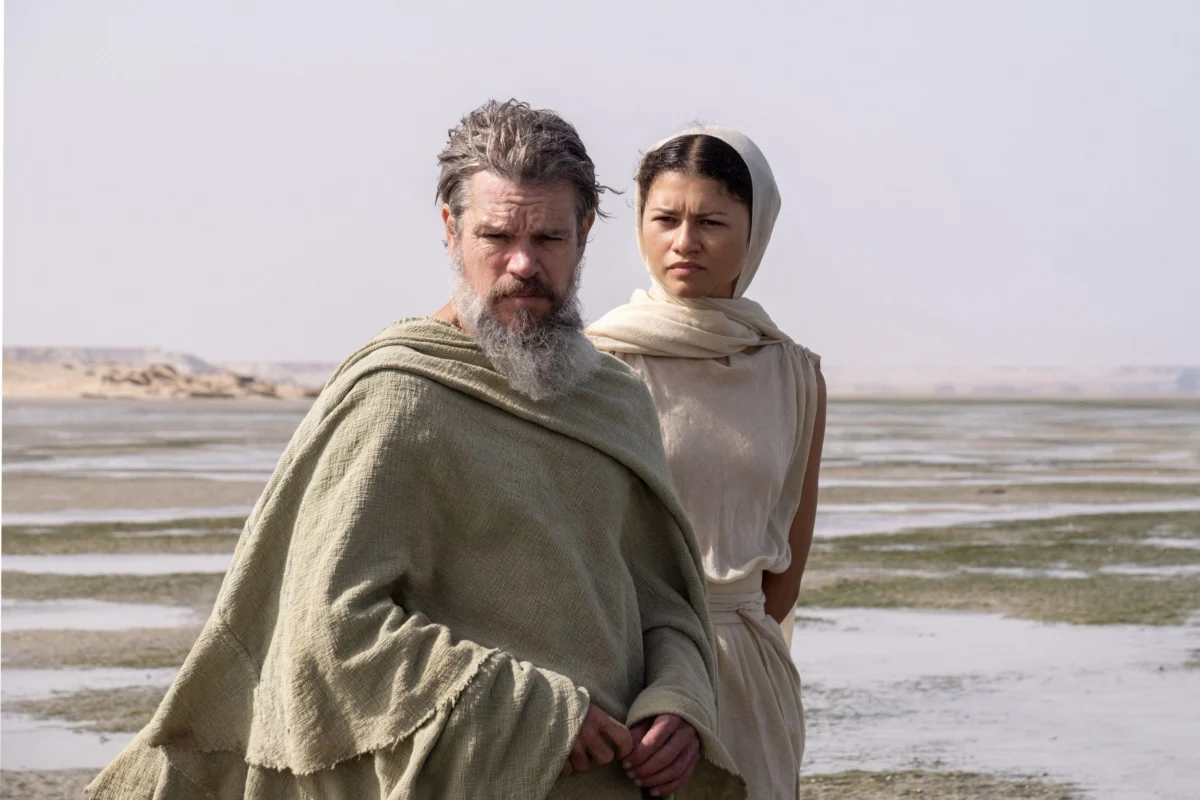
The announcement of Christopher Nolan’s ambitious adaptation of Homer’s The Odyssey in late 2024 immediately ignited a firestorm of discourse across digital platforms, marking it as one of the most anticipated and debated cinematic projects of the decade. As the production moved toward its scheduled release, the conversation surrounding the film bifurcated into two distinct camps: academic-level disputes regarding the translation of ancient Greek hexameter to the silver screen, and more volatile, politically charged debates concerning the film’s diverse casting and perceived modern ideological slants. However, a significant shift in the film’s narrative occurred this week, not due to a new trailer or casting news, but because of a strategic decision by Universal Studios regarding how the film will be first perceived by the public.
In a move that signals high internal confidence, Universal Studios has reportedly decided to skip the customary "influencer screenings" that have become a staple of modern Hollywood marketing. According to reports first surfaced by The Hollywood Reporter, the studio will not be hosting the early, curated previews typically reserved for social media personalities, TikTok creators, and YouTube vloggers—groups often credited with generating early, effusive praise that can buffer a film against more rigorous critical scrutiny. Instead, Universal is returning to a traditional publicity model, placing the weight of the film’s first impressions on professional critics and global premieres.
The Strategic Pivot: Prioritizing Prestige Over Social Media Buzz
The decision to bypass influencer-specific events is a notable departure from the prevailing industry trend. Over the last decade, studios have increasingly relied on "social media reactions"—short, hyperbolic bursts of praise posted to platforms like X (formerly Twitter) and Instagram immediately following early screenings. These reactions are often used in marketing materials to create a sense of universal acclaim before professional, long-form reviews are allowed to be published.
By opting out of this cycle, Universal is effectively signaling that The Odyssey does not require a manufactured "hype machine" to succeed. This strategy aligns with Christopher Nolan’s long-standing reputation as a filmmaker who champions the "sanctity of the cinema" and the importance of professional discourse. While TikTok and YouTube content creators will still have access to press screenings alongside traditional journalists, they will not be given the preferential early access that has become common for major blockbusters.
The reaction from the professional critical community has been overwhelmingly positive. Scott Mantz, cofounder of the Hollywood Critics Association, expressed his approval via social media, characterizing influencer reactions as often lacking in depth or objectivity. Similarly, David Ehrlich, chief film critic at IndieWire, noted that such a move felt appropriate for a project based on the foundational text of Western literature.
Chronology of a High-Stakes Production
The journey of Nolan’s The Odyssey has been tracked closely by industry analysts since its inception. To understand the weight of Universal’s latest decision, one must look at the timeline of the film’s development:
- Late 2024: Christopher Nolan officially announces his next project will be an adaptation of Homer’s The Odyssey, following the massive critical and commercial success of Oppenheimer.
- Early 2025: Casting announcements spark immediate online debate. The inclusion of a diverse, international cast leads to accusations of a "woke" reimagining from certain corners of the internet, while scholars defend the Mediterranean’s historical diversity.
- Late 2025 – Early 2026: Production takes place across various locations in the Mediterranean, utilizing Nolan’s signature IMAX 70mm film cameras and focusing on practical effects over CGI for the mythological elements.
- June 4, 2026: Tickets officially go on sale. Demand is so high that major ticketing platforms, including AMC and Fandango, experience significant technical disruptions.
- June 2026: Projections for the film’s opening weekend are released, placing it in the $80 million to $100 million range domestically.
- July 7, 2026: The global premiere is scheduled to take place in London, marking the first time the full film will be shown to an audience.
Market Demand and the "Nolan Effect"
Despite the "ugly gutter fights" occurring in comment sections regarding the film’s casting, the commercial data suggests that The Odyssey is on track to be a historic success. The demand for the film has transcended typical blockbuster interest, manifesting in record-breaking ticket sales. At the BFI IMAX in London, which houses the largest screen in the United Kingdom, the film shattered the record for the most seats sold within a 24-hour period.
In the United States, the fervor is equally intense. Premium formats, such as IMAX and 70mm screenings, sold out within minutes in major metropolitan areas. This scarcity has led to a burgeoning secondary market, with tickets appearing on eBay for as much as $1,000. This level of demand is rarely seen outside of major franchise "event" movies like those in the Marvel Cinematic Universe or the Star Wars saga, further proving Nolan’s unique status as a director whose name alone functions as a blockbuster brand.
The $80 million to $100 million opening weekend projection is particularly significant for a film that is expected to be a long-form, intellectually demanding epic. If these numbers hold, it would place The Odyssey among Nolan’s highest-grossing openings, potentially rivaling Inception and Oppenheimer.
Industry Implications: A New Stamp of Approval?
The decision to sideline influencers may have broader implications for how Hollywood markets "prestige" blockbusters in the future. Tim Grierson, senior US critic for Screen International, suggested that this could become a new "stamp of approval" for high-quality projects. By refusing to engage in the typical influencer-courting process, a studio can argue that its product is of such high quality that it does not need "shilling" to find an audience.
Furthermore, this move may serve a secondary purpose: endearment. By treating influencers and professional critics as equals—inviting them to the same screenings at the same time—the studio avoids the friction that often arises when critics feel their role is being marginalized by social media personalities. Grierson noted that critics who feel respected by a filmmaker or a studio might be more inclined to engage with the work on its own terms, rather than entering the theater with a defensive posture.
Addressing the "Woke" Backlash
A persistent element of the film’s pre-release narrative has been the vocal opposition from a segment of the internet that claims the film is a victim of modern "woke" culture. These critics point to the casting of non-white actors in roles traditionally depicted as European in previous adaptations. However, classical scholars have frequently pointed out that the world of the Odyssey—the Bronze Age Mediterranean—was a crossroads of cultures, ethnicities, and trade routes.
Universal’s decision to rely on professional critics rather than influencers has been interpreted by some "anti-woke" commentators as a defensive measure. The argument suggests that the studio is afraid of "hot takes" from independent internet personalities. However, industry analysts dismiss this theory, pointing to the massive ticket sales and the fact that professional critics are often more, not less, demanding than social media influencers. The studio’s confidence appears rooted in the film’s quality and Nolan’s track record rather than a fear of online backlash.
The Return to Artistic Analysis
As the July 7 premiere approaches, the focus is beginning to shift from the politics of casting to the artistry of the adaptation. Bringing Homer’s 3,000-year-old epic to life requires more than just technical prowess; it requires a deep engagement with themes of homecoming, identity, and the human condition.
The Odyssey is not merely an adventure story; it is the foundation of Western storytelling. By stripping away the layer of "breathless sound bites" typically generated by the influencer circuit, Universal and Nolan are inviting a more profound level of engagement. The hope among the critical community is that this move will encourage audiences to re-engage with film as an art form that deserves rigorous analysis rather than just "content" to be consumed and rated in 280 characters or less.
Whether or not other studios follow Universal’s lead remains to be seen. Most major productions, particularly those targeting younger demographics, will likely continue to rely heavily on influencer partnerships. However, for the "prestige blockbuster"—a category Christopher Nolan almost single-handedly maintains—the "Odyssey model" of marketing may become the new gold standard. It reinforces the idea that some films are events that do not need to be sold through the lens of social media trends, but rather through the strength of the work itself.
As the industry watches closely, the success or failure of The Odyssey will likely dictate the future of this marketing strategy. Given the current trajectory of ticket sales and the immense cultural footprint Christopher Nolan has established, Universal’s gamble on traditional criticism appears to be a calculated and confident bet on the enduring power of cinema.
