

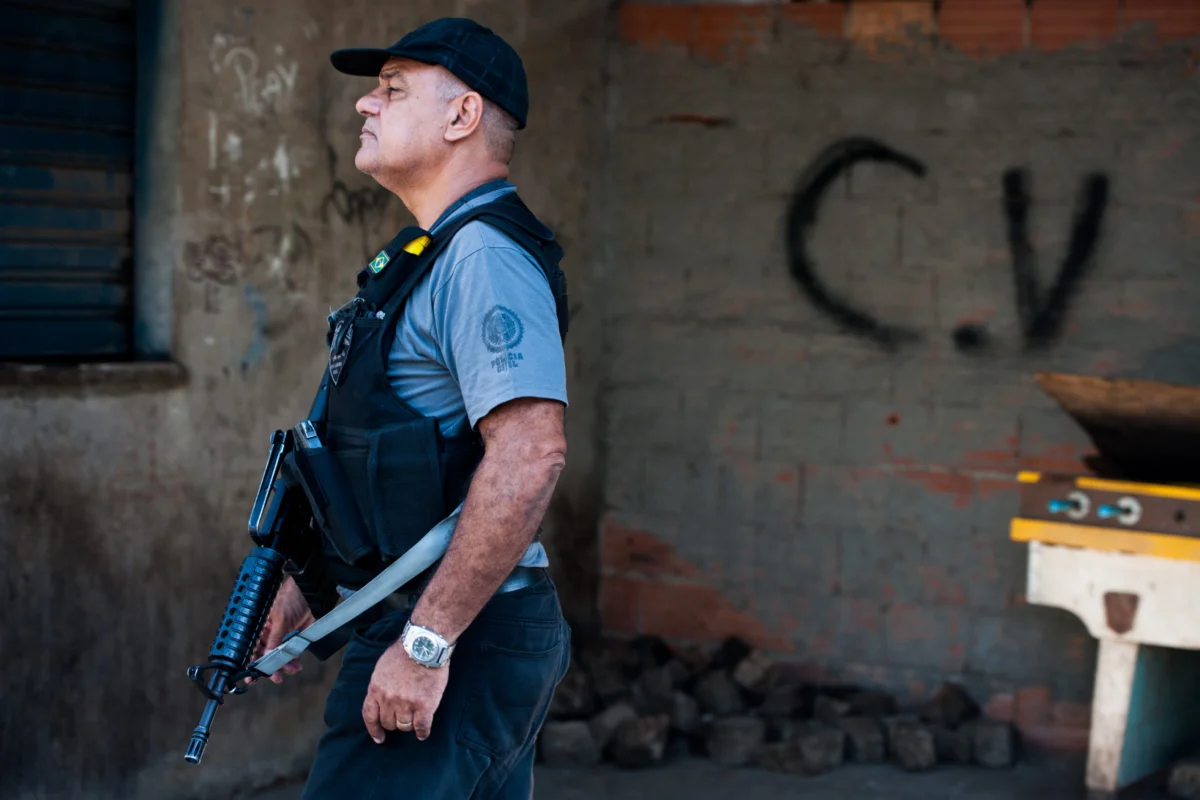
The United States has formally announced its intention to designate two of Brazil’s most formidable criminal organizations, the Primeiro Comando da Capital (PCC) and the Comando Vermelho (CV), as "Foreign Terrorist Organizations" (FTOs), a move that underscores a continuing push under President Donald Trump to broaden the definition of terrorism to encompass major transnational criminal activities. Secretary of State Marco Rubio confirmed the designations on Thursday, stating that the full FTO label would become effective on June 5. This action immediately places the groups under the "Specially Designated Global Terrorists" (SDGT) category, a similar but slightly less restrictive classification drawing its authority from the International Emergency Economic Powers Act (IEEPA), which effectively blocks the organizations’ access to any US-based assets.
The Designation: Legal Framework and Intent
The distinction between a "criminal" organization and a "terrorist" entity, once a clear line in international law and US policy, has become increasingly blurred under the Trump administration. The FTO designation, managed by the State Department, carries significant legal weight, imposing severe penalties on anyone who provides material support to the designated groups, including financial institutions, aid organizations, or even individuals who might unknowingly interact with them. This is considerably more restrictive than the SDGT designation, which primarily targets financial assets. Secretary Rubio articulated the administration’s rationale, stating, "The Trump Administration will continue to use all available tools to protect our nation and our national security interests by keeping illicit drugs off our streets and disrupting the revenue streams funding violent narco-terrorists." This statement highlights a core tenet of the administration’s approach: framing major drug cartels and criminal syndicates, particularly those operating with significant violence and a degree of territorial control, as threats equivalent to traditional terrorist groups. This policy shift is part of a broader strategy championed by Trump, often dubbed the "Donroe Doctrine," a contemporary reinterpretation of the 19th-century Monroe Doctrine aimed at asserting US influence and combating perceived threats within the Western Hemisphere.
Brazil’s Criminal Underbelly: PCC and Comando Vermelho
The Primeiro Comando da Capital (PCC) and Comando Vermelho (CV) are not merely street gangs; they are highly sophisticated, hierarchical criminal enterprises with vast reach both within Brazil and internationally. The PCC, or First Capital Command, originated in São Paulo’s prison system in the early 1990s as a self-protection group for inmates. Over the decades, it evolved into Brazil’s largest and most powerful criminal syndicate, reportedly boasting tens of thousands of members, many still operating from within prisons, and an annual revenue estimated in the hundreds of millions, if not billions, of dollars. Its activities span drug trafficking (especially cocaine from Bolivia, Peru, and Colombia to Europe and Africa), arms trafficking, extortion, money laundering, and control over vast swathes of Brazil’s prison system. The Comando Vermelho, or Red Command, similarly emerged from Rio de Janeiro’s prisons in the late 1970s and early 1980s. While historically less centralized than the PCC, it remains a dominant force in Rio’s favelas, controlling drug distribution networks and engaging in widespread violence, often clashing with rival gangs and state security forces. The CV has also expanded its operations beyond Rio, establishing a presence in other Brazilian states and forging international connections for drug and arms trade. Both organizations are notorious for their brutal tactics, including assassinations, kidnappings, and large-scale prison riots, posing a direct challenge to state authority and public safety across Brazil.
A Broader Regional Strategy: The "Donroe Doctrine" in Action
The designation of the PCC and Comando Vermelho is not an isolated incident but rather a significant manifestation of President Trump’s "Donroe Doctrine." Since returning to the White House for a second term, Trump has intensified efforts to label multiple Latin American criminal networks as "terrorist" entities. This strategy is frequently criticized by international legal scholars and regional analysts as a calculated move to expand US military and intelligence influence across the Western Hemisphere, potentially justifying interventionist policies under the guise of national security. Critics argue that blurring the lines between organized crime and terrorism risks overstretching counter-terrorism resources, undermining human rights, and paving the way for actions that might infringe upon national sovereignty.
Indeed, the "Donroe Doctrine" has already seen controversial applications. In January 2026, a US military operation resulted in the abduction of Venezuelan President Nicolas Maduro, an act widely condemned as a violation of international law and state sovereignty. Such actions fuel concerns among Latin American leaders that the "terrorist" designation for criminal gangs could serve as a pretext for similar interventions or increased military presence in their territories, regardless of their own domestic strategies for combating organized crime.
Brazilian Politics: A Designation Amidst a Heated Election
The timing of this announcement could not be more politically charged for Brazil, which is currently in the throes of a heated presidential election campaign. The decision is poised to send shockwaves through the nation’s political landscape, where public safety and the fight against organized crime are paramount electoral issues.
Left-wing Brazilian President Luiz Inácio Lula da Silva, seeking a fourth non-consecutive term in October’s presidential race, has reportedly made repeated attempts to dissuade the Trump administration from applying the "terrorist" designation. Lula’s administration fears that such a label could have far-reaching and unintended consequences, potentially penalizing any group or individual that comes into contact with the designated organizations. This includes legitimate financial institutions that might process transactions inadvertently linked to regions under gang influence, as well as victims of extortion or communities forced to interact with these groups out of necessity. Lula has also been a vocal critic of what he perceives as a growing threat of foreign interference in Latin America, especially following events like the Maduro abduction, viewing such designations as a potential precursor to unwanted external meddling in Brazil’s internal affairs.
In stark contrast, Lula’s main opponent, right-wing Senator Flavio Bolsonaro, enjoys close ties with the Trump administration. The announcement on Thursday followed a meeting between Senator Bolsonaro and President Trump at the White House earlier in the week. Bolsonaro later informed reporters that he had actively petitioned Trump to designate the PCC and Comando Vermelho as "terrorist" groups, aligning his stance with the US administration’s hardline approach.
A History of Intervention: Trump and the Bolsonaro Family
This is not the first instance of President Trump’s direct intervention in Brazilian politics, particularly on behalf of the Bolsonaro family. Last year, Trump controversially raised tariffs against Brazil to nearly 50 percent, ostensibly in an act of solidarity with Flavio’s father, former President Jair Bolsonaro. Jair Bolsonaro, like Trump, faced legal challenges for attempting to subvert democracy following his 2022 election defeat. Despite Trump’s public calls for the case against the elder Bolsonaro to be dropped, the former president was ultimately sentenced to 27 years in prison. Adding to the family’s legal woes, Jair Bolsonaro’s younger son, Eduardo Bolsonaro, is currently facing trial for obstruction charges related to his alleged attempts to seek Trump’s intervention on his father’s behalf. These past actions underscore a pattern of Trump’s willingness to engage directly in Brazilian domestic affairs, often in support of his political allies.
Public Safety: A Defining Election Issue
The question of public safety and the pervasive influence of organized crime loom large over the current presidential race, where polls indicate Lula and Flavio Bolsonaro are neck and neck. Recent violent clashes between law enforcement and criminal groups like the Comando Vermelho are expected to heavily influence voter sentiment. For instance, a police raid in Rio de Janeiro last October resulted in more than 120 fatalities, while another operation in March claimed eight lives. These incidents highlight the brutal reality of urban violence in Brazil and the ongoing struggle between state forces and powerful gangs.
However, these militarized approaches to combating crime have drawn significant criticism. Experts argue that decades of confrontational tactics have often exacerbated violence and led to widespread human rights abuses without effectively dismantling criminal networks. Luis Flavio Sapori, a sociologist and public safety expert at Pontifical Catholic University of Minas Gerais, remarked to The Associated Press, "Armed confrontation with young drug traffickers from the outskirts is ineffective and fails to deal with the complexity of money laundering and its links to financial crime." This sentiment reflects a growing consensus that a more comprehensive strategy is needed.
Lula’s Counter-Strategy and Sovereignty Concerns
In response to these complex challenges, President Lula’s administration launched a significant $2 billion initiative in March, aimed at attacking the financial underpinnings of criminal networks like the PCC and Comando Vermelho. This multi-pronged strategy includes disrupting arms trafficking, improving the notoriously overcrowded and violent prison system, and investing heavily in homicide investigations to increase accountability. This approach contrasts sharply with the US designation, emphasizing domestic solutions and targeting the economic infrastructure of crime rather than primarily relying on a "terrorist" label.
In the aftermath of Thursday’s announcement, Celso Amorim, Lula’s senior adviser on foreign affairs, issued a stern warning, emphasizing that while Brazil welcomes international cooperation in combating organized crime, particularly in areas like money laundering and arms trade, the US must not use the "terrorist" label as a pretext to infringe upon Brazilian sovereignty. Amorim stated, "Organized crime is an evil that must be fought. International cooperation is welcome… But, any pretext for intervention would be unacceptable." This statement encapsulates Brazil’s delicate balancing act: seeking international assistance without ceding control over its domestic policy or inviting foreign interference.
Implications and Future Outlook
The US designation of the PCC and Comando Vermelho as FTOs carries profound implications for US-Brazil relations, regional stability, and the global fight against organized crime. Geopolitically, it risks deepening existing tensions between the two nations, particularly if the US leverages the designation to justify increased military or intelligence operations within Brazil or the wider region. It could also alienate other Latin American nations wary of the "Donroe Doctrine’s" expansionist tendencies.
Economically, the FTO label could have a chilling effect on Brazilian financial institutions, forcing them to implement even stricter compliance measures to avoid inadvertently facilitating transactions for designated entities. This heightened scrutiny could potentially impact legitimate trade and investment, particularly for businesses operating in regions where the gangs hold sway.
Domestically, the designation will undoubtedly be a central talking point in the Brazilian election. Flavio Bolsonaro will likely use it to demonstrate his strong stance on public safety and his ability to secure international support, while Lula will continue to frame it as an unwarranted foreign intervention that risks undermining Brazilian sovereignty and complicating his own anti-crime initiatives.
Ultimately, the effectiveness of this designation in truly dismantling the PCC and Comando Vermelho remains a subject of intense debate. Critics argue that criminal organizations, unlike ideological terrorist groups, are primarily driven by profit and can adapt rapidly to new pressures, potentially shifting their operations to less scrutinized jurisdictions or further entrenching themselves within local communities. The blurring of lines between crime and terrorism, while appealing as a rhetorical tool, may create more problems than it solves, potentially militarizing responses to issues best addressed through law enforcement, economic development, and social programs. The coming months will reveal whether this controversial move by the Trump administration achieves its stated goals or inadvertently fuels further instability in an already volatile region.
