

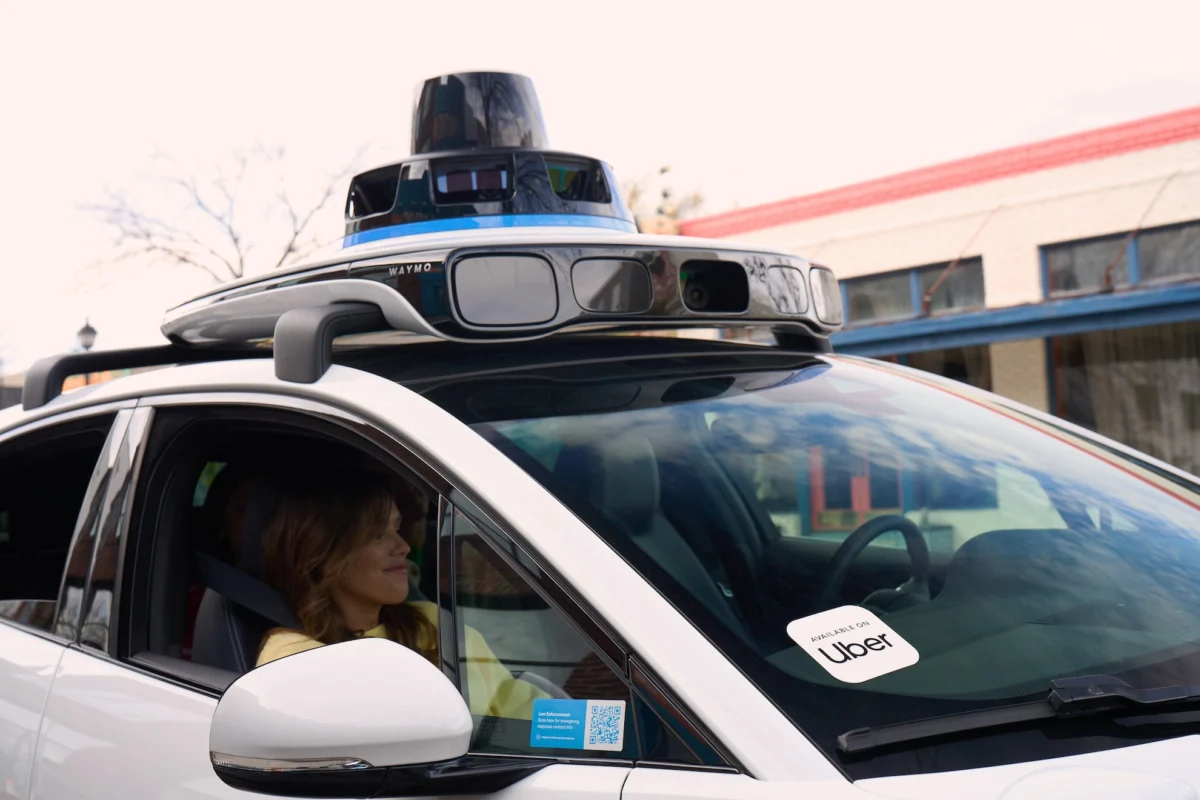
The streets of Washington, D.C., have become the primary battleground for a regulatory conflict that could define the future of the global ride-hailing and autonomous vehicle (AV) industries. At the heart of this dispute is a proposed bill intended to modernize the District’s transportation laws, allowing for the commercial deployment of driverless robotaxis. However, what began as a legislative update has evolved into a high-stakes proxy war between two of the industry’s most powerful players: Uber and Waymo. This confrontation represents a significant shift in Uber’s corporate strategy, moving from a role as a technology partner and investor to an active architect of the regulations that will govern its competitors.
The proposed legislation, introduced by Councilmember Charles Allen, seeks to update the Autonomous Vehicle Act of 2012. While current laws allow for the testing of autonomous vehicles with a human safety operator present, the new bill would grant the District Department of Transportation (DDOT) the authority to issue permits for fully driverless commercial operations. As the D.C. Council prepares for a pivotal hearing on the matter, the divide between Uber’s "hybrid network" vision and Waymo’s "open deployment" model has exposed deep fissures in a partnership that once seemed to signal a peaceful coexistence between human-driven and autonomous platforms.
The Legislative Framework: Modernizing the 2012 AV Act
The bill currently under consideration aims to position Washington, D.C., as a leader in urban mobility. Under the proposed framework, AV developers would be required to meet stringent safety and financial standards before operating on city streets. These include maintaining a minimum of $5 million in liability insurance and adhering to strict crash-reporting protocols—requiring data submission within eight hours for commercial fleet incidents and 72 hours for private vehicles.
A central and controversial feature of the bill is the implementation of a "vehicle miles traveled" (VMT) tax. The legislation proposes a $0.15 per mile tax on all robotaxi operations. The revenue generated from this tax would be divided equally: 50% would support public transit initiatives, while the remaining 50% would fund education and workforce development programs. These programs are specifically designed to assist ride-share and taxi drivers whose livelihoods may be threatened by the transition to autonomous technology.
While robotaxi advocates argue the VMT tax is prohibitively expensive and could stifle innovation, Uber’s opposition to the bill is rooted in a more fundamental structural concern. Uber argues that the bill, in its current form, would facilitate a "first-party only" regulatory environment, effectively handing a de facto monopoly to companies like Waymo that operate their own dedicated apps and fleets.
Uber’s Hybrid Strategy: Protecting the Human Element
Uber’s primary policy objective in D.C. is the mandate of a "hybrid model." This approach would legally require autonomous vehicles to operate on networks that also utilize human drivers. According to public records and internal white papers, Uber envisions a single transportation interface where a consumer requesting a ride might be matched with either a human-driven car or a robotaxi, depending on the trip’s specific requirements, vehicle availability, and passenger preference.

Javi Correoso, Uber’s head of U.S. policy and federal affairs, has been vocal about the risks of an AV-only approach. During a D.C. Council roundtable, Correoso argued that exclusive robotaxi networks lead to increased urban congestion due to "deadheading"—the practice of vehicles cruising empty while waiting for fares. Furthermore, Uber emphasizes the limitations of current AV technology in assisting vulnerable populations. Human drivers, the company argues, provide essential physical assistance to elderly and disabled passengers that robotaxis cannot currently replicate.
This policy shift marks a dramatic evolution for Uber. Under the leadership of CEO Dara Khosrowshahi, the company has transitioned from the "move fast and break things" ethos of its early years to a more collaborative, albeit protective, regulatory stance. By championing the rights of human drivers and the necessity of hybrid networks, Uber is attempting to ensure that it remains the indispensable middleman in the transportation ecosystem, regardless of who owns the self-driving technology.
Waymo’s Vision: Safety, Efficiency, and Open Competition
Alphabet-owned Waymo, which currently provides over 500,000 autonomous rides per week across 11 cities, views the D.C. bill as a necessary step toward safe and equitable urban mobility. Waymo’s leadership contends that the legislation provides a clear pathway for deployment while addressing social concerns through the VMT tax and transit support.
Waymo has pushed back against Uber’s characterization of the bill as a monopolistic tool. A company spokesperson clarified that Waymo does not support efforts to restrict AVs to any specific type of network and would welcome language that ensures a variety of business models can coexist. From Waymo’s perspective, the "hybrid model" proposed by Uber is less about consumer choice and more about "regulatory capture"—an attempt to force AV developers to pay "rent" to Uber by mandating the use of its platform.
The conflict highlights a fundamental business tension: Waymo has invested billions of dollars and over a decade of research into developing a "driver" that does not require a human counterpart. Requiring these vehicles to operate alongside human drivers on a third-party platform could dilute Waymo’s brand and control over the user experience, while also cutting into its profit margins via platform fees.
The Chronology of a "Frenemy" Relationship
The current friction in D.C. is the latest chapter in a long and complex history between Uber and Waymo. To understand the stakes of the current debate, one must look back at the timeline of their relationship:
- 2017: The Legal Showdown. Waymo filed a high-profile lawsuit against Uber, alleging the theft of trade secrets related to LiDAR technology. The case centered on Anthony Levandowski, a former Google engineer who joined Uber. The trial ended in a surprise settlement, with Uber agreeing to pay Waymo a stake in the company and ensuring no Waymo intellectual property was used in its AV program.
- 2020: The Divestiture. Uber sold its in-house self-driving unit, Advanced Technologies Group (ATG), to Aurora Innovation. This move signaled Uber’s exit from the expensive hardware race, pivoting instead to a partnership-based model.
- 2023: The Phoenix Pilot. In a sign of thawing relations, Waymo agreed to integrate its vehicles into the Uber app in Phoenix, Arizona. This pilot allowed Uber users to experience Waymo’s technology firsthand.
- 2024: Expansion and Contraction. While the Phoenix partnership quietly concluded in May 2024, the two companies launched new collaborations in Austin and Atlanta. However, simultaneously, public tension began to rise. Uber executives started criticizing Waymo’s safety record on social media, and Uber’s "hybrid network" white paper was published, laying the groundwork for the current legislative fight.
Labor and Advocacy: The Growing Coalition of Opponents
The D.C. hearing is not merely a corporate duel; it involves a broad spectrum of stakeholders. Labor unions, including the Teamsters and the Service Employees International Union (SEIU), have expressed significant concern over the potential for mass job displacement. These organizations argue that without strict protections, the rapid introduction of robotaxis could devastate the livelihoods of thousands of ride-share and taxi drivers in the District.

Additionally, a group called the Coalition for Accountability and Road Safety (CARS) has launched a public campaign against the bill. While the group’s funding remains opaque, its ties to lobbying firms associated with labor unions suggest a coordinated effort to slow the rollout of autonomous technology until more robust worker protections are in place.
Disability rights groups also play a critical role in the debate. While some see AVs as a potential boon for independence, others fear that a transition away from human drivers will leave those who require physical assistance—such as help with wheelchairs or groceries—without viable transportation options.
Analysis of Implications and the Path Forward
The outcome of the D.C. Council’s deliberations will serve as a precedent for other major metropolitan areas. If Uber successfully lobbies for a hybrid network mandate, it will have created a regulatory "moat" that protects its business model from being bypassed by AV manufacturers. Conversely, if the bill passes without such requirements, Waymo and other developers like Zoox or Tesla may be able to build independent, vertically integrated transportation services that compete directly with Uber.
The economic implications are significant. The $0.15 per mile tax, while intended to mitigate social costs, could impact the affordability of autonomous rides for the general public. However, if the revenue successfully bolsters public transit and provides a safety net for human drivers, it could provide a blueprint for a "just transition" in the age of automation.
As the hearing proceeds, the industry remains focused on the "hybrid" versus "pure-play" debate. Uber’s recent investments in its "AV Labs" division—hiring dozens of engineers to collect and share driving data—suggest that the company is preparing for a future where it is both a partner to and a regulator of the autonomous industry. Whether Washington, D.C., becomes the first city to codify this hybrid reality remains to be seen, but the battle lines are now clearly drawn. The "frenemy" era of Uber and Waymo has transitioned into a period of open competition, where the winner will be determined not just by the quality of their algorithms, but by the strength of their political influence.
