

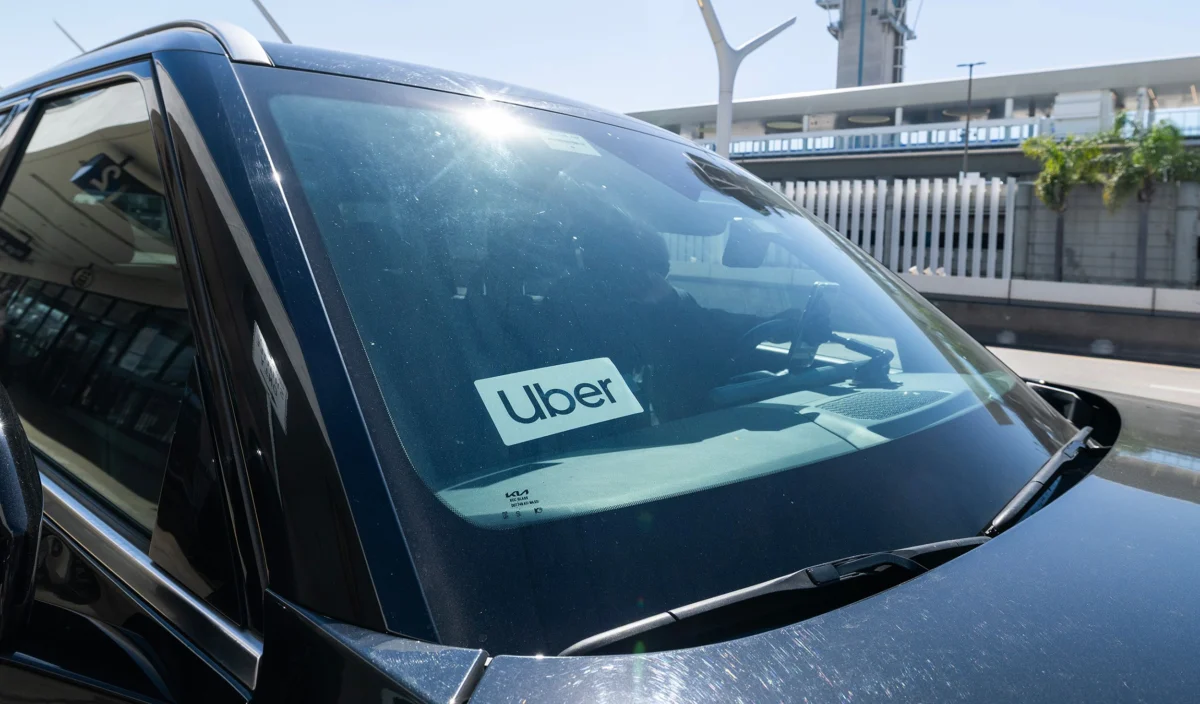
A decade ago, the then-CEO of Uber, Travis Kalanick, famously characterized the rise of autonomous vehicles as an "existential threat" to the company’s ride-hailing business model. At the time, the Silicon Valley giant was aggressively pursuing its own proprietary self-driving technology, fueled by the fear that if Uber did not own the "robot," the future would simply pass it by. Kalanick’s vision was one of total vertical integration, where Uber would eventually replace its massive fleet of human contractors with a proprietary fleet of autonomous machines. However, after years of legal setbacks, a fatal accident, and a multi-billion-dollar divestment of its internal research unit, Uber has pivoted to a radically different strategy. Instead of building the robots, Uber now aims to be the indispensable platform that manages them.
Documents recently obtained through public records requests and reports from industry insiders reveal that Uber is now aggressively lobbying for legislative frameworks that would codify this "platform-first" approach into law. The company is pushing for the adoption of "hybrid networks"—ecosystems where human drivers and autonomous vehicles (AVs) coexist on the same dispatching platforms. While Uber frames this as a necessary transition to protect human labor and ensure public safety, critics and competitors suggest the strategy is a sophisticated attempt to create a regulatory moat, effectively forcing autonomous vehicle developers to use Uber’s marketplace rather than launching their own competing apps.
The Strategic Shift: From Builder to Aggregator
The transformation of Uber’s autonomous vehicle strategy began in earnest under current CEO Dara Khosrowshahi. In 2020, Uber sold its Advanced Technologies Group (ATG) to the self-driving startup Aurora, marking the end of its ambition to manufacture its own self-driving cars. Since then, the company has repositioned itself as the "go-to commercial platform" for the global AV industry. By 2024, Uber had secured agreements with more than 25 major players in the autonomous space, including industry leaders like Waymo, Nuro, Baidu, and Volkswagen’s MOIA.
This aggregator model allows Uber to avoid the massive capital expenditures and technical risks associated with hardware development while maintaining control over the consumer interface. However, for this model to succeed, Uber must ensure that AV developers do not bypass the Uber app to launch their own direct-to-consumer ride-hailing services. This is where the company’s recent lobbying efforts in New Jersey and Washington, D.C., become critical.
The New Jersey "85 Percent" Proposal
In New Jersey, Uber’s lobbyists have circulated legislative language that would impose significant hurdles on standalone robotaxi operators. The proposed language, pitched to State Senator Andrew Zwicker, suggests a three-year transition period during which any platform offering driverless ride-hailing services would be required to have human drivers fulfill at least 85 percent of its total rides.
Such a mandate would be virtually impossible for pure-play AV companies like Waymo or Zoox to meet on their own, as they do not employ large fleets of human drivers. If passed, this regulation would effectively force these companies to partner with an existing "hybrid" platform—like Uber—to gain access to the New Jersey market.
Senator Zwicker is currently sponsoring Senate Bill 1677, which aims to establish the state’s first comprehensive regulatory framework for self-driving cars. While the 85 percent human-driver requirement is not currently part of the official bill, its introduction into the legislative dialogue highlights Uber’s intent to limit the ability of competitors to operate independently. Furthermore, the bill includes technical requirements that appear to target specific competitors. For instance, it mandates the use of multiple sensor types (such as LiDAR and radar) rather than relying solely on cameras. This specific provision would likely disqualify Tesla’s "Full Self-Driving" (FSD) technology, which relies exclusively on vision-based camera systems, from operating as a robotaxi in the state.
Washington D.C. and the Push for Hybrid Integration
While the New Jersey proposal focuses on fleet composition, Uber’s efforts in Washington, D.C., emphasize the integration of ride-hailing platforms into the district’s autonomous future. In April, D.C. Council Member Charles Allen introduced legislation to permit driverless services on public roads under specific safety conditions.
Public records indicate that Uber lobbyist LáVita Gardner actively engaged with Allen’s office prior to the bill’s introduction, advocating for the inclusion of hybrid networks. In correspondence obtained by WIRED, Gardner thanked the council member’s staff for committing to a framework that allows ride-hail companies to participate in the district’s AV program. Uber argues that a hybrid approach is essential for a "smooth transition" that supports both the burgeoning technology and the livelihoods of human drivers.
The debate in D.C. is particularly high-stakes as Waymo, the current leader in the U.S. robotaxi market, is engaged in a months-long campaign to secure operating permits in the nation’s capital. Uber’s insistence on a hybrid model suggests a desire to ensure that if Waymo enters D.C., it does so, at least in part, through the Uber app.
A Chronology of Uber’s Autonomous Ambitions
To understand Uber’s current lobbying posture, one must look at the company’s turbulent history with self-driving technology:
- 2014-2015: Travis Kalanick initiates Uber’s AV program, poaching dozens of researchers from Carnegie Mellon University.
- 2016: Uber enters a standoff with California regulators over testing permits in San Francisco. The company eventually moves its testing fleet to Arizona to evade California’s stricter oversight.
- 2017: Waymo (Google’s self-driving unit) sues Uber, alleging that former engineer Anthony Levandowski stole trade secrets before joining Uber.
- 2018: An Uber test vehicle in Tempe, Arizona, strikes and kills a pedestrian, Elaine Herzberg. It is the first recorded death involving a fully autonomous vehicle. Arizona subsequently bans Uber from testing on its roads.
- 2020: Uber shuts down its internal AV program and sells ATG to Aurora. Anthony Levandowski is sentenced to prison for trade secret theft (later pardoned).
- 2023-2024: Uber shifts to a partnership model, integrating Waymo rides into its app in cities like Phoenix, Atlanta, and Austin.
The Economic Reality: Humans vs. Robots
The core of Uber’s "hybrid" argument rests on the economic impact of automation on the labor force. In prepared testimony for the D.C. City Council, Harry Hartfield, Uber’s director of autonomous vehicles and AI policy, noted that the competition between robots and humans is already having a measurable impact.
According to Uber’s data, driver earnings in San Francisco and Los Angeles declined last year as robotaxi deployments scaled up. Hartfield’s testimony highlights a sobering statistic: one autonomous vehicle in California currently performs the workload of roughly four human drivers. By advocating for a hybrid network, Uber positions itself as a protector of human earnings, arguing that a phased transition prevents a sudden collapse of the gig economy.
However, this "appeal to caution" is a notable departure from Uber’s early years, when the company frequently ignored local taxi regulations and utilized "Greyball" software to deceive authorities. Uber’s President and COO, Andrew Macdonald, recently acknowledged the irony of the company’s new regulatory-friendly stance, admitting that Uber’s past "corporate crisis" was a result of failing to consider the societal implications of its technology.
Competitive Tensions and Industry Reactions
The relationship between Uber and its AV partners is fraught with tension. While Uber and Waymo are currently business partners in several markets, they are also fierce competitors for the future of the consumer interface. Waymo, which currently provides approximately 500,000 rides per week across its service areas, has expressed a desire to maintain its own independent app and brand identity.
In response to Uber’s lobbying efforts, Waymo spokesperson Ethan Teicher stated that the company "does not support efforts to limit AVs to specific types of networks" and advocates for a market that allows for various operational models. The tension between the two companies occasionally spills into the public eye; recently, Uber’s CTO Praveen Neppalli posted a video on social media of a "scary Waymo moment," and the two companies quietly ended a pilot partnership in Phoenix.
Tesla, another major player, faces its own set of challenges. CEO Elon Musk has promised a "Cybercab" robotaxi fleet, but Uber’s lobbying for sensor mandates (LiDAR) and physical controls (steering wheels and pedals) would effectively lock Tesla’s current hardware out of key markets like New Jersey.
Implications for the Future of Transportation
The outcome of these legislative battles will determine the shape of urban transportation for decades. If Uber succeeds in mandating "hybrid networks," it will likely solidify its position as the dominant tollkeeper of the ride-hailing industry, ensuring that every autonomous mile driven results in a commission for the platform.
From a public policy perspective, the "hybrid" model offers a middle ground that may appeal to labor unions and safety advocates. It provides a buffer for the millions of drivers who rely on gig work while allowing for the gradual introduction of safer, more efficient autonomous technology. Conversely, critics argue that these regulations represent "regulatory capture"—a scenario where a dominant incumbent uses the law to stifle innovation and prevent new competitors from entering the market with more efficient, lower-cost business models.
As New Jersey and Washington, D.C., move toward final votes on their respective AV bills, the industry remains at a crossroads. Uber’s pivot from a developer of robots to a lobbyist for "hybrid" ecosystems proves that in the race for autonomy, the most powerful tool may not be the software under the hood, but the legislative language in the statehouse.
