

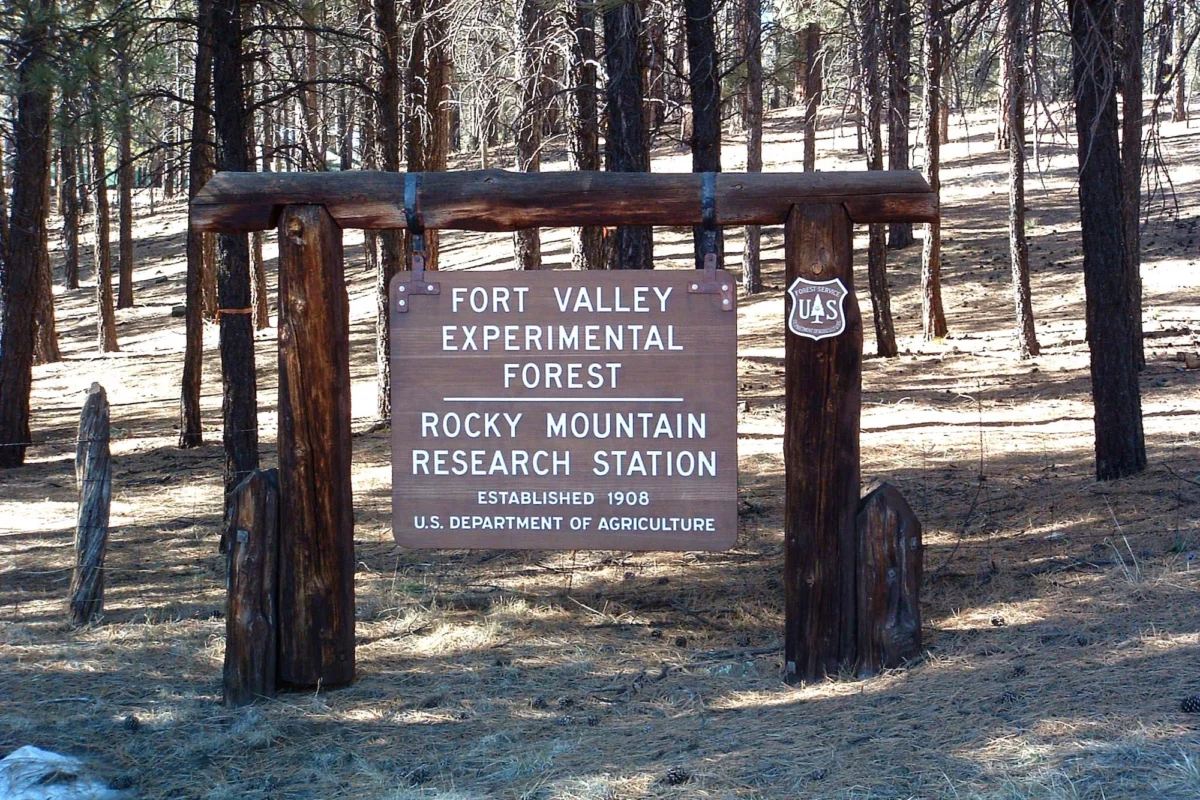
The United States Department of Agriculture (USDA) has initiated a sweeping reorganization of the U.S. Forest Service, a move that critics argue is designed to prioritize the domestic lumber industry over conservation and public recreation. The overhaul, announced by Secretary of Agriculture Brooke L. Rollins, includes the relocation of the agency’s headquarters from Washington, D.C., to Salt Lake City, Utah, and a fundamental shift toward a "state-based" organizational model. While the USDA frames the transition as a "common-sense" reform intended to bring management closer to the lands themselves, an emerging coalition of outdoor recreation businesses, conservationists, and lawmakers warns that the plan could decimate the agency’s professional workforce and permanently alter the ecological health of 193 million acres of public land.
A Strategic Shift in Public Land Management
The Forest Service, a division of the USDA, manages 154 national forests and 20 grasslands across the United States. Unlike the National Park Service, which operates under a strict preservation mandate within the Department of the Interior, the Forest Service has historically followed a "multi-use" mission. This mission attempts to balance timber harvesting and grazing with water protection, wildlife habitat conservation, and outdoor recreation. However, the new directive from the Trump administration signals a decisive pivot toward extraction.
Secretary Rollins stated that the reorganization is essential to ensuring a "healthy and productive forest system" that can provide "affordable, quality lumber to build homes right here in America." This rhetoric aligns with a broader administration push to reduce regulatory hurdles for the timber industry. Specifically, the USDA has indicated plans to rescind the Roadless Rule—a landmark 2001 regulation that prohibits road construction and timber harvesting on nearly 60 million acres of pristine forest. By eliminating these protections and streamlining environmental reviews, the administration seeks to significantly increase the annual volume of timber sold from federal lands.
The Logistics of Relocation: Salt Lake City and the "Brain Drain" Risk
Central to the reorganization is the transfer of approximately 260 leadership and administrative positions from Washington, D.C., to Salt Lake City. The administration argues that moving decision-makers to the West—where the vast majority of Forest Service lands are located—will improve efficiency and responsiveness. However, policy experts and former agency officials describe the move as a "forced purge" of experienced staff.

History suggests that such relocations often lead to a massive loss of institutional knowledge. In 2019, during the first Trump administration, the Bureau of Land Management (BLM) headquarters was moved to Grand Junction, Colorado. According to data from the Government Accountability Office (GAO), nearly 90 percent of the affected employees chose to resign or retire rather than relocate. The Biden administration later reversed the move, but the agency struggled for years to restaff and regain its operational capacity.
Critics point to Utah’s political climate as a primary reason for the choice of Salt Lake City. Utah has long been the epicenter of the "land transfer movement," a political effort to shift federal lands to state control. By embedding the Forest Service headquarters in a state where top officials frequently advocate for state-led management and privatization, opponents fear the agency will be more susceptible to local industrial interests and less accountable to national environmental standards.
Impact on Scientific Research and Fire Mitigation
The reorganization extends far beyond the headquarters relocation. The USDA plan calls for the closure of 57 of the Forest Service’s 77 local research offices. These facilities are responsible for critical studies on forest pathology, invasive species, and the impacts of climate change on Western ecosystems. Thousands of researchers are expected to be affected, with roughly 1,100 positions slated for elimination.
In testimony before Congress, Forest Service Chief Tom Schultz acknowledged the scale of the cuts, noting that much of the remaining research capacity would be consolidated at a single facility in Fort Collins, Colorado. Scientists warn that this centralization will sever the link between researchers and the specific local environments they study. For example, research on the Southern pine beetle or Pacific Northwest old-growth ecosystems cannot easily be conducted from a centralized hub in the Rocky Mountains.
The reduction in staff also raises alarms regarding wildfire management. The Forest Service is the nation’s primary wildfire-fighting agency, and its workforce was already reduced by an estimated 16 percent—nearly 5,900 employees—following budget cuts in the previous fiscal year. With fire seasons becoming longer and more intense, conservation groups argue that further staff reductions will leave the agency unable to perform essential fire mitigation tasks, such as prescribed burns and mechanical thinning, thereby increasing the risk to rural communities.

The Economic Tug-of-War: Timber vs. Recreation
The reorganization has sparked a rare alliance between environmental activists and corporate leaders in the outdoor recreation sector. For these businesses, the health of public lands is not just an ideological concern but a fundamental economic necessity. According to the U.S. Bureau of Economic Analysis, the outdoor recreation economy accounts for $1.1 trillion in annual economic output, supporting nearly 5 million jobs. This sector now dwarfs the economic contribution of the domestic logging industry.
More than 70 major outdoor brands, including Patagonia, REI Co-op, Columbia Sportswear, and Orvis, have signed a formal letter through The Conservation Alliance protesting the USDA’s move. These companies argue that the Forest Service’s shift toward extraction will degrade the "recreation assets"—the trails, rivers, and forests—that drive their industry.
"The outdoor brands that built their entire business on public lands cannot remain silent," stated SaveUSFS, an advocacy project formed to monitor the reorganization. The group argues that the administration’s focus on "industrial productivity" ignores the massive revenue generated by millions of Americans who visit national forests for hiking, fishing, hunting, and camping.
A "State-Based" Model and the Roadless Rule
Perhaps the most controversial aspect of the overhaul is the transition to a "state-based organizational model." Under this plan, the nine existing regional offices—which currently oversee groups of states based on ecological similarities—will be replaced by 15 state directors. These directors will reportedly have a direct line to the USDA leadership and will focus on "intergovernmental coordination."
Opponents argue that this structure is a precursor to the "disposal" of federal lands. By empowering state-level directors, the administration can more easily align forest management with the priorities of state legislatures, which may prioritize short-term revenue from timber sales or mineral leases over long-term conservation. This shift is particularly significant in states like Idaho and Alaska, where there is intense political pressure to open protected areas to the timber industry.

The appointment of Michael Boren as the USDA Under Secretary for Natural Resources and Environment has further fueled these concerns. Boren, a billionaire landowner from Idaho, has a history of legal disputes with the Forest Service over land use and unauthorized construction on public property. His leadership is seen by many as a clear signal that the agency will prioritize private property rights and resource extraction over public access and environmental protection.
Legal Challenges and Congressional Oversight
The legality of the USDA’s reorganization is already being questioned on Capitol Hill. Members of Congress from both parties have expressed skepticism regarding the Department’s authority to move headquarters and eliminate research positions without explicit legislative approval. Under federal law, major agency reorganizations often require a formal budgetary review and a public comment period, steps that critics say the USDA has bypassed.
House representatives have pointed out that the 2026 budget cycle did not include provisions for such a massive relocation, and some Republican lawmakers have joined their Democratic colleagues in expressing concern over the potential loss of jobs in their districts. "Moving the Forest Service closer to the forests is a noble goal, but doing so in a way that destroys the agency’s scientific and operational capacity is a mistake," noted one legislative aide involved in the oversight process.
Chronology of the Reorganization
- Last Year: The Trump administration implements significant budget cuts, resulting in a 16% reduction in Forest Service personnel (approx. 5,900 jobs).
- January 2026: Michael Boren is confirmed as USDA Under Secretary for Natural Resources and Environment.
- March 31, 2026: Secretary Brooke L. Rollins officially announces the Forest Service reorganization and the move to Salt Lake City.
- April 2026: The Conservation Alliance and over 70 outdoor brands sign a letter of protest.
- April 2026: Forest Service Chief Tom Schultz testifies before Congress, confirming the potential loss of 1,100 research positions.
- Present: Legal advocacy groups and members of Congress prepare challenges to the reorganization under the Administrative Procedure Act.
Broader Implications for the Future
The outcome of this reorganization will likely determine the character of American public lands for decades to come. If the USDA succeeds in its "state-based" model, it could set a precedent for other federal agencies, such as the Fish and Wildlife Service, to decentralize and prioritize local extraction over national conservation goals.
For the Forest Service, an agency that celebrated its centennial in 2005, the move represents a return to its early 20th-century roots as a timber-focused bureau, but in a 21st-century context where the ecological stakes are much higher. As the battle moves to the courts and the halls of Congress, the primary question remains whether the agency can fulfill its "multi-use" promise while undergoing its most radical transformation since its founding in 1905. The tension between the $1.1 trillion recreation economy and the traditional timber industry has reached a breaking point, with the future of 193 million acres hanging in the balance.
