

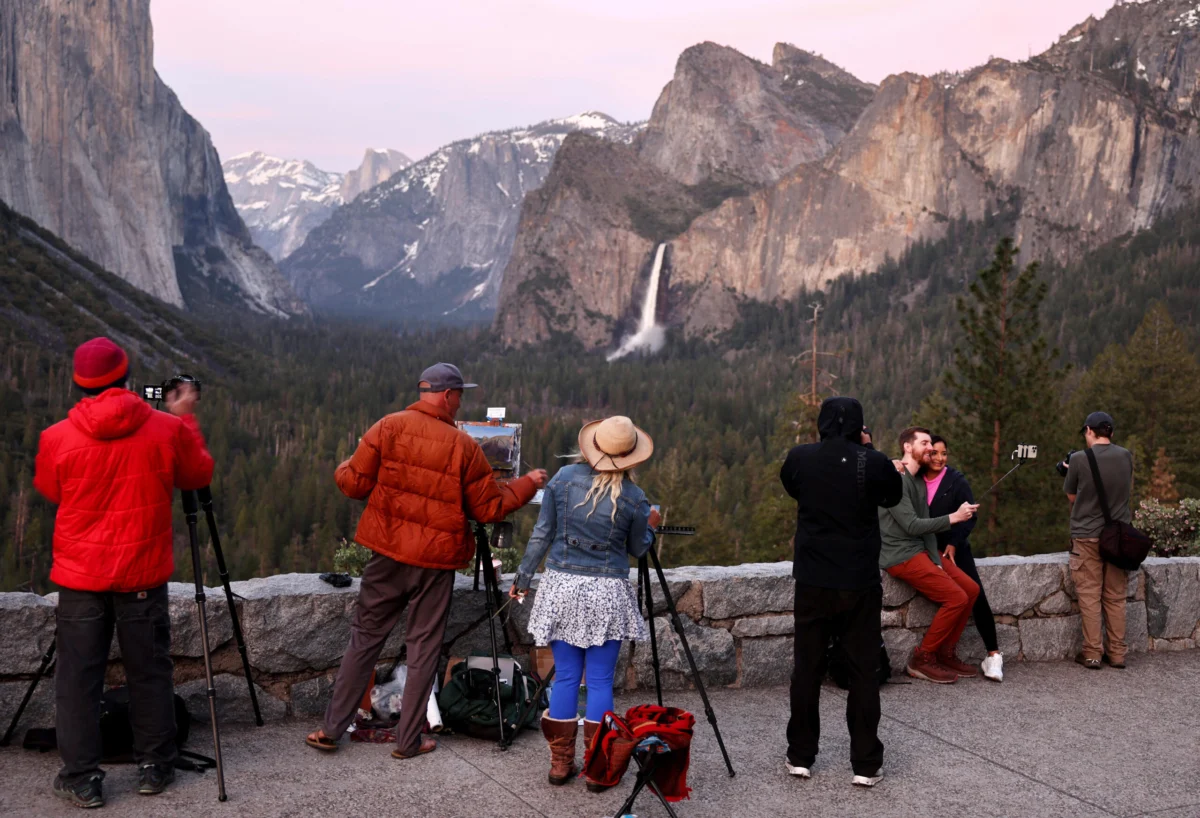
The Trump administration is actively considering a land swap that would involve a segment of Yosemite National Park, or an interest therein, in exchange for a private developer seeking to construct a new access road. This proposal, confirmed by the Interior Department and the developer’s legal counsel, has ignited a fierce debate among environmental advocates, policymakers, and the public, raising significant questions about the integrity of national park protections and the future of America’s cherished natural heritage.
The core of the proposal centers on discussions between the National Park Service (NPS) and Nevada-based Kingsbarn Realty Capital. Kingsbarn aims to secure a new access road, described as "under a mile" in length, to connect to Yosemite’s entrance. Lanny Davis, an attorney representing Kingsbarn, has articulated that this shorter route would offer environmental benefits by reducing driving distances and associated vehicle emissions, framing the proposal as a forward-thinking solution. Kingsbarn owns an 83-acre parcel, historically known as Hazel Green Ranch, situated strategically near Yosemite’s western boundary. As part of the proposed exchange, Kingsbarn would acquire land of equivalent value elsewhere in California and subsequently transfer it to the National Park Service, as detailed in documents initially reported by NOTUS.
A Protected Legacy: Yosemite National Park’s Significance
Yosemite National Park, a UNESCO World Heritage site since 1984, spans nearly 750,000 acres across California’s Sierra Nevada mountains. Renowned globally for its monumental granite cliffs, giant sequoia groves, waterfalls, and biological diversity, Yosemite attracts over 4 million visitors annually, contributing significantly to California’s tourism economy and serving as a vital ecosystem for numerous plant and animal species, including endangered ones. Its establishment as a park in 1890, building upon the Yosemite Grant of 1864, marked a pivotal moment in the American conservation movement, setting a precedent for the preservation of natural wonders for public enjoyment and scientific study. The National Park Service, established in 1916, operates under a dual mandate: to conserve the scenery and the natural and historic objects and the wild life therein and to provide for the enjoyment of the same in such manner and by such means as will leave them unimpaired for the enjoyment of future generations. This foundational principle underscores the gravity of any proposal that seeks to alter park boundaries or grant private access.
The Developer’s Vision: Kingsbarn Realty Capital and Hazel Green Ranch
Kingsbarn Realty Capital, a private equity real estate firm, acquired the 83-acre Hazel Green Ranch parcel with an apparent long-term vision for its development potential. The ranch’s location, proximate to one of Yosemite’s key entrances, makes improved access a significant factor for any potential commercial or residential development. The proposed "under a mile" access road is presented by Kingsbarn’s counsel, Lanny Davis, as a measure that would not only benefit the developer but also contribute to environmental stewardship by reducing traffic congestion and vehicle emissions along existing, longer routes. This argument suggests a win-win scenario where private development aligns with ecological goals, a claim that has been met with considerable skepticism by conservation groups. The specific nature of the development Kingsbarn envisions for Hazel Green Ranch has not been fully disclosed, but the pursuit of a direct access road implies plans that would benefit from enhanced connectivity to the park’s visitor infrastructure.
Historical Precedent and Legal Hurdles
The concept of land exchanges is a common practice within the federal government, particularly for agencies like the Bureau of Land Management or the U.S. Forest Service, where such exchanges often rationalize land ownership patterns, improve resource management, or consolidate public holdings. However, exchanging National Park Service land, especially for the purpose of facilitating private development access, is exceptionally rare and fraught with legal and ethical complexities. According to NOTUS, which cited a former park service official, such a proposal deviates significantly from established norms.
Adding to the complexity, the property’s former owner previously pursued legal avenues to secure easement rights over existing roads leading towards Yosemite. This effort culminated in a federal appeals court ruling in 2012 that affirmed the dismissal of those claims, setting a crucial precedent regarding access to the park via private land. The National Parks Conservation Association (NPCA) has explicitly stated that the current proposal "would also be unlawful," directly referencing this prior court rejection. The legal justification the Trump administration might employ for this specific exchange remains unclear, posing a significant challenge should the proposal advance. Any land exchange involving NPS lands must navigate stringent federal laws, including the National Environmental Policy Act (NEPA) and various other statutes designed to protect federal lands and ensure public transparency.
Conservation Community Outcry
The mere consideration of such a land swap has triggered immediate and vehement opposition from leading environmental advocacy organizations. The Sierra Club, one of the nation’s oldest and most influential environmental groups, unequivocally rebuked the plan, characterizing it as a "corrupt back-room deal." They contend that it would fundamentally betray a longstanding commitment to "protect Yosemite for the public good" by ceding national park land to a private developer. This sentiment reflects a deep-seated belief within the conservation movement that national parks represent an inviolable public trust, not commodities for private transaction.
The National Parks Conservation Association (NPCA), a non-profit organization dedicated to protecting and enhancing America’s national park system, issued an equally scathing condemnation. The NPCA declared the proposal an attempt to "dismantle America’s conservation legacy," asserting that it constitutes "an attack on the American people that own this national park." Their statement underscores the collective ownership Americans feel towards their national parks and the profound implications of any action that could diminish their protected status. Critics argue that even a small parcel of land, if within the park boundaries or critical to its ecological integrity, should not be subject to exchange for private gain, regardless of the purported environmental benefits of a shorter access road. The precedent set by such a swap, they warn, could open the floodgates for similar demands in other national parks across the country.
Official Stance and Procedural Commitments
In response to the growing controversy, a spokesperson for the Interior Department issued a statement acknowledging that no final decision had been made regarding the proposal. The department emphasized that "Any land exchange or access proposal involving National Park Service lands would be subject to all applicable federal laws, regulations and Departmental policies, including required environmental review and public notification processes." Furthermore, the spokesperson affirmed that if a proposal were to advance, the department would "follow established procedures" to ensure transparency and public involvement "consistent with federal law." While these assurances aim to address concerns about due process, critics remain wary, citing the perception of a lack of transparency in the initial stages of the discussions.
The Question of Influence: Campaign Contributions
The scrutiny surrounding the proposal has extended to the political affiliations and contributions of key figures involved. Jeff Pori, the CEO of Kingsbarn, has made regular, albeit mostly small-dollar, donations to President Donald Trump’s campaign committee between 2024 and 2025. Records indicate that Pori had no history of donating to national political campaigns prior to October 2024, raising questions about the timing and potential motivations behind these contributions. While CNBC has reported finding no direct evidence that Pori’s political contributions influenced the administration’s consideration of the proposal, the optics of such donations coinciding with a high-stakes request involving a national park inevitably fuel public speculation and reinforce the "back-room deal" narrative propagated by critics. This intersection of private business interests, political donations, and public land management often draws heightened scrutiny, irrespective of direct influence.
Broader Implications for National Park Stewardship
The potential Yosemite land swap represents more than just a localized dispute; it embodies a larger debate about the philosophy of national park management and the future of conservation in the United States. If approved, even a seemingly small exchange could establish a dangerous precedent, signaling a shift from an ethos of inviolable preservation to one where national park lands are subject to negotiation for private development. This could embolden other developers to seek similar concessions in other protected areas, gradually eroding the protective barriers that have safeguarded these natural treasures for over a century.
Moreover, the environmental impact extends beyond the immediate footprint of a new road. Road construction, even for a short stretch, can lead to habitat fragmentation, increased human-wildlife conflict, alterations in hydrology, and the introduction of invasive species. While Kingsbarn argues for reduced vehicle emissions, the overall ecological cost of new infrastructure within or adjacent to a pristine wilderness area must be meticulously weighed. The proposal also raises concerns about public access and the democratized enjoyment of national parks. If private access is prioritized, it could subtly shift the perception of these lands from public commons to areas susceptible to private interests.
The Path Forward: Regulatory Review and Public Engagement
Should the Interior Department decide to advance the proposal, it would embark on a complex and likely contentious regulatory journey. This would involve detailed environmental assessments and impact statements as required by NEPA, which would analyze the potential effects of the land swap and road construction on Yosemite’s ecosystems, wildlife, and visitor experience. A crucial component of this process would be extensive public notification and comment periods, allowing individuals, conservation groups, and other stakeholders to voice their concerns and provide data. The department’s commitment to transparency and public involvement will be thoroughly tested at this stage. Given the strong opposition and the historical legal challenges, any final decision would likely face immediate legal challenges from environmental organizations, potentially leading to protracted court battles. The outcome of this process will not only determine the fate of a small piece of Yosemite but could also profoundly shape the future landscape of national park protection across the nation.
The proposal to exchange a portion of Yosemite National Park for private development access is a stark reminder of the continuous tension between conservation and development. As discussions continue and public scrutiny intensifies, the fundamental question remains: what price are we willing to pay, and what precedents are we willing to set, for America’s irreplaceable natural heritage? The debate surrounding this specific land swap will undoubtedly resonate far beyond the boundaries of Yosemite, influencing conservation policy and the stewardship of national parks for generations to come.
