

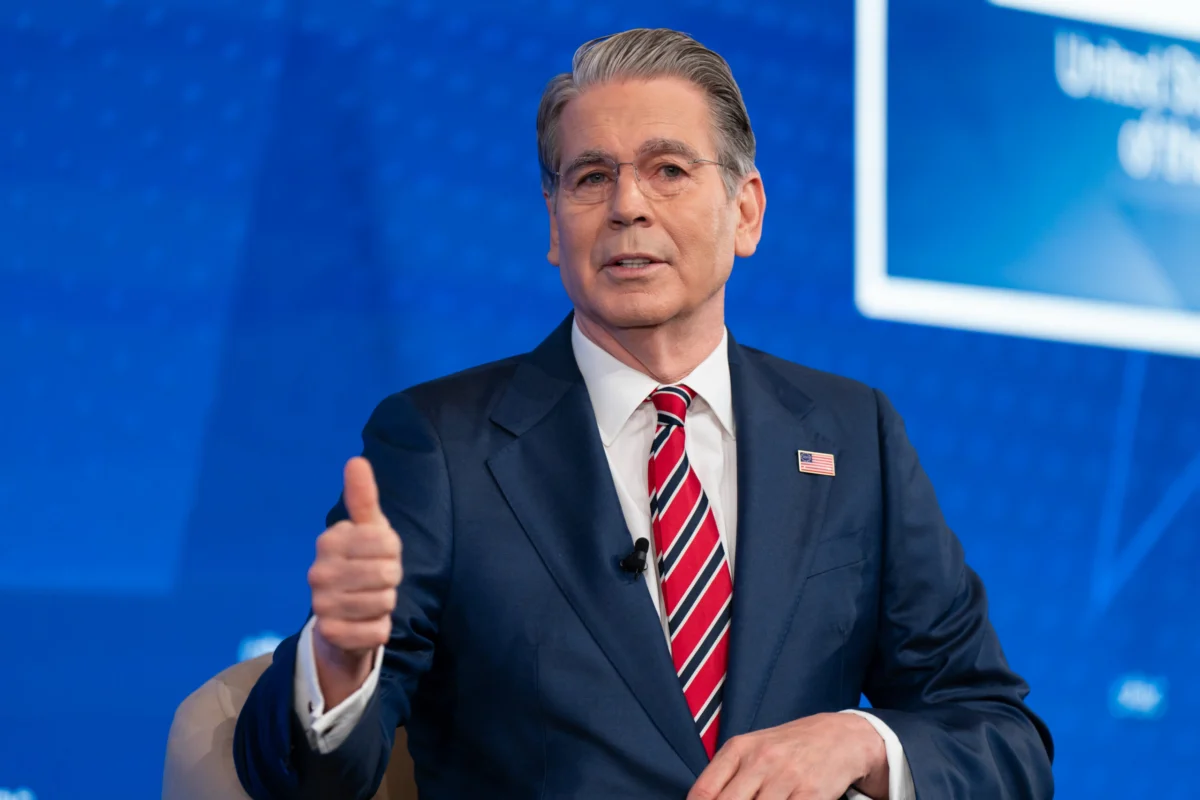
Washington D.C. – Despite a recent barrage of unfavorable inflation data, U.S. Treasury Secretary Scott Bessent expressed a strong conviction on Thursday that price pressures are poised for a significant retreat, anticipating this shift to coincide with a pivotal transition at the helm of the Federal Reserve. Speaking to CNBC from the sidelines of President Donald Trump’s high-stakes summit with Chinese counterpart Xi Jinping, Bessent projected that a series of "hot inflation numbers" will soon give way to a period of "substantial disinflation."
The Treasury Secretary specifically pointed to the current surge in energy prices as a primary driver of recent inflation, a factor he believes is inherently temporary. "I firmly believe that nothing is more transient than a supply shock," Bessent stated, underscoring the U.S.’s commitment to increasing oil production. This increased supply, he suggested, is expected to mitigate the inflationary impact stemming from geopolitical tensions, notably the conflict involving Iran. Bessent recalled that prior to the escalation of the Iranian conflict, core inflation had been on a downward trajectory, a trend he expects to resume.
However, Bessent’s optimistic outlook stands in stark contrast to the latest economic indicators, which paint a more challenging picture of persistent inflation. This week’s releases painted a concerning tableau:
Latest Inflation Data Signals Persistent Price Pressures
The Bureau of Labor Statistics (BLS) reported that the Consumer Price Index (CPI) for all urban consumers rose a significant 0.6% in April, exceeding economists’ expectations. On an annualized basis, the CPI stood at 3.8% by the end of April. Even when excluding the volatile components of food and energy, the core CPI, often considered a more stable measure of underlying inflation, also showed an unwelcome uptick, climbing 0.4% for the month. This brought the year-over-year core inflation rate to 2.8%.
Adding to these concerns, data from the BLS also revealed a sharp increase in wholesale prices. The Producer Price Index (PPI) surged by a substantial 1.4% in April, marking the largest monthly increase since late 2022. This elevated PPI translates to a 12-month inflation rate of 6%, the highest in nearly two years. The inflationary pressures were not confined to domestic wholesale markets; import and export prices also registered their highest levels in approximately four years, indicating that global supply chain disruptions and geopolitical events are continuing to exert upward pressure on prices across the economy.
The "Warsh Fed" Era Begins Amidst Inflationary Headwinds
Bessent’s prediction of impending disinflation comes at a critical juncture for U.S. monetary policy, with a new Federal Reserve Chair set to take the reins. Kevin Warsh, a former Fed governor, was confirmed by the Senate on Wednesday to succeed Jerome Powell, whose term concludes on Friday. Bessent referred to this transition as the commencement of the "Warsh Fed," signaling his anticipation of a fresh approach to monetary policy.

The timing of this leadership change is particularly noteworthy. The Federal Reserve’s stance on inflation has been a subject of intense scrutiny. During the inflationary surge of 2021-2022, the Fed was criticized for its initial characterization of rising prices as "transitory" and for its perceived delay in tightening monetary policy. That period was marked by unprecedented fiscal and monetary stimulus following the COVID-19 pandemic, which, coupled with massive supply and demand imbalances and the impact of the Russian invasion of Ukraine on energy markets, led inflation to peak at over 9%.
Historical Context: Lessons from the 2021-2022 Inflation Surge
Bessent, who served as a senior economic advisor during the Trump administration, explicitly distanced himself from the "transitory" narrative that characterized the Fed’s early response to the prior inflation episode. "I was never on team transitory during Covid," he asserted, drawing a clear line between the current inflationary environment and the pandemic-induced shock. He acknowledged that the previous inflationary wave was exacerbated by a confluence of factors, including extensive government stimulus measures and significant disruptions to global supply chains. The war in Ukraine, in particular, had a profound impact on energy prices, contributing significantly to the overall inflation rate.
The current situation, while showing some echoes of the past, is also influenced by distinct geopolitical events, such as the conflict involving Iran. Bessent’s argument hinges on the belief that supply shocks, by their nature, are temporary. He suggests that as the U.S. continues to ramp up oil production, the immediate inflationary impact from supply disruptions will naturally recede.
Analyzing the Implications: Disinflation and Monetary Policy
Bessent’s projection of "substantial disinflation" in the near future carries significant implications for both the economy and the Federal Reserve’s policy trajectory. If his forecast proves accurate, it could provide the incoming Fed Chair, Kevin Warsh, with a more favorable environment to navigate. A declining inflation rate would allow the Fed to potentially ease its hawkish stance, which has been characterized by a series of interest rate hikes aimed at cooling the economy.
However, the persistence of inflation, as indicated by recent CPI and PPI data, presents a formidable challenge. The widening gap between wholesale and consumer prices suggests that businesses are absorbing some of the rising costs, but the extent to which they can continue to do so without passing them on to consumers remains a critical question. If businesses are forced to increase prices further to cover their own rising expenses, it could prolong the inflationary period and complicate the Fed’s efforts to achieve price stability.
Potential Reactions and Future Outlook
While specific reactions from Federal Reserve officials to Bessent’s remarks were not immediately available, the incoming Chair, Kevin Warsh, is known for his pragmatic approach to monetary policy. His tenure will likely be closely watched for any shifts in strategy or communication regarding inflation targets and interest rate policy. Economic analysts, meanwhile, are divided. Some share Bessent’s optimism, believing that supply-side pressures will abate, leading to a swift decline in inflation. Others remain cautious, pointing to the resilience of core inflation and the potential for further geopolitical shocks to disrupt supply chains and energy markets.
The coming weeks and months will be crucial in determining whether Bessent’s prediction of "substantial disinflation" materializes. The Federal Reserve’s ability to manage inflation without triggering a significant economic downturn will be a defining challenge for the new leadership. Investors and consumers alike will be closely monitoring inflation reports, interest rate decisions, and any further pronouncements from Treasury officials and the Federal Reserve as they seek to navigate this complex economic landscape. The interplay between geopolitical events, supply chain dynamics, and monetary policy will ultimately dictate the path of inflation and its impact on the U.S. economy in the period ahead.
