

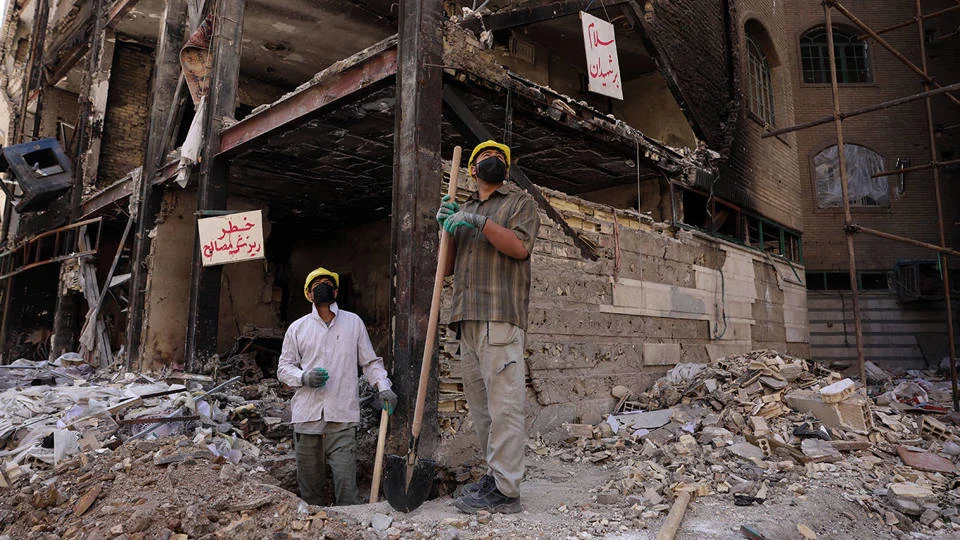
The Iran war launched by the United States and Israel is likely to prove particularly damaging in this respect, which will become all too obvious at this week’s US-China summit in Beijing, where Chinese President Xi Jinping has been given the upper hand.
TEL AVIV – Major wars have historically served as pivotal moments, ushering in new international orders and reshaping the global geopolitical landscape. The Thirty Years’ War culminated in the Peace of Westphalia, establishing the principles of state sovereignty. The Napoleonic Wars led to the Concert of Europe, an attempt to maintain peace and stability through collective security. World War II catalyzed the creation of the Bretton Woods system, fostering global economic cooperation, accelerated decolonization, and propelled European integration. Even the Cold War, a protracted period of ideological confrontation, ultimately yielded a liberal world order characterized by the United States as its hegemonic power. However, the recent conflict in Iran, initiated by a coalition led by the United States and Israel, presents a starkly different trajectory, threatening to unravel existing structures and empower rivals, most notably China, whose President Xi Jinping is poised to gain significant leverage at the upcoming US-China summit in Beijing.
The Genesis and Escalation of the Iran Conflict
The roots of the conflict can be traced back to years of escalating tensions between Iran and Western-backed nations in the Middle East, primarily driven by Iran’s nuclear program, its ballistic missile development, and its support for regional proxy groups. Intelligence assessments, shared by the United States and Israel, indicated an imminent threat posed by Iran’s pursuit of nuclear weapons capabilities, a development that both nations deemed an existential security risk.
Timeline of Key Events Leading to the Conflict:
- 2015: The Joint Comprehensive Plan of Action (JCPOA) was agreed upon, limiting Iran’s nuclear activities in exchange for sanctions relief.
- 2018: The United States withdrew from the JCPOA under the Trump administration, reimposing stringent sanctions on Iran.
- 2019-2023: A series of incidents, including attacks on oil tankers, drone strikes, and the assassination of key Iranian military figures, heightened regional tensions. Iran significantly accelerated its uranium enrichment activities during this period.
- Early 2026: Increased intelligence sharing between the US and Israel pointed to a critical juncture in Iran’s nuclear program, with projections suggesting a near-breakout capability.
- March 2026: A coordinated military operation, described by officials as a pre-emptive strike, was launched by a US-led coalition, targeting key Iranian military and nuclear facilities. This marked the commencement of the Iran War.
The initial phase of the conflict involved precision airstrikes aimed at degrading Iran’s military infrastructure and nuclear program. However, the situation quickly devolved into a more protracted engagement, with Iranian forces and their proxies launching retaliatory attacks, further destabilizing the region. The humanitarian cost has been substantial, with widespread displacement and damage to civilian infrastructure.
The Shifting Global Power Dynamics
The Iran War, far from consolidating a new global order, has instead exposed deep fissures in existing international alliances and accelerated a redistribution of power. The prolonged military engagement has strained the resources and political capital of the United States and its key allies, diverting attention and capacity from other critical geopolitical challenges.
Supporting Data on Economic and Military Strain:
- Increased Defense Spending: Nations involved in the conflict have reported significant increases in defense budgets to sustain military operations and bolster national security. The US Department of Defense, for instance, has seen its operational expenditure rise by an estimated 15% since the conflict’s inception, according to preliminary budget reports.
- Disruption of Global Supply Chains: The conflict has exacerbated existing disruptions in global energy and commodity markets. Oil prices have seen a sustained surge, impacting inflation rates worldwide. The International Monetary Fund (IMF) has revised its global growth forecasts downwards by 0.8% in the last quarter, citing the conflict as a primary contributor.
- Humanitarian Crisis: The United Nations High Commissioner for Refugees (UNHCR) has reported over 3 million internally displaced persons and refugees fleeing the conflict zone, placing immense strain on regional aid organizations and international humanitarian efforts.
In this environment of heightened global uncertainty and resource strain, China has strategically positioned itself. While officially maintaining a stance of neutrality, Beijing has quietly expanded its economic and diplomatic influence. The US-China summit in Beijing, scheduled for May 2026, was initially intended to address bilateral trade imbalances and regional security concerns. However, the ongoing war in Iran has fundamentally altered the agenda and the power dynamic.
Xi Jinping’s Strategic Advantage at the Beijing Summit
Chinese President Xi Jinping enters the Beijing summit with a distinct advantage. The United States, preoccupied with the ongoing military operations and their fallout, is perceived as being on the defensive. This allows China to present itself as a stable and responsible global actor, capable of mediating and offering alternative solutions to regional crises.
Inferred Diplomatic Maneuvers and Strategic Positioning:
- Mediation Efforts: China has subtly increased its diplomatic engagement with regional players in the Middle East, offering itself as a potential mediator for de-escalation and peace talks. This positioning directly contrasts with the perception of the US as being militarily involved.
- Economic Diplomacy: Beijing has continued to pursue its Belt and Road Initiative (BRI) projects, offering economic stability and development opportunities to nations seeking alternatives to Western-centric economic models. Several Middle Eastern nations, potentially wary of the long-term economic consequences of the Iran War, are reportedly deepening ties with China.
- Assertion of Multilateralism: China has been vocal in advocating for multilateral solutions to global challenges, implicitly criticizing what it perceives as unilateral actions by the United States. This narrative resonates with nations seeking a more balanced and multipolar world order.
The US-China summit is therefore not merely a discussion of bilateral issues but a critical juncture for the global order. While the US seeks to project strength and rally support, China is poised to leverage the situation to solidify its influence and advance its vision of a multipolar world. The outcome of these discussions will have profound implications for international security, economic stability, and the future trajectory of global governance. The legacy of the Iran War, therefore, extends far beyond the immediate conflict zone, shaping the contours of power and influence on a global scale for years to come.
