

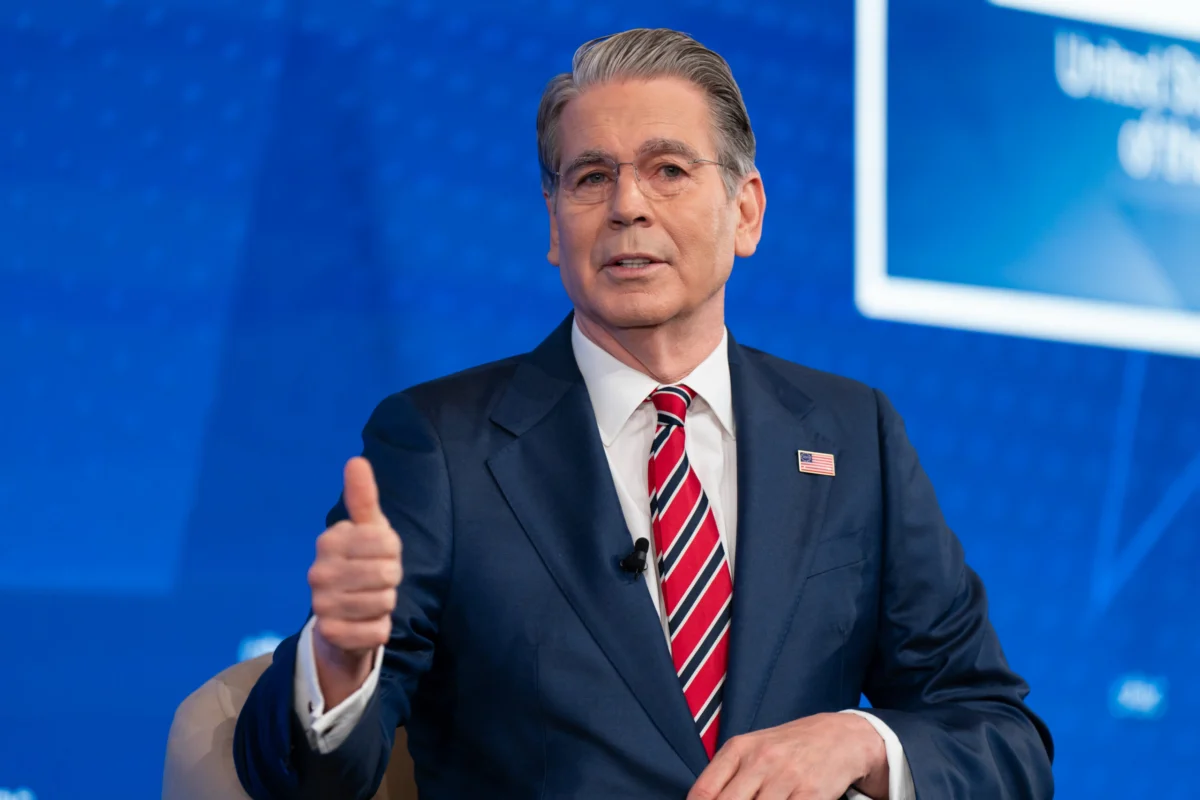
Treasury Secretary Scott Bessent expressed a confident outlook on Thursday, predicting a significant cooling of inflationary pressures in the coming months, even as recent economic indicators have painted a less optimistic picture. Speaking to CNBC on the sidelines of President Donald Trump’s summit with Chinese counterpart Xi Jinping, Bessent articulated his belief that the current surge in energy-driven inflation is a temporary phenomenon, poised to reverse as global oil supply dynamics stabilize. This optimistic forecast comes at a critical juncture, coinciding with the imminent transition of leadership at the Federal Reserve, with Kevin Warsh set to assume the role of Chair.
Anticipating a Shift in Inflationary Trends
Bessent’s assessment hinges on the expectation that the recent price increases, largely attributed to supply-side shocks stemming from the Iran conflict, will prove transient. He highlighted that prior to the geopolitical tensions in the Middle East, core inflation had been on a downward trajectory. "I firmly believe that nothing is more transient than a supply shock, and we can, we can look through that, because before the Iranian conflict began, core inflation was coming down," Bessent stated, underscoring his conviction that core inflation will resume its descent.
However, recent data suggests a more persistent inflationary environment. The latest Consumer Price Index (CPI) report revealed a 0.6% increase in overall prices for April, with core inflation, which excludes volatile food and energy components, also rising by a concerning 0.4%. On a year-over-year basis, inflation stood at 3.8%, while core inflation was recorded at 2.8%. Further compounding these concerns, the Producer Price Index (PPI), a leading indicator of pipeline pressures for businesses, surged by a significant 1.4% in April, pushing the 12-month figure to 6%, the highest level seen since late 2022. Import and export prices also reflected this inflationary shock, reaching their highest points in approximately four years.
Despite these challenging figures, Bessent remains resolute in his forecast, suggesting that the economy might experience "one or two more ‘hot inflation numbers,’ but then I think we’re going to see substantial disinflation." This perspective suggests a belief that underlying economic forces will eventually reassert themselves, leading to a more stable price environment.
The Dawn of the "Warsh Fed"
The timing of Bessent’s remarks is particularly noteworthy given the impending leadership change at the Federal Reserve. Kevin Warsh was confirmed by the Senate on Wednesday to succeed Jerome Powell as the next Chair of the Federal Reserve, with his term commencing immediately after Powell’s concludes on Friday. Bessent’s reference to the "Warsh Fed" signals an anticipation of a new monetary policy era under Warsh’s stewardship.
This transition occurs against the backdrop of a critical debate surrounding the Fed’s past responses to inflation. During the 2021-2022 inflation surge, which followed the unprecedented fiscal and monetary stimulus in response to the Covid-19 pandemic and was exacerbated by supply chain disruptions and the Russian invasion of Ukraine, Federal Reserve officials were criticized for initially characterizing the price increases as "transitory." This delayed response, some argue, allowed inflation to climb to a peak of over 9%.
Bessent, who was critical of the "transitory" narrative during the previous inflationary episode, expressed a renewed sense of optimism. "I was never on team transitory during Covid," he stated. "We’ll get to the other side of this, and I don’t know whether it’s a few days or a few weeks, and energy inflation will come back down." His current outlook suggests a belief that the lessons learned from the past will inform current and future policy decisions, potentially leading to a more agile and effective response to inflationary pressures.
Historical Context and Broader Economic Factors

To fully appreciate Bessent’s forecast, it is crucial to understand the historical context of recent inflationary pressures. The period following the COVID-19 pandemic was characterized by a confluence of factors that fueled inflation:
- Unprecedented Fiscal and Monetary Stimulus: Governments worldwide, including the U.S., implemented massive stimulus packages to support economies during lockdowns. The Federal Reserve, in turn, maintained near-zero interest rates and engaged in quantitative easing, injecting liquidity into the financial system.
- Supply Chain Disruptions: Lockdowns, labor shortages, and logistical bottlenecks severely disrupted global supply chains, leading to shortages of goods and increased shipping costs.
- Surge in Consumer Demand: As economies reopened and consumers received stimulus payments, demand for goods and services rebounded sharply, outstripping available supply.
- Geopolitical Shocks: The Russian invasion of Ukraine in early 2022 sent shockwaves through global energy and commodity markets, leading to a sharp increase in oil and gas prices, which had a cascading effect on inflation.
The current inflation surge, while sharing some similarities with the previous episode, has distinct drivers. The conflict in Iran has reintroduced an element of supply-side risk, particularly in the energy sector. However, Bessent’s assertion that the U.S. will continue to increase oil production suggests a deliberate effort to counteract any supply constraints and stabilize energy prices. This proactive stance, if successful, could indeed contribute to a reversal of inflationary pressures.
Supporting Data and Analytical Perspectives
The reliance on supply shocks as a primary driver of current inflation is a point of analysis for many economists. When inflation is primarily driven by temporary supply disruptions, monetary policy can be less effective in the short term. However, as supply chains normalize and geopolitical tensions subside, price pressures tend to abate naturally.
The distinction between headline inflation and core inflation is also critical. While headline inflation, which includes food and energy, is more volatile and directly impacts consumers’ immediate purchasing power, core inflation is often seen as a better indicator of underlying, persistent price pressures. Bessent’s focus on core inflation suggests a belief that the more entrenched inflationary forces are already moderating or will do so soon.
However, the recent strength in wholesale prices (PPI) warrants attention. A sustained rise in producer costs often translates into higher consumer prices in the future, creating a potential lag effect. The fact that import and export prices are also elevated suggests that global inflationary pressures are being transmitted into the U.S. economy.
Potential Reactions and Broader Implications
The Treasury Secretary’s optimistic forecast, if realized, would have significant implications for the U.S. economy and the Federal Reserve’s policy path.
- Federal Reserve Policy: A sustained period of disinflation would provide the Federal Reserve with more room to maneuver. It could allow the Fed to pause or even consider interest rate cuts sooner than anticipated, providing some relief to borrowers and potentially stimulating economic growth. Conversely, if inflation remains stubbornly high, the Fed might be forced to maintain a tighter monetary policy for longer, risking a slowdown in economic activity.
- Consumer Confidence: Falling inflation would likely boost consumer confidence, which has been shaken by rising prices. This could lead to increased consumer spending, a key driver of economic growth.
- Business Investment: A more stable price environment would reduce uncertainty for businesses, potentially encouraging greater investment in expansion and innovation.
- Global Economic Stability: The U.S. economy’s trajectory has a significant impact on the global economy. A successful moderation of inflation in the U.S. could contribute to greater global economic stability.
The appointment of Kevin Warsh, a figure known for his hawkish stance on inflation during his previous tenure at the Fed, adds another layer of intrigue. His approach to monetary policy will be closely scrutinized, especially in light of Bessent’s predictions. If Warsh prioritizes inflation control above all else, he may adopt a more aggressive tightening stance if inflation proves more persistent than anticipated.
Looking Ahead: A Crucial Period
The coming weeks and months will be a critical period for assessing the validity of Treasury Secretary Bessent’s forecast. The Federal Reserve’s upcoming meetings, the release of further inflation data, and the unfolding geopolitical situation will all play a significant role in shaping the economic landscape. The market will be keenly watching for any signs that the anticipated "substantial disinflation" is indeed taking hold, and how the new Federal Reserve leadership will navigate the complex challenges of maintaining price stability while fostering economic growth. The Treasury Secretary’s confidence suggests a belief that the current inflationary pressures are surmountable and that a return to more stable price levels is within reach, a narrative that will be tested by incoming economic realities.
