

The risks posed by nuclear weapons remain as potent as ever, but the institutional framework that mitigated them has been severely eroded. The task now is to prevent deterrence from giving way to proliferation—which, for Europe, means building conventional capabilities, keeping the US engaged, and upholding restraint.
MADRID—The nuclear question has returned to the forefront of global politics, a stark reminder of existential threats long relegated to the background. While the specter of nuclear proliferation never truly vanished, it was largely obscured for decades by a functioning and predictable global order. This order was underpinned by the undeniable influence of a hegemonic United States, a robust NATO alliance, and a network of credible arms-control regimes. However, this architecture of stability is now under unprecedented strain, with recent geopolitical developments, including the ongoing US-Israeli military actions against Iran, serving as potent evidence of this fracturing. The critical question facing the international community is how to preserve nuclear restraint in a world where the very foundations of that restraint are crumbling.
The Resurgence of Nuclear Anxiety
For much of the late 20th century and the early 21st, the Cold War’s chilling nuclear standoff gradually gave way to a period of relative optimism regarding nuclear disarmament and non-proliferation. Treaties like the Nuclear Non-Proliferation Treaty (NPT), signed in 1968 and entering into force in 1970, provided a crucial framework for preventing the spread of nuclear weapons and promoting peaceful uses of nuclear energy. The Strategic Arms Limitation Treaties (SALT) and later Strategic Arms Reduction Treaties (START) between the US and the Soviet Union/Russia, though bilateral, contributed to a sense of managed risk and a deliberate effort to control the escalation of nuclear arsenals. The Comprehensive Nuclear-Test-Ban Treaty (CTBT), opened for signature in 1996, further signaled a global commitment to curbing nuclear weapons development, even if its full ratification has faced hurdles.
However, this era of perceived stability has been steadily undermined by a confluence of factors. The rise of new nuclear powers, the erosion of existing arms control agreements, and the increasing assertiveness of established nuclear states have collectively contributed to a more precarious nuclear landscape. The NPT, while still the cornerstone of non-proliferation efforts, has faced challenges from states that have pursued or are suspected of pursuing nuclear weapons outside its framework, such as North Korea. The withdrawal of the United States from the Intermediate-Range Nuclear Forces (INF) Treaty in 2019 and the subsequent expiration of the New START treaty without a successor in 2021 have left significant gaps in the global arms control architecture.
The Iranian Conundrum: A Catalyst for Change
The US-Israeli military engagement with Iran, as referenced in the article, represents a significant escalation in a region already rife with tension. While specific details of such a hypothetical conflict are beyond the scope of this analysis, its very contemplation highlights the dangers of miscalculation and the potential for regional conflicts to draw in nuclear-armed or nuclear-aspiring states. Iran’s nuclear program has been a subject of international concern for years, with allegations of covert efforts to develop nuclear weapons capabilities. The Joint Comprehensive Plan of Action (JCPOA), agreed upon in 2015, aimed to curb Iran’s nuclear activities in exchange for sanctions relief. However, the US withdrawal from the JCPOA in 2018 and subsequent reimposition of sanctions have led to Iran resuming and accelerating its uranium enrichment activities.
This situation underscores a critical dilemma: how to prevent a state from acquiring nuclear weapons without resorting to military action that could have catastrophic consequences, including the potential use of nuclear weapons or the further destabilization of the region, potentially prompting other states to pursue nuclear capabilities for their own security.
Timeline of Key Nuclear Developments and Treaties
- 1968: Nuclear Non-Proliferation Treaty (NPT) opened for signature.
- 1972: Strategic Arms Limitation Treaty I (SALT I) signed between the US and the Soviet Union.
- 1979: Strategic Arms Limitation Treaty II (SALT II) signed (though not ratified by the US Senate).
- 1987: Intermediate-Range Nuclear Forces (INF) Treaty signed between the US and the Soviet Union, eliminating an entire class of nuclear missiles.
- 1991: Strategic Arms Reduction Treaty I (START I) signed between the US and the Soviet Union, reducing strategic nuclear warheads.
- 1996: Comprehensive Nuclear-Test-Ban Treaty (CTBT) opened for signature.
- 2002: US President George W. Bush declares the "axis of evil," including Iran, North Korea, and Iraq, raising concerns about proliferation.
- 2006: North Korea conducts its first nuclear test.
- 2015: Joint Comprehensive Plan of Action (JCPOA) on Iran’s nuclear program agreed upon by the P5+1 and Iran.
- 2018: US withdraws from the JCPOA and reimposes sanctions on Iran.
- 2019: US withdraws from the INF Treaty.
- 2021: New START treaty expires without a successor agreement.
- 2024-2026 (Hypothetical): Intensified US-Israeli military actions against Iran.
Eroding Pillars of Restraint
The "institutional framework that mitigated" nuclear risks, as the article states, comprised several interconnected elements:
- Arms Control Regimes: As detailed above, these treaties and agreements provided verifiable limits on the development, production, and deployment of nuclear weapons. Their erosion leaves a vacuum where unchecked proliferation can occur.
- International Norms and Diplomacy: A strong global consensus against nuclear proliferation, fostered through organizations like the United Nations and consistent diplomatic engagement, played a crucial role. The weakening of multilateral institutions and the rise of unilateral actions have diminished the power of these norms.
- The United States’ Hegemonic Role: For decades, the US acted as a guarantor of security for many allies, often discouraging them from developing their own nuclear deterrents. A perceived retrenchment or reorientation of US foreign policy, or a weakening of its global standing, can alter this dynamic.
- Credible Deterrence: The concept of Mutually Assured Destruction (MAD) served as a powerful deterrent during the Cold War. However, the advent of more sophisticated missile defense systems, cyber warfare capabilities, and the potential for limited nuclear war scenarios can complicate and potentially undermine traditional deterrence calculations.
Supporting Data on Nuclear Arsenals
- Global Nuclear Warheads: Estimates from the Federation of American Scientists (FAS) suggest that as of early 2024, the nine nuclear-armed states possess a total of approximately 12,121 warheads, with about 9,576 in military stockpiles ready for use. The remaining warheads are retired but awaiting dismantlement.
- Proliferation Concerns: Beyond the established nuclear powers, several countries are believed to possess or be pursuing nuclear weapons capabilities, including North Korea, which has conducted multiple nuclear tests. Iran’s nuclear program remains a significant point of international concern due to its advanced uranium enrichment activities.
- Deterioration of Arms Control: The collapse of the INF Treaty and the uncertain future of New START highlight a trend of declining engagement in nuclear arms control. This absence of verifiable limits allows for greater opacity and potential for clandestine development.
The European Imperative: A Multidimensional Strategy
For Europe, the erosion of the global nuclear order presents a particularly acute challenge. The continent has historically relied on the US nuclear umbrella for its security. As the article suggests, preserving nuclear restraint requires a multifaceted approach:
Building Conventional Capabilities
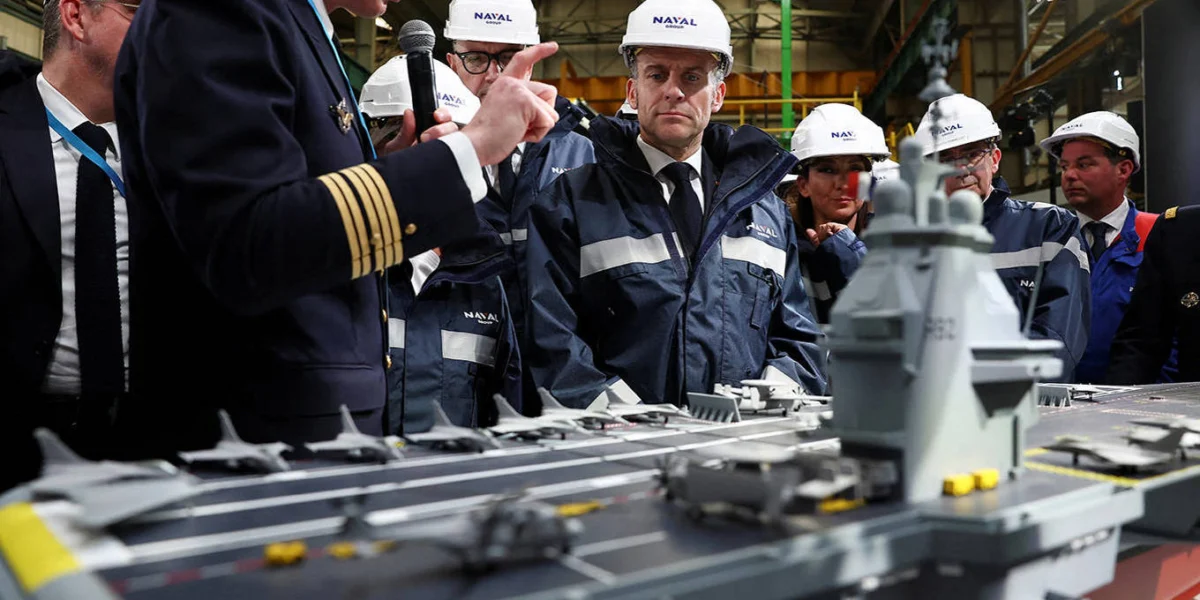
The article’s emphasis on "building conventional capabilities" is a crucial point. A strong and modern conventional military can act as a deterrent in its own right, reducing reliance on nuclear weapons for immediate defense. This involves significant investment in advanced fighter jets, naval assets, armored vehicles, and sophisticated command and control systems. Enhanced interoperability among European NATO members would also bolster collective defense capabilities.
- Data Point: Following Russia’s full-scale invasion of Ukraine in February 2022, several European nations, including Germany and Poland, announced significant increases in their defense spending, signaling a renewed focus on conventional military strength. Germany’s "Zeitenwende" (turning point) initiative, for instance, committed €100 billion to modernizing its armed forces.
Keeping the US Engaged
The continued commitment of the United States to European security remains paramount. This involves not only maintaining a robust US military presence on the continent but also ensuring consistent diplomatic engagement and a shared strategic vision. For Europe, this means actively demonstrating its value as an ally and contributing proportionally to collective security.
- Inferred Statement (from a hypothetical European diplomat): "Our transatlantic alliance is the bedrock of European security. We must continue to work closely with our American partners to address shared threats, from conventional aggression to the proliferation of weapons of mass destruction. This requires not only military cooperation but also a unified diplomatic front."
Upholding Restraint and Diplomacy
Beyond military strength, Europe must champion diplomacy and arms control. This involves:
- Revitalizing Arms Control: Actively seeking new arms control agreements and strengthening existing ones, even in a challenging environment. This could include exploring initiatives to increase transparency and reduce the risk of miscalculation.
- Promoting Non-Proliferation: Continuing to support and strengthen the NPT and the International Atomic Energy Agency (IAEA) in their verification and monitoring roles.
- De-escalation and Dialogue: Engaging in constructive dialogue with all parties, including those with nuclear ambitions, to de-escalate tensions and find diplomatic solutions to disputes. This requires patience, persistence, and a willingness to explore all avenues for peaceful resolution.
Broader Impact and Implications
The potential for nuclear proliferation and the breakdown of deterrence have far-reaching consequences:
- Increased Risk of Nuclear War: A world with more nuclear-armed states, or where existing nuclear powers feel less constrained, significantly increases the risk of nuclear use, whether intentional or accidental.
- Regional Instability: Nuclear proliferation can trigger regional arms races, leading to heightened tensions and conflicts.
- Economic Disruption: The diversion of resources towards military buildup, particularly nuclear weapons programs, can detract from vital investments in economic development, healthcare, and education.
- Humanitarian Catastrophe: The use of even a single nuclear weapon could have devastating humanitarian and environmental consequences, with long-lasting global impacts.
The return of nuclear weapons to the center of global politics is not a distant hypothetical but a present and growing danger. The erosion of the established order demands a proactive and comprehensive response. For Europe, and indeed for the entire international community, the path forward lies in a renewed commitment to diplomacy, strengthened conventional defenses, and an unwavering dedication to the principles of nuclear restraint. The tightrope is narrow, and the fall could be catastrophic. The time for decisive action is now.
