

The clean energy transition reached a significant milestone this week as Antora Energy, a pioneer in zero-emission industrial heat and power, announced the successful closing of a $550 million Series C funding round. This massive infusion of capital is earmarked for the rapid expansion of the company’s thermal battery production and the deployment of large-scale projects across the United States. As heavy industry and energy-hungry data centers face mounting pressure to decarbonize, Antora’s technology offers a potential solution to one of the most difficult challenges in the green economy: providing continuous, high-temperature energy from intermittent renewable sources.
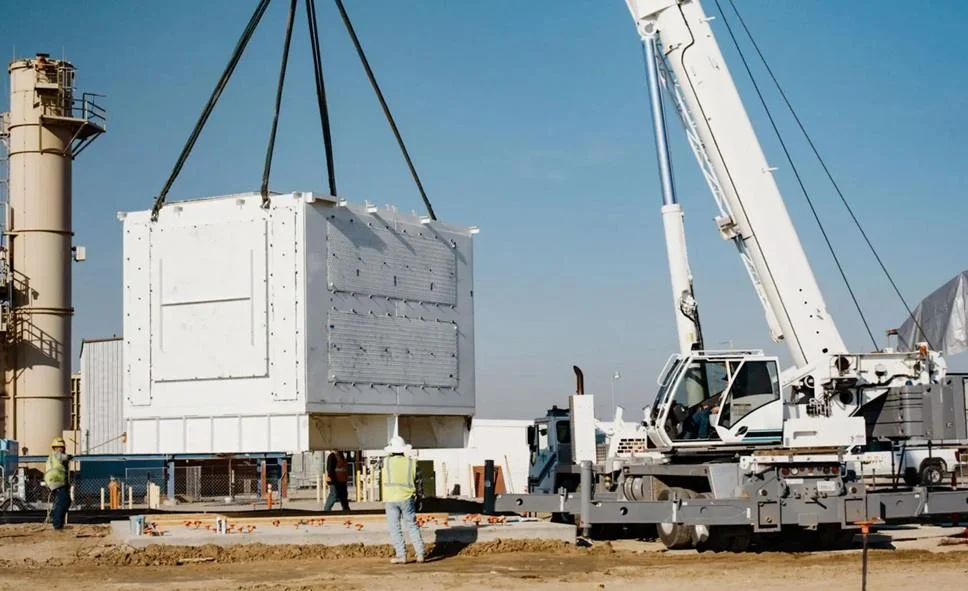
Founded in 2017 and headquartered in Sunnyvale, California, Antora Energy has emerged as a frontrunner in the long-duration energy storage (LDES) sector. The company’s core innovation lies in its ability to store inexpensive, surplus electricity from wind and solar farms as heat in solid carbon blocks. These blocks are housed within highly insulated modules, capable of maintaining temperatures hot enough to glow. This stored energy can then be discharged as industrial-grade process heat or converted back into electricity using the company’s proprietary thermophotovoltaic (TPV) technology.
Breaking the Industrial Decarbonization Bottleneck
Industrial manufacturing accounts for approximately one-third of global greenhouse gas emissions, yet it remains one of the "hardest-to-abate" sectors. Unlike light-duty transportation or residential heating, which can be electrified relatively easily, heavy industries such as cement, steel, and chemical production require intense, high-temperature heat that has historically been provided by burning coal or natural gas.
Antora’s thermal batteries are designed to bridge this gap. By utilizing solid carbon—an abundant, low-cost, and earth-abundant material—the company avoids the supply chain vulnerabilities and high costs associated with traditional lithium-ion batteries. Carbon blocks can be heated to temperatures exceeding 1,500 degrees Celsius without melting or degrading, providing a stable medium for long-term energy storage.
The $550 million Series C round was co-led by G2 Venture Partners and Eclipse, reflecting a high degree of confidence in Antora’s ability to move from the laboratory to industrial-scale application. The round also saw participation from a diverse group of new investors, including Ribbit Capital, Salesforce Ventures, Activate Capital, John Doerr, the Westly Group, StepStone Group, and Liberty Mutual Strategic Ventures. They joined existing heavyweights such as Decarbonization Partners (a joint venture between BlackRock and Temasek), Breakthrough Energy Ventures, and Lowercarbon Capital.
Proven Scalability: The South Dakota Milestone
The funding follows a landmark achievement for Antora: the successful deployment of a 5 GWh thermal battery system in South Dakota. This project is currently one of the largest energy storage installations in the world, notable not just for its capacity but for the speed of its execution. Antora moved from the start of construction to active energy delivery in less than 12 months, demonstrating a level of modularity and "plug-and-play" capability that is often missing in large-scale infrastructure projects.
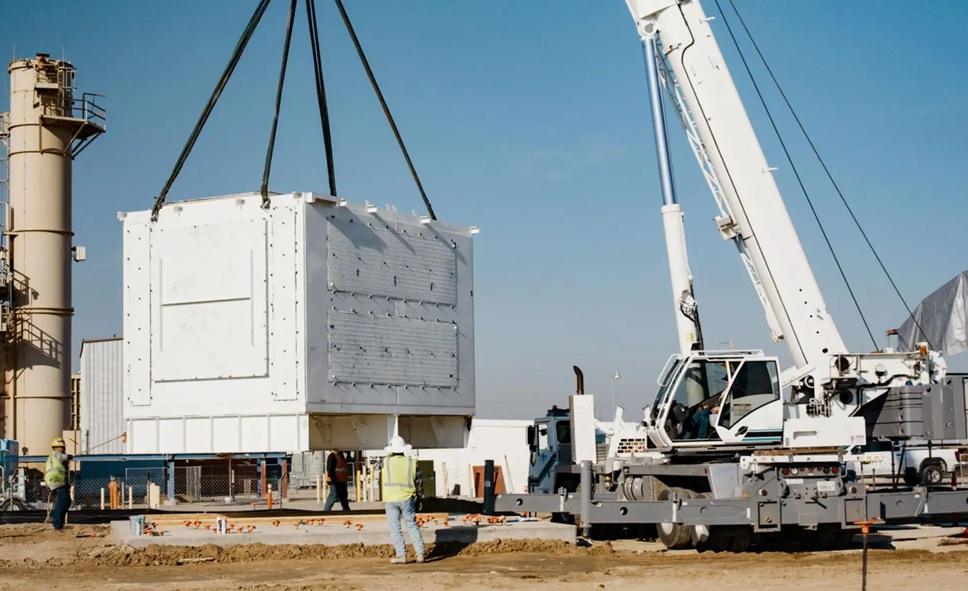
The South Dakota project serves as a proof-of-concept for the "hyperscalers"—large-scale data center operators like Amazon, Google, and Microsoft—who are currently grappling with an unprecedented surge in power demand driven by the rise of artificial intelligence (AI). These companies have committed to 24/7 carbon-free energy goals, but the intermittent nature of solar and wind power makes those targets difficult to reach without massive amounts of firm, reliable storage.
"From factories to data centers, energy is the bottleneck to industrial growth," said Andrew Ponec, Co-Founder and CEO of Antora Energy. "Antora has shown we can help break that bottleneck—delivering energy fast, at massive scale, with American innovation. With this funding round, we’re continuing to strengthen our investment in U.S. manufacturing, delivering affordable energy across the country and around the world."
Technical Innovation: Thermophotovoltaics (TPV)
One of the most unique aspects of Antora’s technology is its heat-to-power conversion method. While traditional power plants use steam turbines with many moving parts to turn heat into electricity, Antora utilizes thermophotovoltaics. TPV cells are similar to solar panels, but instead of capturing sunlight, they capture the infrared light (heat) emitted by the glowing carbon blocks.
This solid-state approach offers several advantages:
- Low Maintenance: With no moving parts, the system is less prone to mechanical failure.
- Efficiency: TPV technology has seen rapid efficiency gains in recent years, with Antora’s cells reaching performance levels that rival traditional heat engines.
- Modularity: The systems can be scaled up or down depending on the specific needs of a facility, from a single factory to a massive utility-scale grid site.
Strategic Use of Capital and Domestic Growth
According to the company, the new capital will be used to achieve four primary objectives:
- Accelerating Large-Scale Project Deployment: Antora plans to fulfill a growing pipeline of signed agreements with industrial leaders and data center providers.
- Expanding Production Capacity: The company will scale its current manufacturing operations to meet global demand.
- Establishing a Second U.S. Manufacturing Hub: In a move to solidify its domestic footprint, Antora will build a new, state-of-the-art manufacturing facility in the United States.
- Strengthening the Domestic Supply Chain: By sourcing materials and components within the U.S., Antora aims to benefit from incentives provided by the Inflation Reduction Act (IRA), which offers tax credits for domestic clean energy manufacturing.
Jake Tauscher, Partner at G2 Venture Partners, emphasized the urgency of the current energy landscape. "Our energy system is at an inflection point, and very few companies can meet soaring power demand," Tauscher said. "Antora is meeting that demand today. They’re deploying at scale, on budget, and on the rapid timelines customers need. That’s how generational energy companies are built."
Market Context: The Rise of Long-Duration Energy Storage
The investment in Antora comes at a time when the Long-Duration Energy Storage (LDES) market is expected to explode. According to the LDES Council, the world may need up to 140 TWh of long-duration storage by 2040 to reach net-zero targets, representing an investment opportunity of over $1 trillion.

While lithium-ion batteries are excellent for short-term storage (2 to 4 hours), they become prohibitively expensive for durations of 10 to 100 hours or more. Thermal batteries like Antora’s, as well as alternative technologies like iron-air batteries or pumped hydro, are essential for maintaining grid stability when the sun isn’t shining and the wind isn’t blowing for days at a time.
Antora’s focus on the "dual-use" of its storage—providing both heat and power—gives it a competitive edge. Many industrial processes require steam or direct heat; by providing this directly from the battery, Antora eliminates the efficiency losses associated with converting heat to electricity and then back to heat via an electric boiler.
Implications for the U.S. Economy and Climate Goals
The expansion of Antora Energy is also a victory for the Biden-Harris administration’s industrial policy. The administration has frequently cited the need for "Made in America" clean energy technology to compete with global rivals. By establishing a second manufacturing hub, Antora is expected to create hundreds of high-skilled jobs in the renewable energy sector.
Furthermore, the technology addresses the "green premium"—the extra cost often associated with choosing a clean alternative over a fossil fuel. Because Antora uses low-cost carbon and captures electricity when it is at its cheapest (often during the middle of the day when solar production peaks), the company claims it can deliver energy at prices competitive with, or even lower than, natural gas.
Looking Ahead
As Antora Energy moves into its next phase of growth, the focus will shift from technological validation to operational excellence. The challenge of building out a massive manufacturing infrastructure while simultaneously managing complex, multi-gigawatt-hour projects in the field is significant. However, with $550 million in the bank and a roster of world-class investors, the company is well-positioned to lead the charge.
The success of Antora could serve as a blueprint for other climate-tech startups. By focusing on a specific, high-pain-point problem (industrial heat), utilizing abundant materials (carbon), and proving the model with a massive pilot project (South Dakota), Antora has moved from a venture-backed startup to a critical player in the global energy transition.
The coming years will determine if thermal batteries can truly become the "backbone" of the 24/7 carbon-free grid. For now, the $550 million Series C serves as a powerful signal that the financial markets are ready to bet big on the hardware needed to power a sustainable industrial future.
