

Wealth management firms are navigating an increasingly complex landscape, facing mounting pressure to support a wider array of assets, deliver hyper-personalized client experiences, and provide near real-time access to information. Yet, beneath the surface of these client-facing demands, many investment teams continue to grapple with a fragmented technological infrastructure. This disjointed ecosystem, often characterized by siloed systems for portfolio management, trading, customer relationship management (CRM), accounting, compliance, and reporting, is poised to become an even more significant impediment as artificial intelligence (AI) evolves from supportive copilots and chatbots to sophisticated agents capable of executing complex tasks.
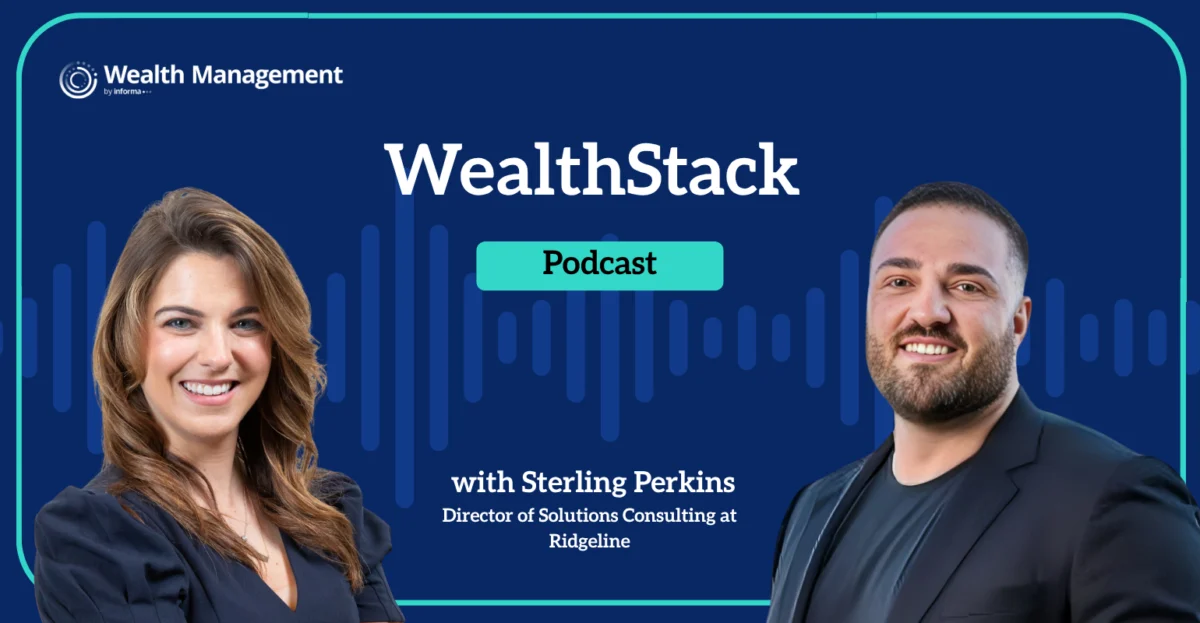
This critical juncture in wealth management technology was the central theme of a recent episode of The WealthStack Podcast. Host Shannon Rosic, Director of WealthStack Content and Solutions at Informa Connect, engaged in a deep-dive discussion with Sterling Perkins, Director of Solutions Consulting at Ridgeline. Their conversation focused on the transformative potential of rebuilding the investment management technology stack around a singular, unified system of record. The podcast, a prominent platform within the wealth management technology discourse, aims to illuminate innovative solutions and strategic insights for industry professionals.
The Fragmented Reality of Modern Wealth Management
The contemporary wealth management industry is characterized by a relentless pursuit of enhanced client engagement and operational efficiency. Clients, accustomed to seamless digital experiences in other aspects of their lives, now expect a similar level of responsiveness and customization from their financial advisors. This includes the ability to track investments in real-time, receive tailored advice based on their unique circumstances, and engage with their advisors through a variety of channels.
However, achieving these client-centric goals is often hampered by legacy technology architectures. Many wealth management firms operate with a patchwork of disparate software solutions, each designed to address a specific functional area. While these systems may have served their purpose in the past, their lack of integration creates significant operational friction. Data often needs to be manually extracted, transformed, and re-entered across different platforms, leading to inefficiencies, increased risk of errors, and a delayed response to client inquiries.
For instance, a portfolio manager might need to access client data from the CRM, cross-reference it with trading system information, and then reconcile it with accounting records, all before generating a compliance report. This multi-step process is not only time-consuming but also prone to human error. Furthermore, the lack of a holistic view of client information can hinder the ability to identify cross-selling opportunities or to proactively address potential client concerns.
The AI Catalyst: Amplifying the Constraints of Disconnection
The rapid advancements in artificial intelligence are set to exacerbate the challenges posed by these fragmented systems. While AI has already begun to augment human capabilities through tools like chatbots for customer service and copilots for generating reports, its future trajectory points towards more autonomous agents capable of performing a wide range of operational tasks. These AI agents could potentially automate portfolio rebalancing, execute trades, generate personalized client communications, and even conduct preliminary compliance checks.
However, for these advanced AI capabilities to be effectively deployed, they require access to clean, consistent, and readily available data. A fragmented technology stack acts as a bottleneck, preventing AI from accessing the comprehensive data sets necessary for intelligent decision-making and execution. Without a unified system of record, AI agents would struggle to aggregate information from disparate sources, leading to incomplete insights, unreliable outputs, and a failure to realize the full potential of AI in driving efficiency and client satisfaction.
The implications of this are significant. Firms that fail to address their technological fragmentation risk falling behind competitors who embrace a more integrated approach. This could manifest in slower response times, less personalized client service, higher operational costs, and an inability to leverage the full power of emerging technologies like AI.
The Ridgeline Perspective: Reimagining the Tech Stack with a Single System of Record
Sterling Perkins, with his extensive background as a financial advisor and a leader in wealth technology, brought a unique and practical perspective to the podcast discussion. His career trajectory, from advising clients at Baird to holding senior product and sales engineering roles at InvestCloud before joining Ridgeline, has provided him with a deep understanding of the operational realities and technological needs of wealth management firms.
Perkins highlighted the core thesis of Ridgeline’s approach: the paramount importance of a "single system of record." This concept refers to a centralized database or platform that serves as the definitive source of truth for all data within an organization. In the context of wealth management, a single system of record would consolidate information from all critical functions, including client data, portfolio holdings, transactions, accounting entries, and compliance records.
The benefits of such a unified approach are multi-faceted. Firstly, it eliminates data silos, ensuring that all stakeholders have access to the same, up-to-date information. This fosters transparency and reduces the need for manual data reconciliation, thereby improving operational efficiency and accuracy. Secondly, a single system of record provides a holistic view of the business, enabling better strategic decision-making and more effective client relationship management. Advisors can gain a comprehensive understanding of a client’s financial situation, preferences, and interactions, allowing for more personalized and proactive service.
From Disconnected Systems to Connected Intelligence
Perkins elaborated on how rebuilding the tech stack around a single system of record can fundamentally transform investment management operations. Instead of navigating multiple applications, users interact with a unified interface that provides seamless access to all relevant data and functionalities. This not only simplifies workflows but also enhances collaboration among different teams within the firm.
For example, a trading desk could instantly see the impact of a proposed trade on a client’s overall portfolio and compliance status, without needing to consult separate systems. Similarly, client service teams could access real-time portfolio performance data to answer client queries promptly and accurately.
The podcast episode touched upon the evolution of technology within wealth management, underscoring that the industry has moved beyond simply adopting new tools. The focus has shifted towards strategic integration and the creation of a technology ecosystem that supports business objectives. The journey from fragmented systems to a connected, intelligent infrastructure is not merely a technological upgrade; it is a fundamental reimagining of how wealth management firms operate and serve their clients.
The Genesis of WealthStack and its Significance
The WealthStack event, for which Shannon Rosic spearheads content and solutions, plays a crucial role in fostering this dialogue within the industry. Informa Connect’s WealthStack is recognized as a rapidly growing and credible platform dedicated to exploring technology’s impact on wealth management. By hosting events, webinars, podcasts, and video series, WealthStack serves as a vital hub for knowledge sharing, networking, and the dissemination of best practices.
The podcast episode featuring Sterling Perkins is a prime example of WealthStack’s commitment to bringing forward critical conversations that address the industry’s most pressing challenges. The timing of this discussion is particularly relevant, as the wealth management sector stands at the precipice of significant technological disruption driven by AI and the increasing demand for sophisticated client experiences.
A Look Back: The Gradual Shift Towards Integration
The push for integrated technology in wealth management is not a recent phenomenon. Over the past two decades, the industry has witnessed a gradual evolution. Initially, firms focused on adopting specialized software for individual functions, leading to the fragmented landscape we see today. As the limitations of this approach became apparent, the industry began to explore solutions that offered greater interoperability.
The advent of Application Programming Interfaces (APIs) in the early 2000s facilitated the connection between disparate systems, allowing for some degree of data sharing. However, this often involved complex integrations and ongoing maintenance. More recently, the focus has shifted towards more comprehensive platform solutions and the concept of a "system of record" as a foundational element for true integration.
Sterling Perkins’ own career trajectory reflects this evolution. His experience at Baird as a financial advisor provided him with firsthand insight into the operational pain points of traditional wealth management. His subsequent roles at InvestCloud, a company known for its integrated wealth management platform solutions, allowed him to contribute to building more unified technological environments. Now at Ridgeline, he continues to champion this integrated approach, emphasizing its critical role in enabling firms to meet the demands of modern wealth management.
The Broader Impact and Future Implications
The implications of adopting a unified system of record extend far beyond mere operational efficiency. For wealth management firms, it represents a strategic imperative for future growth and competitiveness.
- Enhanced Client Retention and Acquisition: By enabling hyper-personalization and real-time responsiveness, firms can foster stronger client relationships, leading to increased loyalty and a greater ability to attract new clients.
- Improved Risk Management: A single source of truth significantly reduces the risk of compliance breaches and operational errors, providing a more robust framework for regulatory adherence.
- Greater Agility and Innovation: With a streamlined technology foundation, firms can more readily adopt new technologies and adapt to evolving market demands and client expectations.
- Attracting and Retaining Talent: Modern, efficient technology stacks can improve the work experience for employees, making firms more attractive to top talent in both advisory and technology roles.
As AI continues its march towards greater autonomy, the firms that have invested in a unified system of record will be best positioned to harness its power. They will be able to deploy AI agents that can operate seamlessly within a well-defined data architecture, driving unprecedented levels of efficiency and client value. Conversely, firms that remain encumbered by fragmented systems will likely find themselves struggling to keep pace, facing mounting operational challenges and a widening gap in client satisfaction.
The conversation on The WealthStack Podcast serves as a timely reminder that the foundation of effective wealth management in the digital age is not just about adopting the latest technologies, but about building a coherent, integrated infrastructure that supports them. The pursuit of a single system of record is no longer a matter of preference; it is a fundamental requirement for success in the evolving world of wealth management.
About the Author and Guest
Shannon Rosic, the host of this insightful podcast episode, is the Director of WealthStack Content and Solutions at Informa Connect. In this capacity, she plays a pivotal role in shaping the strategic direction and growth of WealthStack, a leading event and content platform dedicated to technology in the wealth management sector. Ms. Rosic is a recognized market-facing representative, regularly hosting webinars, podcasts, and video series that explore the critical trends and innovations impacting the industry.
Sterling Perkins, the esteemed guest on the podcast, brings a wealth of experience from both the front lines of financial advising and the forefront of wealth technology. As the Director of Solutions Consulting at Ridgeline, he operates at the nexus of wealth management and financial technology. His career began as a financial advisor at Baird, where he was instrumental in growing a substantial client base. He later transitioned into the technology realm, spending over six years at InvestCloud, holding influential positions such as Global Head of Product and Global Head of Sales Engineering. This dual perspective—as both an advisor and a technology leader—equips Perkins with a unique and practical understanding of investment management operations, the potential of AI, portfolio technology, and how interconnected systems can be leveraged to foster growth and elevate client service.
