

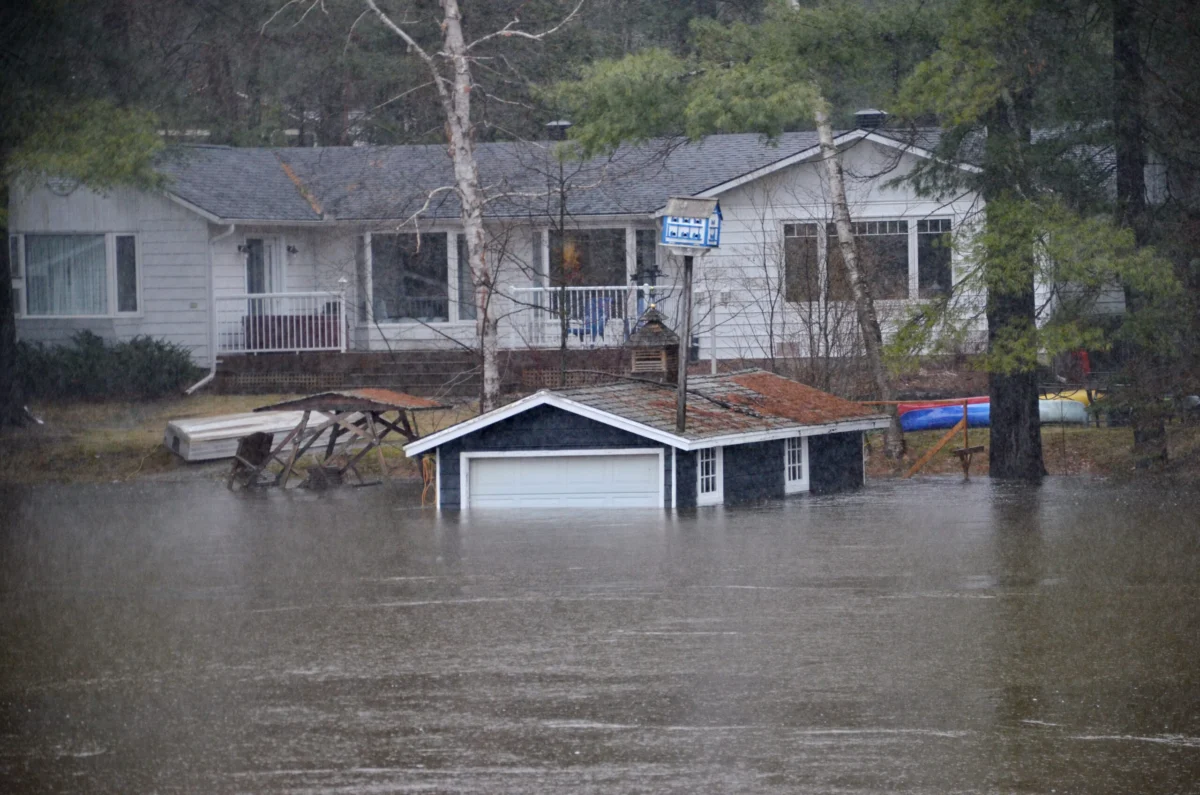
Canada is facing a critical juncture in its response to the climate crisis, as escalating financial losses and human casualties highlight a systemic failure to prioritize climate adaptation. Despite pockets of leadership within the financial sector and select municipalities, the federal and provincial governments remain hampered by significant gaps in funding, policy cohesion, and practical implementation. Policy experts and economists are now calling for the immediate establishment of a National Office for Climate Adaptation to bridge these public-sector weaknesses. This proposed entity would serve as a central hub for analytical and advisory capacity, ensuring that the country’s infrastructure and economic strategies are resilient enough to withstand the intensifying frequency of catastrophic weather events.
A Four-Decade Escalation: The Data of Disaster
The statistical trajectory of extreme weather in Canada paints a grim picture of a nation increasingly under siege by environmental forces. Since 1983, Canada has recorded more than 300 catastrophic weather events—defined as occurrences causing more than $30 million in insured losses ($25 million prior to 2022). The frequency of these events has shifted dramatically over the last forty years. In the early 1980s, Canada averaged approximately two such events per year. By the mid-2020s, that number has surged to an average of 15 annually.
The financial burden associated with these disasters has followed an even steeper curve. Between 1983 and 2008, insured losses typically ranged from $400 million to $700 million per year. However, from 2009 through 2025, climate-related disasters saw insured losses jump to an annual average of nearly $3 billion.
Experts warn that these insurance figures, while staggering, represent only the tip of the iceberg. For every $1 in insured losses, there are typically an additional $3 to $4 in uninsured costs borne by taxpayers, businesses, and individuals. These "hidden" costs include the destruction of public infrastructure, long-term economic disruption, and the immense strain on the healthcare system.
The Human and Economic Toll Beyond the Ledger
The true cost of climate change in Canada cannot be measured solely in dollars. The human toll was most tragically illustrated during the 2021 British Columbia heat dome, which claimed 619 lives. Beyond the immediate loss of life, the economic and health impacts of catastrophic weather are profound.
In 2023, widespread wildfires across the country resulted in total economic loss estimates exceeding $10 billion when accounting for large-scale government firefighting efforts, emergency assistance, and lost productivity. These events create a "polycrisis" environment where multiple, interrelated shocks occur simultaneously, straining the government’s ability to respond effectively.
Research from the Canadian Climate Institute and international bodies indicates that extreme weather directly reduces Gross Domestic Product (GDP) through several channels:
- Supply Chain Disruption: Damage to utility, transportation, and communication networks halts the flow of goods and services.
- Labor Productivity: Extreme heat reduces both cognitive and physical capacity in workers, while wildfire smoke increases absenteeism due to respiratory issues.
- Reduced Demand: Lower household incomes resulting from these supply-side impacts lead to decreased consumption and investment, further depressing the economy.
The Policy Gap: Mitigation vs. Adaptation
A central criticism of Canada’s current climate strategy is the stark imbalance between mitigation—efforts to reduce greenhouse gas emissions—and adaptation—measures taken to protect people and infrastructure from the impacts of climate change. Currently, federal spending on mitigation outweighs adaptation by a ratio of approximately 20:1. For every dollar spent on preventing future warming, only five cents are allocated to dealing with the warming that is already occurring.
While mitigation is an existential necessity for long-term stability, adaptation is vital for immediate survival and economic continuity. Experts argue that the two must be viewed as inseparable pillars of a single strategy. Mitigation requires time to yield results, and adaptation provides the necessary resilience to buy that time. Conversely, adaptation measures will eventually fail if global mitigation efforts do not succeed in stabilizing the climate.
Under the current administration, led by Mark Carney, the primary focus has remained on carbon capture, electrification, and the preservation of natural capital. While these are lauded as essential mitigation steps, the funding for adaptation continues to be a small fraction of overall climate-related expenditures. From 2025 through mid-2026, adaptation spending has remained insufficient to meet the rising risks, leading to a "reactive" rather than "proactive" governance model.
Barriers to Effective Adaptation
Three major political and structural barriers have been identified as the primary hurdles to effective adaptation in Canada:
- Lack of Understanding: Adaptation is often pigeonholed as an environmental or health issue rather than being recognized as a core economic and fiscal priority. There is a persistent, flawed narrative that governments must choose between economic growth and the preservation of natural assets like wetlands and forests, which act as critical buffers against flooding and erosion.
- Inadequate Political Will: Historically, governments have prioritized high-profile policy announcements over the practical, "unseen" work of hardening infrastructure. Once the immediate emergency phase of a disaster passes, political attention frequently shifts to other priorities, leaving long-term resilience projects underfunded.
- Weak Policy Capacity: There is a notable lack of in-house expertise within federal and provincial departments regarding the design and implementation of adaptation strategies. While Canada possesses strong capabilities in weather forecasting and climate modelling, the ability to translate that data into resilient engineering and economic policy is disparate and uncoordinated.
The "Build It Right" Strategy: Infrastructure and Natural Assets
As of June 2026, the federal government has announced more than $25 billion in capital spending across defense, housing, and general infrastructure. Private sector commitments add billions more to this total. Analysts argue that it is imperative these assets be designed and constructed to withstand the climate realities of the future.
Resilience must be embedded in the design of:
- Military Installations: Ensuring national security assets remain operational during extreme weather.
- Critical Infrastructure: Hardening transportation hubs, energy grids, hospitals, and water systems.
- Housing: Improving building codes to protect homeowners from floods, wildfires, and extreme heat.
Furthermore, there is a growing push to integrate "green infrastructure"—natural assets such as wetlands and urban green spaces—into the national balance sheet. Following the lead of countries like the United Kingdom and the Netherlands, Canada has the opportunity to use natural capital to boost resiliency. Wetlands, for instance, significantly lessen flood damage, while urban forests reduce heat stress and improve public health outcomes.
The Fragmented Landscape of Existing Expertise
The problem is not a lack of expertise in Canada, but rather its fragmentation. Valuable knowledge resides in various non-profit and regional entities, including:
- The Intact Centre on Climate Adaptation and the Climate Risk Institute, which provide technical and practical implementation expertise.
- The Canadian Climate Institute and Smart Prosperity Institute, which offer advanced economic modelling.
- Regional Climate Services: Organizations like Ouranos in Quebec, CLIMAtlantic, and ClimateWest provide localized knowledge that is essential for regional planning.
However, because these entities exist outside of the federal government, their intelligence is not consistently integrated into national policy. Small and medium-sized municipalities are particularly vulnerable, as they often lack the budget and staff to navigate the complex requirements of climate adaptation on their own.
The Proposal: A National Office for Climate Adaptation
A National Office for Climate Adaptation would serve as a non-partisan champion within the government, specifically designed to address the capacity gap. Unlike traditional departments, this office would have the mandate to hire experts from the private and non-profit sectors, mirroring the successful models of the Major Projects Office and the Defence Investment Agency.
The office would provide:
- Analytical Support: Offering a centralized source of data for federal, provincial, and municipal governments.
- Coordination Advice: Ensuring that massive investments in housing and defense are "climate-proofed" from the design phase.
- Information Dissemination: Helping local governments understand and implement the best practices for resilience.
While the specific reporting structure—whether to the Privy Council Office, the Prime Minister’s Office, or the Environment Minister—remains a matter for debate, the necessity of its existence is becoming indisputable.
Conclusion: Breaking the Tragedy of the Horizon
The concept of the "tragedy of the horizon," first popularized by Mark Carney during his tenure as Governor of the Bank of England, describes the catastrophic impacts of climate change that will be felt beyond the traditional horizons of political and business cycles.
In mid-2026, as Canada grapples with severe wildfires in the West, flooding in Montreal, and record-breaking hailstorms in the Prairies, it is clear that the tragedy is no longer on the horizon; it is unfolding in the present. The escalating costs and rising risks associated with El Niño and long-term warming trends suggest that the status quo is no longer tenable. Without a dedicated National Office for Climate Adaptation to lead a proactive and coordinated response, Canada remains at the mercy of a climate that is changing faster than its policies.
