

As the sun rises over the great Kilimanjaro, Thomas Kalasinga kick-starts his motorcycle—popularly known as a boda boda—outside his home in Njoro on the Kenyan border with Tanzania. Kalasinga is a boda boda driver who earns a living by ferrying people and goods, representing a vital cog in the machinery of East African commerce. Before he carries his first passenger, the 25-year-old stops at a gas station and pours $4.64 worth of fuel into his tank, money he earned the previous day. On a bad day, he reports spending up to 1,000 Kenyan shillings, approximately $7.70, on fuel alone. With the current surging fuel prices, he notes that his margins are disappearing, a sentiment shared by millions of operators across the region.
In April 2026, petrol and diesel prices in Kenya jumped sharply, hitting some of the highest levels in the country’s history. Based on recent reports from the Energy and Petroleum Regulatory Authority (EPRA), a Kenyan government agency, petrol was selling for between $1.52 and $1.59 per litre, with diesel trailing closely at similar rates. The EPRA attributed this localized surge to the rising cost of imported petroleum products, a direct consequence of the volatility sparked by the Iran war. While Kenya’s Ministry of Energy has attempted to mitigate the impact by trimming taxes—enabling prices to dip by a few cents—this reduction has done little to improve the economic outlook for riders like Kalasinga. The inability to hike fares without losing a price-sensitive clientele has locked these operators into a precarious financial position.
The Economic Backbone Under Pressure
Kalasinga’s story is echoed by hundreds of thousands of motorcycle riders across Kenya. Motorcycles have become the undisputed backbone of last-mile transport, supporting livelihoods, small businesses, and urban mobility in areas where traditional four-wheeled vehicles cannot reach. However, behind this economic engine lies a costly and volatile dependence on fossil fuels. This dependence is not merely an environmental concern; it is a direct driver of urban poverty.
According to research conducted by the asset-financing company Mogo, Kenyan boda boda riders spend up to 60% of their daily earnings on fuel. In congested hubs like Nairobi, where riders are forced to idle in traffic for hours, fuel consumption is even higher, and efficiency drops significantly. For many, the motorcycle has transitioned from a tool of empowerment to a "debt trap" where the majority of revenue is siphoned off by global energy markets over which they have no control. "Fuel is our biggest enemy," Kalasinga says. "You work the whole day, but at the end what remains is very little."
The Emergence of the Electric Alternative
To improve their margins, an increasing number of boda boda drivers are looking toward electrified transportation. The past several years have marked a significant shift in the Kenyan automotive landscape. Data from the transport sector indicates that total electric vehicle (EV) registrations rose from a mere 65 units in 2018 to 4,047 by the end of 2023 across all vehicle categories, with motorcycles leading the charge.
The "electric advantage" is multifaceted. For the individual driver, it represents a drastic reduction in operational costs. For the nation, it offers wider social benefits, including increased energy security and a reduction in urban air pollution. In Nairobi, road transport is responsible for approximately 40% of fine particulate matter. This pollution has been linked to a rise in respiratory illnesses, heart disease, and premature deaths among the city’s population.
Furthermore, Kenya is uniquely positioned to lead the continent in e-mobility due to its energy profile. Paul Mabonga, managing director of Sentimental Energy Ltd., a solar solutions provider, points out that EVs align perfectly with Kenya’s renewable electricity mix. Currently, over 90% of the country’s grid is powered by green sources, including geothermal, hydro, and wind power. By switching to electric motorcycles, the transport sector effectively transitions from imported, carbon-intensive oil to locally produced, renewable energy.
Overcoming Driver Skepticism and Infrastructure Gaps
Despite the clear economic and environmental logic, the transition has not been without friction. High upfront costs for batteries and a lack of accessible charging infrastructure have prompted many riders to remain cautious. Winnie Miranyi, an operations and research associate at the Africa E-Mobility Alliance, notes that concerns regarding battery range, durability, and service continuity are the primary barriers to adoption. For a rider whose livelihood depends on "uptime"—the amount of time they can spend on the road—the prospect of a dead battery with no charging station in sight is a significant risk.
The reality of these concerns is illustrated by Joseph Mwangi, a Nairobi-based rider who briefly switched to an electric motorcycle last year before returning to a petrol-powered model. Mwangi cites the lack of infrastructure as his primary reason for the reversal. "Interest is there, but infrastructure is not," he explains. "Riders ask: Where will I charge? How long will it take? What happens if the battery fails?"
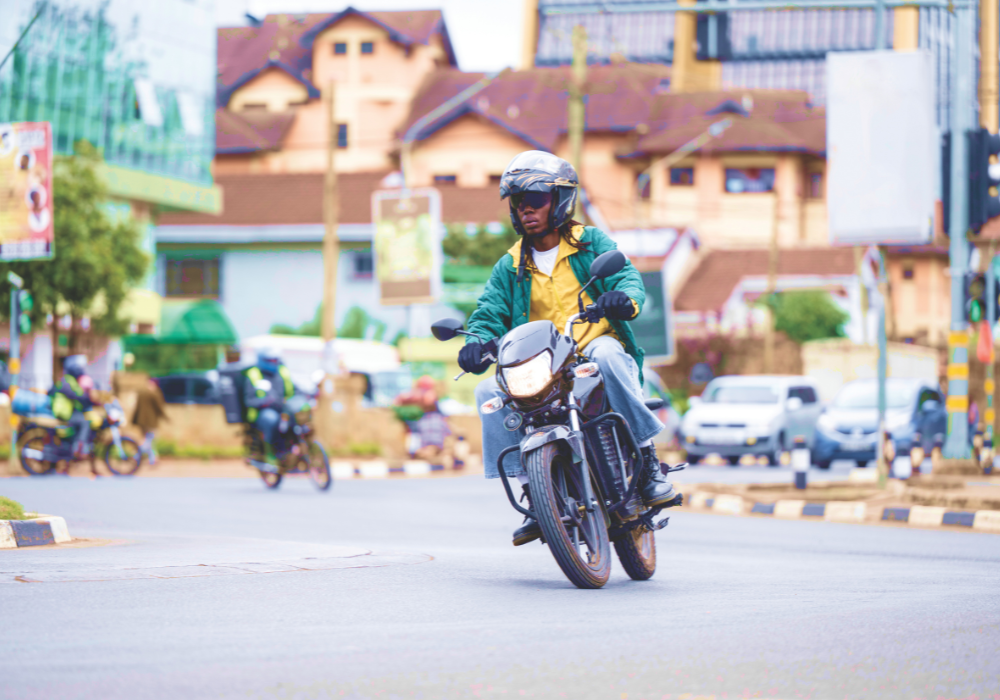
Mabonga echoes this sentiment, stating that many current EV solutions are designed for middle- and high-income consumers who can charge their vehicles at home. Boda boda riders, who represent the largest transport workforce, often live in informal settlements or rural areas where home charging is not a viable option.
The Battery Swapping Revolution
Addressing the infrastructure gap requires a departure from the traditional "plug-in" charging model. Spiro Kenya, an electric mobility company, has introduced a "battery swapping" service designed specifically for the high-demand nature of the boda boda industry. Instead of waiting hours for a battery to charge, riders visit a swap station and exchange their depleted battery for a fully charged one in under two minutes.
Raymond Robert Kitunga, deputy country head at Spiro Kenya, explains the economics of the model. A full charge costs approximately $2.23 if the battery is completely depleted. If a rider swaps a battery that is still at 50% capacity, they only pay for the energy used, roughly $1.12. According to Kitunga, this model can save a rider approximately $23 per month compared to the cost of petrol, providing a significant boost to take-home pay.
The model is gaining traction. Spiro currently operates in 35 counties across Kenya, with more than 22,000 electric motorbikes on the road and a network of over 460 battery swap stations. Across the African continent, the company has deployed roughly 95,000 bikes, signaling a broader regional shift toward sustainable transport. For riders like Joel Musungu in the western Kenyan town of Kimilili, the switch has been transformative. Since getting his electric motorcycle in 2022, Musungu reports taking home up to $4.62 a day, a significant increase from his previous earnings on a petrol bike.
Challenges to Universal Adoption
While battery swapping solves the "time" problem, it does not solve every hurdle. Infrastructure remains largely concentrated in urban centers where demand is densest. In rural areas like Kimilili, a single swapping station may serve an entire district, leading to long queues and vulnerability during power outages or grid fluctuations.
The capital-intensive nature of setting up these stations remains a bottleneck. Kitunga admits that expansion involves complex civil works, real estate acquisition, and coordination with national utilities like Kenya Power. To mitigate "range anxiety," Spiro has developed an app that provides real-time data on station availability and traffic, but digital tools can only do so much if the physical hardware is absent.
Beyond infrastructure, financing remains the most significant hurdle. While battery swapping lowers the ongoing expense of the battery, the initial purchase price of an electric motorcycle remains prohibitively high for the average rider. Miranyi emphasizes that without specialized credit facilities or government subsidies, many riders remain locked out of the market, unable to afford the "green premium" despite the long-term savings.
Analysis: The Path Forward for Kenya’s E-Mobility
The transition of the boda boda sector to electric power is more than a technological upgrade; it is a test case for "just transitions" in developing economies. For the shift to be successful and inclusive, three key areas require urgent attention:
First, the decentralization of infrastructure is essential. The urban-rural divide in charging availability threatens to leave rural operators behind, further exacerbating regional economic disparities. Second, the government must play a more active role in de-risking the sector for lenders. By providing guarantees or tax incentives for e-motorcycle financing, the state can help lower the barrier to entry for low-income riders. Finally, the integration of solar-powered charging stations could alleviate pressure on the national grid and ensure that the "green" transition remains truly carbon-neutral, even in areas with unreliable grid access.
The 2026 fuel crisis has served as a painful reminder of the vulnerability of fossil-fuel-dependent economies. As Kenya looks toward the future, the roar of the petrol engine may slowly be replaced by the quiet hum of the electric motor. For Thomas Kalasinga and thousands like him, the success of this revolution will determine whether they continue to work for the benefit of oil companies or finally begin to build wealth for themselves and their families. The road ahead is long, but the transition to electric mobility offers a rare opportunity to align economic survival with environmental stewardship.
