

Canada is currently facing a pivotal moment in its environmental and economic history, as the mounting frequency of extreme weather events exposes deep structural vulnerabilities in the nation’s infrastructure and policy framework. While various financial institutions and municipalities have launched localized initiatives, a significant gap remains at the federal and provincial levels regarding adaptation funding, policy design, and practical implementation. Experts and economists are now sounding a clarion call for the establishment of a National Office for Climate Adaptation—a centralized, non-partisan entity designed to bridge these gaps and safeguard the Canadian economy against the escalating "tragedy of the horizon."
The necessity of such an office is underscored by a staggering increase in the cost of climate-related disasters. Since 1983, Canada has recorded more than 300 catastrophic weather events, defined as occurrences resulting in more than $30 million in insured losses ($25 million prior to 2022). The trajectory of these events reveals a disturbing trend: in the 1980s, Canada averaged approximately two catastrophic events per year. By the mid-2020s, that number has surged to roughly 15 annually. The financial toll has followed a similar path, with insured losses jumping from an average of $400 million to $700 million per year between 1983 and 2008 to nearly $3 billion annually in the period from 2009 to 2025.
The Economic and Human Toll of Extreme Weather
While insured losses provide a quantifiable metric, they represent only a fraction of the total economic devastation. Historical data suggests that for every $1 in insured losses, there are typically $3 to $4 in uninsured costs borne by governments, businesses, and households. These figures do not account for the intangible but profound loss of life and health. The 2021 British Columbia heat dome, for instance, claimed 619 lives, marking one of the deadliest weather events in Canadian history.
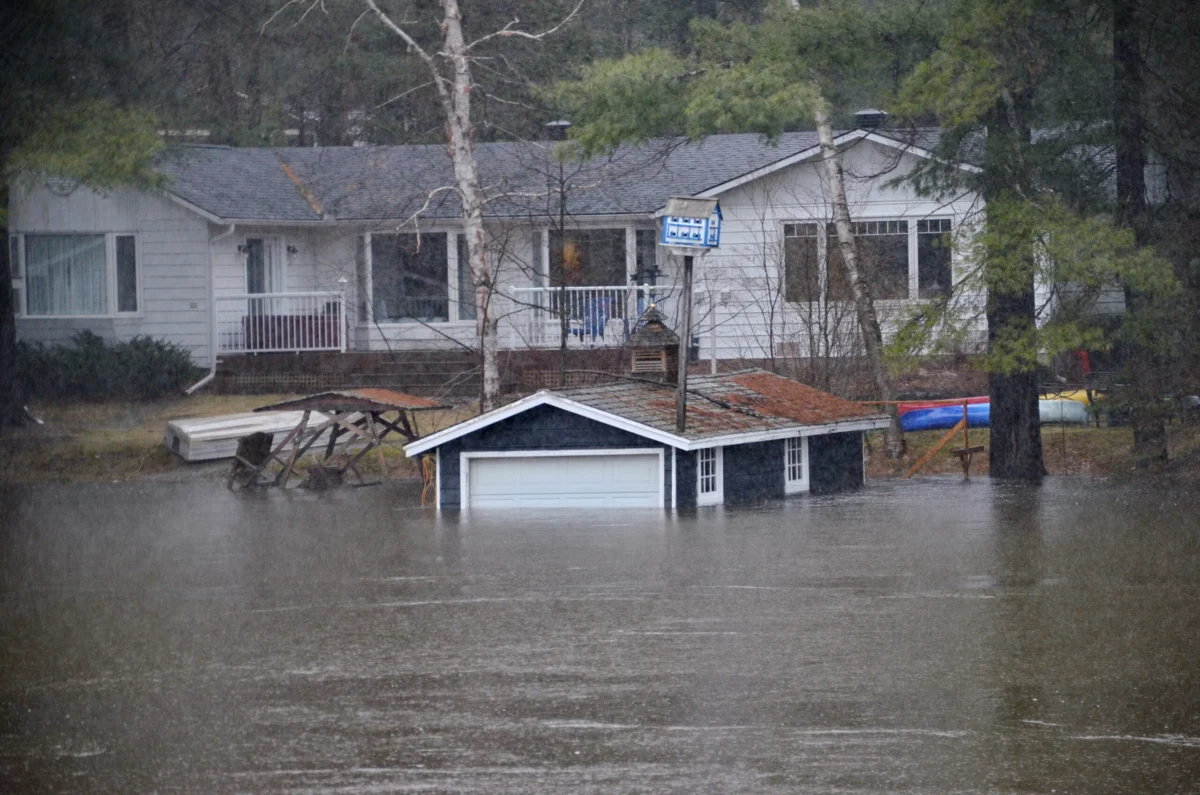
In 2023, the widespread wildfires that blanketed much of the country in smoke and forced mass evacuations resulted in total economic loss estimates exceeding $10 billion, once government firefighting costs and emergency assistance were tallied. By mid-2026, Canada has already witnessed major hailstorms in the Prairies, severe flooding in Montreal and central Ontario, and continued wildfire activity in Western Canada and the Northwest Territories. With the current El Niño cycle intensifying global climate extremes, the risks to Canada’s GDP and public safety have reached a critical threshold.
From a macroeconomic perspective, climate change acts as a persistent drag on productivity. Extreme heat reduces cognitive and physical labor capacity, leading to increased absenteeism and healthcare costs. Damage to utility, transportation, and communication networks disrupts supply chains, while the destruction of commercial assets reduces long-term investment. Research indicates that these supply-side shocks inevitably lead to reduced household consumption and lower overall GDP, creating a cycle of economic contraction that reactive disaster relief cannot solve.
A Chronology of Policy Gaps and the Mitigation-Adaptation Imbalance
The evolution of Canada’s climate policy has been characterized by a heavy emphasis on mitigation—reducing greenhouse gas emissions—while often neglecting the equally vital pillar of adaptation. While mitigation is essential for long-term survival, adaptation is required to survive the impacts that are already "baked in" to the climate system.
- 1983–2008: A period of relatively low climate-related losses, where extreme weather was viewed as an occasional anomaly rather than a systemic risk.
- 2009–2020: Insured losses begin to climb significantly. The 2013 Calgary floods and the 2016 Fort McMurray wildfires serve as wake-up calls, yet federal policy remains largely focused on carbon pricing and emission targets.
- 2021–2023: The "Tragedy of the Horizon" becomes acute. The 2021 heat dome and 2023 wildfire season force the federal government to release the National Adaptation Strategy (NAS).
- 2025–2026: Under the Mark Carney administration, while mitigation remains a priority through electrification and carbon capture, adaptation spending remains a small fraction of total climate outlays. The creation of the Major Projects Office (MPO) and the Defence Investment Agency (DIA) demonstrates that the government can build specialized capacity for high-priority sectors, yet no such entity exists for climate resilience.
Currently, for every $1 spent on mitigation, Canada spends approximately $0.05 on adaptation—a 20:1 ratio. This imbalance persists despite evidence that proactive investment in resilient infrastructure yields massive returns. A 2026 study suggested that proactively upgrading "grey" infrastructure (roads, bridges, water systems) to withstand extreme heat and rainfall could save Canada up to $9 billion annually compared to a reactive "repair as it breaks" model.
Political Barriers to Effective Adaptation
The primary obstacles to effective climate adaptation in Canada are not technological, but political and structural. Analysts identify three major barriers: a lack of understanding, inadequate political will, and weak policy capacity.
The lack of understanding stems from a failure to view adaptation as core fiscal and economic policy. Too often, adaptation is pigeonholed as a niche environmental issue rather than a fundamental requirement for financial stability. This is compounded by populist rhetoric that suggests a false choice between economic growth and the preservation of natural assets. In reality, "green infrastructure"—such as wetlands that mitigate flood damage and forests that sequester carbon—is a critical economic asset.
The problem of will is reflected in the government’s tendency to prioritize high-profile policy announcements over the unglamorous, long-term work of implementation. Furthermore, the "polycrisis" of the early 2020s—including the COVID-19 pandemic, global inflation, and geopolitical shocks like the invasion of Ukraine—has consistently pushed long-term climate strategy to the periphery of the political agenda.
Finally, the problem of capacity is evident in the limited in-house expertise within federal and provincial departments. While Canada possesses world-class climate forecasting and natural capital accounting expertise (notably within Statistics Canada and organizations like the Canadian Climate Institute), this knowledge is disparate and poorly integrated into the broader machinery of government.
The Mandate of a National Office for Climate Adaptation
A National Office for Climate Adaptation would serve as the central nervous system for Canada’s resilience efforts. Unlike traditional government departments, this office would be designed to hire top-tier expertise from the private and non-profit sectors, modeled after the successes of the Major Projects Office and the Defence Investment Agency.
The office’s primary roles would include:
- Analytical and Information Support: Providing rigorous, data-driven assessments of climate risks for all new federal infrastructure projects, ensuring that resilience is "built in" from the design phase.
- Inter-jurisdictional Coordination: Acting as a bridge between federal, provincial, and municipal governments. This is particularly vital for small and medium-sized municipalities that lack the budget and staff to navigate complex climate modeling on their own.
- Integrating Natural Capital: Applying international best practices—such as those seen in the Netherlands and the United Kingdom—to integrate ecosystem services into public policy. This includes recognizing the role of urban green spaces in reducing heat stress and the value of coastal wetlands in storm surge protection.
- Non-Partisan Advocacy: Serving as a persistent champion for adaptation within the halls of power, ensuring that resiliency remains a priority even when the immediate memory of the latest disaster begins to fade.
The office would ideally maintain strong links to the Ministry of Finance and Public Safety Canada, recognizing that climate adaptation is both a matter of fiscal prudence and national security.
Broader Impact and the Path Forward
The establishment of a National Office for Climate Adaptation would have far-reaching implications for the Canadian economy. For the private sector, it would provide a clearer roadmap for investment, potentially stabilizing insurance premiums and opening new markets for resilient construction and technology. For homeowners, it would mean more robust housing standards and better protection against the loss of property value in high-risk zones.
As of June 2026, the federal government has announced over $25 billion in capital spending for defense, housing, and infrastructure. Without a centralized adaptation office to oversee these investments, there is a significant risk that this taxpayer money will be spent on assets that are not equipped to survive the climate of the 2030s and 2040s.
The "tragedy of the horizon," once a theoretical warning about future risks, has become a present-day reality for Canadians. From the smoke-filled skies of the summer to the flooded basements of the spring, the costs of climate change are no longer avoidable. However, by shifting from a reactive "repair" mindset to a proactive "prepare" strategy, Canada can protect its citizens and its economy. The creation of a National Office for Climate Adaptation is not just an environmental necessity; it is a fundamental requirement for a resilient and prosperous Canadian future.
